

Материалы доступны только для специалистов сферы здравоохранения.
Чтобы посмотреть материал полностью
Авторизуйтесь
или зарегистрируйтесь.
Блокада левой ножки на фоне ишемической болезни сердца: в поиске новых электрокардиографических маркеров - Научно-практический журнал Cardioсоматика Том 16, №1 (2025)
Блокада левой ножки на фоне ишемической болезни сердца: в поиске новых электрокардиографических маркеров
Федулаев Ю.Н., Макарова И.В., Григорьева А.В., Капитонова Д.Р., Хайретдинова Г.А. Блокада левой ножки на фоне ишемической болезни сердца: в поиске новых электрокардиографических маркеров // CardioСоматика. 2025. Т. 16, № 1. С. 45–52. DOI: 10.17816/CS639933 EDN: EOBWLW
________________________________________________
Материалы доступны только для специалистов сферы здравоохранения.
Чтобы посмотреть материал полностью
Авторизуйтесь
или зарегистрируйтесь.
Аннотация
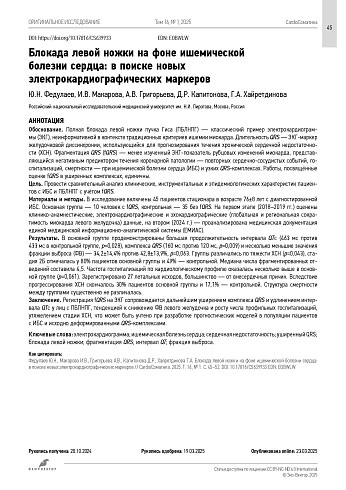
Обоснование. Полная блокада левой ножки пучка Гиса (ПБЛНПГ) — классический пример электрокардиограммы (ЭКГ), неинформативной в контексте традиционных критериев ишемии миокарда. Длительность QRS — ЭКГ‑маркер желудочковой диссинхронии, использующийся для прогнозирования течения хронической сердечной недостаточности (ХСН). Фрагментация QRS (fQRS) — менее изученный ЭКГ-показатель рубцовых изменений миокарда, представляющийся негативным предиктором течения коронарной патологии — повторных сердечно-сосудистых событий, госпитализаций, смертности — при ишемической болезни сердца (ИБС) и узких QRS-комплексах. Работы, посвящённые оценке fQRS в уширенных комплексах, единичны.
Цель. Провести сравнительный анализ клинических, инструментальных и эпидемиологических характеристик пациентов с ИБС и ПБЛНПГ с учётом fQRS.
Материалы и методы. В исследование включены 45 пациентов стационара в возрасте 76±8 лет с диагностированной ИБС. Основная группа — 10 человек с fQRS, контрольная — 35 без fQRS. На первом этапе (2018–2019 гг.) оценены клинико-анамнестические, электрокардиографические и эхокардиографические (глобальная и региональная сократимость миокарда левого желудочка) данные, на втором (2024 г.) — проанализирована медицинская документация единой медицинской информационно-аналитической системы (ЕМИАС).
Результаты. В основной группе продемонстрированы большая продолжительность интервала QTc (463 мс против 433 мс в контрольной группе, p=0,028), комплекса QRS (160 мс против 120 мс, p=0,009) и несколько меньшие значения фракции выброса (ФВ) — 34,2±14,4% против 42,8±13,9%, p=0,063. Группы различались по тяжести ХСН (p=0,043), стадия 2Б отмечалась у 80% пациентов основной группы и 49% — контрольной. Медиана числа фрагментированных отведений составила 4,5. Частота госпитализаций по кардиологическому профилю оказалась несколько выше в основной группе (p=0,061). Зарегистрировано 27 летальных исходов, большинство — от внесердечных причин. Вследствие прогрессирования ХСН скончалось 30% пациентов основной группы и 17,1% — контрольной. Структура смертности между группами существенно не различалась.
Заключение. Регистрация fQRS на ЭКГ сопровождается дальнейшим уширением комплекса QRS и удлинением интервала QTc у лиц с ПБЛНПГ, тенденцией к снижению ФВ левого желудочка и росту числа профильных госпитализаций, утяжелением стадии ХСН, что может быть учтено при разработке прогностических моделей в популяции пациентов с ИБС и исходно деформированными QRS-комплексами.
Ключевые слова: электрокардиограмма, ишемическая болезнь сердца, сердечная недостаточность, уширенный QRS, блокада левой ножки, фрагментация QRS, интервал QT, фракция выброса
AIM: To conduct a comparative analysis of the clinical, instrumental, and epidemiologic characteristics of patients with coronary artery disease and complete left bundle branch block, with consideration of the fragmented QRS presence.
MATERIALS AND METHODS: The study included 45 hospitalized patients with coronary artery disease (mean age 76±8 years). The main group consisted of 10 patients with fragmented QRS, and the control group included 35 patients without fragmented QRS. At the first stage (2018–2019), clinical history, electrocardiographic parameters, and echocardiographic characteristics (global and regional left ventricular contractility) were assessed. At the second stage (2024), medical records were analyzed using the Unified Medical Information and Analytical System.
RESULTS: Patients in the main group had longer QTc intervals (463 vs 433 ms in the control group; p=0.028), wider QRS complexes (160 vs 120 ms; p=0.009), and slightly lower left ventricular ejection fraction (34.2±14.4% vs 42.8±13.9%; p=0.063). The groups differed significantly in the severity of chronic heart failure (p=0.043), with stage 2B CHF (CHF was assessed using the Strazhesko classification which is commonly applied in clinical practice in Eastern Europe and Russia) observed in 80% of the main group vs 49% of the control group. The median number of fragmented leads was 4.5. Cardiovascular-related hospitalizations were slightly more frequent in the main group (p=0.061). A total of 27 deaths were recorded, most due to noncardiac causes. Death due to progression of chronic heart failure occurred in 30% of the main group and 17.1% of the control group. There were no significant differences in the mortality structure between groups.
CONCLUSION: The presence of fragmented QRS complexes on electrocardiogram in patients with complete left bundle branch block is associated with further QRS widening and QTc prolongation, a trend toward reduced left ventricular ejection fraction, increased frequency of cardiovascular-related hospitalizations, and progression of heart failure severity. These findings may be considered in the development of prognostic models for patients with coronary artery disease and initially abnormal QRS complexes.
Keywords: electrocardiography, coronary artery disease, heart failure, wide QRS, left bundle branch block, QRS fragmentation, QT interval, ejection fraction
Цель. Провести сравнительный анализ клинических, инструментальных и эпидемиологических характеристик пациентов с ИБС и ПБЛНПГ с учётом fQRS.
Материалы и методы. В исследование включены 45 пациентов стационара в возрасте 76±8 лет с диагностированной ИБС. Основная группа — 10 человек с fQRS, контрольная — 35 без fQRS. На первом этапе (2018–2019 гг.) оценены клинико-анамнестические, электрокардиографические и эхокардиографические (глобальная и региональная сократимость миокарда левого желудочка) данные, на втором (2024 г.) — проанализирована медицинская документация единой медицинской информационно-аналитической системы (ЕМИАС).
Результаты. В основной группе продемонстрированы большая продолжительность интервала QTc (463 мс против 433 мс в контрольной группе, p=0,028), комплекса QRS (160 мс против 120 мс, p=0,009) и несколько меньшие значения фракции выброса (ФВ) — 34,2±14,4% против 42,8±13,9%, p=0,063. Группы различались по тяжести ХСН (p=0,043), стадия 2Б отмечалась у 80% пациентов основной группы и 49% — контрольной. Медиана числа фрагментированных отведений составила 4,5. Частота госпитализаций по кардиологическому профилю оказалась несколько выше в основной группе (p=0,061). Зарегистрировано 27 летальных исходов, большинство — от внесердечных причин. Вследствие прогрессирования ХСН скончалось 30% пациентов основной группы и 17,1% — контрольной. Структура смертности между группами существенно не различалась.
Заключение. Регистрация fQRS на ЭКГ сопровождается дальнейшим уширением комплекса QRS и удлинением интервала QTc у лиц с ПБЛНПГ, тенденцией к снижению ФВ левого желудочка и росту числа профильных госпитализаций, утяжелением стадии ХСН, что может быть учтено при разработке прогностических моделей в популяции пациентов с ИБС и исходно деформированными QRS-комплексами.
Ключевые слова: электрокардиограмма, ишемическая болезнь сердца, сердечная недостаточность, уширенный QRS, блокада левой ножки, фрагментация QRS, интервал QT, фракция выброса
________________________________________________
AIM: To conduct a comparative analysis of the clinical, instrumental, and epidemiologic characteristics of patients with coronary artery disease and complete left bundle branch block, with consideration of the fragmented QRS presence.
MATERIALS AND METHODS: The study included 45 hospitalized patients with coronary artery disease (mean age 76±8 years). The main group consisted of 10 patients with fragmented QRS, and the control group included 35 patients without fragmented QRS. At the first stage (2018–2019), clinical history, electrocardiographic parameters, and echocardiographic characteristics (global and regional left ventricular contractility) were assessed. At the second stage (2024), medical records were analyzed using the Unified Medical Information and Analytical System.
RESULTS: Patients in the main group had longer QTc intervals (463 vs 433 ms in the control group; p=0.028), wider QRS complexes (160 vs 120 ms; p=0.009), and slightly lower left ventricular ejection fraction (34.2±14.4% vs 42.8±13.9%; p=0.063). The groups differed significantly in the severity of chronic heart failure (p=0.043), with stage 2B CHF (CHF was assessed using the Strazhesko classification which is commonly applied in clinical practice in Eastern Europe and Russia) observed in 80% of the main group vs 49% of the control group. The median number of fragmented leads was 4.5. Cardiovascular-related hospitalizations were slightly more frequent in the main group (p=0.061). A total of 27 deaths were recorded, most due to noncardiac causes. Death due to progression of chronic heart failure occurred in 30% of the main group and 17.1% of the control group. There were no significant differences in the mortality structure between groups.
CONCLUSION: The presence of fragmented QRS complexes on electrocardiogram in patients with complete left bundle branch block is associated with further QRS widening and QTc prolongation, a trend toward reduced left ventricular ejection fraction, increased frequency of cardiovascular-related hospitalizations, and progression of heart failure severity. These findings may be considered in the development of prognostic models for patients with coronary artery disease and initially abnormal QRS complexes.
Keywords: electrocardiography, coronary artery disease, heart failure, wide QRS, left bundle branch block, QRS fragmentation, QT interval, ejection fraction
Полный текст
Список литературы
1. Byrne RA, Rossello X, Coughlan JJ, et al. 2023 ESC Guidelines for the management of acute coronary syndromes. Eur Heart J. 2023; 44(38):3720–3826. doi: 10.1093/eurheartj/ehad191
2. Nikus K, Birnbaum Y, Fiol-Sala M, et al. Conduction Disorders in the Setting of Acute STEMI. Curr Cardiol Rev. 2021;17(1):41–49. doi: 10.2174/1573403x16666200702121937
3. McDonagh TA, Metra M, Adamo M, et al. 2021 ESC Guidelines for the diagnosis and treatment of acute and chronic heart failure: Developed by the Task Force for the diagnosis and treatment of acute and chronic heart failure of the European Society of Cardiology (ESC). With the special contribution of the Heart Failure Association (HFA) of the ESC. Eur J Heart Fail. 2022;24(1):4–131. doi: 10.1002/ejhf.2333
4. Boсkeria LA, Stupakov SI. Significance of qrs duration and left bundle branch block in development and course of congestive heart failure. Annaly aritmologii. 2012;9(1):20–24. EDN: PBLUWZ
5. Das MK, Khan B, Jacob S, et al. Significance of a fragmented QRS complex versus a Q wave in patients with coronary artery disease. Circulation. 2006;113(21):2495–501. doi: 10.1161/CIRCULATIONAHA.105.595892
6. Das MK, Michael MA, Suradi H, et al. Usefulness of fragmented QRS on a 12-lead electrocardiogram in acute coronary syndrome for predicting mortality. Am J Cardiol. 2009;104(12):1631–1637. doi: 10.1016/j.amjcard.2009.07.046
7. Das MK, Saha C, El Masry H, et al. Fragmented QRS on a 12‑lead ECG: A predictor of mortality and cardiac events in patients with coronary artery disease. Heart Rhythm. 2007;4(11):1385–1392. doi: 10.1016/j.hrthm.2007.06.024
8. Torigoe K, Tamura A, Kawano Y, et al. The number of leads with fragmented QRS is independently associated with cardiac death or hospitalization for heart failure in patients with prior myocardial infarction. J Cardiol. 2012;59(1):36–41. doi: 10.1016/j.jjcc.2011.09.003
9. Vandenberk B, Robyns T, Goovaerts G, et al. Inferior and anterior QRS fragmentation have different prognostic value in patients who received an implantable defibrillator in primary prevention of sudden cardiac death. Int J Cardiol. 2017;243:223–228. doi: 10.1016/j.ijcard.2017.02.131
10. Das MK, Suradi H, Maskoun W, et al. Fragmented wide QRS on a 12‑lead ECG: a sign of myocardial scar and poor prognosis. Circ Arrhythm Electrophysiol. 2008;1(4):258–268. doi: 10.1161/circep.107.763284
11. Del-Carpio Munoz F, Noseworthy PA, Gharacholou SM, et al. Fragmentation of QRS complex during ventricular pacing is associated with ventricular arrhythmic events in patients with left ventricular dysfunction. J Cardiovasc Electrophysiol. 2018;29(9):1248–1256. doi: 10.1111/jce.13656
12. Peters S. QRS fragmentation in patients with arrhythmogenic right ventricular cardiomyopathy and complete right bundle branch block: a risk stratification. Eur Heart J Acute Cardiovasc Care. 2012;1(3):236–239. doi: 10.1177/2048872612453922
13. Parmon EV, Gordeeva MS, Kurilenko TA, Berngardt ER. QRS complex fragmentation — an important marker of abnormal depolarization. Russian Journal of Cardiology. 2017;148(8):90–95. doi: 10.15829/1560-4071-2017-8-90-95 EDN: ZHFCRX
14. Bogossian H, Frommeyer G, Ninios I, et al. New formula for evaluation of the QT interval in patients with left bundle branch block. Heart Rhythm. 2014;11(12):2273–2277. doi: 10.1016/j.hrthm.2014.08.026
15. Sagie A, Larson MG, Goldberg RJ, et al. An improved method for adjusting the QT interval for heart rate (the Framingham Heart Study). Am J Cardiol. 1992;70(7):797–801. doi: 10.1016/0002-9149(92)90562-d
16. Gordeeva MS, Parmon EV, Karlina VA, Ryzhkova DV. Fragmented QRS complex as a marker of myocardial fibrosis in patients with coronary artery disease. Science and Innovations in Medicine. 2022;7(2):95–102. doi: 10.35693/2500-1388-2022-7-2-95-102 EDN: LVXZVV
17. Sadeghi R, Dabbagh VR, Tayyebi M, et al. Diagnostic value of fragmented QRS complex in myocardial scar detection: systematic review and meta-analysis of the literature. Kardiol Pol. 2016;74(4):331–337. doi: 10.5603/KP.a2015.0193
18. Hookana I, Holmström L, Eskuri MAE, et al. Characteristics of women with ischemic sudden cardiac death. Ann Med. 2023;55(2):2258911. doi: 10.1080/07853890.2023.2258911
19. Gordeeva MS, Serdiukova IA, Krasichkov AS, Parmon EV. Electrocardiographic signs of impaired depolarization (fragmented QRS, early ventricular repolarization, etc.) as markers of left ventricular systolic dysfunction. Russian Journal of Cardiology. 2022;27(7):15–25. doi: 10.15829/1560-4071-2022-5113 EDN: URDVSR
20. Ikitimur B, Barman HA, Dogan O, et al. Prognostic significance of addition of electrocardiographic findings to the MAGGIC heart failure risk score. J Electrocardiol. 2022;72:102–108. doi: 10.1016/j.jelectrocard.2022.03.003
2. Nikus K, Birnbaum Y, Fiol-Sala M, et al. Conduction Disorders in the Setting of Acute STEMI. Curr Cardiol Rev. 2021;17(1):41–49. doi: 10.2174/1573403x16666200702121937
3. McDonagh TA, Metra M, Adamo M, et al. 2021 ESC Guidelines for the diagnosis and treatment of acute and chronic heart failure: Developed by the Task Force for the diagnosis and treatment of acute and chronic heart failure of the European Society of Cardiology (ESC). With the special contribution of the Heart Failure Association (HFA) of the ESC. Eur J Heart Fail. 2022;24(1):4–131. doi: 10.1002/ejhf.2333
4. Boсkeria LA, Stupakov SI. Significance of qrs duration and left bundle branch block in development and course of congestive heart failure. Annaly aritmologii. 2012;9(1):20–24. EDN: PBLUWZ
5. Das MK, Khan B, Jacob S, et al. Significance of a fragmented QRS complex versus a Q wave in patients with coronary artery disease. Circulation. 2006;113(21):2495–501. doi: 10.1161/CIRCULATIONAHA.105.595892
6. Das MK, Michael MA, Suradi H, et al. Usefulness of fragmented QRS on a 12-lead electrocardiogram in acute coronary syndrome for predicting mortality. Am J Cardiol. 2009;104(12):1631–1637. doi: 10.1016/j.amjcard.2009.07.046
7. Das MK, Saha C, El Masry H, et al. Fragmented QRS on a 12‑lead ECG: A predictor of mortality and cardiac events in patients with coronary artery disease. Heart Rhythm. 2007;4(11):1385–1392. doi: 10.1016/j.hrthm.2007.06.024
8. Torigoe K, Tamura A, Kawano Y, et al. The number of leads with fragmented QRS is independently associated with cardiac death or hospitalization for heart failure in patients with prior myocardial infarction. J Cardiol. 2012;59(1):36–41. doi: 10.1016/j.jjcc.2011.09.003
9. Vandenberk B, Robyns T, Goovaerts G, et al. Inferior and anterior QRS fragmentation have different prognostic value in patients who received an implantable defibrillator in primary prevention of sudden cardiac death. Int J Cardiol. 2017;243:223–228. doi: 10.1016/j.ijcard.2017.02.131
10. Das MK, Suradi H, Maskoun W, et al. Fragmented wide QRS on a 12‑lead ECG: a sign of myocardial scar and poor prognosis. Circ Arrhythm Electrophysiol. 2008;1(4):258–268. doi: 10.1161/circep.107.763284
11. Del-Carpio Munoz F, Noseworthy PA, Gharacholou SM, et al. Fragmentation of QRS complex during ventricular pacing is associated with ventricular arrhythmic events in patients with left ventricular dysfunction. J Cardiovasc Electrophysiol. 2018;29(9):1248–1256. doi: 10.1111/jce.13656
12. Peters S. QRS fragmentation in patients with arrhythmogenic right ventricular cardiomyopathy and complete right bundle branch block: a risk stratification. Eur Heart J Acute Cardiovasc Care. 2012;1(3):236–239. doi: 10.1177/2048872612453922
13. Parmon EV, Gordeeva MS, Kurilenko TA, Berngardt ER. QRS complex fragmentation — an important marker of abnormal depolarization. Russian Journal of Cardiology. 2017;148(8):90–95. doi: 10.15829/1560-4071-2017-8-90-95 EDN: ZHFCRX
14. Bogossian H, Frommeyer G, Ninios I, et al. New formula for evaluation of the QT interval in patients with left bundle branch block. Heart Rhythm. 2014;11(12):2273–2277. doi: 10.1016/j.hrthm.2014.08.026
15. Sagie A, Larson MG, Goldberg RJ, et al. An improved method for adjusting the QT interval for heart rate (the Framingham Heart Study). Am J Cardiol. 1992;70(7):797–801. doi: 10.1016/0002-9149(92)90562-d
16. Gordeeva MS, Parmon EV, Karlina VA, Ryzhkova DV. Fragmented QRS complex as a marker of myocardial fibrosis in patients with coronary artery disease. Science and Innovations in Medicine. 2022;7(2):95–102. doi: 10.35693/2500-1388-2022-7-2-95-102 EDN: LVXZVV
17. Sadeghi R, Dabbagh VR, Tayyebi M, et al. Diagnostic value of fragmented QRS complex in myocardial scar detection: systematic review and meta-analysis of the literature. Kardiol Pol. 2016;74(4):331–337. doi: 10.5603/KP.a2015.0193
18. Hookana I, Holmström L, Eskuri MAE, et al. Characteristics of women with ischemic sudden cardiac death. Ann Med. 2023;55(2):2258911. doi: 10.1080/07853890.2023.2258911
19. Gordeeva MS, Serdiukova IA, Krasichkov AS, Parmon EV. Electrocardiographic signs of impaired depolarization (fragmented QRS, early ventricular repolarization, etc.) as markers of left ventricular systolic dysfunction. Russian Journal of Cardiology. 2022;27(7):15–25. doi: 10.15829/1560-4071-2022-5113 EDN: URDVSR
20. Ikitimur B, Barman HA, Dogan O, et al. Prognostic significance of addition of electrocardiographic findings to the MAGGIC heart failure risk score. J Electrocardiol. 2022;72:102–108. doi: 10.1016/j.jelectrocard.2022.03.003
2. Nikus K, Birnbaum Y, Fiol-Sala M, et al. Conduction Disorders in the Setting of Acute STEMI. Curr Cardiol Rev. 2021;17(1):41–49. doi: 10.2174/1573403x16666200702121937
3. McDonagh TA, Metra M, Adamo M, et al. 2021 ESC Guidelines for the diagnosis and treatment of acute and chronic heart failure: Developed by the Task Force for the diagnosis and treatment of acute and chronic heart failure of the European Society of Cardiology (ESC). With the special contribution of the Heart Failure Association (HFA) of the ESC. Eur J Heart Fail. 2022;24(1):4–131. doi: 10.1002/ejhf.2333
4. Boсkeria LA, Stupakov SI. Significance of qrs duration and left bundle branch block in development and course of congestive heart failure. Annaly aritmologii. 2012;9(1):20–24. EDN: PBLUWZ
5. Das MK, Khan B, Jacob S, et al. Significance of a fragmented QRS complex versus a Q wave in patients with coronary artery disease. Circulation. 2006;113(21):2495–501. doi: 10.1161/CIRCULATIONAHA.105.595892
6. Das MK, Michael MA, Suradi H, et al. Usefulness of fragmented QRS on a 12-lead electrocardiogram in acute coronary syndrome for predicting mortality. Am J Cardiol. 2009;104(12):1631–1637. doi: 10.1016/j.amjcard.2009.07.046
7. Das MK, Saha C, El Masry H, et al. Fragmented QRS on a 12‑lead ECG: A predictor of mortality and cardiac events in patients with coronary artery disease. Heart Rhythm. 2007;4(11):1385–1392. doi: 10.1016/j.hrthm.2007.06.024
8. Torigoe K, Tamura A, Kawano Y, et al. The number of leads with fragmented QRS is independently associated with cardiac death or hospitalization for heart failure in patients with prior myocardial infarction. J Cardiol. 2012;59(1):36–41. doi: 10.1016/j.jjcc.2011.09.003
9. Vandenberk B, Robyns T, Goovaerts G, et al. Inferior and anterior QRS fragmentation have different prognostic value in patients who received an implantable defibrillator in primary prevention of sudden cardiac death. Int J Cardiol. 2017;243:223–228. doi: 10.1016/j.ijcard.2017.02.131
10. Das MK, Suradi H, Maskoun W, et al. Fragmented wide QRS on a 12‑lead ECG: a sign of myocardial scar and poor prognosis. Circ Arrhythm Electrophysiol. 2008;1(4):258–268. doi: 10.1161/circep.107.763284
11. Del-Carpio Munoz F, Noseworthy PA, Gharacholou SM, et al. Fragmentation of QRS complex during ventricular pacing is associated with ventricular arrhythmic events in patients with left ventricular dysfunction. J Cardiovasc Electrophysiol. 2018;29(9):1248–1256. doi: 10.1111/jce.13656
12. Peters S. QRS fragmentation in patients with arrhythmogenic right ventricular cardiomyopathy and complete right bundle branch block: a risk stratification. Eur Heart J Acute Cardiovasc Care. 2012;1(3):236–239. doi: 10.1177/2048872612453922
13. Parmon EV, Gordeeva MS, Kurilenko TA, Berngardt ER. QRS complex fragmentation — an important marker of abnormal depolarization. Russian Journal of Cardiology. 2017;148(8):90–95. doi: 10.15829/1560-4071-2017-8-90-95 EDN: ZHFCRX
14. Bogossian H, Frommeyer G, Ninios I, et al. New formula for evaluation of the QT interval in patients with left bundle branch block. Heart Rhythm. 2014;11(12):2273–2277. doi: 10.1016/j.hrthm.2014.08.026
15. Sagie A, Larson MG, Goldberg RJ, et al. An improved method for adjusting the QT interval for heart rate (the Framingham Heart Study). Am J Cardiol. 1992;70(7):797–801. doi: 10.1016/0002-9149(92)90562-d
16. Gordeeva MS, Parmon EV, Karlina VA, Ryzhkova DV. Fragmented QRS complex as a marker of myocardial fibrosis in patients with coronary artery disease. Science and Innovations in Medicine. 2022;7(2):95–102. doi: 10.35693/2500-1388-2022-7-2-95-102 EDN: LVXZVV
17. Sadeghi R, Dabbagh VR, Tayyebi M, et al. Diagnostic value of fragmented QRS complex in myocardial scar detection: systematic review and meta-analysis of the literature. Kardiol Pol. 2016;74(4):331–337. doi: 10.5603/KP.a2015.0193
18. Hookana I, Holmström L, Eskuri MAE, et al. Characteristics of women with ischemic sudden cardiac death. Ann Med. 2023;55(2):2258911. doi: 10.1080/07853890.2023.2258911
19. Gordeeva MS, Serdiukova IA, Krasichkov AS, Parmon EV. Electrocardiographic signs of impaired depolarization (fragmented QRS, early ventricular repolarization, etc.) as markers of left ventricular systolic dysfunction. Russian Journal of Cardiology. 2022;27(7):15–25. doi: 10.15829/1560-4071-2022-5113 EDN: URDVSR
20. Ikitimur B, Barman HA, Dogan O, et al. Prognostic significance of addition of electrocardiographic findings to the MAGGIC heart failure risk score. J Electrocardiol. 2022;72:102–108. doi: 10.1016/j.jelectrocard.2022.03.003
________________________________________________
2. Nikus K, Birnbaum Y, Fiol-Sala M, et al. Conduction Disorders in the Setting of Acute STEMI. Curr Cardiol Rev. 2021;17(1):41–49. doi: 10.2174/1573403x16666200702121937
3. McDonagh TA, Metra M, Adamo M, et al. 2021 ESC Guidelines for the diagnosis and treatment of acute and chronic heart failure: Developed by the Task Force for the diagnosis and treatment of acute and chronic heart failure of the European Society of Cardiology (ESC). With the special contribution of the Heart Failure Association (HFA) of the ESC. Eur J Heart Fail. 2022;24(1):4–131. doi: 10.1002/ejhf.2333
4. Boсkeria LA, Stupakov SI. Significance of qrs duration and left bundle branch block in development and course of congestive heart failure. Annaly aritmologii. 2012;9(1):20–24. EDN: PBLUWZ
5. Das MK, Khan B, Jacob S, et al. Significance of a fragmented QRS complex versus a Q wave in patients with coronary artery disease. Circulation. 2006;113(21):2495–501. doi: 10.1161/CIRCULATIONAHA.105.595892
6. Das MK, Michael MA, Suradi H, et al. Usefulness of fragmented QRS on a 12-lead electrocardiogram in acute coronary syndrome for predicting mortality. Am J Cardiol. 2009;104(12):1631–1637. doi: 10.1016/j.amjcard.2009.07.046
7. Das MK, Saha C, El Masry H, et al. Fragmented QRS on a 12‑lead ECG: A predictor of mortality and cardiac events in patients with coronary artery disease. Heart Rhythm. 2007;4(11):1385–1392. doi: 10.1016/j.hrthm.2007.06.024
8. Torigoe K, Tamura A, Kawano Y, et al. The number of leads with fragmented QRS is independently associated with cardiac death or hospitalization for heart failure in patients with prior myocardial infarction. J Cardiol. 2012;59(1):36–41. doi: 10.1016/j.jjcc.2011.09.003
9. Vandenberk B, Robyns T, Goovaerts G, et al. Inferior and anterior QRS fragmentation have different prognostic value in patients who received an implantable defibrillator in primary prevention of sudden cardiac death. Int J Cardiol. 2017;243:223–228. doi: 10.1016/j.ijcard.2017.02.131
10. Das MK, Suradi H, Maskoun W, et al. Fragmented wide QRS on a 12‑lead ECG: a sign of myocardial scar and poor prognosis. Circ Arrhythm Electrophysiol. 2008;1(4):258–268. doi: 10.1161/circep.107.763284
11. Del-Carpio Munoz F, Noseworthy PA, Gharacholou SM, et al. Fragmentation of QRS complex during ventricular pacing is associated with ventricular arrhythmic events in patients with left ventricular dysfunction. J Cardiovasc Electrophysiol. 2018;29(9):1248–1256. doi: 10.1111/jce.13656
12. Peters S. QRS fragmentation in patients with arrhythmogenic right ventricular cardiomyopathy and complete right bundle branch block: a risk stratification. Eur Heart J Acute Cardiovasc Care. 2012;1(3):236–239. doi: 10.1177/2048872612453922
13. Parmon EV, Gordeeva MS, Kurilenko TA, Berngardt ER. QRS complex fragmentation — an important marker of abnormal depolarization. Russian Journal of Cardiology. 2017;148(8):90–95. doi: 10.15829/1560-4071-2017-8-90-95 EDN: ZHFCRX
14. Bogossian H, Frommeyer G, Ninios I, et al. New formula for evaluation of the QT interval in patients with left bundle branch block. Heart Rhythm. 2014;11(12):2273–2277. doi: 10.1016/j.hrthm.2014.08.026
15. Sagie A, Larson MG, Goldberg RJ, et al. An improved method for adjusting the QT interval for heart rate (the Framingham Heart Study). Am J Cardiol. 1992;70(7):797–801. doi: 10.1016/0002-9149(92)90562-d
16. Gordeeva MS, Parmon EV, Karlina VA, Ryzhkova DV. Fragmented QRS complex as a marker of myocardial fibrosis in patients with coronary artery disease. Science and Innovations in Medicine. 2022;7(2):95–102. doi: 10.35693/2500-1388-2022-7-2-95-102 EDN: LVXZVV
17. Sadeghi R, Dabbagh VR, Tayyebi M, et al. Diagnostic value of fragmented QRS complex in myocardial scar detection: systematic review and meta-analysis of the literature. Kardiol Pol. 2016;74(4):331–337. doi: 10.5603/KP.a2015.0193
18. Hookana I, Holmström L, Eskuri MAE, et al. Characteristics of women with ischemic sudden cardiac death. Ann Med. 2023;55(2):2258911. doi: 10.1080/07853890.2023.2258911
19. Gordeeva MS, Serdiukova IA, Krasichkov AS, Parmon EV. Electrocardiographic signs of impaired depolarization (fragmented QRS, early ventricular repolarization, etc.) as markers of left ventricular systolic dysfunction. Russian Journal of Cardiology. 2022;27(7):15–25. doi: 10.15829/1560-4071-2022-5113 EDN: URDVSR
20. Ikitimur B, Barman HA, Dogan O, et al. Prognostic significance of addition of electrocardiographic findings to the MAGGIC heart failure risk score. J Electrocardiol. 2022;72:102–108. doi: 10.1016/j.jelectrocard.2022.03.003
Авторы
Ю.Н. Федулаев, И.В. Макарова*, А.В. Григорьева, Д.Р. Капитонова, Г.А. Хайретдинова
Российский национальный исследовательский медицинский университет им. Н.И. Пирогова, Москва, Россия
*irina-makarova93@mail.ru
Pirogov Russian National Research Medical University, Moscow, Russia
*irina-makarova93@mail.ru
Российский национальный исследовательский медицинский университет им. Н.И. Пирогова, Москва, Россия
*irina-makarova93@mail.ru
________________________________________________
Pirogov Russian National Research Medical University, Moscow, Russia
*irina-makarova93@mail.ru
Цель портала OmniDoctor – предоставление профессиональной информации врачам, провизорам и фармацевтам.