

Материалы доступны только для специалистов сферы здравоохранения.
Чтобы посмотреть материал полностью
Авторизуйтесь
или зарегистрируйтесь.
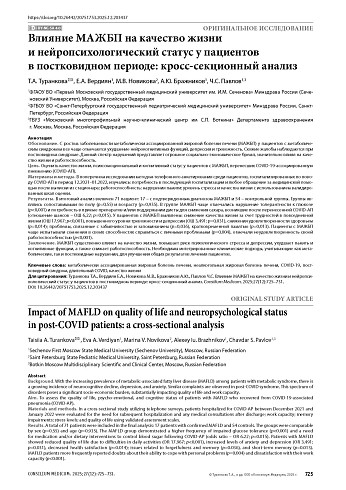
Влияние МАЖБП на качество жизни и нейропсихологический статус у пациентов в постковидном периоде: кросс-секционный анализ
Влияние МАЖБП на качество жизни и нейропсихологический статус у пациентов в постковидном периоде: кросс-секционный анализ
Туранкова Т.А., Вердиян Е.А., Новикова М.В., Бражников А.Ю., Павлов Ч.С. Влияние МАЖБП на качество жизни и нейропсихологический статус у пациентов в постковидном периоде: кросс-секционный анализ. Consilium Medicum. 2025;27(12):725–731. DOI: 10.26442/20751753.2025.12.203437
________________________________________________
Материалы доступны только для специалистов сферы здравоохранения.
Чтобы посмотреть материал полностью
Авторизуйтесь
или зарегистрируйтесь.
Аннотация
Обоснование. С ростом заболеваемости метаболически ассоциированной жировой болезни печени (МАЖБП) у пациентов с метаболическим синдромом все чаще отмечаются ухудшение нейрокогнитивных функций, депрессия и тревожность. Схожие жалобы наблюдаются при постковидном синдроме. Данный спектр нарушений представляет огромное социально-экономическое бремя, значительно влияя на качество жизни и работоспособность.
Цель. Оценить качество жизни, психоэмоциональный и когнитивный статус у пациентов с МАЖБП, перенесших COVID-19-ассоциированную пневмонию (COVID-АП).
Материалы и методы. В поперечном исследовании методом телефонного анкетирования среди пациентов, госпитализированных по поводу COVID-АП в период 12.2021–01.2022, изучались: потребность в последующей госпитализации и любое обращение за медицинской помощью после выписки из стационара; работоспособность; нарушения памяти; уровень стресса и качества жизни с использованием валидированных шкал оценки.
Результаты. В итоговый анализ включен 71 пациент: 17 – с подтвержденным диагнозом МАЖБП и 54 – контрольной группы. Группы являлись сопоставимыми по полу (p=0,55) и возрасту (p=0,935). В группе МАЖБП чаще отмечались нарушение толерантности к глюкозе (p<0,001) и потребность в приеме препаратов и/или поддержании диеты для снижения сахара, возникшие после перенесенной COVID-АП (отношение шансов – ОШ 6,22; p=0,015). У пациентов с МАЖБП выявлены: снижение качества жизни за счет трудностей в повседневной жизни (ОШ 17,967; p<0,001), повышенного уровня тревожности и депрессии (ОШ 3,491; p=0,031), снижения удовлетворенности здоровьем (р=0,014); проблемы, связанные с забывчивостью и запоминанием (p=0,036), кратковременной памятью (p=0,013). Пациенты с МАЖБП чаще испытывали сомнения в своих способностях справиться с личными проблемами (p=0,004), отмечали неудовлетворенность своей работоспособностью (p<0,001).
Заключение. МАЖБП существенно влияет на качество жизни, повышает риск психологического стресса и депрессии, ухудшает память и когнитивные функции, а также снижает работоспособность. Необходимы интегрированные клинические подходы, учитывающие как метаболические, так и постковидные нарушения, для улучшения общих результатов лечения пациентов.
Ключевые слова: метаболически ассоциированная жировая болезнь печени, неалкогольная жировая болезнь печени, COVID-19, постковидный синдром, длительный COVID, качество жизни
Aim. To assess the quality of life, psycho-emotional, and cognitive status of patients with MAFLD who recovered from COVID-19-associated pneumonia (COVID-AP).
Materials and methods. In a cross-sectional study utilizing telephone surveys, patients hospitalized for COVID-AP between December 2021 and January 2022 were evaluated for the need for subsequent hospitalization and any medical consultations after discharge; work capacity; memory impairments; stress levels; and quality of life using validated assessment scales.
Results. A total of 71 patients were included in the final analysis: 17 patients with confirmed MAFLD and 54 controls. The groups were comparable by sex (p=0.55) and age (p=0.935). The MAFLD group demonstrated a higher frequency of impaired glucose tolerance (p<0.001) and a need for medication and/or dietary interventions to control blood sugar following COVID-AP (odds ratio – OR 6.22; p=0.015). Patients with MAFLD showed reduced quality of life due to difficulties in daily activities (OR 17.967; p<0.001), increased levels of anxiety and depression (OR 3.491; p=0.031), decreased health satisfaction (p=0.014); issues related to forgetfulness and memory (p=0.036), and short-term memory (p=0.013). MAFLD patients more frequently reported doubts about their ability to cope with personal problems (p=0.004) and dissatisfaction with their work capacity (p<0.001).
Conclusion. MAFLD significantly impairs quality of life, increases the risk of psychological stress and depression, worsens memory and cognitive functions, and reduces work capacity. Integrated clinical approaches addressing both metabolic and post-COVID complications are necessary to improve overall patient outcomes.
Keywords: metabolic-associated fatty liver disease, non-alcoholic fatty liver disease, COVID-19, post-COVID syndrome, long COVID, quality of life
Цель. Оценить качество жизни, психоэмоциональный и когнитивный статус у пациентов с МАЖБП, перенесших COVID-19-ассоциированную пневмонию (COVID-АП).
Материалы и методы. В поперечном исследовании методом телефонного анкетирования среди пациентов, госпитализированных по поводу COVID-АП в период 12.2021–01.2022, изучались: потребность в последующей госпитализации и любое обращение за медицинской помощью после выписки из стационара; работоспособность; нарушения памяти; уровень стресса и качества жизни с использованием валидированных шкал оценки.
Результаты. В итоговый анализ включен 71 пациент: 17 – с подтвержденным диагнозом МАЖБП и 54 – контрольной группы. Группы являлись сопоставимыми по полу (p=0,55) и возрасту (p=0,935). В группе МАЖБП чаще отмечались нарушение толерантности к глюкозе (p<0,001) и потребность в приеме препаратов и/или поддержании диеты для снижения сахара, возникшие после перенесенной COVID-АП (отношение шансов – ОШ 6,22; p=0,015). У пациентов с МАЖБП выявлены: снижение качества жизни за счет трудностей в повседневной жизни (ОШ 17,967; p<0,001), повышенного уровня тревожности и депрессии (ОШ 3,491; p=0,031), снижения удовлетворенности здоровьем (р=0,014); проблемы, связанные с забывчивостью и запоминанием (p=0,036), кратковременной памятью (p=0,013). Пациенты с МАЖБП чаще испытывали сомнения в своих способностях справиться с личными проблемами (p=0,004), отмечали неудовлетворенность своей работоспособностью (p<0,001).
Заключение. МАЖБП существенно влияет на качество жизни, повышает риск психологического стресса и депрессии, ухудшает память и когнитивные функции, а также снижает работоспособность. Необходимы интегрированные клинические подходы, учитывающие как метаболические, так и постковидные нарушения, для улучшения общих результатов лечения пациентов.
Ключевые слова: метаболически ассоциированная жировая болезнь печени, неалкогольная жировая болезнь печени, COVID-19, постковидный синдром, длительный COVID, качество жизни
________________________________________________
Aim. To assess the quality of life, psycho-emotional, and cognitive status of patients with MAFLD who recovered from COVID-19-associated pneumonia (COVID-AP).
Materials and methods. In a cross-sectional study utilizing telephone surveys, patients hospitalized for COVID-AP between December 2021 and January 2022 were evaluated for the need for subsequent hospitalization and any medical consultations after discharge; work capacity; memory impairments; stress levels; and quality of life using validated assessment scales.
Results. A total of 71 patients were included in the final analysis: 17 patients with confirmed MAFLD and 54 controls. The groups were comparable by sex (p=0.55) and age (p=0.935). The MAFLD group demonstrated a higher frequency of impaired glucose tolerance (p<0.001) and a need for medication and/or dietary interventions to control blood sugar following COVID-AP (odds ratio – OR 6.22; p=0.015). Patients with MAFLD showed reduced quality of life due to difficulties in daily activities (OR 17.967; p<0.001), increased levels of anxiety and depression (OR 3.491; p=0.031), decreased health satisfaction (p=0.014); issues related to forgetfulness and memory (p=0.036), and short-term memory (p=0.013). MAFLD patients more frequently reported doubts about their ability to cope with personal problems (p=0.004) and dissatisfaction with their work capacity (p<0.001).
Conclusion. MAFLD significantly impairs quality of life, increases the risk of psychological stress and depression, worsens memory and cognitive functions, and reduces work capacity. Integrated clinical approaches addressing both metabolic and post-COVID complications are necessary to improve overall patient outcomes.
Keywords: metabolic-associated fatty liver disease, non-alcoholic fatty liver disease, COVID-19, post-COVID syndrome, long COVID, quality of life
Полный текст
Список литературы
1. Райхельсон К.Л., Маевская М.В., Жаркова М.С., и др. Жировая болезнь печени: новая номенклатура и ее адаптация в Российской Федерации. Российский журнал гастроэнтерологии, гепатологии, колопроктологии. 2024;34(2):35-44 [Raikhelson KL, Maevskaya MV, Zharkova MS, et al. Steatotic Liver Disease: New Nomenclature and Its Localization in the Russian Federation. Russian Journal of Gastroenterology, Hepatology, Coloproctology. 2024;34(2):35-44 (in Russian)]. DOI:10.22416/1382-4376-2024-961
2. Said E, Fouad YM, Abo-Amer YEE, et al. Impact of Metabolic Associated Fatty Liver Disease on Health-Related Quality of Life. Benha Medical Journal. 2024;XXX. DOI:10.21608/bmfj.2024.289042.2078
3. Hwang T-I, Han A-L. Quality of Life in Adults with Metabolic Dysfunction-Associated Fatty Liver Disease. Int J Environ Res Public Health. 2021;18(24):13145. DOI:10.3390/ijerph182413145
4. Huang R, Fan J-G, Shi J-P, et al. Health-related quality of life in Chinese population with non-alcoholic fatty liver disease: a national multicenter survey. Health Qual Life Outcomes. 2021;19:140. DOI:10.1186/s12955-021-01778-w
5. Samala N, Desai A, Vilar-Gomez E, et al. Decreased Quality of Life Is Significantly Associated With Body Composition in Patients With Nonalcoholic Fatty Liver Disease. Clin Gastroenterol Hepatol. 2020;18(13):2980-8.e4. DOI:10.1016/j.cgh.2020.04.046
6. Younossi ZM, Henry L. Epidemiology of NAFLD – Focus on diabetes. Diabetes Res Clin Pract. 2024;210:111648. DOI:10.1016/j.diabres.2024.111648
7. Papagiouvanni I, Kotoulas S-C, Pataka A, et al. COVID-19 and liver injury: An ongoing challenge. World J Gastroenterol. 2023;29(2):257-71. DOI:10.3748/wjg.v29.i2.257
8. Yang L, Xie X, Tu Z, et al. The signal pathways and treatment of cytokine storm in COVID-19. Signal Transduct Target Ther. 2021;6(1):255. DOI:10.1038/s41392-021-00679-0
9. Borczuk AC, Yantiss RK. The pathogenesis of coronavirus-19 disease. J Biomed Sci. 2022;29(1):87. DOI:10.1186/s12929-022-00872-5
10. Lamadrid P, Alonso-Peña M, San Segundo D, et al. Innate and Adaptive Immunity Alterations in Metabolic Associated Fatty Liver Disease and Its Implication in COVID-19 Severity. Front Immunol. 2021;12:692455. DOI:10.3389/fimmu.2021.692455
11. Qi R-B, Wu Z-H. Association between COVID-19 and chronic liver disease: Mechanism, diagnosis, damage, and treatment. World J Virol. 2023;12(1):22-9. DOI:10.5501/wjv.v12.i1.22
12. WHOQOL-BREF. The World Health Organization. Available at: https://www.who.int/tools/whoqol/whoqol-100. Accessed: 08.09.2024.
13. Zawilska JB, Kuczyńska K. Psychiatric and neurological complications of long COVID. J Psychiatr Res. 2022;156:349-60. DOI:10.1016/j.jpsychires.2022.10.045
14. Beyer S, Haufe S, Meike D, et al. Post-COVID-19 syndrome: Physical capacity, fatigue and quality of life. PLoS One. 2023;18(10):e0292928. DOI:10.1371/journal.pone.0292928
15. Kwon J, Milne R, Rayner C, et al. Impact of Long COVID on productivity and informal caregiving. Eur J Health Econ. 2024;25(7):1095-115. DOI:10.1007/s10198-023-01653-z
16. Davis HE, McCorkell L, Vogel JM, Topol EJ. Long COVID: major findings, mechanisms and recommendations. Nat Rev Microbiol. 2023;21(3):133-46. DOI:10.1038/s41579-022-00846-2
17. Peng P, Wang Y, Li Z, et al. A network analysis of the long-term quality of life and mental distress of COVID-19 survivors 1 year after hospital discharge. Front Public Health. 2023;11:1184282. DOI:10.3389/fpubh.2023.1184282
18. Shea S, Lionis C, Kite C, et al. Non-alcoholic fatty liver disease and coexisting depression, anxiety and/or stress in adults: a systematic review and meta-analysis. Front Endocrinol (Lausanne). 2024;15:1326541. DOI:10.3389/fendo.2024.1127250
19. Leehr EJ, Krohmer K, Schag K, et al. Emotion regulation model in binge eating disorder and obesity – a systematic review. Neurosci Biobehav Rev. 2015;49:125-34. DOI:10.1016/j.neubiorev.2014.12.017
20. Brodosi L, Stecchi M, Musio A, et al. Anxiety and depression in metabolic-associated steatotic liver disease: relation with socio-demographic features and liver disease severity. Acta Diabetol. 2024;61(8):1041-51. DOI:10.1007/s00592-024-02124-z
21. Gonzalez JS, Peyrot M, McCarl LA, et al. Depression and Diabetes Treatment Nonadherence: A Meta-Analysis. Diabetes Care. 2008;31(12):2398-403. DOI:10.2337/dc08-1341
22. García-Carvajal MJJ, Cano-Contreras AD, Francisco MR, et al. Changes in physical activity and its impact on MAFLD during the COVID-19 pandemic. Ann Hepatol. 2022;27:100687. DOI:10.1016/j.aohep.2022.100687
23. Туранкова Т.А., Бражников А.Ю., Мороз Н.Г., и др. Внедрение в клиническую практику алгоритма диагностики стеатоза печени у пациентов с вирусной пневмонией. Терапевтический архив. 2025;97(8):704-10 [Turankova TA, Brazhnikov AIu, Moroz NG, et al. The introduction into clinical practice of an algorithm for the diagnosis of liver steatosis in patients with viral pneumonia. Terapevticheskii Arkhiv (Ter. Arkh.). 2025;97(8):704-10 (in Russian)]. DOI:10.26442/00403660.2025.08.203365
24. Vale FAC, Balieiro-Jr AP, Silva-Filho JH. Memory complaint scale (MCS): Proposed tool for active systematic search. Dement Neuropsychol. 2012;6(4):212-8. DOI:10.1590/S1980-57642012DN06040006
25. Warttig SL, Forshaw MJ, South J, White AK. New, normative, English-sample data for the Short Form Perceived Stress Scale (PSS-4). J Health Psychol. 2013;18(12):1617-28. DOI:10.1177/1359105313508346
26. Herdman M, Gudex C, Lloyd A, et al. Development and preliminary testing of the new five-level version of EQ-5D (EQ-5D-5L). Qual Life Res. 2011;20(10):1727-36. DOI:10.1007/s11136-011-9903-x
27. Булгакова С.В., Долгих Ю.А., Шаронова Л.А., и др. Современные аспекты терапии метаболически ассоциированной жировой болезни печени у пациентов с сахарным диабетом 2-го типа. Медицинский Совет. 2024;(16):184-92 [Bulgakova SV, Dolgikh YA, Sharonova LA, et al. Modern aspects of therapy of metabolic associated liver disease in patients with type 2 diabetes mellitus. Medical Council. 2024;(16):184-92 (in Russian)]. DOI:10.21518/ms2024-414
28. Shih C-I, Wu K-T, Hsieh M-H, et al. Severity of fatty liver is highly correlated with the risk of hypertension and diabetes: a cross-sectional and longitudinal cohort study. Hepatol Int. 2024;18(1):138-54. DOI:10.1007/s12072-023-10533-
29. Emiroglu C, Dicle M, Yesiloglu C, et al. Association between newly diagnosed hyperglycemia/diabetes mellitus, atherogenic index of plasma and obesity in post-COVID-19 syndrome patients. Endocrine. 2024;84(2):470-80. DOI:10.1007/s12020-023-03425-3
30. Harding JL, Oviedo SA, Ali MK, et al. The bidirectional association between diabetes and long-COVID-19 – A systematic review. Diabetes Res Clin Pract. 2023;195:110202. DOI:10.1016/j.diabres.2023.109936
31. Seighali N, Abdollahi A, Shafiee A, et al. The global prevalence of depression, anxiety, and sleep disorder among patients coping with Post COVID-19 syndrome (long COVID): a systematic review and meta-analysis. BMC Psychiatry. 2024;24:105. DOI:10.1186/s12888-024-04158-8
32. Liang W, Zhong K, Lai T, et al. Causal relationship between depression and metabolic dysfunction-associated steatotic liver disease: a bidirectional Mendelian randomized study. Front Psychiatry. 2024;15:1341791. DOI:10.3389/fpsyt.2024.1094878
33. Ida FS, Ferreira HP, Vasconcelos AKM, et al. Post-COVID-19 syndrome: persistent symptoms, functional impact, quality of life, return to work, and indirect costs – a prospective case study 12 months after COVID-19 infection. Cad Saude Publica. 2024;40:e00022623. DOI:10.1590/0102-311X00022623
34. Kohn L, Dauvrin M, Detollenaere J, et al. Long COVID and return to work: a qualitative study. Occup Med (Lond). 2024;74(1):29-36. DOI:10.1093/occmed/kqac138
35. Younossi ZM, AlQahtani SA, Funuyet-Salas J, et al. The impact of stigma on quality of life and liver disease burden among patients with nonalcoholic fatty liver disease. JHEP Rep. 2024;6(7):101066. DOI:10.1016/j.jhepr.2024.101066
2. Said E, Fouad YM, Abo-Amer YEE, et al. Impact of Metabolic Associated Fatty Liver Disease on Health-Related Quality of Life. Benha Medical Journal. 2024;XXX. DOI:10.21608/bmfj.2024.289042.2078
3. Hwang T-I, Han A-L. Quality of Life in Adults with Metabolic Dysfunction-Associated Fatty Liver Disease. Int J Environ Res Public Health. 2021;18(24):13145. DOI:10.3390/ijerph182413145
4. Huang R, Fan J-G, Shi J-P, et al. Health-related quality of life in Chinese population with non-alcoholic fatty liver disease: a national multicenter survey. Health Qual Life Outcomes. 2021;19:140. DOI:10.1186/s12955-021-01778-w
5. Samala N, Desai A, Vilar-Gomez E, et al. Decreased Quality of Life Is Significantly Associated With Body Composition in Patients With Nonalcoholic Fatty Liver Disease. Clin Gastroenterol Hepatol. 2020;18(13):2980-8.e4. DOI:10.1016/j.cgh.2020.04.046
6. Younossi ZM, Henry L. Epidemiology of NAFLD – Focus on diabetes. Diabetes Res Clin Pract. 2024;210:111648. DOI:10.1016/j.diabres.2024.111648
7. Papagiouvanni I, Kotoulas S-C, Pataka A, et al. COVID-19 and liver injury: An ongoing challenge. World J Gastroenterol. 2023;29(2):257-71. DOI:10.3748/wjg.v29.i2.257
8. Yang L, Xie X, Tu Z, et al. The signal pathways and treatment of cytokine storm in COVID-19. Signal Transduct Target Ther. 2021;6(1):255. DOI:10.1038/s41392-021-00679-0
9. Borczuk AC, Yantiss RK. The pathogenesis of coronavirus-19 disease. J Biomed Sci. 2022;29(1):87. DOI:10.1186/s12929-022-00872-5
10. Lamadrid P, Alonso-Peña M, San Segundo D, et al. Innate and Adaptive Immunity Alterations in Metabolic Associated Fatty Liver Disease and Its Implication in COVID-19 Severity. Front Immunol. 2021;12:692455. DOI:10.3389/fimmu.2021.692455
11. Qi R-B, Wu Z-H. Association between COVID-19 and chronic liver disease: Mechanism, diagnosis, damage, and treatment. World J Virol. 2023;12(1):22-9. DOI:10.5501/wjv.v12.i1.22
12. WHOQOL-BREF. The World Health Organization. Available at: https://www.who.int/tools/whoqol/whoqol-100. Accessed: 08.09.2024.
13. Zawilska JB, Kuczyńska K. Psychiatric and neurological complications of long COVID. J Psychiatr Res. 2022;156:349-60. DOI:10.1016/j.jpsychires.2022.10.045
14. Beyer S, Haufe S, Meike D, et al. Post-COVID-19 syndrome: Physical capacity, fatigue and quality of life. PLoS One. 2023;18(10):e0292928. DOI:10.1371/journal.pone.0292928
15. Kwon J, Milne R, Rayner C, et al. Impact of Long COVID on productivity and informal caregiving. Eur J Health Econ. 2024;25(7):1095-115. DOI:10.1007/s10198-023-01653-z
16. Davis HE, McCorkell L, Vogel JM, Topol EJ. Long COVID: major findings, mechanisms and recommendations. Nat Rev Microbiol. 2023;21(3):133-46. DOI:10.1038/s41579-022-00846-2
17. Peng P, Wang Y, Li Z, et al. A network analysis of the long-term quality of life and mental distress of COVID-19 survivors 1 year after hospital discharge. Front Public Health. 2023;11:1184282. DOI:10.3389/fpubh.2023.1184282
18. Shea S, Lionis C, Kite C, et al. Non-alcoholic fatty liver disease and coexisting depression, anxiety and/or stress in adults: a systematic review and meta-analysis. Front Endocrinol (Lausanne). 2024;15:1326541. DOI:10.3389/fendo.2024.1127250
19. Leehr EJ, Krohmer K, Schag K, et al. Emotion regulation model in binge eating disorder and obesity – a systematic review. Neurosci Biobehav Rev. 2015;49:125-34. DOI:10.1016/j.neubiorev.2014.12.017
20. Brodosi L, Stecchi M, Musio A, et al. Anxiety and depression in metabolic-associated steatotic liver disease: relation with socio-demographic features and liver disease severity. Acta Diabetol. 2024;61(8):1041-51. DOI:10.1007/s00592-024-02124-z
21. Gonzalez JS, Peyrot M, McCarl LA, et al. Depression and Diabetes Treatment Nonadherence: A Meta-Analysis. Diabetes Care. 2008;31(12):2398-403. DOI:10.2337/dc08-1341
22. García-Carvajal MJJ, Cano-Contreras AD, Francisco MR, et al. Changes in physical activity and its impact on MAFLD during the COVID-19 pandemic. Ann Hepatol. 2022;27:100687. DOI:10.1016/j.aohep.2022.100687
23. Turankova TA, Brazhnikov AIu, Moroz NG, et al. The introduction into clinical practice of an algorithm for the diagnosis of liver steatosis in patients with viral pneumonia. Terapevticheskii Arkhiv (Ter. Arkh.). 2025;97(8):704-10 (in Russian). DOI:10.26442/00403660.2025.08.203365
24. Vale FAC, Balieiro-Jr AP, Silva-Filho JH. Memory complaint scale (MCS): Proposed tool for active systematic search. Dement Neuropsychol. 2012;6(4):212-8. DOI:10.1590/S1980-57642012DN06040006
25. Warttig SL, Forshaw MJ, South J, White AK. New, normative, English-sample data for the Short Form Perceived Stress Scale (PSS-4). J Health Psychol. 2013;18(12):1617-28. DOI:10.1177/1359105313508346
26. Herdman M, Gudex C, Lloyd A, et al. Development and preliminary testing of the new five-level version of EQ-5D (EQ-5D-5L). Qual Life Res. 2011;20(10):1727-36. DOI:10.1007/s11136-011-9903-x
27. Bulgakova SV, Dolgikh YA, Sharonova LA, et al. Modern aspects of therapy of metabolic associated liver disease in patients with type 2 diabetes mellitus. Medical Council. 2024;(16):184-92 (in Russian). DOI:10.21518/ms2024-414
28. Shih C-I, Wu K-T, Hsieh M-H, et al. Severity of fatty liver is highly correlated with the risk of hypertension and diabetes: a cross-sectional and longitudinal cohort study. Hepatol Int. 2024;18(1):138-54. DOI:10.1007/s12072-023-10533-
29. Emiroglu C, Dicle M, Yesiloglu C, et al. Association between newly diagnosed hyperglycemia/diabetes mellitus, atherogenic index of plasma and obesity in post-COVID-19 syndrome patients. Endocrine. 2024;84(2):470-80. DOI:10.1007/s12020-023-03425-3
30. Harding JL, Oviedo SA, Ali MK, et al. The bidirectional association between diabetes and long-COVID-19 – A systematic review. Diabetes Res Clin Pract. 2023;195:110202. DOI:10.1016/j.diabres.2023.109936
31. Seighali N, Abdollahi A, Shafiee A, et al. The global prevalence of depression, anxiety, and sleep disorder among patients coping with Post COVID-19 syndrome (long COVID): a systematic review and meta-analysis. BMC Psychiatry. 2024;24:105. DOI:10.1186/s12888-024-04158-8
32. Liang W, Zhong K, Lai T, et al. Causal relationship between depression and metabolic dysfunction-associated steatotic liver disease: a bidirectional Mendelian randomized study. Front Psychiatry. 2024;15:1341791. DOI:10.3389/fpsyt.2024.1094878
33. Ida FS, Ferreira HP, Vasconcelos AKM, et al. Post-COVID-19 syndrome: persistent symptoms, functional impact, quality of life, return to work, and indirect costs – a prospective case study 12 months after COVID-19 infection. Cad Saude Publica. 2024;40:e00022623. DOI:10.1590/0102-311X00022623
34. Kohn L, Dauvrin M, Detollenaere J, et al. Long COVID and return to work: a qualitative study. Occup Med (Lond). 2024;74(1):29-36. DOI:10.1093/occmed/kqac138
35. Younossi ZM, AlQahtani SA, Funuyet-Salas J, et al. The impact of stigma on quality of life and liver disease burden among patients with nonalcoholic fatty liver disease. JHEP Rep. 2024;6(7):101066. DOI:10.1016/j.jhepr.2024.101066
2. Said E, Fouad YM, Abo-Amer YEE, et al. Impact of Metabolic Associated Fatty Liver Disease on Health-Related Quality of Life. Benha Medical Journal. 2024;XXX. DOI:10.21608/bmfj.2024.289042.2078
3. Hwang T-I, Han A-L. Quality of Life in Adults with Metabolic Dysfunction-Associated Fatty Liver Disease. Int J Environ Res Public Health. 2021;18(24):13145. DOI:10.3390/ijerph182413145
4. Huang R, Fan J-G, Shi J-P, et al. Health-related quality of life in Chinese population with non-alcoholic fatty liver disease: a national multicenter survey. Health Qual Life Outcomes. 2021;19:140. DOI:10.1186/s12955-021-01778-w
5. Samala N, Desai A, Vilar-Gomez E, et al. Decreased Quality of Life Is Significantly Associated With Body Composition in Patients With Nonalcoholic Fatty Liver Disease. Clin Gastroenterol Hepatol. 2020;18(13):2980-8.e4. DOI:10.1016/j.cgh.2020.04.046
6. Younossi ZM, Henry L. Epidemiology of NAFLD – Focus on diabetes. Diabetes Res Clin Pract. 2024;210:111648. DOI:10.1016/j.diabres.2024.111648
7. Papagiouvanni I, Kotoulas S-C, Pataka A, et al. COVID-19 and liver injury: An ongoing challenge. World J Gastroenterol. 2023;29(2):257-71. DOI:10.3748/wjg.v29.i2.257
8. Yang L, Xie X, Tu Z, et al. The signal pathways and treatment of cytokine storm in COVID-19. Signal Transduct Target Ther. 2021;6(1):255. DOI:10.1038/s41392-021-00679-0
9. Borczuk AC, Yantiss RK. The pathogenesis of coronavirus-19 disease. J Biomed Sci. 2022;29(1):87. DOI:10.1186/s12929-022-00872-5
10. Lamadrid P, Alonso-Peña M, San Segundo D, et al. Innate and Adaptive Immunity Alterations in Metabolic Associated Fatty Liver Disease and Its Implication in COVID-19 Severity. Front Immunol. 2021;12:692455. DOI:10.3389/fimmu.2021.692455
11. Qi R-B, Wu Z-H. Association between COVID-19 and chronic liver disease: Mechanism, diagnosis, damage, and treatment. World J Virol. 2023;12(1):22-9. DOI:10.5501/wjv.v12.i1.22
12. WHOQOL-BREF. The World Health Organization. Available at: https://www.who.int/tools/whoqol/whoqol-100. Accessed: 08.09.2024.
13. Zawilska JB, Kuczyńska K. Psychiatric and neurological complications of long COVID. J Psychiatr Res. 2022;156:349-60. DOI:10.1016/j.jpsychires.2022.10.045
14. Beyer S, Haufe S, Meike D, et al. Post-COVID-19 syndrome: Physical capacity, fatigue and quality of life. PLoS One. 2023;18(10):e0292928. DOI:10.1371/journal.pone.0292928
15. Kwon J, Milne R, Rayner C, et al. Impact of Long COVID on productivity and informal caregiving. Eur J Health Econ. 2024;25(7):1095-115. DOI:10.1007/s10198-023-01653-z
16. Davis HE, McCorkell L, Vogel JM, Topol EJ. Long COVID: major findings, mechanisms and recommendations. Nat Rev Microbiol. 2023;21(3):133-46. DOI:10.1038/s41579-022-00846-2
17. Peng P, Wang Y, Li Z, et al. A network analysis of the long-term quality of life and mental distress of COVID-19 survivors 1 year after hospital discharge. Front Public Health. 2023;11:1184282. DOI:10.3389/fpubh.2023.1184282
18. Shea S, Lionis C, Kite C, et al. Non-alcoholic fatty liver disease and coexisting depression, anxiety and/or stress in adults: a systematic review and meta-analysis. Front Endocrinol (Lausanne). 2024;15:1326541. DOI:10.3389/fendo.2024.1127250
19. Leehr EJ, Krohmer K, Schag K, et al. Emotion regulation model in binge eating disorder and obesity – a systematic review. Neurosci Biobehav Rev. 2015;49:125-34. DOI:10.1016/j.neubiorev.2014.12.017
20. Brodosi L, Stecchi M, Musio A, et al. Anxiety and depression in metabolic-associated steatotic liver disease: relation with socio-demographic features and liver disease severity. Acta Diabetol. 2024;61(8):1041-51. DOI:10.1007/s00592-024-02124-z
21. Gonzalez JS, Peyrot M, McCarl LA, et al. Depression and Diabetes Treatment Nonadherence: A Meta-Analysis. Diabetes Care. 2008;31(12):2398-403. DOI:10.2337/dc08-1341
22. García-Carvajal MJJ, Cano-Contreras AD, Francisco MR, et al. Changes in physical activity and its impact on MAFLD during the COVID-19 pandemic. Ann Hepatol. 2022;27:100687. DOI:10.1016/j.aohep.2022.100687
23. Туранкова Т.А., Бражников А.Ю., Мороз Н.Г., и др. Внедрение в клиническую практику алгоритма диагностики стеатоза печени у пациентов с вирусной пневмонией. Терапевтический архив. 2025;97(8):704-10 [Turankova TA, Brazhnikov AIu, Moroz NG, et al. The introduction into clinical practice of an algorithm for the diagnosis of liver steatosis in patients with viral pneumonia. Terapevticheskii Arkhiv (Ter. Arkh.). 2025;97(8):704-10 (in Russian)]. DOI:10.26442/00403660.2025.08.203365
24. Vale FAC, Balieiro-Jr AP, Silva-Filho JH. Memory complaint scale (MCS): Proposed tool for active systematic search. Dement Neuropsychol. 2012;6(4):212-8. DOI:10.1590/S1980-57642012DN06040006
25. Warttig SL, Forshaw MJ, South J, White AK. New, normative, English-sample data for the Short Form Perceived Stress Scale (PSS-4). J Health Psychol. 2013;18(12):1617-28. DOI:10.1177/1359105313508346
26. Herdman M, Gudex C, Lloyd A, et al. Development and preliminary testing of the new five-level version of EQ-5D (EQ-5D-5L). Qual Life Res. 2011;20(10):1727-36. DOI:10.1007/s11136-011-9903-x
27. Булгакова С.В., Долгих Ю.А., Шаронова Л.А., и др. Современные аспекты терапии метаболически ассоциированной жировой болезни печени у пациентов с сахарным диабетом 2-го типа. Медицинский Совет. 2024;(16):184-92 [Bulgakova SV, Dolgikh YA, Sharonova LA, et al. Modern aspects of therapy of metabolic associated liver disease in patients with type 2 diabetes mellitus. Medical Council. 2024;(16):184-92 (in Russian)]. DOI:10.21518/ms2024-414
28. Shih C-I, Wu K-T, Hsieh M-H, et al. Severity of fatty liver is highly correlated with the risk of hypertension and diabetes: a cross-sectional and longitudinal cohort study. Hepatol Int. 2024;18(1):138-54. DOI:10.1007/s12072-023-10533-
29. Emiroglu C, Dicle M, Yesiloglu C, et al. Association between newly diagnosed hyperglycemia/diabetes mellitus, atherogenic index of plasma and obesity in post-COVID-19 syndrome patients. Endocrine. 2024;84(2):470-80. DOI:10.1007/s12020-023-03425-3
30. Harding JL, Oviedo SA, Ali MK, et al. The bidirectional association between diabetes and long-COVID-19 – A systematic review. Diabetes Res Clin Pract. 2023;195:110202. DOI:10.1016/j.diabres.2023.109936
31. Seighali N, Abdollahi A, Shafiee A, et al. The global prevalence of depression, anxiety, and sleep disorder among patients coping with Post COVID-19 syndrome (long COVID): a systematic review and meta-analysis. BMC Psychiatry. 2024;24:105. DOI:10.1186/s12888-024-04158-8
32. Liang W, Zhong K, Lai T, et al. Causal relationship between depression and metabolic dysfunction-associated steatotic liver disease: a bidirectional Mendelian randomized study. Front Psychiatry. 2024;15:1341791. DOI:10.3389/fpsyt.2024.1094878
33. Ida FS, Ferreira HP, Vasconcelos AKM, et al. Post-COVID-19 syndrome: persistent symptoms, functional impact, quality of life, return to work, and indirect costs – a prospective case study 12 months after COVID-19 infection. Cad Saude Publica. 2024;40:e00022623. DOI:10.1590/0102-311X00022623
34. Kohn L, Dauvrin M, Detollenaere J, et al. Long COVID and return to work: a qualitative study. Occup Med (Lond). 2024;74(1):29-36. DOI:10.1093/occmed/kqac138
35. Younossi ZM, AlQahtani SA, Funuyet-Salas J, et al. The impact of stigma on quality of life and liver disease burden among patients with nonalcoholic fatty liver disease. JHEP Rep. 2024;6(7):101066. DOI:10.1016/j.jhepr.2024.101066
________________________________________________
2. Said E, Fouad YM, Abo-Amer YEE, et al. Impact of Metabolic Associated Fatty Liver Disease on Health-Related Quality of Life. Benha Medical Journal. 2024;XXX. DOI:10.21608/bmfj.2024.289042.2078
3. Hwang T-I, Han A-L. Quality of Life in Adults with Metabolic Dysfunction-Associated Fatty Liver Disease. Int J Environ Res Public Health. 2021;18(24):13145. DOI:10.3390/ijerph182413145
4. Huang R, Fan J-G, Shi J-P, et al. Health-related quality of life in Chinese population with non-alcoholic fatty liver disease: a national multicenter survey. Health Qual Life Outcomes. 2021;19:140. DOI:10.1186/s12955-021-01778-w
5. Samala N, Desai A, Vilar-Gomez E, et al. Decreased Quality of Life Is Significantly Associated With Body Composition in Patients With Nonalcoholic Fatty Liver Disease. Clin Gastroenterol Hepatol. 2020;18(13):2980-8.e4. DOI:10.1016/j.cgh.2020.04.046
6. Younossi ZM, Henry L. Epidemiology of NAFLD – Focus on diabetes. Diabetes Res Clin Pract. 2024;210:111648. DOI:10.1016/j.diabres.2024.111648
7. Papagiouvanni I, Kotoulas S-C, Pataka A, et al. COVID-19 and liver injury: An ongoing challenge. World J Gastroenterol. 2023;29(2):257-71. DOI:10.3748/wjg.v29.i2.257
8. Yang L, Xie X, Tu Z, et al. The signal pathways and treatment of cytokine storm in COVID-19. Signal Transduct Target Ther. 2021;6(1):255. DOI:10.1038/s41392-021-00679-0
9. Borczuk AC, Yantiss RK. The pathogenesis of coronavirus-19 disease. J Biomed Sci. 2022;29(1):87. DOI:10.1186/s12929-022-00872-5
10. Lamadrid P, Alonso-Peña M, San Segundo D, et al. Innate and Adaptive Immunity Alterations in Metabolic Associated Fatty Liver Disease and Its Implication in COVID-19 Severity. Front Immunol. 2021;12:692455. DOI:10.3389/fimmu.2021.692455
11. Qi R-B, Wu Z-H. Association between COVID-19 and chronic liver disease: Mechanism, diagnosis, damage, and treatment. World J Virol. 2023;12(1):22-9. DOI:10.5501/wjv.v12.i1.22
12. WHOQOL-BREF. The World Health Organization. Available at: https://www.who.int/tools/whoqol/whoqol-100. Accessed: 08.09.2024.
13. Zawilska JB, Kuczyńska K. Psychiatric and neurological complications of long COVID. J Psychiatr Res. 2022;156:349-60. DOI:10.1016/j.jpsychires.2022.10.045
14. Beyer S, Haufe S, Meike D, et al. Post-COVID-19 syndrome: Physical capacity, fatigue and quality of life. PLoS One. 2023;18(10):e0292928. DOI:10.1371/journal.pone.0292928
15. Kwon J, Milne R, Rayner C, et al. Impact of Long COVID on productivity and informal caregiving. Eur J Health Econ. 2024;25(7):1095-115. DOI:10.1007/s10198-023-01653-z
16. Davis HE, McCorkell L, Vogel JM, Topol EJ. Long COVID: major findings, mechanisms and recommendations. Nat Rev Microbiol. 2023;21(3):133-46. DOI:10.1038/s41579-022-00846-2
17. Peng P, Wang Y, Li Z, et al. A network analysis of the long-term quality of life and mental distress of COVID-19 survivors 1 year after hospital discharge. Front Public Health. 2023;11:1184282. DOI:10.3389/fpubh.2023.1184282
18. Shea S, Lionis C, Kite C, et al. Non-alcoholic fatty liver disease and coexisting depression, anxiety and/or stress in adults: a systematic review and meta-analysis. Front Endocrinol (Lausanne). 2024;15:1326541. DOI:10.3389/fendo.2024.1127250
19. Leehr EJ, Krohmer K, Schag K, et al. Emotion regulation model in binge eating disorder and obesity – a systematic review. Neurosci Biobehav Rev. 2015;49:125-34. DOI:10.1016/j.neubiorev.2014.12.017
20. Brodosi L, Stecchi M, Musio A, et al. Anxiety and depression in metabolic-associated steatotic liver disease: relation with socio-demographic features and liver disease severity. Acta Diabetol. 2024;61(8):1041-51. DOI:10.1007/s00592-024-02124-z
21. Gonzalez JS, Peyrot M, McCarl LA, et al. Depression and Diabetes Treatment Nonadherence: A Meta-Analysis. Diabetes Care. 2008;31(12):2398-403. DOI:10.2337/dc08-1341
22. García-Carvajal MJJ, Cano-Contreras AD, Francisco MR, et al. Changes in physical activity and its impact on MAFLD during the COVID-19 pandemic. Ann Hepatol. 2022;27:100687. DOI:10.1016/j.aohep.2022.100687
23. Turankova TA, Brazhnikov AIu, Moroz NG, et al. The introduction into clinical practice of an algorithm for the diagnosis of liver steatosis in patients with viral pneumonia. Terapevticheskii Arkhiv (Ter. Arkh.). 2025;97(8):704-10 (in Russian). DOI:10.26442/00403660.2025.08.203365
24. Vale FAC, Balieiro-Jr AP, Silva-Filho JH. Memory complaint scale (MCS): Proposed tool for active systematic search. Dement Neuropsychol. 2012;6(4):212-8. DOI:10.1590/S1980-57642012DN06040006
25. Warttig SL, Forshaw MJ, South J, White AK. New, normative, English-sample data for the Short Form Perceived Stress Scale (PSS-4). J Health Psychol. 2013;18(12):1617-28. DOI:10.1177/1359105313508346
26. Herdman M, Gudex C, Lloyd A, et al. Development and preliminary testing of the new five-level version of EQ-5D (EQ-5D-5L). Qual Life Res. 2011;20(10):1727-36. DOI:10.1007/s11136-011-9903-x
27. Bulgakova SV, Dolgikh YA, Sharonova LA, et al. Modern aspects of therapy of metabolic associated liver disease in patients with type 2 diabetes mellitus. Medical Council. 2024;(16):184-92 (in Russian). DOI:10.21518/ms2024-414
28. Shih C-I, Wu K-T, Hsieh M-H, et al. Severity of fatty liver is highly correlated with the risk of hypertension and diabetes: a cross-sectional and longitudinal cohort study. Hepatol Int. 2024;18(1):138-54. DOI:10.1007/s12072-023-10533-
29. Emiroglu C, Dicle M, Yesiloglu C, et al. Association between newly diagnosed hyperglycemia/diabetes mellitus, atherogenic index of plasma and obesity in post-COVID-19 syndrome patients. Endocrine. 2024;84(2):470-80. DOI:10.1007/s12020-023-03425-3
30. Harding JL, Oviedo SA, Ali MK, et al. The bidirectional association between diabetes and long-COVID-19 – A systematic review. Diabetes Res Clin Pract. 2023;195:110202. DOI:10.1016/j.diabres.2023.109936
31. Seighali N, Abdollahi A, Shafiee A, et al. The global prevalence of depression, anxiety, and sleep disorder among patients coping with Post COVID-19 syndrome (long COVID): a systematic review and meta-analysis. BMC Psychiatry. 2024;24:105. DOI:10.1186/s12888-024-04158-8
32. Liang W, Zhong K, Lai T, et al. Causal relationship between depression and metabolic dysfunction-associated steatotic liver disease: a bidirectional Mendelian randomized study. Front Psychiatry. 2024;15:1341791. DOI:10.3389/fpsyt.2024.1094878
33. Ida FS, Ferreira HP, Vasconcelos AKM, et al. Post-COVID-19 syndrome: persistent symptoms, functional impact, quality of life, return to work, and indirect costs – a prospective case study 12 months after COVID-19 infection. Cad Saude Publica. 2024;40:e00022623. DOI:10.1590/0102-311X00022623
34. Kohn L, Dauvrin M, Detollenaere J, et al. Long COVID and return to work: a qualitative study. Occup Med (Lond). 2024;74(1):29-36. DOI:10.1093/occmed/kqac138
35. Younossi ZM, AlQahtani SA, Funuyet-Salas J, et al. The impact of stigma on quality of life and liver disease burden among patients with nonalcoholic fatty liver disease. JHEP Rep. 2024;6(7):101066. DOI:10.1016/j.jhepr.2024.101066
Авторы
Т.А. Туранкова*1, Е.А. Вердиян1, М.В. Новикова2, А.Ю. Бражников1, Ч.С. Павлов1,3
1ФГАОУ ВО «Первый Московский государственный медицинский университет им. И.М. Сеченова» Минздрава России (Сеченовский Университет), Москва, Российская Федерация
2ФГБОУ ВО «Санкт-Петербургский государственный педиатрический медицинский университет» Минздрава России, Санкт-Петербург, Российская Федерация
3ГБУЗ «Московский многопрофильный научно-клинический центр им С.П. Боткина» Департамента здравоохранения г. Москвы, Москва, Российская Федерация
*turankova_t_a@staff.sechenov.ru
1Sechenov First Moscow State Medical University (Sechenov University), Moscow, Russian Federation
2Saint Petersburg State Pediatric Medical University, Saint Petersburg, Russian Federation
3Botkin Moscow Multidisciplinary Scientific and Clinical Center, Moscow, Russian Federation
*turankova_t_a@staff.sechenov.ru
1ФГАОУ ВО «Первый Московский государственный медицинский университет им. И.М. Сеченова» Минздрава России (Сеченовский Университет), Москва, Российская Федерация
2ФГБОУ ВО «Санкт-Петербургский государственный педиатрический медицинский университет» Минздрава России, Санкт-Петербург, Российская Федерация
3ГБУЗ «Московский многопрофильный научно-клинический центр им С.П. Боткина» Департамента здравоохранения г. Москвы, Москва, Российская Федерация
*turankova_t_a@staff.sechenov.ru
________________________________________________
1Sechenov First Moscow State Medical University (Sechenov University), Moscow, Russian Federation
2Saint Petersburg State Pediatric Medical University, Saint Petersburg, Russian Federation
3Botkin Moscow Multidisciplinary Scientific and Clinical Center, Moscow, Russian Federation
*turankova_t_a@staff.sechenov.ru
Цель портала OmniDoctor – предоставление профессиональной информации врачам, провизорам и фармацевтам.