

Материалы доступны только для специалистов сферы здравоохранения.
Чтобы посмотреть материал полностью
Авторизуйтесь
или зарегистрируйтесь.
Антибиотикоассоциированная диарея: бояться или действовать?
Антибиотикоассоциированная диарея: бояться или действовать?
Плоскирева А.А., Голден Л.Б. Антибиотикоассоциированная диарея: бояться или действовать? Педиатрия (Прил. к журн. Consilium Medicum). 2017; 4: 67–70.
________________________________________________
Материалы доступны только для специалистов сферы здравоохранения.
Чтобы посмотреть материал полностью
Авторизуйтесь
или зарегистрируйтесь.
Аннотация
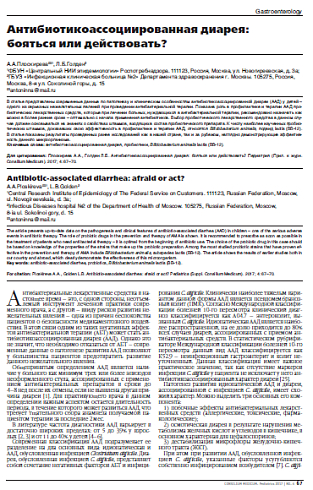
В статье представлены современные данные по патогенезу и клиническим особенностям антибиотикоассоциированной диареи (ААД) у детей – одного из серьезных нежелательных явлений при проведении антибактериальной терапии. Показана роль в профилактике и терапии ААД пробиотических лекарственных средств, которые при лечении больных, нуждающихся в антибактериальной терапии, рекомендовано назначать как можно в более ранние сроки – оптимально с начала применения антибиотиков. Выбор пробиотического лекарственного средства в данном случае должен основываться на знаниях о свойствах штаммов, входящих в состав пробиотического препарата. К числу наиболее изученных пробиотических штаммов, доказавших свою эффективность в профилактике и терапии ААД, относятся Bifidobacterium animalis, подвид lactis (BB-12). В статье показаны результаты проведенных ранее исследований как в нашей стране, так и за рубежом, наглядно демонстрирующие эффективность данного микроорганизма.
Ключевые слова: антибиотикоассоциированная диарея, пробиотики, Bifidobacterium animalis lactis (BB-12).
Key words: antibiotic-associated diarrhea, probiotics, Bifidobacterium animalis lactis (BB-12).
Ключевые слова: антибиотикоассоциированная диарея, пробиотики, Bifidobacterium animalis lactis (BB-12).
________________________________________________
Key words: antibiotic-associated diarrhea, probiotics, Bifidobacterium animalis lactis (BB-12).
Полный текст
Список литературы
1. Горелов А.В., Усенко Д.В. Современные подходы к профилактике антибиотикоассоциированной диареи у детей. Педиатрия (Прил. к журн. Consilium Medicum). 2005; 7 (2). / Gorelov A.V., Usenko D.V. Sovremennye podkhody k profilaktike antibiotikoassotsiirovannoi diarei u detei. Pediatrics (Suppl. Consilium Medicum). 2005; 7 (2). [in Russian]
2. McFarland L.V. Epidemiology, risk factors and treatments for antibiotic-associated diarrhea. Dig Dis 1998; 16: 292–307.
3. Wiström J, Norrby SR, Myhre EB et al. Frequency of antibiotic-associated diarrhea in 2462 antibiotic-treated hospitalized patients: a prospective study. J Antimicrob Chemother 2001; 47: 43–50.
4. Elstner CL, Lindsay AN, Book LS, Matsen JM. Lack of relationship of Clostridium difficile to antibiotic-associated diarrhoea in children. Pediatr Inf Dis 1983; 2: 364–6.
5. Turck D, Bernet JP, Marx J et al. Incidence and risk factors of oral antibiotic-associated diarrhea in an outpatient pediatric population. J Pediatr Gastroenterol Nutr 2003; 37: 22–6.
6. Kotowska M, Albrecht P, Szajewska H. Saccharomyces boulardii in the prevention of antibiotic-associated diarrhoea in children: a randomized double-blind placebo-controlled trial. Aliment Pharmacol Ther 2005; 21: 583–90.
7. Лобзин Ю.В., Захаренко С.М., Иванов Г.А. Современные представления об инфекции Clostridium difficile. Клин. микробиология и антимикробная химиотерапия. 2002; 3 (4): 200–32. / Lobzin Iu.V., Zakharenko S.M., Ivanov G.A. Sovremennye predstavleniia ob infektsii Clostridium difficile. Klin. mikrobiologiia i antimikrobnaia khimioterapiia. 2002; 3 (4): 200–32. [in Russian]
8. Плоскирева А.А., Горелов А.В. Системный подход к оценке микробиоценоза желудочно-кишечного тракта при острых кишечных инфекциях у детей. Совр. проблемы науки и образования. 2015; 5. http://www.science-education.ru/ru/article/view?id=22040 / Ploskireva A.A., Gorelov A.V. Sistemnyi podkhod k otsenke mikrobiotsenoza zheludochno-kishechnogo trakta pri ostrykh kishechnykh infektsiiakh u detei. Sovr. problemy nauki i obrazovaniia. 2015; 5. http://www.science-education.ru/ru/article/view?id=22040 [in Russian]
9. Beaugerie L, Petit JC. Microbial-gut interactions in health and disease. Antibiotic-associated diarrhea. Best Pract Res Clin Gastroenterol 2004; 18: 337–52.
10. Clausen MR, Bonnen H, Tvede M, Mortensen PB. Colonic fermentation to short-chain fatty acids is decreased in antibiotic-associated diarrhea. Gastroenterology 1991; 101: 1497–504.
11. Asha NJ, Tompkins D, Wlilcox MH. Comparative analysis of prevalence, risk factors, and molecular epidemiology of antibiotic-associated diarrhea due to Clostridium difficile, Clostridium perfringens and Staphylococcus aureus. J Clin Microbiol 2006; 44: 2785–91.
12. Hogenauer C, Langner C, Beubler E. Klebsiella oxytoca as a causative organism of antibiotic-associated hemorrhagic colitis. N Engl J Med 2006; 355: 2418–26.
13. Hogenauer C, Hammer HF, Krejs GJ, Reisinger EC. Mechanisms and management of antibiotic-associated diarrhea. Clin Infect Dis 1998; 27: 702–10.
14. Thomas MR, Litin SC, Osmon DR et al. Lack of effect of Lactobacillus GG on antibiotic-associated diarrhea: a randomized, placebo-controlled trial. Mayo Clin Proc 2001; 76: 883–9.
15. Ивашкин В.Т., Шептулин А.А. Синдром диареи. М.: ГЭОТАР-Медицина, 2000. / Ivashkin V.T., Sheptulin A.A. Sindrom diarei. M.: GEOTAR-Meditsina, 2000. [in Russian]
16. Floch MH. Recommendations for Probiotic Use in Humans – 2014 Update. Pharmaceuticals (Basel) 2014; 7 (10): 999–1007.
17. McFarland LV. Meta-analysis of probiotics for the prevention of antibiotic associated diarrhea and the treatment of Clostridium difficile disease. Am J Gastroenterol 2006; 101: 812–22.
18. D’Souza AL, Rajkumar C, Cooke J, Bulpitt CJ. Probiotics in prevention of antibiotic associated diarrhoea: meta-analysis. Br Med J 2002; 324: 1361–4.
19. Cremonini F, Di Caro S, Nista EC et al. Meta-analysis: the effect of probiotic administration on antibiotic-associated diarrhoea. Aliment Pharmacol Ther 2002; 16: 1461–7.
20. Szajewska H, Mrukowicz J. Meta-analysis: non-pathogenic yeast Saccharomyces boulardii in the prevention of antibiotic-associated diarrhea. Aliment Pharmacol Ther 2005; 22: 365–72.
21. Hawrelak JA, Whitten DL, Myers SP. Is Lactobacillus rhamnosus GG effective in preventing the onset of antibiotic-associated diarrhoea: a systematic review. Digestion 2005; 72: 51–6.
22. Bhalla A. Randomized placebo-controlled, double blind, multicentric trial on efficacy and safety of providac techsules (lactobacillus acidophilus LA-5 and bifidobacterium BB-12) for prevention of antibiotic-associated diarrhea in Indian patients [in: Abstracts: 40th Annual Meeting of the American college of clinical pharmacology; September 11–13, 2011; Chicago, IL]. J Clin Pharmacol 2011; 51 (9): 1327.
23. Chatterjee S, Kar P, Das T et al. Randomised placebo-controlled double blind multicentric trial on efficacy and safety of Lactobacillus acidophilus LA-5 and Bifidobacterium BB-12 for prevention of antibiotic-associated diarrhoea. J Assoc Physicians India 2013; 61 (10): 708–12.
24. Каннер Е.В., Горелов А.В., Крутихина С.Б. Антибиотикоассоциированная диарея у детей: современный взгляд на проблему. Мед. совет. 2017; 1: 226–30. / Kanner E.V., Gorelov A.V., Krutihina S.B.,. Antibiotikoassociirovannaja diareja u detej: sovremennyj vzgljad na problemu. Med. sovet. 2017; 1: 226–30. [in Russian]
25. Akanbi O et al. Antibiotic-associated haemorrhagic colitis: not always Clostridium difficile. BMJ Case Rep 2017. PII: bcr-2017-219915. DOI: 10.1136/bcr-2017-219915.
26. Vanderhoof JA, Whitney DB, Antonson DL et al. Lactobacillus GG in the prevention of antibiotic-associated diarrhea in children. J Pediatr 1999; 135: 564–8.
27. Turck D, Bernet JP, Marx J et al. Incidence and risk factors for of oral antibiotic-associated diarrhea in an outpatient pediatric population. J Pediatr Gastroenterol Nutr 2003; 37: 22–6.
28. Probiotics and prebiotics. Practice Guideline World Gastroenterology Organization, 2011. http://www.worldgastroenterology.org/UserFiles/file/guidelines/probiotics-english-2011.pdf
29. Sheu B-S, Wu J-J, Lo C-Y et al. Impact of supplement with Lactobacillus- and Bifidobacteriumcontaining on triple therapy for Helicobacter pylori Eradication. Aliment Pharmacol Ther 2002; 16: 1669–75.
30. Xu HB et al. Meta-analysis of the effects of Bifidobacterium preparations for the prevention and treatment of pediatric antibiotic-associated diarrhea in China. Complement Ther Med 2017; 33: 105–13. DOI: 10.1016/j.ctim.2017.07.001.
2. McFarland L.V. Epidemiology, risk factors and treatments for antibiotic-associated diarrhea. Dig Dis 1998; 16: 292–307.
3. Wiström J, Norrby SR, Myhre EB et al. Frequency of antibiotic-associated diarrhea in 2462 antibiotic-treated hospitalized patients: a prospective study. J Antimicrob Chemother 2001; 47: 43–50.
4. Elstner CL, Lindsay AN, Book LS, Matsen JM. Lack of relationship of Clostridium difficile to antibiotic-associated diarrhoea in children. Pediatr Inf Dis 1983; 2: 364–6.
5. Turck D, Bernet JP, Marx J et al. Incidence and risk factors of oral antibiotic-associated diarrhea in an outpatient pediatric population. J Pediatr Gastroenterol Nutr 2003; 37: 22–6.
6. Kotowska M, Albrecht P, Szajewska H. Saccharomyces boulardii in the prevention of antibiotic-associated diarrhoea in children: a randomized double-blind placebo-controlled trial. Aliment Pharmacol Ther 2005; 21: 583–90.
7. Lobzin Iu.V., Zakharenko S.M., Ivanov G.A. Sovremennye predstavleniia ob infektsii Clostridium difficile. Klin. mikrobiologiia i antimikrobnaia khimioterapiia. 2002; 3 (4): 200–32. [in Russian]
8. Ploskireva A.A., Gorelov A.V. Sistemnyi podkhod k otsenke mikrobiotsenoza zheludochno-kishechnogo trakta pri ostrykh kishechnykh infektsiiakh u detei. Sovr. problemy nauki i obrazovaniia. 2015; 5. http://www.science-education.ru/ru/article/view?id=22040 [in Russian]
9. Beaugerie L, Petit JC. Microbial-gut interactions in health and disease. Antibiotic-associated diarrhea. Best Pract Res Clin Gastroenterol 2004; 18: 337–52.
10. Clausen MR, Bonnen H, Tvede M, Mortensen PB. Colonic fermentation to short-chain fatty acids is decreased in antibiotic-associated diarrhea. Gastroenterology 1991; 101: 1497–504.
11. Asha NJ, Tompkins D, Wlilcox MH. Comparative analysis of prevalence, risk factors, and molecular epidemiology of antibiotic-associated diarrhea due to Clostridium difficile, Clostridium perfringens and Staphylococcus aureus. J Clin Microbiol 2006; 44: 2785–91.
12. Hogenauer C, Langner C, Beubler E. Klebsiella oxytoca as a causative organism of antibiotic-associated hemorrhagic colitis. N Engl J Med 2006; 355: 2418–26.
13. Hogenauer C, Hammer HF, Krejs GJ, Reisinger EC. Mechanisms and management of antibiotic-associated diarrhea. Clin Infect Dis 1998; 27: 702–10.
14. Thomas MR, Litin SC, Osmon DR et al. Lack of effect of Lactobacillus GG on antibiotic-associated diarrhea: a randomized, placebo-controlled trial. Mayo Clin Proc 2001; 76: 883–9.
15. Ivashkin V.T., Sheptulin A.A. Sindrom diarei. M.: GEOTAR-Meditsina, 2000. [in Russian]
16. Floch MH. Recommendations for Probiotic Use in Humans – 2014 Update. Pharmaceuticals (Basel) 2014; 7 (10): 999–1007.
17. McFarland LV. Meta-analysis of probiotics for the prevention of antibiotic associated diarrhea and the treatment of Clostridium difficile disease. Am J Gastroenterol 2006; 101: 812–22.
18. D’Souza AL, Rajkumar C, Cooke J, Bulpitt CJ. Probiotics in prevention of antibiotic associated diarrhoea: meta-analysis. Br Med J 2002; 324: 1361–4.
19. Cremonini F, Di Caro S, Nista EC et al. Meta-analysis: the effect of probiotic administration on antibiotic-associated diarrhoea. Aliment Pharmacol Ther 2002; 16: 1461–7.
20. Szajewska H, Mrukowicz J. Meta-analysis: non-pathogenic yeast Saccharomyces boulardii in the prevention of antibiotic-associated diarrhea. Aliment Pharmacol Ther 2005; 22: 365–72.
21. Hawrelak JA, Whitten DL, Myers SP. Is Lactobacillus rhamnosus GG effective in preventing the onset of antibiotic-associated diarrhoea: a systematic review. Digestion 2005; 72: 51–6.
22. Bhalla A. Randomized placebo-controlled, double blind, multicentric trial on efficacy and safety of providac techsules (lactobacillus acidophilus LA-5 and bifidobacterium BB-12) for prevention of antibiotic-associated diarrhea in Indian patients [in: Abstracts: 40th Annual Meeting of the American college of clinical pharmacology; September 11–13, 2011; Chicago, IL]. J Clin Pharmacol 2011; 51 (9): 1327.
23. Chatterjee S, Kar P, Das T et al. Randomised placebo-controlled double blind multicentric trial on efficacy and safety of Lactobacillus acidophilus LA-5 and Bifidobacterium BB-12 for prevention of antibiotic-associated diarrhoea. J Assoc Physicians India 2013; 61 (10): 708–12.
24. Kanner E.V., Gorelov A.V., Krutihina S.B.,. Antibiotikoassociirovannaja diareja u detej: sovremennyj vzgljad na problemu. Med. sovet. 2017; 1: 226–30. [in Russian]
25. Akanbi O et al. Antibiotic-associated haemorrhagic colitis: not always Clostridium difficile. BMJ Case Rep 2017. PII: bcr-2017-219915. DOI: 10.1136/bcr-2017-219915.
26. Vanderhoof JA, Whitney DB, Antonson DL et al. Lactobacillus GG in the prevention of antibiotic-associated diarrhea in children. J Pediatr 1999; 135: 564–8.
27. Turck D, Bernet JP, Marx J et al. Incidence and risk factors for of oral antibiotic-associated diarrhea in an outpatient pediatric population. J Pediatr Gastroenterol Nutr 2003; 37: 22–6.
28. Probiotics and prebiotics. Practice Guideline World Gastroenterology Organization, 2011. http://www.worldgastroenterology.org/UserFiles/file/guidelines/probiotics-english-2011.pdf
29. Sheu B-S, Wu J-J, Lo C-Y et al. Impact of supplement with Lactobacillus- and Bifidobacteriumcontaining on triple therapy for Helicobacter pylori Eradication. Aliment Pharmacol Ther 2002; 16: 1669–75.
30. Xu HB et al. Meta-analysis of the effects of Bifidobacterium preparations for the prevention and treatment of pediatric antibiotic-associated diarrhea in China. Complement Ther Med 2017; 33: 105–13. DOI: 10.1016/j.ctim.2017.07.001.
2. McFarland L.V. Epidemiology, risk factors and treatments for antibiotic-associated diarrhea. Dig Dis 1998; 16: 292–307.
3. Wiström J, Norrby SR, Myhre EB et al. Frequency of antibiotic-associated diarrhea in 2462 antibiotic-treated hospitalized patients: a prospective study. J Antimicrob Chemother 2001; 47: 43–50.
4. Elstner CL, Lindsay AN, Book LS, Matsen JM. Lack of relationship of Clostridium difficile to antibiotic-associated diarrhoea in children. Pediatr Inf Dis 1983; 2: 364–6.
5. Turck D, Bernet JP, Marx J et al. Incidence and risk factors of oral antibiotic-associated diarrhea in an outpatient pediatric population. J Pediatr Gastroenterol Nutr 2003; 37: 22–6.
6. Kotowska M, Albrecht P, Szajewska H. Saccharomyces boulardii in the prevention of antibiotic-associated diarrhoea in children: a randomized double-blind placebo-controlled trial. Aliment Pharmacol Ther 2005; 21: 583–90.
7. Лобзин Ю.В., Захаренко С.М., Иванов Г.А. Современные представления об инфекции Clostridium difficile. Клин. микробиология и антимикробная химиотерапия. 2002; 3 (4): 200–32. / Lobzin Iu.V., Zakharenko S.M., Ivanov G.A. Sovremennye predstavleniia ob infektsii Clostridium difficile. Klin. mikrobiologiia i antimikrobnaia khimioterapiia. 2002; 3 (4): 200–32. [in Russian]
8. Плоскирева А.А., Горелов А.В. Системный подход к оценке микробиоценоза желудочно-кишечного тракта при острых кишечных инфекциях у детей. Совр. проблемы науки и образования. 2015; 5. http://www.science-education.ru/ru/article/view?id=22040 / Ploskireva A.A., Gorelov A.V. Sistemnyi podkhod k otsenke mikrobiotsenoza zheludochno-kishechnogo trakta pri ostrykh kishechnykh infektsiiakh u detei. Sovr. problemy nauki i obrazovaniia. 2015; 5. http://www.science-education.ru/ru/article/view?id=22040 [in Russian]
9. Beaugerie L, Petit JC. Microbial-gut interactions in health and disease. Antibiotic-associated diarrhea. Best Pract Res Clin Gastroenterol 2004; 18: 337–52.
10. Clausen MR, Bonnen H, Tvede M, Mortensen PB. Colonic fermentation to short-chain fatty acids is decreased in antibiotic-associated diarrhea. Gastroenterology 1991; 101: 1497–504.
11. Asha NJ, Tompkins D, Wlilcox MH. Comparative analysis of prevalence, risk factors, and molecular epidemiology of antibiotic-associated diarrhea due to Clostridium difficile, Clostridium perfringens and Staphylococcus aureus. J Clin Microbiol 2006; 44: 2785–91.
12. Hogenauer C, Langner C, Beubler E. Klebsiella oxytoca as a causative organism of antibiotic-associated hemorrhagic colitis. N Engl J Med 2006; 355: 2418–26.
13. Hogenauer C, Hammer HF, Krejs GJ, Reisinger EC. Mechanisms and management of antibiotic-associated diarrhea. Clin Infect Dis 1998; 27: 702–10.
14. Thomas MR, Litin SC, Osmon DR et al. Lack of effect of Lactobacillus GG on antibiotic-associated diarrhea: a randomized, placebo-controlled trial. Mayo Clin Proc 2001; 76: 883–9.
15. Ивашкин В.Т., Шептулин А.А. Синдром диареи. М.: ГЭОТАР-Медицина, 2000. / Ivashkin V.T., Sheptulin A.A. Sindrom diarei. M.: GEOTAR-Meditsina, 2000. [in Russian]
16. Floch MH. Recommendations for Probiotic Use in Humans – 2014 Update. Pharmaceuticals (Basel) 2014; 7 (10): 999–1007.
17. McFarland LV. Meta-analysis of probiotics for the prevention of antibiotic associated diarrhea and the treatment of Clostridium difficile disease. Am J Gastroenterol 2006; 101: 812–22.
18. D’Souza AL, Rajkumar C, Cooke J, Bulpitt CJ. Probiotics in prevention of antibiotic associated diarrhoea: meta-analysis. Br Med J 2002; 324: 1361–4.
19. Cremonini F, Di Caro S, Nista EC et al. Meta-analysis: the effect of probiotic administration on antibiotic-associated diarrhoea. Aliment Pharmacol Ther 2002; 16: 1461–7.
20. Szajewska H, Mrukowicz J. Meta-analysis: non-pathogenic yeast Saccharomyces boulardii in the prevention of antibiotic-associated diarrhea. Aliment Pharmacol Ther 2005; 22: 365–72.
21. Hawrelak JA, Whitten DL, Myers SP. Is Lactobacillus rhamnosus GG effective in preventing the onset of antibiotic-associated diarrhoea: a systematic review. Digestion 2005; 72: 51–6.
22. Bhalla A. Randomized placebo-controlled, double blind, multicentric trial on efficacy and safety of providac techsules (lactobacillus acidophilus LA-5 and bifidobacterium BB-12) for prevention of antibiotic-associated diarrhea in Indian patients [in: Abstracts: 40th Annual Meeting of the American college of clinical pharmacology; September 11–13, 2011; Chicago, IL]. J Clin Pharmacol 2011; 51 (9): 1327.
23. Chatterjee S, Kar P, Das T et al. Randomised placebo-controlled double blind multicentric trial on efficacy and safety of Lactobacillus acidophilus LA-5 and Bifidobacterium BB-12 for prevention of antibiotic-associated diarrhoea. J Assoc Physicians India 2013; 61 (10): 708–12.
24. Каннер Е.В., Горелов А.В., Крутихина С.Б. Антибиотикоассоциированная диарея у детей: современный взгляд на проблему. Мед. совет. 2017; 1: 226–30. / Kanner E.V., Gorelov A.V., Krutihina S.B.,. Antibiotikoassociirovannaja diareja u detej: sovremennyj vzgljad na problemu. Med. sovet. 2017; 1: 226–30. [in Russian]
25. Akanbi O et al. Antibiotic-associated haemorrhagic colitis: not always Clostridium difficile. BMJ Case Rep 2017. PII: bcr-2017-219915. DOI: 10.1136/bcr-2017-219915.
26. Vanderhoof JA, Whitney DB, Antonson DL et al. Lactobacillus GG in the prevention of antibiotic-associated diarrhea in children. J Pediatr 1999; 135: 564–8.
27. Turck D, Bernet JP, Marx J et al. Incidence and risk factors for of oral antibiotic-associated diarrhea in an outpatient pediatric population. J Pediatr Gastroenterol Nutr 2003; 37: 22–6.
28. Probiotics and prebiotics. Practice Guideline World Gastroenterology Organization, 2011. http://www.worldgastroenterology.org/UserFiles/file/guidelines/probiotics-english-2011.pdf
29. Sheu B-S, Wu J-J, Lo C-Y et al. Impact of supplement with Lactobacillus- and Bifidobacteriumcontaining on triple therapy for Helicobacter pylori Eradication. Aliment Pharmacol Ther 2002; 16: 1669–75.
30. Xu HB et al. Meta-analysis of the effects of Bifidobacterium preparations for the prevention and treatment of pediatric antibiotic-associated diarrhea in China. Complement Ther Med 2017; 33: 105–13. DOI: 10.1016/j.ctim.2017.07.001.
________________________________________________
2. McFarland L.V. Epidemiology, risk factors and treatments for antibiotic-associated diarrhea. Dig Dis 1998; 16: 292–307.
3. Wiström J, Norrby SR, Myhre EB et al. Frequency of antibiotic-associated diarrhea in 2462 antibiotic-treated hospitalized patients: a prospective study. J Antimicrob Chemother 2001; 47: 43–50.
4. Elstner CL, Lindsay AN, Book LS, Matsen JM. Lack of relationship of Clostridium difficile to antibiotic-associated diarrhoea in children. Pediatr Inf Dis 1983; 2: 364–6.
5. Turck D, Bernet JP, Marx J et al. Incidence and risk factors of oral antibiotic-associated diarrhea in an outpatient pediatric population. J Pediatr Gastroenterol Nutr 2003; 37: 22–6.
6. Kotowska M, Albrecht P, Szajewska H. Saccharomyces boulardii in the prevention of antibiotic-associated diarrhoea in children: a randomized double-blind placebo-controlled trial. Aliment Pharmacol Ther 2005; 21: 583–90.
7. Lobzin Iu.V., Zakharenko S.M., Ivanov G.A. Sovremennye predstavleniia ob infektsii Clostridium difficile. Klin. mikrobiologiia i antimikrobnaia khimioterapiia. 2002; 3 (4): 200–32. [in Russian]
8. Ploskireva A.A., Gorelov A.V. Sistemnyi podkhod k otsenke mikrobiotsenoza zheludochno-kishechnogo trakta pri ostrykh kishechnykh infektsiiakh u detei. Sovr. problemy nauki i obrazovaniia. 2015; 5. http://www.science-education.ru/ru/article/view?id=22040 [in Russian]
9. Beaugerie L, Petit JC. Microbial-gut interactions in health and disease. Antibiotic-associated diarrhea. Best Pract Res Clin Gastroenterol 2004; 18: 337–52.
10. Clausen MR, Bonnen H, Tvede M, Mortensen PB. Colonic fermentation to short-chain fatty acids is decreased in antibiotic-associated diarrhea. Gastroenterology 1991; 101: 1497–504.
11. Asha NJ, Tompkins D, Wlilcox MH. Comparative analysis of prevalence, risk factors, and molecular epidemiology of antibiotic-associated diarrhea due to Clostridium difficile, Clostridium perfringens and Staphylococcus aureus. J Clin Microbiol 2006; 44: 2785–91.
12. Hogenauer C, Langner C, Beubler E. Klebsiella oxytoca as a causative organism of antibiotic-associated hemorrhagic colitis. N Engl J Med 2006; 355: 2418–26.
13. Hogenauer C, Hammer HF, Krejs GJ, Reisinger EC. Mechanisms and management of antibiotic-associated diarrhea. Clin Infect Dis 1998; 27: 702–10.
14. Thomas MR, Litin SC, Osmon DR et al. Lack of effect of Lactobacillus GG on antibiotic-associated diarrhea: a randomized, placebo-controlled trial. Mayo Clin Proc 2001; 76: 883–9.
15. Ivashkin V.T., Sheptulin A.A. Sindrom diarei. M.: GEOTAR-Meditsina, 2000. [in Russian]
16. Floch MH. Recommendations for Probiotic Use in Humans – 2014 Update. Pharmaceuticals (Basel) 2014; 7 (10): 999–1007.
17. McFarland LV. Meta-analysis of probiotics for the prevention of antibiotic associated diarrhea and the treatment of Clostridium difficile disease. Am J Gastroenterol 2006; 101: 812–22.
18. D’Souza AL, Rajkumar C, Cooke J, Bulpitt CJ. Probiotics in prevention of antibiotic associated diarrhoea: meta-analysis. Br Med J 2002; 324: 1361–4.
19. Cremonini F, Di Caro S, Nista EC et al. Meta-analysis: the effect of probiotic administration on antibiotic-associated diarrhoea. Aliment Pharmacol Ther 2002; 16: 1461–7.
20. Szajewska H, Mrukowicz J. Meta-analysis: non-pathogenic yeast Saccharomyces boulardii in the prevention of antibiotic-associated diarrhea. Aliment Pharmacol Ther 2005; 22: 365–72.
21. Hawrelak JA, Whitten DL, Myers SP. Is Lactobacillus rhamnosus GG effective in preventing the onset of antibiotic-associated diarrhoea: a systematic review. Digestion 2005; 72: 51–6.
22. Bhalla A. Randomized placebo-controlled, double blind, multicentric trial on efficacy and safety of providac techsules (lactobacillus acidophilus LA-5 and bifidobacterium BB-12) for prevention of antibiotic-associated diarrhea in Indian patients [in: Abstracts: 40th Annual Meeting of the American college of clinical pharmacology; September 11–13, 2011; Chicago, IL]. J Clin Pharmacol 2011; 51 (9): 1327.
23. Chatterjee S, Kar P, Das T et al. Randomised placebo-controlled double blind multicentric trial on efficacy and safety of Lactobacillus acidophilus LA-5 and Bifidobacterium BB-12 for prevention of antibiotic-associated diarrhoea. J Assoc Physicians India 2013; 61 (10): 708–12.
24. Kanner E.V., Gorelov A.V., Krutihina S.B.,. Antibiotikoassociirovannaja diareja u detej: sovremennyj vzgljad na problemu. Med. sovet. 2017; 1: 226–30. [in Russian]
25. Akanbi O et al. Antibiotic-associated haemorrhagic colitis: not always Clostridium difficile. BMJ Case Rep 2017. PII: bcr-2017-219915. DOI: 10.1136/bcr-2017-219915.
26. Vanderhoof JA, Whitney DB, Antonson DL et al. Lactobacillus GG in the prevention of antibiotic-associated diarrhea in children. J Pediatr 1999; 135: 564–8.
27. Turck D, Bernet JP, Marx J et al. Incidence and risk factors for of oral antibiotic-associated diarrhea in an outpatient pediatric population. J Pediatr Gastroenterol Nutr 2003; 37: 22–6.
28. Probiotics and prebiotics. Practice Guideline World Gastroenterology Organization, 2011. http://www.worldgastroenterology.org/UserFiles/file/guidelines/probiotics-english-2011.pdf
29. Sheu B-S, Wu J-J, Lo C-Y et al. Impact of supplement with Lactobacillus- and Bifidobacteriumcontaining on triple therapy for Helicobacter pylori Eradication. Aliment Pharmacol Ther 2002; 16: 1669–75.
30. Xu HB et al. Meta-analysis of the effects of Bifidobacterium preparations for the prevention and treatment of pediatric antibiotic-associated diarrhea in China. Complement Ther Med 2017; 33: 105–13. DOI: 10.1016/j.ctim.2017.07.001.
Авторы
А.А.Плоскирева*1, Л.Б.Голден2
1 ФБУН «Центральный НИИ эпидемиологии» Роспотребнадзора. 111123, Россия, Москва, ул. Новогиреевская, д. 3а;
2 ГБУЗ «Инфекционная клиническая больница №2» Департамента здравоохранения г. Москвы. 105275, Россия, Москва, 8-я ул. Соколиной горы, д. 15
*antoninna@mail.ru
1 Central Research Institute of Epidemiology of The Federal Service on Customers. 111123, Russian Federation, Moscow, ul. Novogireevskaia, d. 3a;
2 Infectious Diseases hospital №2 of the Department of Health of Moscow. 105275, Russian Federation, Moscow, 8-ia ul. Sokolinoi gory, d. 15
*antoninna@mail.ru
1 ФБУН «Центральный НИИ эпидемиологии» Роспотребнадзора. 111123, Россия, Москва, ул. Новогиреевская, д. 3а;
2 ГБУЗ «Инфекционная клиническая больница №2» Департамента здравоохранения г. Москвы. 105275, Россия, Москва, 8-я ул. Соколиной горы, д. 15
*antoninna@mail.ru
________________________________________________
1 Central Research Institute of Epidemiology of The Federal Service on Customers. 111123, Russian Federation, Moscow, ul. Novogireevskaia, d. 3a;
2 Infectious Diseases hospital №2 of the Department of Health of Moscow. 105275, Russian Federation, Moscow, 8-ia ul. Sokolinoi gory, d. 15
*antoninna@mail.ru
Цель портала OmniDoctor – предоставление профессиональной информации врачам, провизорам и фармацевтам.