

Материалы доступны только для специалистов сферы здравоохранения.
Чтобы посмотреть материал полностью
Авторизуйтесь
или зарегистрируйтесь.
Рак почки, ассоциированный с синдромом фон Гиппеля–Линдау
Рак почки, ассоциированный с синдромом фон Гиппеля–Линдау
Волкова М.И., Турупаев К.А., Филиппова М.Г., Ладыко Д.Д., Синицына О.Р., Гриднева Я.В., Матвеев В.Б. Рак почки, ассоциированный с синдромом фон Гиппеля–Линдау. Современная Онкология. 2025;27(2):122–128. DOI: 10.26442/18151434.2025.2.203226
© ООО «КОНСИЛИУМ МЕДИКУМ», 2025 г.
© ООО «КОНСИЛИУМ МЕДИКУМ», 2025 г.
________________________________________________
Материалы доступны только для специалистов сферы здравоохранения.
Чтобы посмотреть материал полностью
Авторизуйтесь
или зарегистрируйтесь.
Аннотация
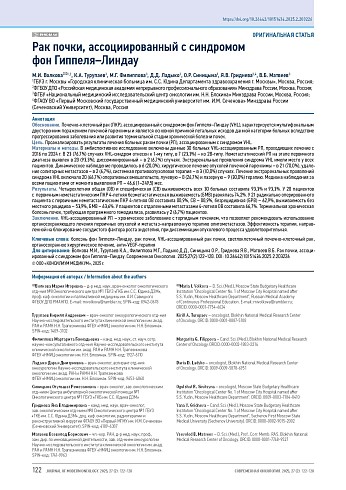
Обоснование. Почечно-клеточный рак (ПКР), ассоциированный с синдромом фон Гиппеля–Линдау (VHL), характеризуется мультифокальным двусторонним поражением почечной паренхимы и является основной причиной летальных исходов данной категории больных вследствие прогрессирования заболевания или развития терминальной стадии хронической болезни почек.
Цель. Проанализировать результаты лечения больных раком почки (РП), ассоциированным с синдромом VHL.
Материалы и методы. В амбиспективное исследование включены данные 30 больных VHL-ассоциированным РП, проходивших лечение с 2016 по 2024 г. В 23 (76,7%) случаях VHL-синдром отнесен к 1-му типу, в 7 (23,3%) – ко 2В-типу. Неметастатический РП на этапе первичного диагноза выявлен в 28 (93,3%), диссеминированный – в 2 (6,7%) случаях. Экстраренальные проявления синдрома VHL имели место у всех пациентов. Динамическое наблюдение проводилось в 6 (20,0%), хирургическое лечение опухолей почечной паренхимы – в 21 (70,0%), удаление солитарных метастазов – в 2 (6,7%), системная противоопухолевая терапия – в 3 (10,0%) случаях. Лечение экстраренальных проявлений синдрома VHL включало 20 (66,7%) оперативных вмешательств, лучевую – 8 (26,7%) и лазерную – 9 (30,0%) терапию. Медиана наблюдения за всеми пациентами от момента выявления РП – 46,6 [1–249,5] мес.
Результаты. Четырехлетняя общая (ОВ) и специфическая (СВ) выживаемость всех 30 больных составила 93,3% и 93,3%. У 28 пациентов с первичным неметастатическим ПКР 4-летняя безметастатическая выживаемость (БМВ) равнялась 74,2%. У 21 радикально оперированного пациента с первичным неметастатическим ПКР 4-летняя ОВ составила 88,9%, СВ – 88,9%, безрецидивная (БРВ) – 62,9%, выживаемость без местного рецидива – 53,9%, БМВ – 63,6%. У пациентов с отдаленными метастазами 4-летняя ОВ составила 66,7%. Терминальная хроническая болезнь почек, требующая программного гемодиализа, развилась у 2 (6,7%) пациентов.
Заключение. VHL-ассоциированный РП – хроническое заболевание с торпидным течением, что позволяет рекомендовать использование органосохраняющего лечения первичных опухолей и метастаз-направленную терапию олигометастазов. Эффективность терапии, направленной на блокирование сосудистого фактора роста эндотелия, при диссеминации опухолевого процесса удовлетворительная.
Ключевые слова: болезнь фон Гиппеля–Линдау, рак почки, VHL-ассоциированный рак почки, светлоклеточный почечно-клеточный рак, органосохранное хирургическое лечение, анти-VEGF-терапия
Aim. To analyze the treatment outcomes of patients with RCC associated with VHL syndrome.
Materials and methods. The ambispective study included data of 30 patients treated with VHL-associated RCC from 2016 to 2024. In 23 (76.7%) cases, VHL syndrome was classified as type 1, and in 7 (23.3%) as type 2B. Non-metastatic RCC at the initial diagnosis was detected in 28 (93.3%) patients and metastatic RCC in 2 (6.7%). Extrarenal manifestations of VHL syndrome occurred in all patients. Watchful waiting was used in 6 (20.0%) patients, surgical treatment of renal parenchyma tumors in 21 (70.0%), metastasectomy – in 2 (6.7%), and systemic antitumor therapy in 3 (10.0%). Treatment of extrarenal manifestations of VHL syndrome included surgical interventions in 20 (66.7%) patients, radiation therapy in 8 (26.7%), and laser therapy in 9 (30.0%). The median follow-up for all patients from the RCC detection was 46.6 [1-249.5] months.
Results. The four-year overall (OS) and disease-specific (DSS) survival rates for all 30 patients were 93.3% and 93.3%, respectively. In 28 patients with primary non-metastatic RCC, the 4-year metastasis-free survival (MFS) was 74.2%. In 21 patients after radical surgery for the primary non-metastatic renal cell carcinoma, the 4-year OS was 88.9%, DSS was 88.9%, relapse-free survival (RFS) was 62.9%, local recurrence-free survival was 53.9%, and MFS was 63.6%. In patients with distant metastases, the 4-year OS was 66.7%. Two (6.7%) patients developed terminal chronic kidney disease requiring permanent hemodialysis.
Conclusion. VHL-associated RCC is a chronic disease with a torpid course, allowing to recommend organ-sparing treatment of primary tumors and metastasis-directed therapy of oligometastases. Antiangiogenic therapy is effective in metastatic RCC.
Keywords: von Hippel-Lindau disease, kidney cancer, VHL-associated kidney cancer, clear cell renal cell carcinoma, organ-sparing surgical treatment, anti-VEGF therapy
Цель. Проанализировать результаты лечения больных раком почки (РП), ассоциированным с синдромом VHL.
Материалы и методы. В амбиспективное исследование включены данные 30 больных VHL-ассоциированным РП, проходивших лечение с 2016 по 2024 г. В 23 (76,7%) случаях VHL-синдром отнесен к 1-му типу, в 7 (23,3%) – ко 2В-типу. Неметастатический РП на этапе первичного диагноза выявлен в 28 (93,3%), диссеминированный – в 2 (6,7%) случаях. Экстраренальные проявления синдрома VHL имели место у всех пациентов. Динамическое наблюдение проводилось в 6 (20,0%), хирургическое лечение опухолей почечной паренхимы – в 21 (70,0%), удаление солитарных метастазов – в 2 (6,7%), системная противоопухолевая терапия – в 3 (10,0%) случаях. Лечение экстраренальных проявлений синдрома VHL включало 20 (66,7%) оперативных вмешательств, лучевую – 8 (26,7%) и лазерную – 9 (30,0%) терапию. Медиана наблюдения за всеми пациентами от момента выявления РП – 46,6 [1–249,5] мес.
Результаты. Четырехлетняя общая (ОВ) и специфическая (СВ) выживаемость всех 30 больных составила 93,3% и 93,3%. У 28 пациентов с первичным неметастатическим ПКР 4-летняя безметастатическая выживаемость (БМВ) равнялась 74,2%. У 21 радикально оперированного пациента с первичным неметастатическим ПКР 4-летняя ОВ составила 88,9%, СВ – 88,9%, безрецидивная (БРВ) – 62,9%, выживаемость без местного рецидива – 53,9%, БМВ – 63,6%. У пациентов с отдаленными метастазами 4-летняя ОВ составила 66,7%. Терминальная хроническая болезнь почек, требующая программного гемодиализа, развилась у 2 (6,7%) пациентов.
Заключение. VHL-ассоциированный РП – хроническое заболевание с торпидным течением, что позволяет рекомендовать использование органосохраняющего лечения первичных опухолей и метастаз-направленную терапию олигометастазов. Эффективность терапии, направленной на блокирование сосудистого фактора роста эндотелия, при диссеминации опухолевого процесса удовлетворительная.
Ключевые слова: болезнь фон Гиппеля–Линдау, рак почки, VHL-ассоциированный рак почки, светлоклеточный почечно-клеточный рак, органосохранное хирургическое лечение, анти-VEGF-терапия
________________________________________________
Aim. To analyze the treatment outcomes of patients with RCC associated with VHL syndrome.
Materials and methods. The ambispective study included data of 30 patients treated with VHL-associated RCC from 2016 to 2024. In 23 (76.7%) cases, VHL syndrome was classified as type 1, and in 7 (23.3%) as type 2B. Non-metastatic RCC at the initial diagnosis was detected in 28 (93.3%) patients and metastatic RCC in 2 (6.7%). Extrarenal manifestations of VHL syndrome occurred in all patients. Watchful waiting was used in 6 (20.0%) patients, surgical treatment of renal parenchyma tumors in 21 (70.0%), metastasectomy – in 2 (6.7%), and systemic antitumor therapy in 3 (10.0%). Treatment of extrarenal manifestations of VHL syndrome included surgical interventions in 20 (66.7%) patients, radiation therapy in 8 (26.7%), and laser therapy in 9 (30.0%). The median follow-up for all patients from the RCC detection was 46.6 [1-249.5] months.
Results. The four-year overall (OS) and disease-specific (DSS) survival rates for all 30 patients were 93.3% and 93.3%, respectively. In 28 patients with primary non-metastatic RCC, the 4-year metastasis-free survival (MFS) was 74.2%. In 21 patients after radical surgery for the primary non-metastatic renal cell carcinoma, the 4-year OS was 88.9%, DSS was 88.9%, relapse-free survival (RFS) was 62.9%, local recurrence-free survival was 53.9%, and MFS was 63.6%. In patients with distant metastases, the 4-year OS was 66.7%. Two (6.7%) patients developed terminal chronic kidney disease requiring permanent hemodialysis.
Conclusion. VHL-associated RCC is a chronic disease with a torpid course, allowing to recommend organ-sparing treatment of primary tumors and metastasis-directed therapy of oligometastases. Antiangiogenic therapy is effective in metastatic RCC.
Keywords: von Hippel-Lindau disease, kidney cancer, VHL-associated kidney cancer, clear cell renal cell carcinoma, organ-sparing surgical treatment, anti-VEGF therapy
Полный текст
Список литературы
1. Choyke PL, Glenn GM, Walther MM, et al. von Hippel–Lindau disease: Genetic, clinical, and imaging features. Radiology. 1995;194(3):629-42. PMID:7862955. Correction appears in: Radiology. 1995;196(2):582.
2. Lonser RR, Glenn GM, Walther M, et al. von Hippel–Lindau disease. Lancet. 2003;361(9374):2059-67. DOI:10.1016/S0140-6736(03)13643-4
3. Pithukpakorn M, Glenn G. von Hippel–Lindau syndrome. Commun Oncol. 2004;1(4):232-43.
4. Glenn GM, Daniel LN, Choyke P, et al. Von Hippel–Lindau (VHL) disease: Distinct phenotypes suggest more than one mutant allele at the VHL locus. Hum Genet. 1991;87(2):207-10. PMID:2066108
5. Neumann HP, Wiestler OD. Clustering of features of von Hippel–Lindau syndrome: Evidence for a complex genetic locus. Lancet. 1991;337(8749):1052-4. PMID:1673491
6. Hoffman MA, Ohh M, Yang H, et al. von Hippel–Lindau protein mutants linked to type 2C VHL disease preserve the ability to downregulate HIF. Hum Mol Genet. 2001;10(10):1019-27. DOI:10.1093/hmg/10.10.1019
7. Carrion DM, Linares-Espinós E, Ríos González E, et al. Invasive management of renal cell carcinoma in von Hippel–Lindau disease. Cent European J Urol. 2020;73(2):167-72. DOI:10.5173/ceju.2020.0004
8. Sgambati MT, Stolle C, Choyke PL, et al. Mosaicism in von Hippel–Lindau disease: Lessons from kindreds with germline mutations identified in offspring with mosaic parents. Am J Hum Genet. 2000;66(1):84-91. DOI:10.1086/302726
9. Reich M, Jaegle S, Neumann-Haefelin E, et al. Genotype-phenotype correlation in von Hippel–Lindau disease. Acta Ophthalmol. 2021;99(8):e1492-500. DOI:10.1111/aos.14843
10. Austin KD, Hall JG. Nontraditional inheritance. Pediatr Clin North Am. 1992;39(2):335-48. PMID:1553247
11. Duffey BG, Choyke PL, Glenn G, et al. The relationship between renal tumor size and metastases in patients with von Hippel–Lindau disease. J Urol. 2004;172(1):63-5. DOI:10.1097/01.ju.0000132127.79974.3f
12. Jilg CA, Neumann HP, Gläsker S, et al. Nephron sparing surgery in von Hippel–Lindau associated renal cell carcinoma; clinicopathological long-term follow-up. Fam Cancer. 2012;11(3):387-94. DOI:10.1007/s10689-012-9525-7
13. Singer EA, Vourganti S, Lin KY, et al. Outcomes of patients with surgically treated bilate- ral renal masses and a minimum of 10 years of followup. J Urol. 2012;188(6):2084-8. DOI:10.1016/j.juro.2012.08.038
14. Bratslavsky G, Liu JJ, Johnson AD, et al. Salvage partial nephrectomy for hereditary renal cancer: Feasibility and outcomes. J Urol. 2008;179(1):67-70. DOI:10.1016/j.juro.2007.08.150
15. Johnson A, Sudarshan S, Liu J, et al. Feasibility and outcomes of repeat partial nephrectomy. J Urol. 2008;180(1):89-93; discussion 93. DOI:10.1016/j.juro.2008.03.030
16. Binderup MLM. von Hippel–Lindau disease: Diagnosis and factors influencing disease outcome. Dan Med J. 2018;65(3):B5461. PMID:29510814
17. Jonasch E, McCutcheon IE, Gombos DS, et al. Pazopanib in patients with von Hippel–Lindau disease: A single-arm, single-centre, phase 2 trial. Lancet Oncol. 2018;19(10):1351-9. DOI:10.1016/S1470-2045(18)30487-X
18. Jonasch E, Iliopoulos O, Rathmell WK, et al. LITESPARK-004 (MK-6482-004) phase 2 study of belzutifan, an oral hypoxia-inducible factor 2α inhibitor (HIF-2α), for von Hippel–Lindau (VHL) disease: Update with more than two years of follow-up data. J Clin Oncol. 2022;40:4546. DOI:10.1200/JCO.2022.40.16_suppl.4546
19. Iliopoulos O, Iversen A, Beckermann K, et al. Belzutifan treatment for von Hippel–Lindau (VHL) disease-associated central nervous system (CNS) hemangioblastomas (HBs) in the phase 2 LITESPARK-004 study. J Clin Oncol. 2023;41:2008. DOI:10.1200/JCO.2023.41.16_suppl.2008
20. Louise M, Binderup M, Smerdel M, et al. von Hippel–Lindau disease: Updated guideline for diagnosis and surveillance. Eur J Med Genet. 2022;65(8):104538. DOI:10.1016/j.ejmg.2022.104538
2. Lonser RR, Glenn GM, Walther M, et al. von Hippel–Lindau disease. Lancet. 2003;361(9374):2059-67. DOI:10.1016/S0140-6736(03)13643-4
3. Pithukpakorn M, Glenn G. von Hippel–Lindau syndrome. Commun Oncol. 2004;1(4):232-43.
4. Glenn GM, Daniel LN, Choyke P, et al. Von Hippel–Lindau (VHL) disease: Distinct phenotypes suggest more than one mutant allele at the VHL locus. Hum Genet. 1991;87(2):207-10. PMID:2066108
5. Neumann HP, Wiestler OD. Clustering of features of von Hippel–Lindau syndrome: Evidence for a complex genetic locus. Lancet. 1991;337(8749):1052-4. PMID:1673491
6. Hoffman MA, Ohh M, Yang H, et al. von Hippel–Lindau protein mutants linked to type 2C VHL disease preserve the ability to downregulate HIF. Hum Mol Genet. 2001;10(10):1019-27. DOI:10.1093/hmg/10.10.1019
7. Carrion DM, Linares-Espinós E, Ríos González E, et al. Invasive management of renal cell carcinoma in von Hippel–Lindau disease. Cent European J Urol. 2020;73(2):167-72. DOI:10.5173/ceju.2020.0004
8. Sgambati MT, Stolle C, Choyke PL, et al. Mosaicism in von Hippel–Lindau disease: Lessons from kindreds with germline mutations identified in offspring with mosaic parents. Am J Hum Genet. 2000;66(1):84-91. DOI:10.1086/302726
9. Reich M, Jaegle S, Neumann-Haefelin E, et al. Genotype-phenotype correlation in von Hippel–Lindau disease. Acta Ophthalmol. 2021;99(8):e1492-500. DOI:10.1111/aos.14843
10. Austin KD, Hall JG. Nontraditional inheritance. Pediatr Clin North Am. 1992;39(2):335-48. PMID:1553247
11. Duffey BG, Choyke PL, Glenn G, et al. The relationship between renal tumor size and metastases in patients with von Hippel–Lindau disease. J Urol. 2004;172(1):63-5. DOI:10.1097/01.ju.0000132127.79974.3f
12. Jilg CA, Neumann HP, Gläsker S, et al. Nephron sparing surgery in von Hippel–Lindau associated renal cell carcinoma; clinicopathological long-term follow-up. Fam Cancer. 2012;11(3):387-94. DOI:10.1007/s10689-012-9525-7
13. Singer EA, Vourganti S, Lin KY, et al. Outcomes of patients with surgically treated bilate- ral renal masses and a minimum of 10 years of followup. J Urol. 2012;188(6):2084-8. DOI:10.1016/j.juro.2012.08.038
14. Bratslavsky G, Liu JJ, Johnson AD, et al. Salvage partial nephrectomy for hereditary renal cancer: Feasibility and outcomes. J Urol. 2008;179(1):67-70. DOI:10.1016/j.juro.2007.08.150
15. Johnson A, Sudarshan S, Liu J, et al. Feasibility and outcomes of repeat partial nephrectomy. J Urol. 2008;180(1):89-93; discussion 93. DOI:10.1016/j.juro.2008.03.030
16. Binderup MLM. von Hippel–Lindau disease: Diagnosis and factors influencing disease outcome. Dan Med J. 2018;65(3):B5461. PMID:29510814
17. Jonasch E, McCutcheon IE, Gombos DS, et al. Pazopanib in patients with von Hippel–Lindau disease: A single-arm, single-centre, phase 2 trial. Lancet Oncol. 2018;19(10):1351-9. DOI:10.1016/S1470-2045(18)30487-X
18. Jonasch E, Iliopoulos O, Rathmell WK, et al. LITESPARK-004 (MK-6482-004) phase 2 study of belzutifan, an oral hypoxia-inducible factor 2α inhibitor (HIF-2α), for von Hippel–Lindau (VHL) disease: Update with more than two years of follow-up data. J Clin Oncol. 2022;40:4546. DOI:10.1200/JCO.2022.40.16_suppl.4546
19. Iliopoulos O, Iversen A, Beckermann K, et al. Belzutifan treatment for von Hippel–Lindau (VHL) disease-associated central nervous system (CNS) hemangioblastomas (HBs) in the phase 2 LITESPARK-004 study. J Clin Oncol. 2023;41:2008. DOI:10.1200/JCO.2023.41.16_suppl.2008
20. Louise M, Binderup M, Smerdel M, et al. von Hippel–Lindau disease: Updated guideline for diagnosis and surveillance. Eur J Med Genet. 2022;65(8):104538. DOI:10.1016/j.ejmg.2022.104538
2. Lonser RR, Glenn GM, Walther M, et al. von Hippel–Lindau disease. Lancet. 2003;361(9374):2059-67. DOI:10.1016/S0140-6736(03)13643-4
3. Pithukpakorn M, Glenn G. von Hippel–Lindau syndrome. Commun Oncol. 2004;1(4):232-43.
4. Glenn GM, Daniel LN, Choyke P, et al. Von Hippel–Lindau (VHL) disease: Distinct phenotypes suggest more than one mutant allele at the VHL locus. Hum Genet. 1991;87(2):207-10. PMID:2066108
5. Neumann HP, Wiestler OD. Clustering of features of von Hippel–Lindau syndrome: Evidence for a complex genetic locus. Lancet. 1991;337(8749):1052-4. PMID:1673491
6. Hoffman MA, Ohh M, Yang H, et al. von Hippel–Lindau protein mutants linked to type 2C VHL disease preserve the ability to downregulate HIF. Hum Mol Genet. 2001;10(10):1019-27. DOI:10.1093/hmg/10.10.1019
7. Carrion DM, Linares-Espinós E, Ríos González E, et al. Invasive management of renal cell carcinoma in von Hippel–Lindau disease. Cent European J Urol. 2020;73(2):167-72. DOI:10.5173/ceju.2020.0004
8. Sgambati MT, Stolle C, Choyke PL, et al. Mosaicism in von Hippel–Lindau disease: Lessons from kindreds with germline mutations identified in offspring with mosaic parents. Am J Hum Genet. 2000;66(1):84-91. DOI:10.1086/302726
9. Reich M, Jaegle S, Neumann-Haefelin E, et al. Genotype-phenotype correlation in von Hippel–Lindau disease. Acta Ophthalmol. 2021;99(8):e1492-500. DOI:10.1111/aos.14843
10. Austin KD, Hall JG. Nontraditional inheritance. Pediatr Clin North Am. 1992;39(2):335-48. PMID:1553247
11. Duffey BG, Choyke PL, Glenn G, et al. The relationship between renal tumor size and metastases in patients with von Hippel–Lindau disease. J Urol. 2004;172(1):63-5. DOI:10.1097/01.ju.0000132127.79974.3f
12. Jilg CA, Neumann HP, Gläsker S, et al. Nephron sparing surgery in von Hippel–Lindau associated renal cell carcinoma; clinicopathological long-term follow-up. Fam Cancer. 2012;11(3):387-94. DOI:10.1007/s10689-012-9525-7
13. Singer EA, Vourganti S, Lin KY, et al. Outcomes of patients with surgically treated bilate- ral renal masses and a minimum of 10 years of followup. J Urol. 2012;188(6):2084-8. DOI:10.1016/j.juro.2012.08.038
14. Bratslavsky G, Liu JJ, Johnson AD, et al. Salvage partial nephrectomy for hereditary renal cancer: Feasibility and outcomes. J Urol. 2008;179(1):67-70. DOI:10.1016/j.juro.2007.08.150
15. Johnson A, Sudarshan S, Liu J, et al. Feasibility and outcomes of repeat partial nephrectomy. J Urol. 2008;180(1):89-93; discussion 93. DOI:10.1016/j.juro.2008.03.030
16. Binderup MLM. von Hippel–Lindau disease: Diagnosis and factors influencing disease outcome. Dan Med J. 2018;65(3):B5461. PMID:29510814
17. Jonasch E, McCutcheon IE, Gombos DS, et al. Pazopanib in patients with von Hippel–Lindau disease: A single-arm, single-centre, phase 2 trial. Lancet Oncol. 2018;19(10):1351-9. DOI:10.1016/S1470-2045(18)30487-X
18. Jonasch E, Iliopoulos O, Rathmell WK, et al. LITESPARK-004 (MK-6482-004) phase 2 study of belzutifan, an oral hypoxia-inducible factor 2α inhibitor (HIF-2α), for von Hippel–Lindau (VHL) disease: Update with more than two years of follow-up data. J Clin Oncol. 2022;40:4546. DOI:10.1200/JCO.2022.40.16_suppl.4546
19. Iliopoulos O, Iversen A, Beckermann K, et al. Belzutifan treatment for von Hippel–Lindau (VHL) disease-associated central nervous system (CNS) hemangioblastomas (HBs) in the phase 2 LITESPARK-004 study. J Clin Oncol. 2023;41:2008. DOI:10.1200/JCO.2023.41.16_suppl.2008
20. Louise M, Binderup M, Smerdel M, et al. von Hippel–Lindau disease: Updated guideline for diagnosis and surveillance. Eur J Med Genet. 2022;65(8):104538. DOI:10.1016/j.ejmg.2022.104538
________________________________________________
2. Lonser RR, Glenn GM, Walther M, et al. von Hippel–Lindau disease. Lancet. 2003;361(9374):2059-67. DOI:10.1016/S0140-6736(03)13643-4
3. Pithukpakorn M, Glenn G. von Hippel–Lindau syndrome. Commun Oncol. 2004;1(4):232-43.
4. Glenn GM, Daniel LN, Choyke P, et al. Von Hippel–Lindau (VHL) disease: Distinct phenotypes suggest more than one mutant allele at the VHL locus. Hum Genet. 1991;87(2):207-10. PMID:2066108
5. Neumann HP, Wiestler OD. Clustering of features of von Hippel–Lindau syndrome: Evidence for a complex genetic locus. Lancet. 1991;337(8749):1052-4. PMID:1673491
6. Hoffman MA, Ohh M, Yang H, et al. von Hippel–Lindau protein mutants linked to type 2C VHL disease preserve the ability to downregulate HIF. Hum Mol Genet. 2001;10(10):1019-27. DOI:10.1093/hmg/10.10.1019
7. Carrion DM, Linares-Espinós E, Ríos González E, et al. Invasive management of renal cell carcinoma in von Hippel–Lindau disease. Cent European J Urol. 2020;73(2):167-72. DOI:10.5173/ceju.2020.0004
8. Sgambati MT, Stolle C, Choyke PL, et al. Mosaicism in von Hippel–Lindau disease: Lessons from kindreds with germline mutations identified in offspring with mosaic parents. Am J Hum Genet. 2000;66(1):84-91. DOI:10.1086/302726
9. Reich M, Jaegle S, Neumann-Haefelin E, et al. Genotype-phenotype correlation in von Hippel–Lindau disease. Acta Ophthalmol. 2021;99(8):e1492-500. DOI:10.1111/aos.14843
10. Austin KD, Hall JG. Nontraditional inheritance. Pediatr Clin North Am. 1992;39(2):335-48. PMID:1553247
11. Duffey BG, Choyke PL, Glenn G, et al. The relationship between renal tumor size and metastases in patients with von Hippel–Lindau disease. J Urol. 2004;172(1):63-5. DOI:10.1097/01.ju.0000132127.79974.3f
12. Jilg CA, Neumann HP, Gläsker S, et al. Nephron sparing surgery in von Hippel–Lindau associated renal cell carcinoma; clinicopathological long-term follow-up. Fam Cancer. 2012;11(3):387-94. DOI:10.1007/s10689-012-9525-7
13. Singer EA, Vourganti S, Lin KY, et al. Outcomes of patients with surgically treated bilate- ral renal masses and a minimum of 10 years of followup. J Urol. 2012;188(6):2084-8. DOI:10.1016/j.juro.2012.08.038
14. Bratslavsky G, Liu JJ, Johnson AD, et al. Salvage partial nephrectomy for hereditary renal cancer: Feasibility and outcomes. J Urol. 2008;179(1):67-70. DOI:10.1016/j.juro.2007.08.150
15. Johnson A, Sudarshan S, Liu J, et al. Feasibility and outcomes of repeat partial nephrectomy. J Urol. 2008;180(1):89-93; discussion 93. DOI:10.1016/j.juro.2008.03.030
16. Binderup MLM. von Hippel–Lindau disease: Diagnosis and factors influencing disease outcome. Dan Med J. 2018;65(3):B5461. PMID:29510814
17. Jonasch E, McCutcheon IE, Gombos DS, et al. Pazopanib in patients with von Hippel–Lindau disease: A single-arm, single-centre, phase 2 trial. Lancet Oncol. 2018;19(10):1351-9. DOI:10.1016/S1470-2045(18)30487-X
18. Jonasch E, Iliopoulos O, Rathmell WK, et al. LITESPARK-004 (MK-6482-004) phase 2 study of belzutifan, an oral hypoxia-inducible factor 2α inhibitor (HIF-2α), for von Hippel–Lindau (VHL) disease: Update with more than two years of follow-up data. J Clin Oncol. 2022;40:4546. DOI:10.1200/JCO.2022.40.16_suppl.4546
19. Iliopoulos O, Iversen A, Beckermann K, et al. Belzutifan treatment for von Hippel–Lindau (VHL) disease-associated central nervous system (CNS) hemangioblastomas (HBs) in the phase 2 LITESPARK-004 study. J Clin Oncol. 2023;41:2008. DOI:10.1200/JCO.2023.41.16_suppl.2008
20. Louise M, Binderup M, Smerdel M, et al. von Hippel–Lindau disease: Updated guideline for diagnosis and surveillance. Eur J Med Genet. 2022;65(8):104538. DOI:10.1016/j.ejmg.2022.104538
Авторы
М.И. Волкова*1,2, К.А. Турупаев3, М.Г. Филиппова3, Д.Д. Ладыко3, О.Р. Синицына1, Я.В. Гриднева1,4, В.Б. Матвеев3
1ГБУЗ г. Москвы «Городская клиническая больница им. С.С. Юдина Департамента здравоохранения г. Москвы», Москва, Россия;
2ФГБОУ ДПО «Российская медицинская академия непрерывного профессионального образования» Минздрава России, Москва, Россия;
3ФГБУ «Национальный медицинский исследовательский центр онкологии им. Н.Н. Блохина» Минздрава России, Москва, Россия;
4ФГАОУ ВО «Первый Московский государственный медицинский университет им. И.М. Сеченова» Минздрава России (Сеченовский Университет), Москва, Россия
*mivolkova@rambler.ru
1Moscow State Budgetary Healthcare Institution "Oncological Center No. 1 of Moscow City Hospital named after S.S. Yudin, Moscow Healthcare Department", Moscow, Russia;
2Russian Medical Academy of Continuous Professional Education, Moscow, Russia;
3Blokhin National Medical Research Center of Oncology, Moscow, Russia;
4Sechenov First Moscow State Medical University (Sechenov University), Moscow, Russia
*mivolkova@rambler.ru
1ГБУЗ г. Москвы «Городская клиническая больница им. С.С. Юдина Департамента здравоохранения г. Москвы», Москва, Россия;
2ФГБОУ ДПО «Российская медицинская академия непрерывного профессионального образования» Минздрава России, Москва, Россия;
3ФГБУ «Национальный медицинский исследовательский центр онкологии им. Н.Н. Блохина» Минздрава России, Москва, Россия;
4ФГАОУ ВО «Первый Московский государственный медицинский университет им. И.М. Сеченова» Минздрава России (Сеченовский Университет), Москва, Россия
*mivolkova@rambler.ru
________________________________________________
1Moscow State Budgetary Healthcare Institution "Oncological Center No. 1 of Moscow City Hospital named after S.S. Yudin, Moscow Healthcare Department", Moscow, Russia;
2Russian Medical Academy of Continuous Professional Education, Moscow, Russia;
3Blokhin National Medical Research Center of Oncology, Moscow, Russia;
4Sechenov First Moscow State Medical University (Sechenov University), Moscow, Russia
*mivolkova@rambler.ru
Цель портала OmniDoctor – предоставление профессиональной информации врачам, провизорам и фармацевтам.