

Материалы доступны только для специалистов сферы здравоохранения.
Чтобы посмотреть материал полностью
Авторизуйтесь
или зарегистрируйтесь.
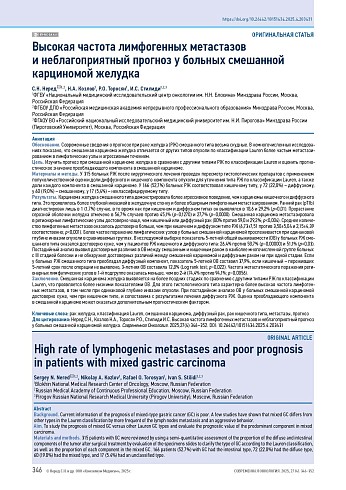
Высокая частота лимфогенных метастазов и неблагоприятный прогноз у больных смешанной карциномой желудка
Высокая частота лимфогенных метастазов и неблагоприятный прогноз у больных смешанной карциномой желудка
Неред С.Н., Козлов Н.А., Торосян Р.О., Стилиди И.С. Высокая частота лимфогенных метастазов и неблагоприятный прогноз у больных смешанной карциномой желудка. Современная Онкология. 2025;27(4):346–352. DOI: 10.26442/18151434.2025.4.203431
________________________________________________
Материалы доступны только для специалистов сферы здравоохранения.
Чтобы посмотреть материал полностью
Авторизуйтесь
или зарегистрируйтесь.
Аннотация
Обоснование. Современные сведения о прогнозе при раке желудка (РЖ) смешанного типа весьма скудные. В немногочисленных исследованиях показано, что смешанная карцинома желудка отличается от других типов опухоли по классификации Lauren более частым метастазированием в лимфатические узлы и агрессивным течением.
Цель. Изучить прогноз при смешанной карциноме желудка в сравнении с другими типами РЖ по классификации Lauren и оценить прогностическое значение преобладающего компонента в смешанной карциноме.
Материалы и методы. У 315 больных РЖ после хирургического лечения проведен пересмотр гистологических препаратов с применением полуколичественной оценки доли диффузного и кишечного компонента опухоли для уточнения типа РЖ по классификации Lauren, а также доли каждого компонента в смешанной карциноме. У 166 (52,7%) больных РЖ соответствовал кишечному типу, у 72 (22,8%) – диффузному, у 60 (19,0%) – смешанному, у 17 (5,4%) – неклассифицируемому типу.
Результаты. Карцинома желудка смешанного типа демонстрировала более агрессивное поведение, чем карциномы кишечного и диффузного типа. Это проявлялось более глубокой инвазией в желудочную стенку и более обширным лимфогенным метастазированием. Ранний рак (pT1b) диагностирован лишь в 1 (1,7%) случае, в то время как при кишечном и диффузном типах он выявлялся в 18,6 и 29,2% (p<0,01). Прорастание серозной оболочки желудка отмечено в 56,7% случаев против 45,1% (p=0,1270) и 27,7% (p=0,0008). Смешанная карцинома метастазировала в регионарные лимфатические узлы достоверно чаще, чем кишечный или диффузный рак (80% против 59,0 и 29,2%; p<0,004). Среднее количество лимфогенных метастазов оказалось достоверно больше, чем при кишечном и диффузном типе РЖ (6,73±7,51 против 3,58±5,04 и 2,15±4,39 соответственно; p<0,001). Более частое поражение лимфатических узлов у больных смешанной карциномой прослеживается при одинаковой глубине инвазии опухоли в сравниваемых группах. В исследуемой выборке показатель 5-летней общей выживаемости (ОВ) у больных РЖ смешанного типа оказался достоверно хуже, чем у пациентов РЖ кишечного и диффузного типа: 26,4% против 58,7% (p=0,00000) и 51,1% (p<0,03). Постадийный анализ выявил достоверные различия в ОВ между смешанным и кишечным раком в наиболее многочисленной группе больных с III стадией болезни и не обнаружил достоверных различий между смешанной карциномой и диффузным раком ни при одной стадии. Если у больных РЖ смешанного типа преобладал диффузный компонент, показатель 5-летней ОВ составил 37,9%, если кишечный – переживших 5-летний срок после операции не выявлено, 3-летняя ОВ составила 12,8% (Log rank test; p=0,022). Частота метастатического поражения регионарных лимфатических узлов в 1-й подгруппе оказалась меньше, чем во 2-й (74,4% против 94,1%; p=0,0856).
Заключение. Смешанная карцинома желудка выявляется на более поздних стадиях по сравнению с другими типами РЖ по классификации Lauren, что проявляется более низкими показателями ОВ. Для этого гистологического типа характерна более высокая частота лимфогенных метастазов, в том числе при одинаковой глубине инвазии опухоли. При постадийном анализе ОВ у больных смешанной карциномой достоверно хуже, чем при кишечном типе, и сопоставима с результатами лечения диффузного РЖ. Оценка преобладающего компонента в смешанной карциноме может оказаться дополнительным прогностическим фактором.
Ключевые слова: рак желудка, классификация Lauren, смешанная карцинома, диффузный рак, рак кишечного типа, метастазы, прогноз
Aim. To study the prognosis of mixed GC versus other Lauren GC types and evaluate the prognostic value of the predominant component in mixed carcinoma.
Materials and methods. 315 patients with GC were reviewed by using a semi-quantitative assessment of the proportion of the diffuse and intestinal components of the tumor after surgical treatment by evaluation of the specimens slides to clarify the type of GC according to the Lauren classification, as well as the proportion of each component in the mixed GC. 166 patients (52.7%) with GC had the intestinal type, 72 (22.8%) had the diffuse type, 60 (19.0%) had the mixed type, and 17 (5.4%) had an unclassified type.
Results. Mixed-type GC exhibited more aggressive behavior than intestinal and diffuse types of GC. It was characterized by deeper invasion of the gastric wall and more extensive lymphogenic metastasis. Early cancer (pT1b) was diagnosed in only 1 (1.7%) case, while in intestinal and diffuse types, it was detected in 18.6% and 29.2% of patients (p<0.01), respectively. Invasion into the serous membrane of the stomach was reported in 56.7% of cases versus 45.1% (p=0.1270) and 27.7% (p=0.0008), respectively. Mixed GC metastasized to regional lymph nodes metastasis more frequently than intestinal or diffuse cancer (80% vs. 59.0% and 29.2%, respectively; p<0.004). The average number of lymphogenic metastases was significantly higher than in intestinal and diffuse GC types (6.73±7.51 vs 3.58±5.04 and 2.15±4.39, respectively; p<0.001). More frequently lymph node involvement in patients with mixed GC was observed with a similar depth of tumor invasion in the compared groups. In the study population, the 5-year overall survival (OS) in patients with mixed-type GC was significantly lower than in patients with intestinal and diffuse-type GC: 26.4% vs. 58.7% (p=0.00000) and 51.1% (p<0.03). Stage-by-stage analysis showed significant differences in OS between mixed and intestinal GC in the largest group of patients with stage III disease and found no significant differences between mixed and diffuse GC at any stage. If the diffuse component was prevailed in patients with mixed-type GC, the 5-year OS rate was 37.9%; if the intestinal component prevailed, there were no survivors 5 years after surgery, and the 3-year OS rate was 12.8% (Log rank test; p=0.022). The frequency of metastatic lesions of regional lymph nodes in subgroup 1 was lower than in subgroup 2 (74.4% vs. 94.1%; p=0.0856).
Conclusion. Mixed GC is diagnosed in later stages compared to other types of GC according to the Lauren classification, which translates into lower OS rates. This histological type shows a higher rate of lymphatic metastases, even with the same depth of tumor invasion. In a step-by-step analysis, OS in patients with mixed GC was significantly worse than that in the intestinal type, and was comparable to the results of treatment of diffuse GC. The predominant component assessment in mixed carcinoma may prove to be an additional prognostic factor.
Keywords: gastric cancer, Lauren classification, mixed carcinoma, diffuse cancer, intestinal type cancer, metastases, prognosis
Цель. Изучить прогноз при смешанной карциноме желудка в сравнении с другими типами РЖ по классификации Lauren и оценить прогностическое значение преобладающего компонента в смешанной карциноме.
Материалы и методы. У 315 больных РЖ после хирургического лечения проведен пересмотр гистологических препаратов с применением полуколичественной оценки доли диффузного и кишечного компонента опухоли для уточнения типа РЖ по классификации Lauren, а также доли каждого компонента в смешанной карциноме. У 166 (52,7%) больных РЖ соответствовал кишечному типу, у 72 (22,8%) – диффузному, у 60 (19,0%) – смешанному, у 17 (5,4%) – неклассифицируемому типу.
Результаты. Карцинома желудка смешанного типа демонстрировала более агрессивное поведение, чем карциномы кишечного и диффузного типа. Это проявлялось более глубокой инвазией в желудочную стенку и более обширным лимфогенным метастазированием. Ранний рак (pT1b) диагностирован лишь в 1 (1,7%) случае, в то время как при кишечном и диффузном типах он выявлялся в 18,6 и 29,2% (p<0,01). Прорастание серозной оболочки желудка отмечено в 56,7% случаев против 45,1% (p=0,1270) и 27,7% (p=0,0008). Смешанная карцинома метастазировала в регионарные лимфатические узлы достоверно чаще, чем кишечный или диффузный рак (80% против 59,0 и 29,2%; p<0,004). Среднее количество лимфогенных метастазов оказалось достоверно больше, чем при кишечном и диффузном типе РЖ (6,73±7,51 против 3,58±5,04 и 2,15±4,39 соответственно; p<0,001). Более частое поражение лимфатических узлов у больных смешанной карциномой прослеживается при одинаковой глубине инвазии опухоли в сравниваемых группах. В исследуемой выборке показатель 5-летней общей выживаемости (ОВ) у больных РЖ смешанного типа оказался достоверно хуже, чем у пациентов РЖ кишечного и диффузного типа: 26,4% против 58,7% (p=0,00000) и 51,1% (p<0,03). Постадийный анализ выявил достоверные различия в ОВ между смешанным и кишечным раком в наиболее многочисленной группе больных с III стадией болезни и не обнаружил достоверных различий между смешанной карциномой и диффузным раком ни при одной стадии. Если у больных РЖ смешанного типа преобладал диффузный компонент, показатель 5-летней ОВ составил 37,9%, если кишечный – переживших 5-летний срок после операции не выявлено, 3-летняя ОВ составила 12,8% (Log rank test; p=0,022). Частота метастатического поражения регионарных лимфатических узлов в 1-й подгруппе оказалась меньше, чем во 2-й (74,4% против 94,1%; p=0,0856).
Заключение. Смешанная карцинома желудка выявляется на более поздних стадиях по сравнению с другими типами РЖ по классификации Lauren, что проявляется более низкими показателями ОВ. Для этого гистологического типа характерна более высокая частота лимфогенных метастазов, в том числе при одинаковой глубине инвазии опухоли. При постадийном анализе ОВ у больных смешанной карциномой достоверно хуже, чем при кишечном типе, и сопоставима с результатами лечения диффузного РЖ. Оценка преобладающего компонента в смешанной карциноме может оказаться дополнительным прогностическим фактором.
Ключевые слова: рак желудка, классификация Lauren, смешанная карцинома, диффузный рак, рак кишечного типа, метастазы, прогноз
________________________________________________
Aim. To study the prognosis of mixed GC versus other Lauren GC types and evaluate the prognostic value of the predominant component in mixed carcinoma.
Materials and methods. 315 patients with GC were reviewed by using a semi-quantitative assessment of the proportion of the diffuse and intestinal components of the tumor after surgical treatment by evaluation of the specimens slides to clarify the type of GC according to the Lauren classification, as well as the proportion of each component in the mixed GC. 166 patients (52.7%) with GC had the intestinal type, 72 (22.8%) had the diffuse type, 60 (19.0%) had the mixed type, and 17 (5.4%) had an unclassified type.
Results. Mixed-type GC exhibited more aggressive behavior than intestinal and diffuse types of GC. It was characterized by deeper invasion of the gastric wall and more extensive lymphogenic metastasis. Early cancer (pT1b) was diagnosed in only 1 (1.7%) case, while in intestinal and diffuse types, it was detected in 18.6% and 29.2% of patients (p<0.01), respectively. Invasion into the serous membrane of the stomach was reported in 56.7% of cases versus 45.1% (p=0.1270) and 27.7% (p=0.0008), respectively. Mixed GC metastasized to regional lymph nodes metastasis more frequently than intestinal or diffuse cancer (80% vs. 59.0% and 29.2%, respectively; p<0.004). The average number of lymphogenic metastases was significantly higher than in intestinal and diffuse GC types (6.73±7.51 vs 3.58±5.04 and 2.15±4.39, respectively; p<0.001). More frequently lymph node involvement in patients with mixed GC was observed with a similar depth of tumor invasion in the compared groups. In the study population, the 5-year overall survival (OS) in patients with mixed-type GC was significantly lower than in patients with intestinal and diffuse-type GC: 26.4% vs. 58.7% (p=0.00000) and 51.1% (p<0.03). Stage-by-stage analysis showed significant differences in OS between mixed and intestinal GC in the largest group of patients with stage III disease and found no significant differences between mixed and diffuse GC at any stage. If the diffuse component was prevailed in patients with mixed-type GC, the 5-year OS rate was 37.9%; if the intestinal component prevailed, there were no survivors 5 years after surgery, and the 3-year OS rate was 12.8% (Log rank test; p=0.022). The frequency of metastatic lesions of regional lymph nodes in subgroup 1 was lower than in subgroup 2 (74.4% vs. 94.1%; p=0.0856).
Conclusion. Mixed GC is diagnosed in later stages compared to other types of GC according to the Lauren classification, which translates into lower OS rates. This histological type shows a higher rate of lymphatic metastases, even with the same depth of tumor invasion. In a step-by-step analysis, OS in patients with mixed GC was significantly worse than that in the intestinal type, and was comparable to the results of treatment of diffuse GC. The predominant component assessment in mixed carcinoma may prove to be an additional prognostic factor.
Keywords: gastric cancer, Lauren classification, mixed carcinoma, diffuse cancer, intestinal type cancer, metastases, prognosis
Полный текст
Список литературы
1. Tang D, Ni M, Zhu H, et al. Differential prognostic implications of gastric adenocarcinoma based on Lauren’s classification: a Surveillance, Epidemiology, and End Results (SEER)-based cohort study. Ann Transl Med. 2021;9(8):646. DOI:10.21037/atm-20-7953
2. Petrelli F, Berenato R, Turati L, et al. Prognostic value of diffuse versus intestinal histotype in patients with gastric cancer: a systematic review and metaanalysis. J Gastrointest Oncol. 2017;8(1):148-63. DOI:10.21037/jgo.2017.01.10
3. Qiu M, Cai M, Zhang D, et al. Clinicopathological characteristics and prognostic analysis of Lauren classification in gastric adenocarcinoma in China. J Transl Med. 2013;11:58. DOI:10.1186/1479-5876-11-58
4. Wang Q, Wang T. Comparison of survival between diffuse type and intestinal type early-onset gastric cancer patients: A large populationbased study. Medicine. 2023;102:47(e36261). DOI:10.1097/MD.0000000000036261
5. Lee JH, Chang KK, Yoon C, et al. Lauren Histologic Type Is the Most Important Factor Associated With Pattern of Recurrence Following Resection of Gastric Adenocarcinoma. Ann Surg. 2018;267(1):105-13. DOI:10.1097/SLA.0000000000002040
6. Lauren P. The two histological main types of gastric carcinoma: diffuse and so-called intestinal-type carcinoma. An attempt at a histo-clinical classification. Acta Pathol Microbiol Scand. 1965;64:31-49. DOI:10.1111/apm.1965.64.1.31
7. Borch K, Jonsson B, Tarpila E, et al. Changing pattern of histological type, location, stage and outcome of surgical treatment of gastric carcinoma. Br J Surg. 2000;87:618-26. DOI:10.1046/j.1365-2168.2000.01425.x
8. Stelzner S, Emmrich P. The mixed type in Lauren's classification of gastric carcinoma. Histologic description and biologic behavior. Gen Diagn Pathol. 1997;143:39-48.
9. Chen YC, Fang WL, Wang RF, et al. Clinicopathological Variation of Lauren Classification in Gastric Cancer. Pathol Oncol Res. 2016;22:197-202. DOI:10.1007/s12253-015-9996-6
10. Pyo JH, Lee H, Min BH, et al. Early gastric cancer with a mixed-type Lauren classification is more aggressive and exhibits greater lymph node metastasis. J Gastroenterol. (2017) 52:594–601. DOI:10.1007/s00535-016-1254-5
11. Zheng HC, Li XH, Hara T, et al. Mixed-type gastric carcinomas exhibit more aggressive features and indicate the histogenesis of carcinomas. Virchows Arch. 2008;452:525-34. DOI:10.1007/s00428-007-0572-7
12. Huh GW, Jung DH, Kim JH, et al. Signet Ring Cell Mixed Histology May Show More Aggressive Behavior Than Other Histologies in Early Gastric Cancer. J Surg Oncol. 2013;107:124-9.
13. Zheng H, Takahashi H, Murai Y, et al. Pathobiological characteristics of intestinal and diffuse-type gastric carcinoma in Japan: an immunostaining study on the tissue microarray. J Clin Pathol. 2007;60:273-7. DOI:10.1136/jcp.2006.038778
14. Qiu M, Cai M, Zhang D, et al. Clinicopathological characteristics and prognostic analysis of Lauren classification in gastric adenocarcinoma in China. J Transl Med. 2013;11:58. Available at: https://www.translational-medicine.com/content/11/1/58. Accessed: 14.01.2025.
15. Yang S, Gu X, Tao R, et al. Relationship between histological mixed-type early gastric cancer and lymph node metastasis: A systematic review and meta-analysis. PLoS ONE. 2022;17(4):e0266952. DOI:10.1371/journal.pone.0266952
16. Park SY, Kook MC, Kim YW, et al. Mixed-type gastric cancer and its association with high-frequency CpG island hypermethylation. Virchows Arch. 2010;456:625-33.
17. Machado JC, Soares P, Carneiro F, et al. E-cadherin gene mutations provide a genetic basis for the phenotypic divergence of mixed gastric carcinomas. Lab Invest. 1999;79(4):459-65.
18. Komatsu S. Histological mixed-type as an independent prognostic factor in stage I gastric carcinoma. World J Gastroenterol. 2015;21(2):549-55. DOI:10.3748/wjg.v21.i2.549
2. Petrelli F, Berenato R, Turati L, et al. Prognostic value of diffuse versus intestinal histotype in patients with gastric cancer: a systematic review and metaanalysis. J Gastrointest Oncol. 2017;8(1):148-63. DOI:10.21037/jgo.2017.01.10
3. Qiu M, Cai M, Zhang D, et al. Clinicopathological characteristics and prognostic analysis of Lauren classification in gastric adenocarcinoma in China. J Transl Med. 2013;11:58. DOI:10.1186/1479-5876-11-58
4. Wang Q, Wang T. Comparison of survival between diffuse type and intestinal type early-onset gastric cancer patients: A large populationbased study. Medicine. 2023;102:47(e36261). DOI:10.1097/MD.0000000000036261
5. Lee JH, Chang KK, Yoon C, et al. Lauren Histologic Type Is the Most Important Factor Associated With Pattern of Recurrence Following Resection of Gastric Adenocarcinoma. Ann Surg. 2018;267(1):105-13. DOI:10.1097/SLA.0000000000002040
6. Lauren P. The two histological main types of gastric carcinoma: diffuse and so-called intestinal-type carcinoma. An attempt at a histo-clinical classification. Acta Pathol Microbiol Scand. 1965;64:31-49. DOI:10.1111/apm.1965.64.1.31
7. Borch K, Jonsson B, Tarpila E, et al. Changing pattern of histological type, location, stage and outcome of surgical treatment of gastric carcinoma. Br J Surg. 2000;87:618-26. DOI:10.1046/j.1365-2168.2000.01425.x
8. Stelzner S, Emmrich P. The mixed type in Lauren's classification of gastric carcinoma. Histologic description and biologic behavior. Gen Diagn Pathol. 1997;143:39-48.
9. Chen YC, Fang WL, Wang RF, et al. Clinicopathological Variation of Lauren Classification in Gastric Cancer. Pathol Oncol Res. 2016;22:197-202. DOI:10.1007/s12253-015-9996-6
10. Pyo JH, Lee H, Min BH, et al. Early gastric cancer with a mixed-type Lauren classification is more aggressive and exhibits greater lymph node metastasis. J Gastroenterol. (2017) 52:594–601. DOI:10.1007/s00535-016-1254-5
11. Zheng HC, Li XH, Hara T, et al. Mixed-type gastric carcinomas exhibit more aggressive features and indicate the histogenesis of carcinomas. Virchows Arch. 2008;452:525-34. DOI:10.1007/s00428-007-0572-7
12. Huh GW, Jung DH, Kim JH, et al. Signet Ring Cell Mixed Histology May Show More Aggressive Behavior Than Other Histologies in Early Gastric Cancer. J Surg Oncol. 2013;107:124-9.
13. Zheng H, Takahashi H, Murai Y, et al. Pathobiological characteristics of intestinal and diffuse-type gastric carcinoma in Japan: an immunostaining study on the tissue microarray. J Clin Pathol. 2007;60:273-7. DOI:10.1136/jcp.2006.038778
14. Qiu M, Cai M, Zhang D, et al. Clinicopathological characteristics and prognostic analysis of Lauren classification in gastric adenocarcinoma in China. J Transl Med. 2013;11:58. Available at: https://www.translational-medicine.com/content/11/1/58. Accessed: 14.01.2025.
15. Yang S, Gu X, Tao R, et al. Relationship between histological mixed-type early gastric cancer and lymph node metastasis: A systematic review and meta-analysis. PLoS ONE. 2022;17(4):e0266952. DOI:10.1371/journal.pone.0266952
16. Park SY, Kook MC, Kim YW, et al. Mixed-type gastric cancer and its association with high-frequency CpG island hypermethylation. Virchows Arch. 2010;456:625-33.
17. Machado JC, Soares P, Carneiro F, et al. E-cadherin gene mutations provide a genetic basis for the phenotypic divergence of mixed gastric carcinomas. Lab Invest. 1999;79(4):459-65.
18. Komatsu S. Histological mixed-type as an independent prognostic factor in stage I gastric carcinoma. World J Gastroenterol. 2015;21(2):549-55. DOI:10.3748/wjg.v21.i2.549
2. Petrelli F, Berenato R, Turati L, et al. Prognostic value of diffuse versus intestinal histotype in patients with gastric cancer: a systematic review and metaanalysis. J Gastrointest Oncol. 2017;8(1):148-63. DOI:10.21037/jgo.2017.01.10
3. Qiu M, Cai M, Zhang D, et al. Clinicopathological characteristics and prognostic analysis of Lauren classification in gastric adenocarcinoma in China. J Transl Med. 2013;11:58. DOI:10.1186/1479-5876-11-58
4. Wang Q, Wang T. Comparison of survival between diffuse type and intestinal type early-onset gastric cancer patients: A large populationbased study. Medicine. 2023;102:47(e36261). DOI:10.1097/MD.0000000000036261
5. Lee JH, Chang KK, Yoon C, et al. Lauren Histologic Type Is the Most Important Factor Associated With Pattern of Recurrence Following Resection of Gastric Adenocarcinoma. Ann Surg. 2018;267(1):105-13. DOI:10.1097/SLA.0000000000002040
6. Lauren P. The two histological main types of gastric carcinoma: diffuse and so-called intestinal-type carcinoma. An attempt at a histo-clinical classification. Acta Pathol Microbiol Scand. 1965;64:31-49. DOI:10.1111/apm.1965.64.1.31
7. Borch K, Jonsson B, Tarpila E, et al. Changing pattern of histological type, location, stage and outcome of surgical treatment of gastric carcinoma. Br J Surg. 2000;87:618-26. DOI:10.1046/j.1365-2168.2000.01425.x
8. Stelzner S, Emmrich P. The mixed type in Lauren's classification of gastric carcinoma. Histologic description and biologic behavior. Gen Diagn Pathol. 1997;143:39-48.
9. Chen YC, Fang WL, Wang RF, et al. Clinicopathological Variation of Lauren Classification in Gastric Cancer. Pathol Oncol Res. 2016;22:197-202. DOI:10.1007/s12253-015-9996-6
10. Pyo JH, Lee H, Min BH, et al. Early gastric cancer with a mixed-type Lauren classification is more aggressive and exhibits greater lymph node metastasis. J Gastroenterol. (2017) 52:594–601. DOI:10.1007/s00535-016-1254-5
11. Zheng HC, Li XH, Hara T, et al. Mixed-type gastric carcinomas exhibit more aggressive features and indicate the histogenesis of carcinomas. Virchows Arch. 2008;452:525-34. DOI:10.1007/s00428-007-0572-7
12. Huh GW, Jung DH, Kim JH, et al. Signet Ring Cell Mixed Histology May Show More Aggressive Behavior Than Other Histologies in Early Gastric Cancer. J Surg Oncol. 2013;107:124-9.
13. Zheng H, Takahashi H, Murai Y, et al. Pathobiological characteristics of intestinal and diffuse-type gastric carcinoma in Japan: an immunostaining study on the tissue microarray. J Clin Pathol. 2007;60:273-7. DOI:10.1136/jcp.2006.038778
14. Qiu M, Cai M, Zhang D, et al. Clinicopathological characteristics and prognostic analysis of Lauren classification in gastric adenocarcinoma in China. J Transl Med. 2013;11:58. Available at: https://www.translational-medicine.com/content/11/1/58. Accessed: 14.01.2025.
15. Yang S, Gu X, Tao R, et al. Relationship between histological mixed-type early gastric cancer and lymph node metastasis: A systematic review and meta-analysis. PLoS ONE. 2022;17(4):e0266952. DOI:10.1371/journal.pone.0266952
16. Park SY, Kook MC, Kim YW, et al. Mixed-type gastric cancer and its association with high-frequency CpG island hypermethylation. Virchows Arch. 2010;456:625-33.
17. Machado JC, Soares P, Carneiro F, et al. E-cadherin gene mutations provide a genetic basis for the phenotypic divergence of mixed gastric carcinomas. Lab Invest. 1999;79(4):459-65.
18. Komatsu S. Histological mixed-type as an independent prognostic factor in stage I gastric carcinoma. World J Gastroenterol. 2015;21(2):549-55. DOI:10.3748/wjg.v21.i2.549
________________________________________________
2. Petrelli F, Berenato R, Turati L, et al. Prognostic value of diffuse versus intestinal histotype in patients with gastric cancer: a systematic review and metaanalysis. J Gastrointest Oncol. 2017;8(1):148-63. DOI:10.21037/jgo.2017.01.10
3. Qiu M, Cai M, Zhang D, et al. Clinicopathological characteristics and prognostic analysis of Lauren classification in gastric adenocarcinoma in China. J Transl Med. 2013;11:58. DOI:10.1186/1479-5876-11-58
4. Wang Q, Wang T. Comparison of survival between diffuse type and intestinal type early-onset gastric cancer patients: A large populationbased study. Medicine. 2023;102:47(e36261). DOI:10.1097/MD.0000000000036261
5. Lee JH, Chang KK, Yoon C, et al. Lauren Histologic Type Is the Most Important Factor Associated With Pattern of Recurrence Following Resection of Gastric Adenocarcinoma. Ann Surg. 2018;267(1):105-13. DOI:10.1097/SLA.0000000000002040
6. Lauren P. The two histological main types of gastric carcinoma: diffuse and so-called intestinal-type carcinoma. An attempt at a histo-clinical classification. Acta Pathol Microbiol Scand. 1965;64:31-49. DOI:10.1111/apm.1965.64.1.31
7. Borch K, Jonsson B, Tarpila E, et al. Changing pattern of histological type, location, stage and outcome of surgical treatment of gastric carcinoma. Br J Surg. 2000;87:618-26. DOI:10.1046/j.1365-2168.2000.01425.x
8. Stelzner S, Emmrich P. The mixed type in Lauren's classification of gastric carcinoma. Histologic description and biologic behavior. Gen Diagn Pathol. 1997;143:39-48.
9. Chen YC, Fang WL, Wang RF, et al. Clinicopathological Variation of Lauren Classification in Gastric Cancer. Pathol Oncol Res. 2016;22:197-202. DOI:10.1007/s12253-015-9996-6
10. Pyo JH, Lee H, Min BH, et al. Early gastric cancer with a mixed-type Lauren classification is more aggressive and exhibits greater lymph node metastasis. J Gastroenterol. (2017) 52:594–601. DOI:10.1007/s00535-016-1254-5
11. Zheng HC, Li XH, Hara T, et al. Mixed-type gastric carcinomas exhibit more aggressive features and indicate the histogenesis of carcinomas. Virchows Arch. 2008;452:525-34. DOI:10.1007/s00428-007-0572-7
12. Huh GW, Jung DH, Kim JH, et al. Signet Ring Cell Mixed Histology May Show More Aggressive Behavior Than Other Histologies in Early Gastric Cancer. J Surg Oncol. 2013;107:124-9.
13. Zheng H, Takahashi H, Murai Y, et al. Pathobiological characteristics of intestinal and diffuse-type gastric carcinoma in Japan: an immunostaining study on the tissue microarray. J Clin Pathol. 2007;60:273-7. DOI:10.1136/jcp.2006.038778
14. Qiu M, Cai M, Zhang D, et al. Clinicopathological characteristics and prognostic analysis of Lauren classification in gastric adenocarcinoma in China. J Transl Med. 2013;11:58. Available at: https://www.translational-medicine.com/content/11/1/58. Accessed: 14.01.2025.
15. Yang S, Gu X, Tao R, et al. Relationship between histological mixed-type early gastric cancer and lymph node metastasis: A systematic review and meta-analysis. PLoS ONE. 2022;17(4):e0266952. DOI:10.1371/journal.pone.0266952
16. Park SY, Kook MC, Kim YW, et al. Mixed-type gastric cancer and its association with high-frequency CpG island hypermethylation. Virchows Arch. 2010;456:625-33.
17. Machado JC, Soares P, Carneiro F, et al. E-cadherin gene mutations provide a genetic basis for the phenotypic divergence of mixed gastric carcinomas. Lab Invest. 1999;79(4):459-65.
18. Komatsu S. Histological mixed-type as an independent prognostic factor in stage I gastric carcinoma. World J Gastroenterol. 2015;21(2):549-55. DOI:10.3748/wjg.v21.i2.549
Авторы
С.Н. Неред*1,2, Н.А. Козлов1, Р.О. Торосян1, И.С. Стилиди1,2,3
1ФГБУ «Национальный медицинский исследовательский центр онкологии им. Н.Н. Блохина» Минздрава России, Москва, Российская Федерация
2ФГБОУ ДПО «Российская медицинская академия непрерывного профессионального образования» Минздрава России, Москва, Российская Федерация
3ФГАОУ ВО «Российский национальный исследовательский медицинский университет им. Н.И. Пирогова» Минздрава России (Пироговский Университет), Москва, Российская Федерация
*nered@mail.ru
1Blokhin National Medical Research Center of Oncology, Moscow, Russian Federation
2Russian Medical Academy of Continuous Professional Education, Moscow, Russian Federation
3Pirogov Russian National Research Medical University (Pirogov University), Moscow, Russian Federation
*nered@mail.ru
1ФГБУ «Национальный медицинский исследовательский центр онкологии им. Н.Н. Блохина» Минздрава России, Москва, Российская Федерация
2ФГБОУ ДПО «Российская медицинская академия непрерывного профессионального образования» Минздрава России, Москва, Российская Федерация
3ФГАОУ ВО «Российский национальный исследовательский медицинский университет им. Н.И. Пирогова» Минздрава России (Пироговский Университет), Москва, Российская Федерация
*nered@mail.ru
________________________________________________
1Blokhin National Medical Research Center of Oncology, Moscow, Russian Federation
2Russian Medical Academy of Continuous Professional Education, Moscow, Russian Federation
3Pirogov Russian National Research Medical University (Pirogov University), Moscow, Russian Federation
*nered@mail.ru
Цель портала OmniDoctor – предоставление профессиональной информации врачам, провизорам и фармацевтам.