

Материалы доступны только для специалистов сферы здравоохранения.
Чтобы посмотреть материал полностью
Авторизуйтесь
или зарегистрируйтесь.
Применение ХС221GI в лечении гриппа и ОРВИ у взрослых: новый подход – управление вирус-индуцированным воспалением. Результаты двойного слепого рандомизированного плацебо-контролируемого многоцентрового клинического исследования - Журнал Терапевтический архив №12 Vario 2023
Применение ХС221GI в лечении гриппа и ОРВИ у взрослых: новый подход – управление вирус-индуцированным воспалением. Результаты двойного слепого рандомизированного плацебо-контролируемого многоцентрового клинического исследования
Малявин А. Г., Багаева М. И., Калюжин О. В. Применение ХС221GI в лечении гриппа и ОРВИ у взрослых: новый подход – управление вирус-индуцированным воспалением. Результаты двойного слепого рандомизированного плацебо-контролируемого многоцентрового клинического исследования. Терапевтический архив. 2023;95(12):1165–1171. DOI: 10.26442/00403660.2023.12.202554
© ООО «КОНСИЛИУМ МЕДИКУМ», 2023 г.
DOI: 10.26442/00403660.2023.12.202554
© ООО «КОНСИЛИУМ МЕДИКУМ», 2023 г.
________________________________________________
DOI: 10.26442/00403660.2023.12.202554
Материалы доступны только для специалистов сферы здравоохранения.
Чтобы посмотреть материал полностью
Авторизуйтесь
или зарегистрируйтесь.
Аннотация
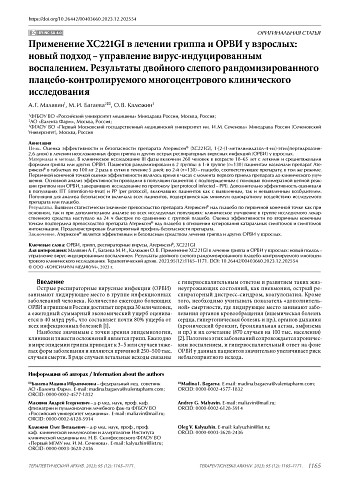
Цель. Оценка эффективности и безопасности препарата Атериксен® (ХС221GI, 1-[2-(1‑метилимидазол‑4‑ил)-этил]пергидроазин‑2,6‑дион) в лечении неосложненных форм гриппа и других острых респираторных вирусных инфекций (ОРВИ) у взрослых.
Материалы и методы. В клиническое исследование III фазы включили 260 человек в возрасте 18–65 лет с легкими и среднетяжелыми формами гриппа или других ОРВИ. Пациентов рандомизировали в 2 группы: в 1‑й группе (n=130) пациентам назначали препарат Атериксен® в таблетках по 100 мг 2 раза в сутки в течение 5 дней; во 2‑й (n=130) – плацебо, соответствующее препарату, в том же режиме. Первичной конечной точкой оценки эффективности являлось время в часах с момента первого приема препарата до клинического улучшения. Основной анализ эффективности проводили в популяции пациентов с подтвержденным с помощью полимеразной цепной реакции гриппом или ОРВИ, завершивших исследование по протоколу (per protocol infected – PPI). Дополнительно эффективность оценивали в популяциях ITT (intention-to-treat) и РР (per protocol), включавших пациентов как с выявленным, так и невыявленным возбудителем. Популяция для анализа безопасности включала всех пациентов, подвергшихся как минимум однократному воздействию исследуемого препарата или плацебо.
Результаты. Выявили статистически значимое превосходство препарата Атериксен® над плацебо по первичной конечной точке как при основном, так и при дополнительном анализе во всех исследуемых популяциях: клиническое улучшение в группе исследуемого лекарственного средства наступало на 24 ч быстрее по сравнению с группой плацебо. Оценка эффективности по вторичным конечным точкам подтвердила превосходство препарата Атериксен® над плацебо в отношении купирования катаральных симптомов и симптомов интоксикации. Продемонстрирован благоприятный профиль безопасности препарата.
Заключение. Атериксен® является эффективным и безопасным средством лечения гриппа и других ОРВИ у взрослых.
Ключевые слова: ОРВИ, грипп, респираторные вирусы, Атериксен®, ХС221GI
Materials and methods. The phase III clinical trial enrolled 260 people aged 18–65 years with mild and moderate forms of influenza or other ARVI. Patients were randomly assigned to two groups: in group 1 (n=130), patients were prescribed the drug Aterixen® in tablets of 100 mg 2 times a day for 5 days; in group 2 (n=130) – a placebo corresponding to the drug, in the same regimen. The primary endpoint of the efficacy assessment was the time in hours from the first administration of the drug to clinical improvement. The main efficacy analysis was performed in a population of patients with PCR-confirmed influenza or ARVI who completed the study according to the protocol (per protocol infected). Additionally, efficacy was evaluated in ITT and PP populations, including patients with both identified and undetected pathogen. The population for safety analysis included all patients, without exception, who were exposed to at least one exposure to the study drug or placebo.
Results. A statistically significant superiority of the drug Aterixen® over placebo in primary endpoint was revealed in both the main and additional analysis in all studied populations: clinical improvement in the group of the studied drug occurred 24 hours faster compared with the placebo group. The evaluation of the effectiveness of secondary endpoints confirmed the superiority of the drug Aterixen® over placebo in terms of relief of catarrhal symptoms and symptoms of intoxication. A favorable safety profile of the drug has been demonstrated.
Conclusion. The drug has demonstrated a favorable safety profile for use in outpatient practice. Aterixen® is an effective and safe treatment for influenza and other ARVI in adults.
Keywords: ARVI, acute respiratory infections, influenza, respiratory viruses, Aterixen®, ХС221GI
Материалы и методы. В клиническое исследование III фазы включили 260 человек в возрасте 18–65 лет с легкими и среднетяжелыми формами гриппа или других ОРВИ. Пациентов рандомизировали в 2 группы: в 1‑й группе (n=130) пациентам назначали препарат Атериксен® в таблетках по 100 мг 2 раза в сутки в течение 5 дней; во 2‑й (n=130) – плацебо, соответствующее препарату, в том же режиме. Первичной конечной точкой оценки эффективности являлось время в часах с момента первого приема препарата до клинического улучшения. Основной анализ эффективности проводили в популяции пациентов с подтвержденным с помощью полимеразной цепной реакции гриппом или ОРВИ, завершивших исследование по протоколу (per protocol infected – PPI). Дополнительно эффективность оценивали в популяциях ITT (intention-to-treat) и РР (per protocol), включавших пациентов как с выявленным, так и невыявленным возбудителем. Популяция для анализа безопасности включала всех пациентов, подвергшихся как минимум однократному воздействию исследуемого препарата или плацебо.
Результаты. Выявили статистически значимое превосходство препарата Атериксен® над плацебо по первичной конечной точке как при основном, так и при дополнительном анализе во всех исследуемых популяциях: клиническое улучшение в группе исследуемого лекарственного средства наступало на 24 ч быстрее по сравнению с группой плацебо. Оценка эффективности по вторичным конечным точкам подтвердила превосходство препарата Атериксен® над плацебо в отношении купирования катаральных симптомов и симптомов интоксикации. Продемонстрирован благоприятный профиль безопасности препарата.
Заключение. Атериксен® является эффективным и безопасным средством лечения гриппа и других ОРВИ у взрослых.
Ключевые слова: ОРВИ, грипп, респираторные вирусы, Атериксен®, ХС221GI
________________________________________________
Materials and methods. The phase III clinical trial enrolled 260 people aged 18–65 years with mild and moderate forms of influenza or other ARVI. Patients were randomly assigned to two groups: in group 1 (n=130), patients were prescribed the drug Aterixen® in tablets of 100 mg 2 times a day for 5 days; in group 2 (n=130) – a placebo corresponding to the drug, in the same regimen. The primary endpoint of the efficacy assessment was the time in hours from the first administration of the drug to clinical improvement. The main efficacy analysis was performed in a population of patients with PCR-confirmed influenza or ARVI who completed the study according to the protocol (per protocol infected). Additionally, efficacy was evaluated in ITT and PP populations, including patients with both identified and undetected pathogen. The population for safety analysis included all patients, without exception, who were exposed to at least one exposure to the study drug or placebo.
Results. A statistically significant superiority of the drug Aterixen® over placebo in primary endpoint was revealed in both the main and additional analysis in all studied populations: clinical improvement in the group of the studied drug occurred 24 hours faster compared with the placebo group. The evaluation of the effectiveness of secondary endpoints confirmed the superiority of the drug Aterixen® over placebo in terms of relief of catarrhal symptoms and symptoms of intoxication. A favorable safety profile of the drug has been demonstrated.
Conclusion. The drug has demonstrated a favorable safety profile for use in outpatient practice. Aterixen® is an effective and safe treatment for influenza and other ARVI in adults.
Keywords: ARVI, acute respiratory infections, influenza, respiratory viruses, Aterixen®, ХС221GI
Полный текст
Список литературы
1. Острые респираторные вирусные инфекции (ОРВИ) у взрослых. Клинические рекомендации РФ. 2021. Режим доступа: Рубрикатор КР (minzdrav.gov.ru). Ссылка активна на 11.12.2023 [Ostrye respiratornye virusnye infektsii (ORVI) u vzroslykh. Klinicheskie rekomendatsii RF. 2021. Available at: Рубрикатор КР (minzdrav.gov.ru). Accessed: 11.12.2023 (in Russian)].
2. Грипп у взрослых. Клинические рекомендации РФ. 2022. Режим доступа: Рубрикатор КР (minzdrav.gov.ru). Ссылка активна на 11.12.2023 [Gripp u vzroslykh. Klinicheskie rekomendatsii RF. 2022. Available at: Рубрикатор КР (minzdrav.gov.ru). Accessed: 11.12.2023(in Russian)].
3. Globenko AA, Kuzin GV, Rydlovskaya AV, et al. Curtailing virus-induced inflammation in respiratory infections: emerging strategies for therapeutic interventions. Front Pharmacol. 2023;14:1087850. DOI:10.3389/fphar.2023.1087850
4. Стукова М.А., Рыдловская А.В., Проскурина О.В., и др. Фармакодинамическая активность нового соединения XC221GI в in vitro и in vivo моделях вирусного воспаления респираторного тракта. MIR J. 2022;9(1):56-70 [Stukova MA, Rydlovskaya AV, Proskurina OV, et al. In vitro and in vivo pharmacodynamic activity of the new compound XC221GI in models of the viral inflammation of the respiratory tract. MIR J. 2022;9(1):56-70 (in Russian)]. DOI:10.18527/2500-2236-2022-9-1-56-70
5. Singh L, Bajaj S, Gadewar M, et al. Modulation of Host Immune Response Is an Alternative Strategy to Combat SARS-CoV‑2 Pathogenesis. Front Immunol. 2021;12:660632. DOI:10.3389/fimmu.2021.660632
6. Latreille E, Lee WL. Modulation of the Host Response as a Therapeutic Strategy in Severe Lung Infections. Viruses. 2023;15(7):1462. DOI:10.3390/v15071462
7. Zhou A, Zhang W, Dong X, et al. The battle for autophagy between host and influenza A virus. Virulence. 2022;13(1):46-59. DOI:10.1080/21505594.2021.2014680
8. Калюжин О.В., Баранова А., Багаева М. И. Стратегия управления вирус-индуцированным воспалением при COVID‑19. Результаты многоцентрового адаптивного рандомизированного двойного слепого плацебо-контролируемого исследования у амбулаторных пациентов. Инфекционные болезни. 2023;21(1):26-34 [Kalyuzhin OV, Baranova A, Bagaeva MI. Management strategy for virus-induced inflammation in COVID‑19. Results of a multicenter, adaptive, randomized, double-blind, placebo-controlled study in outpatients. Infectious Diseases. 2023;21(1):26-34 (in Russian)]. DOI:10.20953/1729-9225-2023-1-26-34
9. Горелов А.В., Калюжин О. В., Багаева М. И. Новые возможности упреждающей противовоспалительной терапии пациентов со среднетяжелой и тяжелой формой COVID‑19. Терапевтический архив. 2022;94(7):872-5 [Gorelov AV, Kalyuzhin OV, Bagaeva MI. New opportunities for preventive anti-inflammatory therapy in the management of patients with moderate and severe COVID‑19. Terapevticheskii Arkhiv (Ter. Arkh.). 2022;94(7):872-5 (in Russian)]. DOI:10.26442/00403660.2022.07.201729
10. Jefferson T, Jones MA, Doshi P, et al. Neuraminidase inhibitors for preventing and treating influenza in adults and children. Cochrane Database Syst Rev. 2014;2014(4): CD008965. DOI:10.1002/14651858.CD008965.pub4
11. Пшеничная Н.Ю., Булгакова В. А., Львов Н. И., и др. Клиническая эффективность умифеновира при гриппе и ОРВИ (исследование АРБИТР). Терапевтический архив. 2019;91(3):56-63 [Pshenichnaya NYu, Bulgakova VA, Lvov NI, et al. Clinical efficacy of umifenovir in influenza and ARVI (study ARBITR). Terapevticheskii Arkhiv (Ter. Arkh.). 2019;91(3):56-63 (in Russian)]. DOI:10.26442/00403660.2019.03.000127
12. Taieb V, Ikeoka H, Ma FF, et al. A network meta-analysis of the efficacy and safety of baloxavir marboxil versus neuraminidase inhibitors for the treatment of influenza in otherwise healthy patients. Curr Med Res Opin. 2019;35(8):1355-64. DOI:10.1080/03007995.2019.1584505
13. Faraone I, Labanca F, Ponticelli M, at all. Recent Clinical and Preclinical Studies of Hydroxychloroquine on RNA Viruses and Chronic Diseases: A Systematic Review. Molecules. 2020;25(22):5318. DOI:10.3390/molecules25225318
14. Sukhatme VP, Reiersen AM, Vayttaden SJ, Sukhatme VV. Fluvoxamine: A Review of Its Mechanism of Action and Its Role in COVID‑19. Front Pharmacol. 2021;12:652688. DOI:10.3389/fphar.2021.652688
2. Gripp u vzroslykh. Klinicheskie rekomendatsii RF. 2022. Available at: Рубрикатор КР (minzdrav.gov.ru). Accessed: 11.12.2023(in Russian).
3. Globenko AA, Kuzin GV, Rydlovskaya AV, et al. Curtailing virus-induced inflammation in respiratory infections: emerging strategies for therapeutic interventions. Front Pharmacol. 2023;14:1087850. DOI:10.3389/fphar.2023.1087850
4. Stukova MA, Rydlovskaya AV, Proskurina OV, et al. In vitro and in vivo pharmacodynamic activity of the new compound XC221GI in models of the viral inflammation of the respiratory tract. MIR J. 2022;9(1):56-70 (in Russian). DOI:10.18527/2500-2236-2022-9-1-56-70
5. Singh L, Bajaj S, Gadewar M, et al. Modulation of Host Immune Response Is an Alternative Strategy to Combat SARS-CoV‑2 Pathogenesis. Front Immunol. 2021;12:660632. DOI:10.3389/fimmu.2021.660632
6. Latreille E, Lee WL. Modulation of the Host Response as a Therapeutic Strategy in Severe Lung Infections. Viruses. 2023;15(7):1462. DOI:10.3390/v15071462
7. Zhou A, Zhang W, Dong X, et al. The battle for autophagy between host and influenza A virus. Virulence. 2022;13(1):46-59. DOI:10.1080/21505594.2021.2014680
8. Kalyuzhin OV, Baranova A, Bagaeva MI. Management strategy for virus-induced inflammation in COVID‑19. Results of a multicenter, adaptive, randomized, double-blind, placebo-controlled study in outpatients. Infectious Diseases. 2023;21(1):26-34 (in Russian). DOI:10.20953/1729-9225-2023-1-26-34
9. Gorelov AV, Kalyuzhin OV, Bagaeva MI. New opportunities for preventive anti-inflammatory therapy in the management of patients with moderate and severe COVID‑19. Terapevticheskii Arkhiv (Ter. Arkh.). 2022;94(7):872-5 (in Russian). DOI:10.26442/00403660.2022.07.201729
10. Jefferson T, Jones MA, Doshi P, et al. Neuraminidase inhibitors for preventing and treating influenza in adults and children. Cochrane Database Syst Rev. 2014;2014(4): CD008965. DOI:10.1002/14651858.CD008965.pub4
11. Pshenichnaya NYu, Bulgakova VA, Lvov NI, et al. Clinical efficacy of umifenovir in influenza and ARVI (study ARBITR). Terapevticheskii Arkhiv (Ter. Arkh.). 2019;91(3):56-63 (in Russian). DOI:10.26442/00403660.2019.03.000127
12. Taieb V, Ikeoka H, Ma FF, et al. A network meta-analysis of the efficacy and safety of baloxavir marboxil versus neuraminidase inhibitors for the treatment of influenza in otherwise healthy patients. Curr Med Res Opin. 2019;35(8):1355-64. DOI:10.1080/03007995.2019.1584505
13. Faraone I, Labanca F, Ponticelli M, at all. Recent Clinical and Preclinical Studies of Hydroxychloroquine on RNA Viruses and Chronic Diseases: A Systematic Review. Molecules. 2020;25(22):5318. DOI:10.3390/molecules25225318
14. Sukhatme VP, Reiersen AM, Vayttaden SJ, Sukhatme VV. Fluvoxamine: A Review of Its Mechanism of Action and Its Role in COVID‑19. Front Pharmacol. 2021;12:652688. DOI:10.3389/fphar.2021.652688
2. Грипп у взрослых. Клинические рекомендации РФ. 2022. Режим доступа: Рубрикатор КР (minzdrav.gov.ru). Ссылка активна на 11.12.2023 [Gripp u vzroslykh. Klinicheskie rekomendatsii RF. 2022. Available at: Рубрикатор КР (minzdrav.gov.ru). Accessed: 11.12.2023(in Russian)].
3. Globenko AA, Kuzin GV, Rydlovskaya AV, et al. Curtailing virus-induced inflammation in respiratory infections: emerging strategies for therapeutic interventions. Front Pharmacol. 2023;14:1087850. DOI:10.3389/fphar.2023.1087850
4. Стукова М.А., Рыдловская А.В., Проскурина О.В., и др. Фармакодинамическая активность нового соединения XC221GI в in vitro и in vivo моделях вирусного воспаления респираторного тракта. MIR J. 2022;9(1):56-70 [Stukova MA, Rydlovskaya AV, Proskurina OV, et al. In vitro and in vivo pharmacodynamic activity of the new compound XC221GI in models of the viral inflammation of the respiratory tract. MIR J. 2022;9(1):56-70 (in Russian)]. DOI:10.18527/2500-2236-2022-9-1-56-70
5. Singh L, Bajaj S, Gadewar M, et al. Modulation of Host Immune Response Is an Alternative Strategy to Combat SARS-CoV‑2 Pathogenesis. Front Immunol. 2021;12:660632. DOI:10.3389/fimmu.2021.660632
6. Latreille E, Lee WL. Modulation of the Host Response as a Therapeutic Strategy in Severe Lung Infections. Viruses. 2023;15(7):1462. DOI:10.3390/v15071462
7. Zhou A, Zhang W, Dong X, et al. The battle for autophagy between host and influenza A virus. Virulence. 2022;13(1):46-59. DOI:10.1080/21505594.2021.2014680
8. Калюжин О.В., Баранова А., Багаева М. И. Стратегия управления вирус-индуцированным воспалением при COVID‑19. Результаты многоцентрового адаптивного рандомизированного двойного слепого плацебо-контролируемого исследования у амбулаторных пациентов. Инфекционные болезни. 2023;21(1):26-34 [Kalyuzhin OV, Baranova A, Bagaeva MI. Management strategy for virus-induced inflammation in COVID‑19. Results of a multicenter, adaptive, randomized, double-blind, placebo-controlled study in outpatients. Infectious Diseases. 2023;21(1):26-34 (in Russian)]. DOI:10.20953/1729-9225-2023-1-26-34
9. Горелов А.В., Калюжин О. В., Багаева М. И. Новые возможности упреждающей противовоспалительной терапии пациентов со среднетяжелой и тяжелой формой COVID‑19. Терапевтический архив. 2022;94(7):872-5 [Gorelov AV, Kalyuzhin OV, Bagaeva MI. New opportunities for preventive anti-inflammatory therapy in the management of patients with moderate and severe COVID‑19. Terapevticheskii Arkhiv (Ter. Arkh.). 2022;94(7):872-5 (in Russian)]. DOI:10.26442/00403660.2022.07.201729
10. Jefferson T, Jones MA, Doshi P, et al. Neuraminidase inhibitors for preventing and treating influenza in adults and children. Cochrane Database Syst Rev. 2014;2014(4): CD008965. DOI:10.1002/14651858.CD008965.pub4
11. Пшеничная Н.Ю., Булгакова В. А., Львов Н. И., и др. Клиническая эффективность умифеновира при гриппе и ОРВИ (исследование АРБИТР). Терапевтический архив. 2019;91(3):56-63 [Pshenichnaya NYu, Bulgakova VA, Lvov NI, et al. Clinical efficacy of umifenovir in influenza and ARVI (study ARBITR). Terapevticheskii Arkhiv (Ter. Arkh.). 2019;91(3):56-63 (in Russian)]. DOI:10.26442/00403660.2019.03.000127
12. Taieb V, Ikeoka H, Ma FF, et al. A network meta-analysis of the efficacy and safety of baloxavir marboxil versus neuraminidase inhibitors for the treatment of influenza in otherwise healthy patients. Curr Med Res Opin. 2019;35(8):1355-64. DOI:10.1080/03007995.2019.1584505
13. Faraone I, Labanca F, Ponticelli M, at all. Recent Clinical and Preclinical Studies of Hydroxychloroquine on RNA Viruses and Chronic Diseases: A Systematic Review. Molecules. 2020;25(22):5318. DOI:10.3390/molecules25225318
14. Sukhatme VP, Reiersen AM, Vayttaden SJ, Sukhatme VV. Fluvoxamine: A Review of Its Mechanism of Action and Its Role in COVID‑19. Front Pharmacol. 2021;12:652688. DOI:10.3389/fphar.2021.652688
________________________________________________
2. Gripp u vzroslykh. Klinicheskie rekomendatsii RF. 2022. Available at: Рубрикатор КР (minzdrav.gov.ru). Accessed: 11.12.2023(in Russian).
3. Globenko AA, Kuzin GV, Rydlovskaya AV, et al. Curtailing virus-induced inflammation in respiratory infections: emerging strategies for therapeutic interventions. Front Pharmacol. 2023;14:1087850. DOI:10.3389/fphar.2023.1087850
4. Stukova MA, Rydlovskaya AV, Proskurina OV, et al. In vitro and in vivo pharmacodynamic activity of the new compound XC221GI in models of the viral inflammation of the respiratory tract. MIR J. 2022;9(1):56-70 (in Russian). DOI:10.18527/2500-2236-2022-9-1-56-70
5. Singh L, Bajaj S, Gadewar M, et al. Modulation of Host Immune Response Is an Alternative Strategy to Combat SARS-CoV‑2 Pathogenesis. Front Immunol. 2021;12:660632. DOI:10.3389/fimmu.2021.660632
6. Latreille E, Lee WL. Modulation of the Host Response as a Therapeutic Strategy in Severe Lung Infections. Viruses. 2023;15(7):1462. DOI:10.3390/v15071462
7. Zhou A, Zhang W, Dong X, et al. The battle for autophagy between host and influenza A virus. Virulence. 2022;13(1):46-59. DOI:10.1080/21505594.2021.2014680
8. Kalyuzhin OV, Baranova A, Bagaeva MI. Management strategy for virus-induced inflammation in COVID‑19. Results of a multicenter, adaptive, randomized, double-blind, placebo-controlled study in outpatients. Infectious Diseases. 2023;21(1):26-34 (in Russian). DOI:10.20953/1729-9225-2023-1-26-34
9. Gorelov AV, Kalyuzhin OV, Bagaeva MI. New opportunities for preventive anti-inflammatory therapy in the management of patients with moderate and severe COVID‑19. Terapevticheskii Arkhiv (Ter. Arkh.). 2022;94(7):872-5 (in Russian). DOI:10.26442/00403660.2022.07.201729
10. Jefferson T, Jones MA, Doshi P, et al. Neuraminidase inhibitors for preventing and treating influenza in adults and children. Cochrane Database Syst Rev. 2014;2014(4): CD008965. DOI:10.1002/14651858.CD008965.pub4
11. Pshenichnaya NYu, Bulgakova VA, Lvov NI, et al. Clinical efficacy of umifenovir in influenza and ARVI (study ARBITR). Terapevticheskii Arkhiv (Ter. Arkh.). 2019;91(3):56-63 (in Russian). DOI:10.26442/00403660.2019.03.000127
12. Taieb V, Ikeoka H, Ma FF, et al. A network meta-analysis of the efficacy and safety of baloxavir marboxil versus neuraminidase inhibitors for the treatment of influenza in otherwise healthy patients. Curr Med Res Opin. 2019;35(8):1355-64. DOI:10.1080/03007995.2019.1584505
13. Faraone I, Labanca F, Ponticelli M, at all. Recent Clinical and Preclinical Studies of Hydroxychloroquine on RNA Viruses and Chronic Diseases: A Systematic Review. Molecules. 2020;25(22):5318. DOI:10.3390/molecules25225318
14. Sukhatme VP, Reiersen AM, Vayttaden SJ, Sukhatme VV. Fluvoxamine: A Review of Its Mechanism of Action and Its Role in COVID‑19. Front Pharmacol. 2021;12:652688. DOI:10.3389/fphar.2021.652688
Авторы
А. Г. Малявин1, М. И. Багаева*2, О. В. Калюжин3
1ФГБОУ ВО «Российский университет медицины» Минздрава России, Москва, Россия;
2АО «Валента Фарм», Москва, Россия;
3ФГАОУ ВО «Первый Московский государственный медицинский университет им. И. М. Сеченова» Минздрава России (Сеченовский Университет), Москва, Россия
*madina.bagaeva@valentapharm.com
1Russian University of Medicine, Moscow, Russia;
2Valenta Pharm Pharmaceutical Company JSC, Moscow, Russia;
3Sechenov First Moscow State Medical University (Sechenov University), Moscow, Russia
*madina.bagaeva@valentapharm.com
1ФГБОУ ВО «Российский университет медицины» Минздрава России, Москва, Россия;
2АО «Валента Фарм», Москва, Россия;
3ФГАОУ ВО «Первый Московский государственный медицинский университет им. И. М. Сеченова» Минздрава России (Сеченовский Университет), Москва, Россия
*madina.bagaeva@valentapharm.com
________________________________________________
1Russian University of Medicine, Moscow, Russia;
2Valenta Pharm Pharmaceutical Company JSC, Moscow, Russia;
3Sechenov First Moscow State Medical University (Sechenov University), Moscow, Russia
*madina.bagaeva@valentapharm.com
Цель портала OmniDoctor – предоставление профессиональной информации врачам, провизорам и фармацевтам.