

Материалы доступны только для специалистов сферы здравоохранения.
Чтобы посмотреть материал полностью
Авторизуйтесь
или зарегистрируйтесь.
Предикторы неэффективности терапии у пациентов с ревматоидным артритом, нуждающихся в смене ГИБП/иJAK: данные одноцентрового проспективного исследования - Журнал Терапевтический архив №12 Vario 2025
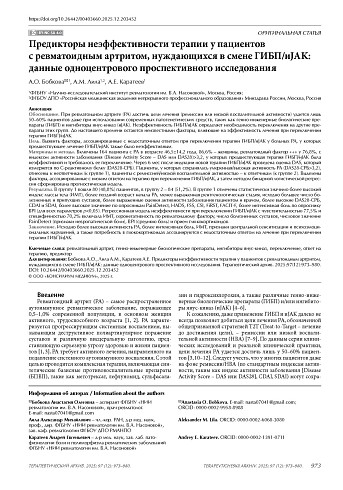
Предикторы неэффективности терапии у пациентов с ревматоидным артритом, нуждающихся в смене ГИБП/иJAK: данные одноцентрового проспективного исследования
Бобкова А.О., Лила А.М., Каратеев А.Е. Предикторы неэффективности терапии у пациентов с ревматоидным артритом, нуждающихся в смене ГИБП/иJAK: данные одноцентрового проспективного исследования. Терапевтический архив. 2025;97(12):973–980. DOI: 10.26442/00403660.2025.12.203452
© ООО «КОНСИЛИУМ МЕДИКУМ», 2025 г.
© ООО «КОНСИЛИУМ МЕДИКУМ», 2025 г.
________________________________________________
Материалы доступны только для специалистов сферы здравоохранения.
Чтобы посмотреть материал полностью
Авторизуйтесь
или зарегистрируйтесь.
Аннотация
Обоснование. При ревматоидном артрите (РА) достичь цели лечения (ремиссии или низкой воспалительной активности) удается лишь 50–60% пациентов даже при использовании современных патогенетических средств, таких как генно-инженерные биологические препараты (ГИБП) и ингибиторы янус-киназ (иJAK). Неэффективность ГИБП/иJAK определяет необходимость переключения на другие препараты этих групп. До настоящего времени остаются неизвестными факторы, влияющие на эффективность лечения при переключении терапии ГИБП/иJAK.
Цель. Выявить факторы, ассоциированные с недостаточным ответом при переключении терапии ГИБП/иJAK у больных РА, у которых предшествующее лечение ГИБП/иJAK также было неэффективным.
Материалы и методы. Включены 164 пациента с РА в возрасте 46,5±14,2 года, 86,6% – женщины, ревматоидный фактор «+» у 76,8%, с индексом активности заболевания (Disease Activity Score – DAS или DAS28)>3,2, у которых предшествующая терапия ГИБП/иJAK была неэффективной и требовалось ее переключение. Через 6 мес после индукции новой терапии ГИБП/иJAK проведена оценка DAS, который измеряется по С-реактивному белку (DAS28-СРБ). Пациенты, у которых сохранялась умеренная/высокая активность РА (DAS28-СРБ>3,2), отнесены к неответчикам (к группе 1), пациенты с ремиссией/низкой воспалительной активностью – к ответчикам (к группе 2). Выделены факторы, ассоциированные с низким ответом на терапию при переключении ГИБП/иJAK, а затем методом бинарной логистической регрессии сформирована прогностическая модель.
Результаты. В группу 1 вошли 80 (48,8%) пациентов, в группу 2 – 84 (51,2%). В группе 1 отмечены статистически значимо более высокий индекс массы тела (ИМТ), более поздний возраст начала РА, менее выраженная рентгенологическая стадия, исходно большее число болезненных и припухших суставов, более выраженные оценки активности заболевания пациентом и врачом, более высокие DAS28-СРБ, CDAI и SDAI, более высокое значение по опросникам PainDetect, HADS, FSS, CSI, FiRST, FACIT-F, более интенсивная боль по опроснику BPI (для всех параметров p<0,05). Регрессионная модель неэффективности при переключении ГИБП/иJAK с чувствительностью 77,5% и специфичностью 70,2% включала ИМТ, серонегативность по ревматоидному фактору, число болезненных суставов, числовое значение PainDetect (признаки невропатической боли), BPI (среднюю боль) и прием глюкокортикоидов.
Заключение. Исходно более высокая активность РА, более интенсивная боль, ИМТ, признаки центральной сенситизации и психоэмоциональных нарушений, а также потребность в глюкокортикоидах ассоциируются с недостаточным ответом на лечение при переключении терапии ГИБП/иJAK.
Ключевые слова: ревматоидный артрит, генно-инженерные биологические препараты, ингибиторы янус-киназ, переключение, ответ на терапию, предиктор
Aim. To identify factors associated with poor response when switching bDMARDs/JAKi in RA patients whose previous bDMARDs/JAKi were also ineffective.
Materials and methods. A total of 164 patients with RA, 46.5±14 years old, 86.6% female, RF '+' 76.8%, with Disease Activity Score – DAS28>3.2, who had failed prior bDMARD/JAKi therapy requiring a switch were enrolled. DAS28-CRP was assessed 6 months after induction of new bDMARDs/JAKi therapy. Patients with moderate/high RA activity (DAS28-CRP>3.2) were classified as non-responders (group 1), patients in remission/ low disease activity were classified as responders (group 2). Factors associated with poor response to therapy when switching bDMARDs/JAKi were identified, and then a predictive model was formed by binary logistic regression.
Results. Group 1 included 80 (48.8%) patients and group 2 included 84 (51.2%) patients. Group 1 showed statistically significantly higher body mass index (BMI), later age of onset of RA, less advanced radiological stage, baseline greater TJC (tender joint count) and SJC (swollen joint count), more severe PtPGA and PhPGA, higher DAS28-CRP, CDAI and SDAI, higher PainDetect, HADS depression, FSS, CSI, FiRST, FACIT-F, higher BPI pain (for all parameters p<0.05). A regression model for bDMARD/JAKi switching ineffectiveness with a sensitivity of 77.5% and specificity of 70.2% included BMI, RF seronegativity, CSI, PainDetect numeric score (signs of neuropathic pain), BPI (mean pain) and GC intake at baseline.
Conclusion. Initial higher RA activity, pain severity, BMI, signs of central sensitisation and psychoemotional disturbance, and need for GC are associated with a poor response to therapy when switching bDMARDs/JAKi.
Keywords: rheumatoid arthritis, biologic disease-modifying anti-rheumatic drugs, Janus kinase inhibitors, switching, response to therapy, predictor
Цель. Выявить факторы, ассоциированные с недостаточным ответом при переключении терапии ГИБП/иJAK у больных РА, у которых предшествующее лечение ГИБП/иJAK также было неэффективным.
Материалы и методы. Включены 164 пациента с РА в возрасте 46,5±14,2 года, 86,6% – женщины, ревматоидный фактор «+» у 76,8%, с индексом активности заболевания (Disease Activity Score – DAS или DAS28)>3,2, у которых предшествующая терапия ГИБП/иJAK была неэффективной и требовалось ее переключение. Через 6 мес после индукции новой терапии ГИБП/иJAK проведена оценка DAS, который измеряется по С-реактивному белку (DAS28-СРБ). Пациенты, у которых сохранялась умеренная/высокая активность РА (DAS28-СРБ>3,2), отнесены к неответчикам (к группе 1), пациенты с ремиссией/низкой воспалительной активностью – к ответчикам (к группе 2). Выделены факторы, ассоциированные с низким ответом на терапию при переключении ГИБП/иJAK, а затем методом бинарной логистической регрессии сформирована прогностическая модель.
Результаты. В группу 1 вошли 80 (48,8%) пациентов, в группу 2 – 84 (51,2%). В группе 1 отмечены статистически значимо более высокий индекс массы тела (ИМТ), более поздний возраст начала РА, менее выраженная рентгенологическая стадия, исходно большее число болезненных и припухших суставов, более выраженные оценки активности заболевания пациентом и врачом, более высокие DAS28-СРБ, CDAI и SDAI, более высокое значение по опросникам PainDetect, HADS, FSS, CSI, FiRST, FACIT-F, более интенсивная боль по опроснику BPI (для всех параметров p<0,05). Регрессионная модель неэффективности при переключении ГИБП/иJAK с чувствительностью 77,5% и специфичностью 70,2% включала ИМТ, серонегативность по ревматоидному фактору, число болезненных суставов, числовое значение PainDetect (признаки невропатической боли), BPI (среднюю боль) и прием глюкокортикоидов.
Заключение. Исходно более высокая активность РА, более интенсивная боль, ИМТ, признаки центральной сенситизации и психоэмоциональных нарушений, а также потребность в глюкокортикоидах ассоциируются с недостаточным ответом на лечение при переключении терапии ГИБП/иJAK.
Ключевые слова: ревматоидный артрит, генно-инженерные биологические препараты, ингибиторы янус-киназ, переключение, ответ на терапию, предиктор
________________________________________________
Aim. To identify factors associated with poor response when switching bDMARDs/JAKi in RA patients whose previous bDMARDs/JAKi were also ineffective.
Materials and methods. A total of 164 patients with RA, 46.5±14 years old, 86.6% female, RF '+' 76.8%, with Disease Activity Score – DAS28>3.2, who had failed prior bDMARD/JAKi therapy requiring a switch were enrolled. DAS28-CRP was assessed 6 months after induction of new bDMARDs/JAKi therapy. Patients with moderate/high RA activity (DAS28-CRP>3.2) were classified as non-responders (group 1), patients in remission/ low disease activity were classified as responders (group 2). Factors associated with poor response to therapy when switching bDMARDs/JAKi were identified, and then a predictive model was formed by binary logistic regression.
Results. Group 1 included 80 (48.8%) patients and group 2 included 84 (51.2%) patients. Group 1 showed statistically significantly higher body mass index (BMI), later age of onset of RA, less advanced radiological stage, baseline greater TJC (tender joint count) and SJC (swollen joint count), more severe PtPGA and PhPGA, higher DAS28-CRP, CDAI and SDAI, higher PainDetect, HADS depression, FSS, CSI, FiRST, FACIT-F, higher BPI pain (for all parameters p<0.05). A regression model for bDMARD/JAKi switching ineffectiveness with a sensitivity of 77.5% and specificity of 70.2% included BMI, RF seronegativity, CSI, PainDetect numeric score (signs of neuropathic pain), BPI (mean pain) and GC intake at baseline.
Conclusion. Initial higher RA activity, pain severity, BMI, signs of central sensitisation and psychoemotional disturbance, and need for GC are associated with a poor response to therapy when switching bDMARDs/JAKi.
Keywords: rheumatoid arthritis, biologic disease-modifying anti-rheumatic drugs, Janus kinase inhibitors, switching, response to therapy, predictor
Полный текст
Список литературы
1. Насонов Е.Л., Олюнин Ю.А., Лила А.М. Ревматоидный артрит: проблемы ремиссии и резистентности к терапии. Научно-практическая ревматология. 2018;56(3):363-71 [Nasonov EL, Olyunin YuA, Lila AM. Rheumatoid arthritis: the problems of remission and therapy resistance. Nauchno-Prakticheskaya Revmatologiya = Rheumatology Science and Practice. 2018;56(3):363-71 (in Russian)]. DOI:10.14412/1995-4484-2018-263-271
2. Галушко Е.А., Эрдес Ш.Ф., Базоркина Д.И., и др. Распространенность ревматоидного артрита в России (по данным эпидемиологического исследования). Терапевтический архив. 2010;82(5):9-14 [Galushko EA, Erdes SF, Bazorkina DI, et al. Prevalence of rheumatoid arthritis in Russia (according to epidemiological findings). Terapevticheskii Arkhiv (Ter. Arkh.). 2010;82(5):9-14 (in Russian)].
3. Smolen JS, Aletaha D, Barton A, et al. Rheumatoid arthritis. Nat Rev Dis Primers. 2018;4:18001. DOI:10.1038/nrdp.2018.1
4. Prasad P, Verma S, Surbhi, et al. Rheumatoid arthritis: advances in treatment strategies. Mol Cell Biochem. 2023;478(1):69-88. DOI:10.1007/s11010-022-04492-3
5. Fraenkel L, Bathon JM, England BR, et al. 2021 American College of Rheumatology Guideline for the Treatment of Rheumatoid Arthritis. Arthritis Care Res (Hoboken). 2021;73(7):924-39. DOI:10.1002/acr.24596
6. Насонов Е.Л., Каратеев Д.Е., Лукина Г.В. Фармакотерапия ревматоидного артрита в начале XXI века: российский и международный опыт. Терапевтический архив. 2013;85(8):20-8 [Nasonov EL, Karateev DE, Lukina GV. Pharmacotherapy for rheumatoid arthritis in the early 21st century: Russian and international experience. Terapevticheskii Arkhiv (Ter. Arkh.). 2013;85(8):20-8 (in Russian)].
7. Thomas K, Lazarini A, Kaltsonoudis E, et al. Treatment patterns and achievement of the treat-to-target goals in a real-life rheumatoid arthritis patient cohort: data from 1317 patients. Ther Adv Musculoskelet Dis. 2020;12:1759720X20937132. DOI:10.1177/1759720X20937132
8. Smolen JS, Landewé RBM, Bergstra SA, et al. EULAR recommendations for the management of rheumatoid arthritis with synthetic and biological disease-modifying antirheumatic drugs: 2022 update. Ann Rheum Dis. 2023;82(1):3-18. DOI:10.1136/ard-2022-223356
9. Holdsworth EA, Donaghy B, Fox KM, et al. Biologic and Targeted Synthetic DMARD Utilization in the United States: Adelphi Real World Disease Specific Programme for Rheumatoid Arthritis. Rheumatol Ther. 2021;8(4):1637-69. DOI:10.1007/s40744-021-00357-1
10. Rubbert-Roth A, Szabó MZ, Kedves M, et al. Failure of anti-TNF treatment in patients with rheumatoid arthritis: The pros and cons of the early use of alternative biological agents. Autoimmun Rev. 2019;18(12):102398. DOI:10.1016/j.autrev.2019.102398
11. Eberhard A, Di Giuseppe D, Askling J, et al. Effectiveness of JAK Inhibitors Compared With Biologic Disease-Modifying Antirheumatic Drugs on Pain Reduction in Rheumatoid Arthritis: Results From a Nationwide Swedish Cohort Study. Arthritis Rheumatol. 2025;77(3):253-62. DOI:10.1002/art.43014
12. Amstad A, Papagiannoulis E, Scherer A, et al. Comparison of drug retention of TNF inhibitors, other biologics and JAK inhibitors in RA patients who discontinued JAK inhibitor therapy. Rheumatology (Oxford). 2022;62(1):89-97. DOI:10.1093/rheumatology/keac285
13. Гордеев А.В., Олюнин Ю.А., Галушко Е.А., и др. Труднолечимый ревматоидный артрит. Какой он? Современная ревматология. 2021;15(5):7-11 [Gordeev AV, Olyunin YA, Galushko EA, et al. Difficult-to-treat rheumatoid arthritis. What is it? Modern Rheumatology Journal. 2021;15(5):7-11 (in Russian)]. DOI:10.14412/1996-7012-2021-5-7-11
14. Ataman S, Sunar I, Bodur H, et al. Demographic and Clinical Characteristics of Patients with Sustained and Switching Treatments Using Biological and Targeted Synthetic Disease-Modifying Antirheumatic Drugs: A Multicenter, Observational Cross-Sectional Study for Rheumatoid Arthritis. Rheumatol Ther. 2022;9(1):223-41. DOI:10.1007/s40744-021-00403-y
15. Das D, Choy E. Non-inflammatory pain in inflammatory arthritis. Rheumatology (Oxford). 2023;62(7):2360-35. DOI:10.1093/rheumatology/keac671
16. McDermott GC, DiIorio M, Kawano Y, et al. Reasons for multiple biologic and targeted synthetic DMARD switching and characteristics of treatment refractory rheumatoid arthritis. Semin Arthritis Rheum. 2024;66:152421. DOI:10.1016/j.semarthrit.2024.152421
17. Бобкова А.О., Лила А.М. Проблема переключений генно-инженерных биологических препаратов и ингибиторов Янус-киназ у пациентов с ревматоидным артритом. Современная ревматология. 2023;17(3):82-8 [Bobkova AO, Lila AM. Switching biological disease-modifying antirheumatic drugs and Janus kinase inhibitors in patients with rheumatoid arthritis. Modern Rheumatology Journal. 2023;17(3):82-8 (in Russian)]. DOI:10.14412/1996-7012-2023-3-82-88
18. Caporali R, Kadakia A, Howell O, et al. A Real-World Comparison of Clinical Effectiveness in Patients with Rheumatoid Arthritis Treated with Upadacitinib, Tumor Necrosis Factor Inhibitors, and Other Advanced Therapies After Switching from an Initial Tumor Necrosis Factor Inhibitor. Adv Ther. 2024;41(9):3706-21. DOI:10.1007/s12325-024-02948-0
19. Pombo-Suarez M, Sanchez-Piedra C, Gómez-Reino J, et al. After JAK inhibitor failure: to cycle or to switch, that is the question – data from the JAK-pot collaboration of registries. Ann Rheum Dis. 2023;82(2):175-81. DOI:10.1136/ard-2022-222835
20. Fleischmann RM, Blanco R, Hall S, et al. Switching between Janus kinase inhibitor upadacitinib and adalimumab following insufficient response: efficacy and safety in patients with rheumatoid arthritis. Ann Rheum Dis. 2021;80(4):432-3. DOI:10.1136/annrheumdis-2020-218412
21. Wei W, Knapp K, Wang L, et al. Treatment Persistence and Clinical Outcomes of Tumor Necrosis Factor Inhibitor Cycling or Switching to a New Mechanism of Action Therapy: Real-world Observational Study of Rheumatoid Arthritis Patients in the United States with Prior Tumor Necrosis Factor Inhibitor Therapy. Adv Ther. 2017;34(8):1936-52. DOI:10.1007/s12325-017-0578-822
22. Kearsley-Fleet L, Davies R, De Cock D, et al. Biologic refractory disease in rheumatoid arthritis: results from the British Society for Rheumatology Biologics Register for Rheumatoid Arthritis. Ann Rheum Dis. 2018;77(10):1405-42. DOI:10.1136/annrheumdis-2018-213378
23. Lauper K, Iudici M, Mongin D, et al. Effectiveness of TNF-inhibitors, abatacept, IL6-inhibitors and JAK-inhibitors in 31 846 patients with rheumatoid arthritis in 19 registers from the 'JAK-pot' collaboration. Ann Rheum Dis. 2024;83(1):e1. DOI:10.1136/ard-2022-222586corr1
24. Novella-Navarro M, Plasencia C, Tornero C, et al. Clinical predictors of multiple failure to biological therapy in patients with rheumatoid arthritis. Arthritis Res Ther. 2020;22(1):284. DOI:10.1186/s13075-020-02354-1
25. Janahiraman S, Too CL, Lee KW, et al. Genetic Biomarkers as Predictors of Response to Tocilizumab in Rheumatoid Arthritis: A Systematic Review and Meta-Analysis. Genes (Basel). 2022;13(7):1284. DOI:10.3390/genes13071284
26. Gamboa-Cárdenas RV, Ugarte-Gil MF, Loreto M, et al. Clinical predictors of remission and low disease activity in Latin American early rheumatoid arthritis: data from the GLADAR cohort. Clin Rheumatol. 2019;38(10):2737-76. DOI:10.1007/s10067-019-04618-x
27. Law-Wan J, Sparfel MA, Derolez S, et al. Predictors of response to TNF inhibitors in rheumatoid arthritis: an individual patient data pooled analysis of randomised controlled trials. RMD Open. 2021;7(3):e001882. DOI:10.1136/rmdopen-2021-001882
28. Yu C, Jin S, Wang Y, et al. Remission rate and predictors of remission in patients with rheumatoid arthritis under treat-to-target strategy in real-world studies: a systematic review and meta-analysis. Clin Rheumatol. 2019;38(3):727-38. DOI:10.1007/s10067-018-4340-7
29. Watanabe R, Ebina K, Gon T, et al. Predictive factors and treatment outcomes associated with difficult-to-treat rheumatoid arthritis conditions: the ANSWER cohort study. Rheumatology (Oxford). 2024;63(9):2418-46. DOI:10.1093/rheumatology/keae265
30. Авдеева А.С., Кусевич Д.А. Роль лабораторных биомаркеров в прогнозировании эффективности терапии ритуксимабом при ревматоидном артрите (новые данные). Научно-практическая ревматология. 2017;55(3):295-303 [Avdeeva AS, Kusevich DA. The role of laboratory biomarkers in predicting the efficiency of rituximab therapy for rheumatoid arthritis: new evidence. Rheumatology Science and Practice. 2017;55(3):295-303 (in Russian)]. DOI:10.14412/1995-4484-2017-295-303
31. Nagatani K, Sakashita E, Endo H, Minota S. A novel multi-biomarker combination predicting relapse from long-term remission after discontinuation of biological drugs in rheumatoid arthritis. Sci Rep. 2021;11(1):20771. DOI:10.1038/s41598-021-00357-9
32. Абрамкин А.А., Лисицына Т.А., Вельтищев Д.Ю., и др. Факторы, влияющие на эффективность терапии у больных ревматоидным артритом: роль коморбидной психической и соматической патологии. Научно-практическая ревматология. 2018;56(4):439-48 [Abramkin AA, Lisitsyna TA, Veltishchev DYu, et al. Factors influencing the efficiency of therapy in patients with rheumatoid arthritis: the role of comorbid mental and somatic diseases. Rheumatology Science and Practice. 2018;56(4):439-48 (in Russian)]. DOI:10.14412/1995-4484-2018-439-448
33. Галушко Е.А., Гордеев А.В., Матьянова Е.В., и др. Труднолечимый ревматоидный артрит в реальной клинической практике. Предварительные результаты. Терапевтический архив. 2022;94(5):661-6 [Galushko EA, Gordeev AV, Matyanova EV, et al. Difficult-to-treat rheumatoid arthritis in real clinical practice. Preliminary results. Terapevticheskii Arkhiv (Ter. Arkh.). 2022;94(5):661-6 (in Russian)]. DOI:10.26442/00403660.2022.05.201489
34. Khader Y, Beran A, Ghazaleh S, et al. Predictors of remission in rheumatoid arthritis patients treated with biologics: a systematic review and meta-analysis. Clin Rheumatol. 2022;41(12):3615-67. DOI:10.1007/s10067-022-06307-8
35. Qi W, Robert A, Singbo N, et al. Characteristics of patients with difficult-to-treat rheumatoid arthritis: a descriptive retrospective cohort study. Adv Rheumatol. 2024;64(1):55. DOI:10.1186/s42358-024-00396-6
36. Бобкова А.О., Лила А.М., Каратеев А.Е. Особенности клинических проявлений и фармакотерапии у пациентов с ревматоидным артритом, нуждающихся в переключении генно-инженерных биологических препаратов и ингибиторов Янус-киназ. Современная ревматология. 2024;18(4):16-22 [Bobkova AO, Lila AM, Karateev AE. Characteristics of clinical manifestations and pharmacotherapy in patients with rheumatoid arthritis requiring switching between biologic disease-modifying antirheumatic drugs and Janus kinase inhibitors. Modern Rheumatology Journal. 2024;18(4):16-22 (in Russian)]. DOI:10.14412/1996-7012-2024-4-16-22
37. Majnik J, Császár-Nagy N, Böcskei G, et al. Non-pharmacological treatment in difficult-to-treat rheumatoid arthritis. Front Med (Lausanne). 2022;9:991677. DOI:10.3389/fmed.2022.991677
38. Roodenrijs NMT, Hamar A, Kedves M, et al. Pharmacological and non-pharmacological therapeutic strategies in difficult-to-treat rheumatoid arthritis: a systematic literature review informing the EULAR recommendations for the management of difficult-to-treat rheumatoid arthritis. RMD Open. 2021;7(1):e001512. DOI:10.1136/rmdopen-2020-001512
39. Абрамкин А.А., Лисицына Т.А., Вельтищев Д.Ю., и др. Влияние успешной психофармакотерапии расстройств тревожно-депрессивного спектра на выраженность функциональных ограничений у больных ревматоидным артритом. Терапевтический архив. 2022;94(5):616-21 [Abramkin AA, Lisitsyna TA, Veltishchev DY, et al. Successful psychopharmacotherapy of anxiety and depressive disorders improve functional limitations in patients with rheumatoid arthritis. Terapevticheskii Arkhiv (Ter. Arkh.). 2022;94(5):616-21 (in Russian)]. DOI:10.26442/00403660.2022.05.201514
40. Bournia VK, Tektonidou MG, Vassilopoulos D, et al. Introduction and switching of biologic agents are associated with antidepressant and anxiolytic medication use: data on 42 815 real-world patients with inflammatory rheumatic disease. RMD Open. 2020;6(3):e001303. DOI:10.1136/rmdopen-2020-001303
41. Berghea F, Berghea CE, Zaharia D, et al. Residual Pain in the Context of Selecting and Switching Biologic Therapy in Inflammatory Rheumatic Diseases. Front Med (Lausanne). 2021;8:712645. DOI:10.3389/fmed.2021.712645
42. Martins A, Pimenta S, Oliveira D, et al. Can we predict the risk factors for switching due to ineffectiveness in the first year of therapy with bDMARD in patients with rheumatoid arthritis? Reumatol Clin (Engl Ed). 2024;20(7):380-8. DOI:10.1016/j.reumae.2024.07.008
2. Galushko EA, Erdes SF, Bazorkina DI, et al. Prevalence of rheumatoid arthritis in Russia (according to epidemiological findings). Terapevticheskii Arkhiv (Ter. Arkh.). 2010;82(5):9-14 (in Russian).
3. Smolen JS, Aletaha D, Barton A, et al. Rheumatoid arthritis. Nat Rev Dis Primers. 2018;4:18001. DOI:10.1038/nrdp.2018.1
4. Prasad P, Verma S, Surbhi, et al. Rheumatoid arthritis: advances in treatment strategies. Mol Cell Biochem. 2023;478(1):69-88. DOI:10.1007/s11010-022-04492-3
5. Fraenkel L, Bathon JM, England BR, et al. 2021 American College of Rheumatology Guideline for the Treatment of Rheumatoid Arthritis. Arthritis Care Res (Hoboken). 2021;73(7):924-39. DOI:10.1002/acr.24596
6. Nasonov EL, Karateev DE, Lukina GV. Pharmacotherapy for rheumatoid arthritis in the early 21st century: Russian and international experience. Terapevticheskii Arkhiv (Ter. Arkh.). 2013;85(8):20-8 (in Russian).
7. Thomas K, Lazarini A, Kaltsonoudis E, et al. Treatment patterns and achievement of the treat-to-target goals in a real-life rheumatoid arthritis patient cohort: data from 1317 patients. Ther Adv Musculoskelet Dis. 2020;12:1759720X20937132. DOI:10.1177/1759720X20937132
8. Smolen JS, Landewé RBM, Bergstra SA, et al. EULAR recommendations for the management of rheumatoid arthritis with synthetic and biological disease-modifying antirheumatic drugs: 2022 update. Ann Rheum Dis. 2023;82(1):3-18. DOI:10.1136/ard-2022-223356
9. Holdsworth EA, Donaghy B, Fox KM, et al. Biologic and Targeted Synthetic DMARD Utilization in the United States: Adelphi Real World Disease Specific Programme for Rheumatoid Arthritis. Rheumatol Ther. 2021;8(4):1637-69. DOI:10.1007/s40744-021-00357-1
10. Rubbert-Roth A, Szabó MZ, Kedves M, et al. Failure of anti-TNF treatment in patients with rheumatoid arthritis: The pros and cons of the early use of alternative biological agents. Autoimmun Rev. 2019;18(12):102398. DOI:10.1016/j.autrev.2019.102398
11. Eberhard A, Di Giuseppe D, Askling J, et al. Effectiveness of JAK Inhibitors Compared With Biologic Disease-Modifying Antirheumatic Drugs on Pain Reduction in Rheumatoid Arthritis: Results From a Nationwide Swedish Cohort Study. Arthritis Rheumatol. 2025;77(3):253-62. DOI:10.1002/art.43014
12. Amstad A, Papagiannoulis E, Scherer A, et al. Comparison of drug retention of TNF inhibitors, other biologics and JAK inhibitors in RA patients who discontinued JAK inhibitor therapy. Rheumatology (Oxford). 2022;62(1):89-97. DOI:10.1093/rheumatology/keac285
13. Gordeev AV, Olyunin YA, Galushko EA, et al. Difficult-to-treat rheumatoid arthritis. What is it? Modern Rheumatology Journal. 2021;15(5):7-11 (in Russian). DOI:10.14412/1996-7012-2021-5-7-11
14. Ataman S, Sunar I, Bodur H, et al. Demographic and Clinical Characteristics of Patients with Sustained and Switching Treatments Using Biological and Targeted Synthetic Disease-Modifying Antirheumatic Drugs: A Multicenter, Observational Cross-Sectional Study for Rheumatoid Arthritis. Rheumatol Ther. 2022;9(1):223-41. DOI:10.1007/s40744-021-00403-y
15. Das D, Choy E. Non-inflammatory pain in inflammatory arthritis. Rheumatology (Oxford). 2023;62(7):2360-35. DOI:10.1093/rheumatology/keac671
16. McDermott GC, DiIorio M, Kawano Y, et al. Reasons for multiple biologic and targeted synthetic DMARD switching and characteristics of treatment refractory rheumatoid arthritis. Semin Arthritis Rheum. 2024;66:152421. DOI:10.1016/j.semarthrit.2024.152421
17. Bobkova AO, Lila AM. Switching biological disease-modifying antirheumatic drugs and Janus kinase inhibitors in patients with rheumatoid arthritis. Modern Rheumatology Journal. 2023;17(3):82-8 (in Russian). DOI:10.14412/1996-7012-2023-3-82-88
18. Caporali R, Kadakia A, Howell O, et al. A Real-World Comparison of Clinical Effectiveness in Patients with Rheumatoid Arthritis Treated with Upadacitinib, Tumor Necrosis Factor Inhibitors, and Other Advanced Therapies After Switching from an Initial Tumor Necrosis Factor Inhibitor. Adv Ther. 2024;41(9):3706-21. DOI:10.1007/s12325-024-02948-0
19. Pombo-Suarez M, Sanchez-Piedra C, Gómez-Reino J, et al. After JAK inhibitor failure: to cycle or to switch, that is the question – data from the JAK-pot collaboration of registries. Ann Rheum Dis. 2023;82(2):175-81. DOI:10.1136/ard-2022-222835
20. Fleischmann RM, Blanco R, Hall S, et al. Switching between Janus kinase inhibitor upadacitinib and adalimumab following insufficient response: efficacy and safety in patients with rheumatoid arthritis. Ann Rheum Dis. 2021;80(4):432-3. DOI:10.1136/annrheumdis-2020-218412
21. Wei W, Knapp K, Wang L, et al. Treatment Persistence and Clinical Outcomes of Tumor Necrosis Factor Inhibitor Cycling or Switching to a New Mechanism of Action Therapy: Real-world Observational Study of Rheumatoid Arthritis Patients in the United States with Prior Tumor Necrosis Factor Inhibitor Therapy. Adv Ther. 2017;34(8):1936-52. DOI:10.1007/s12325-017-0578-822
22. Kearsley-Fleet L, Davies R, De Cock D, et al. Biologic refractory disease in rheumatoid arthritis: results from the British Society for Rheumatology Biologics Register for Rheumatoid Arthritis. Ann Rheum Dis. 2018;77(10):1405-42. DOI:10.1136/annrheumdis-2018-213378
23. Lauper K, Iudici M, Mongin D, et al. Effectiveness of TNF-inhibitors, abatacept, IL6-inhibitors and JAK-inhibitors in 31 846 patients with rheumatoid arthritis in 19 registers from the 'JAK-pot' collaboration. Ann Rheum Dis. 2024;83(1):e1. DOI:10.1136/ard-2022-222586corr1
24. Novella-Navarro M, Plasencia C, Tornero C, et al. Clinical predictors of multiple failure to biological therapy in patients with rheumatoid arthritis. Arthritis Res Ther. 2020;22(1):284. DOI:10.1186/s13075-020-02354-1
25. Janahiraman S, Too CL, Lee KW, et al. Genetic Biomarkers as Predictors of Response to Tocilizumab in Rheumatoid Arthritis: A Systematic Review and Meta-Analysis. Genes (Basel). 2022;13(7):1284. DOI:10.3390/genes13071284
26. Gamboa-Cárdenas RV, Ugarte-Gil MF, Loreto M, et al. Clinical predictors of remission and low disease activity in Latin American early rheumatoid arthritis: data from the GLADAR cohort. Clin Rheumatol. 2019;38(10):2737-76. DOI:10.1007/s10067-019-04618-x
27. Law-Wan J, Sparfel MA, Derolez S, et al. Predictors of response to TNF inhibitors in rheumatoid arthritis: an individual patient data pooled analysis of randomised controlled trials. RMD Open. 2021;7(3):e001882. DOI:10.1136/rmdopen-2021-001882
28. Yu C, Jin S, Wang Y, et al. Remission rate and predictors of remission in patients with rheumatoid arthritis under treat-to-target strategy in real-world studies: a systematic review and meta-analysis. Clin Rheumatol. 2019;38(3):727-38. DOI:10.1007/s10067-018-4340-7
29. Watanabe R, Ebina K, Gon T, et al. Predictive factors and treatment outcomes associated with difficult-to-treat rheumatoid arthritis conditions: the ANSWER cohort study. Rheumatology (Oxford). 2024;63(9):2418-46. DOI:10.1093/rheumatology/keae265
30. Avdeeva AS, Kusevich DA. The role of laboratory biomarkers in predicting the efficiency of rituximab therapy for rheumatoid arthritis: new evidence. Rheumatology Science and Practice. 2017;55(3):295-303 (in Russian). DOI:10.14412/1995-4484-2017-295-303
31. Nagatani K, Sakashita E, Endo H, Minota S. A novel multi-biomarker combination predicting relapse from long-term remission after discontinuation of biological drugs in rheumatoid arthritis. Sci Rep. 2021;11(1):20771. DOI:10.1038/s41598-021-00357-9
32. Abramkin AA, Lisitsyna TA, Veltishchev DYu, et al. Factors influencing the efficiency of therapy in patients with rheumatoid arthritis: the role of comorbid mental and somatic diseases. Rheumatology Science and Practice. 2018;56(4):439-48 (in Russian). DOI:10.14412/1995-4484-2018-439-448
33. Galushko EA, Gordeev AV, Matyanova EV, et al. Difficult-to-treat rheumatoid arthritis in real clinical practice. Preliminary results. Terapevticheskii Arkhiv (Ter. Arkh.). 2022;94(5):661-6 (in Russian). DOI:10.26442/00403660.2022.05.201489
34. Khader Y, Beran A, Ghazaleh S, et al. Predictors of remission in rheumatoid arthritis patients treated with biologics: a systematic review and meta-analysis. Clin Rheumatol. 2022;41(12):3615-67. DOI:10.1007/s10067-022-06307-8
35. Qi W, Robert A, Singbo N, et al. Characteristics of patients with difficult-to-treat rheumatoid arthritis: a descriptive retrospective cohort study. Adv Rheumatol. 2024;64(1):55. DOI:10.1186/s42358-024-00396-6
36. Bobkova AO, Lila AM, Karateev AE. Characteristics of clinical manifestations and pharmacotherapy in patients with rheumatoid arthritis requiring switching between biologic disease-modifying antirheumatic drugs and Janus kinase inhibitors. Modern Rheumatology Journal. 2024;18(4):16-22 (in Russian). DOI:10.14412/1996-7012-2024-4-16-22
37. Majnik J, Császár-Nagy N, Böcskei G, et al. Non-pharmacological treatment in difficult-to-treat rheumatoid arthritis. Front Med (Lausanne). 2022;9:991677. DOI:10.3389/fmed.2022.991677
38. Roodenrijs NMT, Hamar A, Kedves M, et al. Pharmacological and non-pharmacological therapeutic strategies in difficult-to-treat rheumatoid arthritis: a systematic literature review informing the EULAR recommendations for the management of difficult-to-treat rheumatoid arthritis. RMD Open. 2021;7(1):e001512. DOI:10.1136/rmdopen-2020-001512
39. Abramkin AA, Lisitsyna TA, Veltishchev DY, et al. Successful psychopharmacotherapy of anxiety and depressive disorders improve functional limitations in patients with rheumatoid arthritis. Terapevticheskii Arkhiv (Ter. Arkh.). 2022;94(5):616-21 (in Russian). DOI:10.26442/00403660.2022.05.201514
40. Bournia VK, Tektonidou MG, Vassilopoulos D, et al. Introduction and switching of biologic agents are associated with antidepressant and anxiolytic medication use: data on 42 815 real-world patients with inflammatory rheumatic disease. RMD Open. 2020;6(3):e001303. DOI:10.1136/rmdopen-2020-001303
41. Berghea F, Berghea CE, Zaharia D, et al. Residual Pain in the Context of Selecting and Switching Biologic Therapy in Inflammatory Rheumatic Diseases. Front Med (Lausanne). 2021;8:712645. DOI:10.3389/fmed.2021.712645
42. Martins A, Pimenta S, Oliveira D, et al. Can we predict the risk factors for switching due to ineffectiveness in the first year of therapy with bDMARD in patients with rheumatoid arthritis? Reumatol Clin (Engl Ed). 2024;20(7):380-8. DOI:10.1016/j.reumae.2024.07.008
2. Галушко Е.А., Эрдес Ш.Ф., Базоркина Д.И., и др. Распространенность ревматоидного артрита в России (по данным эпидемиологического исследования). Терапевтический архив. 2010;82(5):9-14 [Galushko EA, Erdes SF, Bazorkina DI, et al. Prevalence of rheumatoid arthritis in Russia (according to epidemiological findings). Terapevticheskii Arkhiv (Ter. Arkh.). 2010;82(5):9-14 (in Russian)].
3. Smolen JS, Aletaha D, Barton A, et al. Rheumatoid arthritis. Nat Rev Dis Primers. 2018;4:18001. DOI:10.1038/nrdp.2018.1
4. Prasad P, Verma S, Surbhi, et al. Rheumatoid arthritis: advances in treatment strategies. Mol Cell Biochem. 2023;478(1):69-88. DOI:10.1007/s11010-022-04492-3
5. Fraenkel L, Bathon JM, England BR, et al. 2021 American College of Rheumatology Guideline for the Treatment of Rheumatoid Arthritis. Arthritis Care Res (Hoboken). 2021;73(7):924-39. DOI:10.1002/acr.24596
6. Насонов Е.Л., Каратеев Д.Е., Лукина Г.В. Фармакотерапия ревматоидного артрита в начале XXI века: российский и международный опыт. Терапевтический архив. 2013;85(8):20-8 [Nasonov EL, Karateev DE, Lukina GV. Pharmacotherapy for rheumatoid arthritis in the early 21st century: Russian and international experience. Terapevticheskii Arkhiv (Ter. Arkh.). 2013;85(8):20-8 (in Russian)].
7. Thomas K, Lazarini A, Kaltsonoudis E, et al. Treatment patterns and achievement of the treat-to-target goals in a real-life rheumatoid arthritis patient cohort: data from 1317 patients. Ther Adv Musculoskelet Dis. 2020;12:1759720X20937132. DOI:10.1177/1759720X20937132
8. Smolen JS, Landewé RBM, Bergstra SA, et al. EULAR recommendations for the management of rheumatoid arthritis with synthetic and biological disease-modifying antirheumatic drugs: 2022 update. Ann Rheum Dis. 2023;82(1):3-18. DOI:10.1136/ard-2022-223356
9. Holdsworth EA, Donaghy B, Fox KM, et al. Biologic and Targeted Synthetic DMARD Utilization in the United States: Adelphi Real World Disease Specific Programme for Rheumatoid Arthritis. Rheumatol Ther. 2021;8(4):1637-69. DOI:10.1007/s40744-021-00357-1
10. Rubbert-Roth A, Szabó MZ, Kedves M, et al. Failure of anti-TNF treatment in patients with rheumatoid arthritis: The pros and cons of the early use of alternative biological agents. Autoimmun Rev. 2019;18(12):102398. DOI:10.1016/j.autrev.2019.102398
11. Eberhard A, Di Giuseppe D, Askling J, et al. Effectiveness of JAK Inhibitors Compared With Biologic Disease-Modifying Antirheumatic Drugs on Pain Reduction in Rheumatoid Arthritis: Results From a Nationwide Swedish Cohort Study. Arthritis Rheumatol. 2025;77(3):253-62. DOI:10.1002/art.43014
12. Amstad A, Papagiannoulis E, Scherer A, et al. Comparison of drug retention of TNF inhibitors, other biologics and JAK inhibitors in RA patients who discontinued JAK inhibitor therapy. Rheumatology (Oxford). 2022;62(1):89-97. DOI:10.1093/rheumatology/keac285
13. Гордеев А.В., Олюнин Ю.А., Галушко Е.А., и др. Труднолечимый ревматоидный артрит. Какой он? Современная ревматология. 2021;15(5):7-11 [Gordeev AV, Olyunin YA, Galushko EA, et al. Difficult-to-treat rheumatoid arthritis. What is it? Modern Rheumatology Journal. 2021;15(5):7-11 (in Russian)]. DOI:10.14412/1996-7012-2021-5-7-11
14. Ataman S, Sunar I, Bodur H, et al. Demographic and Clinical Characteristics of Patients with Sustained and Switching Treatments Using Biological and Targeted Synthetic Disease-Modifying Antirheumatic Drugs: A Multicenter, Observational Cross-Sectional Study for Rheumatoid Arthritis. Rheumatol Ther. 2022;9(1):223-41. DOI:10.1007/s40744-021-00403-y
15. Das D, Choy E. Non-inflammatory pain in inflammatory arthritis. Rheumatology (Oxford). 2023;62(7):2360-35. DOI:10.1093/rheumatology/keac671
16. McDermott GC, DiIorio M, Kawano Y, et al. Reasons for multiple biologic and targeted synthetic DMARD switching and characteristics of treatment refractory rheumatoid arthritis. Semin Arthritis Rheum. 2024;66:152421. DOI:10.1016/j.semarthrit.2024.152421
17. Бобкова А.О., Лила А.М. Проблема переключений генно-инженерных биологических препаратов и ингибиторов Янус-киназ у пациентов с ревматоидным артритом. Современная ревматология. 2023;17(3):82-8 [Bobkova AO, Lila AM. Switching biological disease-modifying antirheumatic drugs and Janus kinase inhibitors in patients with rheumatoid arthritis. Modern Rheumatology Journal. 2023;17(3):82-8 (in Russian)]. DOI:10.14412/1996-7012-2023-3-82-88
18. Caporali R, Kadakia A, Howell O, et al. A Real-World Comparison of Clinical Effectiveness in Patients with Rheumatoid Arthritis Treated with Upadacitinib, Tumor Necrosis Factor Inhibitors, and Other Advanced Therapies After Switching from an Initial Tumor Necrosis Factor Inhibitor. Adv Ther. 2024;41(9):3706-21. DOI:10.1007/s12325-024-02948-0
19. Pombo-Suarez M, Sanchez-Piedra C, Gómez-Reino J, et al. After JAK inhibitor failure: to cycle or to switch, that is the question – data from the JAK-pot collaboration of registries. Ann Rheum Dis. 2023;82(2):175-81. DOI:10.1136/ard-2022-222835
20. Fleischmann RM, Blanco R, Hall S, et al. Switching between Janus kinase inhibitor upadacitinib and adalimumab following insufficient response: efficacy and safety in patients with rheumatoid arthritis. Ann Rheum Dis. 2021;80(4):432-3. DOI:10.1136/annrheumdis-2020-218412
21. Wei W, Knapp K, Wang L, et al. Treatment Persistence and Clinical Outcomes of Tumor Necrosis Factor Inhibitor Cycling or Switching to a New Mechanism of Action Therapy: Real-world Observational Study of Rheumatoid Arthritis Patients in the United States with Prior Tumor Necrosis Factor Inhibitor Therapy. Adv Ther. 2017;34(8):1936-52. DOI:10.1007/s12325-017-0578-822
22. Kearsley-Fleet L, Davies R, De Cock D, et al. Biologic refractory disease in rheumatoid arthritis: results from the British Society for Rheumatology Biologics Register for Rheumatoid Arthritis. Ann Rheum Dis. 2018;77(10):1405-42. DOI:10.1136/annrheumdis-2018-213378
23. Lauper K, Iudici M, Mongin D, et al. Effectiveness of TNF-inhibitors, abatacept, IL6-inhibitors and JAK-inhibitors in 31 846 patients with rheumatoid arthritis in 19 registers from the 'JAK-pot' collaboration. Ann Rheum Dis. 2024;83(1):e1. DOI:10.1136/ard-2022-222586corr1
24. Novella-Navarro M, Plasencia C, Tornero C, et al. Clinical predictors of multiple failure to biological therapy in patients with rheumatoid arthritis. Arthritis Res Ther. 2020;22(1):284. DOI:10.1186/s13075-020-02354-1
25. Janahiraman S, Too CL, Lee KW, et al. Genetic Biomarkers as Predictors of Response to Tocilizumab in Rheumatoid Arthritis: A Systematic Review and Meta-Analysis. Genes (Basel). 2022;13(7):1284. DOI:10.3390/genes13071284
26. Gamboa-Cárdenas RV, Ugarte-Gil MF, Loreto M, et al. Clinical predictors of remission and low disease activity in Latin American early rheumatoid arthritis: data from the GLADAR cohort. Clin Rheumatol. 2019;38(10):2737-76. DOI:10.1007/s10067-019-04618-x
27. Law-Wan J, Sparfel MA, Derolez S, et al. Predictors of response to TNF inhibitors in rheumatoid arthritis: an individual patient data pooled analysis of randomised controlled trials. RMD Open. 2021;7(3):e001882. DOI:10.1136/rmdopen-2021-001882
28. Yu C, Jin S, Wang Y, et al. Remission rate and predictors of remission in patients with rheumatoid arthritis under treat-to-target strategy in real-world studies: a systematic review and meta-analysis. Clin Rheumatol. 2019;38(3):727-38. DOI:10.1007/s10067-018-4340-7
29. Watanabe R, Ebina K, Gon T, et al. Predictive factors and treatment outcomes associated with difficult-to-treat rheumatoid arthritis conditions: the ANSWER cohort study. Rheumatology (Oxford). 2024;63(9):2418-46. DOI:10.1093/rheumatology/keae265
30. Авдеева А.С., Кусевич Д.А. Роль лабораторных биомаркеров в прогнозировании эффективности терапии ритуксимабом при ревматоидном артрите (новые данные). Научно-практическая ревматология. 2017;55(3):295-303 [Avdeeva AS, Kusevich DA. The role of laboratory biomarkers in predicting the efficiency of rituximab therapy for rheumatoid arthritis: new evidence. Rheumatology Science and Practice. 2017;55(3):295-303 (in Russian)]. DOI:10.14412/1995-4484-2017-295-303
31. Nagatani K, Sakashita E, Endo H, Minota S. A novel multi-biomarker combination predicting relapse from long-term remission after discontinuation of biological drugs in rheumatoid arthritis. Sci Rep. 2021;11(1):20771. DOI:10.1038/s41598-021-00357-9
32. Абрамкин А.А., Лисицына Т.А., Вельтищев Д.Ю., и др. Факторы, влияющие на эффективность терапии у больных ревматоидным артритом: роль коморбидной психической и соматической патологии. Научно-практическая ревматология. 2018;56(4):439-48 [Abramkin AA, Lisitsyna TA, Veltishchev DYu, et al. Factors influencing the efficiency of therapy in patients with rheumatoid arthritis: the role of comorbid mental and somatic diseases. Rheumatology Science and Practice. 2018;56(4):439-48 (in Russian)]. DOI:10.14412/1995-4484-2018-439-448
33. Галушко Е.А., Гордеев А.В., Матьянова Е.В., и др. Труднолечимый ревматоидный артрит в реальной клинической практике. Предварительные результаты. Терапевтический архив. 2022;94(5):661-6 [Galushko EA, Gordeev AV, Matyanova EV, et al. Difficult-to-treat rheumatoid arthritis in real clinical practice. Preliminary results. Terapevticheskii Arkhiv (Ter. Arkh.). 2022;94(5):661-6 (in Russian)]. DOI:10.26442/00403660.2022.05.201489
34. Khader Y, Beran A, Ghazaleh S, et al. Predictors of remission in rheumatoid arthritis patients treated with biologics: a systematic review and meta-analysis. Clin Rheumatol. 2022;41(12):3615-67. DOI:10.1007/s10067-022-06307-8
35. Qi W, Robert A, Singbo N, et al. Characteristics of patients with difficult-to-treat rheumatoid arthritis: a descriptive retrospective cohort study. Adv Rheumatol. 2024;64(1):55. DOI:10.1186/s42358-024-00396-6
36. Бобкова А.О., Лила А.М., Каратеев А.Е. Особенности клинических проявлений и фармакотерапии у пациентов с ревматоидным артритом, нуждающихся в переключении генно-инженерных биологических препаратов и ингибиторов Янус-киназ. Современная ревматология. 2024;18(4):16-22 [Bobkova AO, Lila AM, Karateev AE. Characteristics of clinical manifestations and pharmacotherapy in patients with rheumatoid arthritis requiring switching between biologic disease-modifying antirheumatic drugs and Janus kinase inhibitors. Modern Rheumatology Journal. 2024;18(4):16-22 (in Russian)]. DOI:10.14412/1996-7012-2024-4-16-22
37. Majnik J, Császár-Nagy N, Böcskei G, et al. Non-pharmacological treatment in difficult-to-treat rheumatoid arthritis. Front Med (Lausanne). 2022;9:991677. DOI:10.3389/fmed.2022.991677
38. Roodenrijs NMT, Hamar A, Kedves M, et al. Pharmacological and non-pharmacological therapeutic strategies in difficult-to-treat rheumatoid arthritis: a systematic literature review informing the EULAR recommendations for the management of difficult-to-treat rheumatoid arthritis. RMD Open. 2021;7(1):e001512. DOI:10.1136/rmdopen-2020-001512
39. Абрамкин А.А., Лисицына Т.А., Вельтищев Д.Ю., и др. Влияние успешной психофармакотерапии расстройств тревожно-депрессивного спектра на выраженность функциональных ограничений у больных ревматоидным артритом. Терапевтический архив. 2022;94(5):616-21 [Abramkin AA, Lisitsyna TA, Veltishchev DY, et al. Successful psychopharmacotherapy of anxiety and depressive disorders improve functional limitations in patients with rheumatoid arthritis. Terapevticheskii Arkhiv (Ter. Arkh.). 2022;94(5):616-21 (in Russian)]. DOI:10.26442/00403660.2022.05.201514
40. Bournia VK, Tektonidou MG, Vassilopoulos D, et al. Introduction and switching of biologic agents are associated with antidepressant and anxiolytic medication use: data on 42 815 real-world patients with inflammatory rheumatic disease. RMD Open. 2020;6(3):e001303. DOI:10.1136/rmdopen-2020-001303
41. Berghea F, Berghea CE, Zaharia D, et al. Residual Pain in the Context of Selecting and Switching Biologic Therapy in Inflammatory Rheumatic Diseases. Front Med (Lausanne). 2021;8:712645. DOI:10.3389/fmed.2021.712645
42. Martins A, Pimenta S, Oliveira D, et al. Can we predict the risk factors for switching due to ineffectiveness in the first year of therapy with bDMARD in patients with rheumatoid arthritis? Reumatol Clin (Engl Ed). 2024;20(7):380-8. DOI:10.1016/j.reumae.2024.07.008
________________________________________________
2. Galushko EA, Erdes SF, Bazorkina DI, et al. Prevalence of rheumatoid arthritis in Russia (according to epidemiological findings). Terapevticheskii Arkhiv (Ter. Arkh.). 2010;82(5):9-14 (in Russian).
3. Smolen JS, Aletaha D, Barton A, et al. Rheumatoid arthritis. Nat Rev Dis Primers. 2018;4:18001. DOI:10.1038/nrdp.2018.1
4. Prasad P, Verma S, Surbhi, et al. Rheumatoid arthritis: advances in treatment strategies. Mol Cell Biochem. 2023;478(1):69-88. DOI:10.1007/s11010-022-04492-3
5. Fraenkel L, Bathon JM, England BR, et al. 2021 American College of Rheumatology Guideline for the Treatment of Rheumatoid Arthritis. Arthritis Care Res (Hoboken). 2021;73(7):924-39. DOI:10.1002/acr.24596
6. Nasonov EL, Karateev DE, Lukina GV. Pharmacotherapy for rheumatoid arthritis in the early 21st century: Russian and international experience. Terapevticheskii Arkhiv (Ter. Arkh.). 2013;85(8):20-8 (in Russian).
7. Thomas K, Lazarini A, Kaltsonoudis E, et al. Treatment patterns and achievement of the treat-to-target goals in a real-life rheumatoid arthritis patient cohort: data from 1317 patients. Ther Adv Musculoskelet Dis. 2020;12:1759720X20937132. DOI:10.1177/1759720X20937132
8. Smolen JS, Landewé RBM, Bergstra SA, et al. EULAR recommendations for the management of rheumatoid arthritis with synthetic and biological disease-modifying antirheumatic drugs: 2022 update. Ann Rheum Dis. 2023;82(1):3-18. DOI:10.1136/ard-2022-223356
9. Holdsworth EA, Donaghy B, Fox KM, et al. Biologic and Targeted Synthetic DMARD Utilization in the United States: Adelphi Real World Disease Specific Programme for Rheumatoid Arthritis. Rheumatol Ther. 2021;8(4):1637-69. DOI:10.1007/s40744-021-00357-1
10. Rubbert-Roth A, Szabó MZ, Kedves M, et al. Failure of anti-TNF treatment in patients with rheumatoid arthritis: The pros and cons of the early use of alternative biological agents. Autoimmun Rev. 2019;18(12):102398. DOI:10.1016/j.autrev.2019.102398
11. Eberhard A, Di Giuseppe D, Askling J, et al. Effectiveness of JAK Inhibitors Compared With Biologic Disease-Modifying Antirheumatic Drugs on Pain Reduction in Rheumatoid Arthritis: Results From a Nationwide Swedish Cohort Study. Arthritis Rheumatol. 2025;77(3):253-62. DOI:10.1002/art.43014
12. Amstad A, Papagiannoulis E, Scherer A, et al. Comparison of drug retention of TNF inhibitors, other biologics and JAK inhibitors in RA patients who discontinued JAK inhibitor therapy. Rheumatology (Oxford). 2022;62(1):89-97. DOI:10.1093/rheumatology/keac285
13. Gordeev AV, Olyunin YA, Galushko EA, et al. Difficult-to-treat rheumatoid arthritis. What is it? Modern Rheumatology Journal. 2021;15(5):7-11 (in Russian). DOI:10.14412/1996-7012-2021-5-7-11
14. Ataman S, Sunar I, Bodur H, et al. Demographic and Clinical Characteristics of Patients with Sustained and Switching Treatments Using Biological and Targeted Synthetic Disease-Modifying Antirheumatic Drugs: A Multicenter, Observational Cross-Sectional Study for Rheumatoid Arthritis. Rheumatol Ther. 2022;9(1):223-41. DOI:10.1007/s40744-021-00403-y
15. Das D, Choy E. Non-inflammatory pain in inflammatory arthritis. Rheumatology (Oxford). 2023;62(7):2360-35. DOI:10.1093/rheumatology/keac671
16. McDermott GC, DiIorio M, Kawano Y, et al. Reasons for multiple biologic and targeted synthetic DMARD switching and characteristics of treatment refractory rheumatoid arthritis. Semin Arthritis Rheum. 2024;66:152421. DOI:10.1016/j.semarthrit.2024.152421
17. Bobkova AO, Lila AM. Switching biological disease-modifying antirheumatic drugs and Janus kinase inhibitors in patients with rheumatoid arthritis. Modern Rheumatology Journal. 2023;17(3):82-8 (in Russian). DOI:10.14412/1996-7012-2023-3-82-88
18. Caporali R, Kadakia A, Howell O, et al. A Real-World Comparison of Clinical Effectiveness in Patients with Rheumatoid Arthritis Treated with Upadacitinib, Tumor Necrosis Factor Inhibitors, and Other Advanced Therapies After Switching from an Initial Tumor Necrosis Factor Inhibitor. Adv Ther. 2024;41(9):3706-21. DOI:10.1007/s12325-024-02948-0
19. Pombo-Suarez M, Sanchez-Piedra C, Gómez-Reino J, et al. After JAK inhibitor failure: to cycle or to switch, that is the question – data from the JAK-pot collaboration of registries. Ann Rheum Dis. 2023;82(2):175-81. DOI:10.1136/ard-2022-222835
20. Fleischmann RM, Blanco R, Hall S, et al. Switching between Janus kinase inhibitor upadacitinib and adalimumab following insufficient response: efficacy and safety in patients with rheumatoid arthritis. Ann Rheum Dis. 2021;80(4):432-3. DOI:10.1136/annrheumdis-2020-218412
21. Wei W, Knapp K, Wang L, et al. Treatment Persistence and Clinical Outcomes of Tumor Necrosis Factor Inhibitor Cycling or Switching to a New Mechanism of Action Therapy: Real-world Observational Study of Rheumatoid Arthritis Patients in the United States with Prior Tumor Necrosis Factor Inhibitor Therapy. Adv Ther. 2017;34(8):1936-52. DOI:10.1007/s12325-017-0578-822
22. Kearsley-Fleet L, Davies R, De Cock D, et al. Biologic refractory disease in rheumatoid arthritis: results from the British Society for Rheumatology Biologics Register for Rheumatoid Arthritis. Ann Rheum Dis. 2018;77(10):1405-42. DOI:10.1136/annrheumdis-2018-213378
23. Lauper K, Iudici M, Mongin D, et al. Effectiveness of TNF-inhibitors, abatacept, IL6-inhibitors and JAK-inhibitors in 31 846 patients with rheumatoid arthritis in 19 registers from the 'JAK-pot' collaboration. Ann Rheum Dis. 2024;83(1):e1. DOI:10.1136/ard-2022-222586corr1
24. Novella-Navarro M, Plasencia C, Tornero C, et al. Clinical predictors of multiple failure to biological therapy in patients with rheumatoid arthritis. Arthritis Res Ther. 2020;22(1):284. DOI:10.1186/s13075-020-02354-1
25. Janahiraman S, Too CL, Lee KW, et al. Genetic Biomarkers as Predictors of Response to Tocilizumab in Rheumatoid Arthritis: A Systematic Review and Meta-Analysis. Genes (Basel). 2022;13(7):1284. DOI:10.3390/genes13071284
26. Gamboa-Cárdenas RV, Ugarte-Gil MF, Loreto M, et al. Clinical predictors of remission and low disease activity in Latin American early rheumatoid arthritis: data from the GLADAR cohort. Clin Rheumatol. 2019;38(10):2737-76. DOI:10.1007/s10067-019-04618-x
27. Law-Wan J, Sparfel MA, Derolez S, et al. Predictors of response to TNF inhibitors in rheumatoid arthritis: an individual patient data pooled analysis of randomised controlled trials. RMD Open. 2021;7(3):e001882. DOI:10.1136/rmdopen-2021-001882
28. Yu C, Jin S, Wang Y, et al. Remission rate and predictors of remission in patients with rheumatoid arthritis under treat-to-target strategy in real-world studies: a systematic review and meta-analysis. Clin Rheumatol. 2019;38(3):727-38. DOI:10.1007/s10067-018-4340-7
29. Watanabe R, Ebina K, Gon T, et al. Predictive factors and treatment outcomes associated with difficult-to-treat rheumatoid arthritis conditions: the ANSWER cohort study. Rheumatology (Oxford). 2024;63(9):2418-46. DOI:10.1093/rheumatology/keae265
30. Avdeeva AS, Kusevich DA. The role of laboratory biomarkers in predicting the efficiency of rituximab therapy for rheumatoid arthritis: new evidence. Rheumatology Science and Practice. 2017;55(3):295-303 (in Russian). DOI:10.14412/1995-4484-2017-295-303
31. Nagatani K, Sakashita E, Endo H, Minota S. A novel multi-biomarker combination predicting relapse from long-term remission after discontinuation of biological drugs in rheumatoid arthritis. Sci Rep. 2021;11(1):20771. DOI:10.1038/s41598-021-00357-9
32. Abramkin AA, Lisitsyna TA, Veltishchev DYu, et al. Factors influencing the efficiency of therapy in patients with rheumatoid arthritis: the role of comorbid mental and somatic diseases. Rheumatology Science and Practice. 2018;56(4):439-48 (in Russian). DOI:10.14412/1995-4484-2018-439-448
33. Galushko EA, Gordeev AV, Matyanova EV, et al. Difficult-to-treat rheumatoid arthritis in real clinical practice. Preliminary results. Terapevticheskii Arkhiv (Ter. Arkh.). 2022;94(5):661-6 (in Russian). DOI:10.26442/00403660.2022.05.201489
34. Khader Y, Beran A, Ghazaleh S, et al. Predictors of remission in rheumatoid arthritis patients treated with biologics: a systematic review and meta-analysis. Clin Rheumatol. 2022;41(12):3615-67. DOI:10.1007/s10067-022-06307-8
35. Qi W, Robert A, Singbo N, et al. Characteristics of patients with difficult-to-treat rheumatoid arthritis: a descriptive retrospective cohort study. Adv Rheumatol. 2024;64(1):55. DOI:10.1186/s42358-024-00396-6
36. Bobkova AO, Lila AM, Karateev AE. Characteristics of clinical manifestations and pharmacotherapy in patients with rheumatoid arthritis requiring switching between biologic disease-modifying antirheumatic drugs and Janus kinase inhibitors. Modern Rheumatology Journal. 2024;18(4):16-22 (in Russian). DOI:10.14412/1996-7012-2024-4-16-22
37. Majnik J, Császár-Nagy N, Böcskei G, et al. Non-pharmacological treatment in difficult-to-treat rheumatoid arthritis. Front Med (Lausanne). 2022;9:991677. DOI:10.3389/fmed.2022.991677
38. Roodenrijs NMT, Hamar A, Kedves M, et al. Pharmacological and non-pharmacological therapeutic strategies in difficult-to-treat rheumatoid arthritis: a systematic literature review informing the EULAR recommendations for the management of difficult-to-treat rheumatoid arthritis. RMD Open. 2021;7(1):e001512. DOI:10.1136/rmdopen-2020-001512
39. Abramkin AA, Lisitsyna TA, Veltishchev DY, et al. Successful psychopharmacotherapy of anxiety and depressive disorders improve functional limitations in patients with rheumatoid arthritis. Terapevticheskii Arkhiv (Ter. Arkh.). 2022;94(5):616-21 (in Russian). DOI:10.26442/00403660.2022.05.201514
40. Bournia VK, Tektonidou MG, Vassilopoulos D, et al. Introduction and switching of biologic agents are associated with antidepressant and anxiolytic medication use: data on 42 815 real-world patients with inflammatory rheumatic disease. RMD Open. 2020;6(3):e001303. DOI:10.1136/rmdopen-2020-001303
41. Berghea F, Berghea CE, Zaharia D, et al. Residual Pain in the Context of Selecting and Switching Biologic Therapy in Inflammatory Rheumatic Diseases. Front Med (Lausanne). 2021;8:712645. DOI:10.3389/fmed.2021.712645
42. Martins A, Pimenta S, Oliveira D, et al. Can we predict the risk factors for switching due to ineffectiveness in the first year of therapy with bDMARD in patients with rheumatoid arthritis? Reumatol Clin (Engl Ed). 2024;20(7):380-8. DOI:10.1016/j.reumae.2024.07.008
Авторы
А.О. Бобкова*1, А.М. Лила1,2, А.Е. Каратеев1
1ФГБНУ «Научно-исследовательский институт ревматологии им. В.А. Насоновой», Москва, Россия;
2ФГБОУ ДПО «Российская медицинская академия непрерывного профессионального образования» Минздрава России, Москва, Россия
*nasta07041@gmail.com
1Nasonova Research Institute of Rheumatology, Moscow, Russia;
2Russian Medical Academy of Continuous Professional Education, Moscow, Russia
*nasta07041@gmail.com
1ФГБНУ «Научно-исследовательский институт ревматологии им. В.А. Насоновой», Москва, Россия;
2ФГБОУ ДПО «Российская медицинская академия непрерывного профессионального образования» Минздрава России, Москва, Россия
*nasta07041@gmail.com
________________________________________________
1Nasonova Research Institute of Rheumatology, Moscow, Russia;
2Russian Medical Academy of Continuous Professional Education, Moscow, Russia
*nasta07041@gmail.com
Цель портала OmniDoctor – предоставление профессиональной информации врачам, провизорам и фармацевтам.