

Материалы доступны только для специалистов сферы здравоохранения.
Чтобы посмотреть материал полностью
Авторизуйтесь
или зарегистрируйтесь.
Роль убиквитин-протеасомной системы в развитии острого повреждения миокарда - Журнал Терапевтический архив №12 Vario 2025
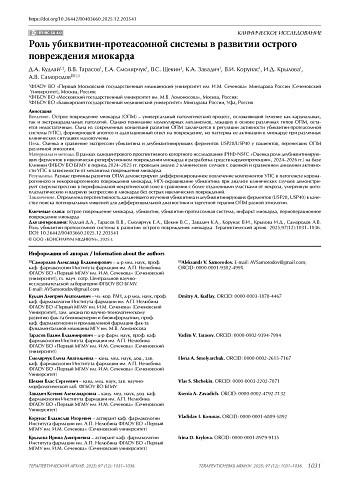
Роль убиквитин-протеасомной системы в развитии острого повреждения миокарда
Кудлай Д.А., Тарасов В.В., Смолярчук Е.А., Щекин В.С., Завадич К.А., Корунас В.И., Крылова И.Д., Самородов А.В. Роль убиквитин-протеасомной системы в развитии острого повреждения миокарда. Терапевтический архив. 2025;97(12):1031–1036. DOI: 10.26442/00403660.2025.12.203541
© ООО «КОНСИЛИУМ МЕДИКУМ», 2025 г.
© ООО «КОНСИЛИУМ МЕДИКУМ», 2025 г.
________________________________________________
Материалы доступны только для специалистов сферы здравоохранения.
Чтобы посмотреть материал полностью
Авторизуйтесь
или зарегистрируйтесь.
Аннотация
Введение. Острое повреждение миокарда (ОПМ) – универсальный патологический процесс, осложняющий течение как кардиальных, так и экстракардиальных патологий. Однако понимание молекулярных механизмов, лежащих в основе различных типов ОПМ, остается недостаточным. Одна из современных концепций развития ОПМ заключается в регуляции активности убиквитин-протеасомной системы (УПС), формирующей апоптоз и адаптационный ответ на повреждение, но паттерны ее активации в миокарде при различных клинических ситуациях малоизучены.
Цель. Оценка и сравнение экспрессии убиквитина и деубиквитинирующих ферментов USP28/USP40 у пациентов, перенесших ОПМ различной этиологии.
Материалы и методы. В рамках одноцентрового проспективного когортного исследования (РНФ-NSFC «Оценка роли деубиквитинирующих ферментов в ишемически-реперфузионном повреждении миокарда и разработка средств кардиопротекции», 2024–2026 гг.) на базе Клиники ФГБОУ ВО БГМУ в период 2024–2025 гг. проведен анализ 2 клинических случаев с оценкой и сравнением динамики активности УПС в зависимости от механизма повреждения миокарда.
Результаты. Разные причины развития ОПМ демонстрируют дифференцированное вовлечение компонентов УПС в патогенезе коронарогенного и некоронарогенного повреждения миокарда, ИГХ-окрашивание убиквитина при анализе клинических случаев демонстрирует сверхэкспрессию в перифокальной некротической зоне в сравнении с более отдаленными участками от некроза, умеренную цитоплазматическую и ядерную экспрессию в миокарде без острых ишемических повреждений.
Заключение. Определена перспективность дальнейшего изучения убиквитина и деубиквитинирующих ферментов (USP28, USP40) в качестве поиска потенциальных мишеней для дифференциальной диагностики и таргетной терапии ОПМ разной этиологии.
Ключевые слова: острое повреждение миокарда, убиквитин, убиквитин-протеасомная система, инфаркт миокарда, периоперационное повреждение миокарда
Aim. To evaluate and compare the expression of ubiquitin and the deubiquitinating enzymes USP28/USP40 in patients who have suffered acute myocardial injury of various etiologies.
Materials and methods. As part of a single-center prospective cohort study (RNF-NSFC "Assessment of the Role of Deubiquitinating Enzymes in Myocardial Ischemia-Reperfusion Injury and Development of Cardioprotective Agents", 2024–2026), three clinical cases were analyzed at the Clinic of the Federal State Budgetary Educational Institution of Higher Education Bashkir State Medical University of the Ministry of Health of the Russian Federation (Ufa) during the period 2024–2025. The analysis assessed and compared the dynamics of UPS activity depending on the mechanism of myocardial injury.
Results. Different causes of acute myocardial infarction demonstrate differential involvement of UPS components in the pathogenesis of coronary and non-coronary myocardial injury. IHC staining of ubiquitin in clinical cases demonstrates overexpression in the perifocal necrotic zone compared to areas more distant from necrosis, and moderate cytoplasmic and nuclear expression in myocardium without acute ischemic injury.
Conclusion. The prospects for further study of ubiquitin and deubiquitinating enzymes (USP28, USP40) in the search for potential targets for differential diagnosis and targeted therapy of AMI of various etiologies have been determined.
Keywords: acute myocardial injury, ubiquitin, ubiquitin-proteasome system, myocardial infarction, perioperative myocardial injury
Цель. Оценка и сравнение экспрессии убиквитина и деубиквитинирующих ферментов USP28/USP40 у пациентов, перенесших ОПМ различной этиологии.
Материалы и методы. В рамках одноцентрового проспективного когортного исследования (РНФ-NSFC «Оценка роли деубиквитинирующих ферментов в ишемически-реперфузионном повреждении миокарда и разработка средств кардиопротекции», 2024–2026 гг.) на базе Клиники ФГБОУ ВО БГМУ в период 2024–2025 гг. проведен анализ 2 клинических случаев с оценкой и сравнением динамики активности УПС в зависимости от механизма повреждения миокарда.
Результаты. Разные причины развития ОПМ демонстрируют дифференцированное вовлечение компонентов УПС в патогенезе коронарогенного и некоронарогенного повреждения миокарда, ИГХ-окрашивание убиквитина при анализе клинических случаев демонстрирует сверхэкспрессию в перифокальной некротической зоне в сравнении с более отдаленными участками от некроза, умеренную цитоплазматическую и ядерную экспрессию в миокарде без острых ишемических повреждений.
Заключение. Определена перспективность дальнейшего изучения убиквитина и деубиквитинирующих ферментов (USP28, USP40) в качестве поиска потенциальных мишеней для дифференциальной диагностики и таргетной терапии ОПМ разной этиологии.
Ключевые слова: острое повреждение миокарда, убиквитин, убиквитин-протеасомная система, инфаркт миокарда, периоперационное повреждение миокарда
________________________________________________
Aim. To evaluate and compare the expression of ubiquitin and the deubiquitinating enzymes USP28/USP40 in patients who have suffered acute myocardial injury of various etiologies.
Materials and methods. As part of a single-center prospective cohort study (RNF-NSFC "Assessment of the Role of Deubiquitinating Enzymes in Myocardial Ischemia-Reperfusion Injury and Development of Cardioprotective Agents", 2024–2026), three clinical cases were analyzed at the Clinic of the Federal State Budgetary Educational Institution of Higher Education Bashkir State Medical University of the Ministry of Health of the Russian Federation (Ufa) during the period 2024–2025. The analysis assessed and compared the dynamics of UPS activity depending on the mechanism of myocardial injury.
Results. Different causes of acute myocardial infarction demonstrate differential involvement of UPS components in the pathogenesis of coronary and non-coronary myocardial injury. IHC staining of ubiquitin in clinical cases demonstrates overexpression in the perifocal necrotic zone compared to areas more distant from necrosis, and moderate cytoplasmic and nuclear expression in myocardium without acute ischemic injury.
Conclusion. The prospects for further study of ubiquitin and deubiquitinating enzymes (USP28, USP40) in the search for potential targets for differential diagnosis and targeted therapy of AMI of various etiologies have been determined.
Keywords: acute myocardial injury, ubiquitin, ubiquitin-proteasome system, myocardial infarction, perioperative myocardial injury
Полный текст
Список литературы
1. Algoet M, Janssens S, Himmelreich U, et al. Myocardial ischemia-reperfusion injury and the influence of inflammation. Trends Cardiovasc Med. 2023;33(6):357-66. DOI:10.1016/j.tcm.2022.02.005
2. Аверков О.В., Барбараш О.Л., Бойцов С.А., и др. Дифференцированный подход в диагностике, формулировке диагноза, ведении больных и статистическом учете инфаркта миокарда 2 типа (согласованная позиция). Российский кардиологический журнал. 2019;24(6):7-21 [Averkov OV, Barbarash OL, Boytsov SA. Differentiated approach in diagnostics, diagnosis formulation, case management and statistical accounting of type 2 myocardial infarction (position paper). Russian Journal of Cardiology. 2019;24(6):7-21 (in Russian)]. DOI:10.15829/1560-4071-2019-6-7-21
3. Chen Y, Zhou D, Yao Y, et al. Monoubiquitination in homeostasis and cancer. Int J Mol Sci. 2022;23(11):5925. DOI:10.3390/ijms23115925
4. Kavsak PA, Belley-Cote EP, Whitlock RP, Lamy A. Cardiac troponin testing in cardiac surgery. Expert Rev Cardiovasc Ther. 2023;21(11):729-31. DOI:10.1080/14779072.2023.2283123
5. Dalal S, Shook PL, Singh M, Singh K. Cardioprotective Potential of Exogenous Ubiquitin. Cardiovasc Drugs Ther. 2021;35(6):1227-32. DOI:10.1007/s10557-020-07042-5
6. Li Y, Reverter D. Molecular Mechanisms of DUBs Regulation in Signaling and Disease. Int J Mol Sci. 2021;22(3):986. DOI:10.3390/ijms22030986
7. Ikeda F. Protein and nonprotein targets of ubiquitin modification. Am J Physiol Cell Physiol. 2023;324(5):C1053-60. DOI:10.1152/ajpcell.00069.2023
8. Li D, Ma Q. Ubiquitin-specific protease: an emerging key player in cardiomyopathy. Cell Commun Signal. 2025;23(1):143. DOI:10.1186/s12964-025-02123-0
9. Makaros Y, Raiff A, Timms RT, et al. Ubiquitin-independent proteasomal degradation driven by C-degron pathways. Mol Cell. 2023;83(11):1921-35. DOI:10.1016/j.molcel.2023.04.023
10. Shook PL, Singh M, Singh K. Macrophages in the Inflammatory Phase Following Myocardial Infarction: Role of Exogenous Ubiquitin. Biology (Basel). 2023;12(9):1258. DOI:10.3390/biology12091258
11. Диль С.В., Кирилин В.В., Иванов Н.М., Рябов В.В. Диагностика и лечение сепсис-индуцированной кардиомиопатии с использованием гемосорбционной терапии. Клинический случай. Российский кардиологический журнал. 2023;28(7):5355 [Dil SV, Kirilin VV, Ivanov NM, Ryabov VV. Diagnosis and treatment of sepsis-induced cardiomyopathy using hemosorption therapy: a case report. Russian Journal of Cardiology. 2023;28(7):5355 (in Russian)]. DOI:10.15829/1560-4071-2023-5355 EDN:HHPBKK
12. Cai J, Qian X, Qi Q, et al. Extracellular ubiquitin inhibits the apoptosis of hepatoma cells via the involvement of macrophages. Transl Cancer Res. 2020;9(4):2855-64. DOI:10.21037/tcr.2020.03.12
13. Guo X, Liu L, Zhang Q, et al. E2F7 Transcriptionally Inhibits Microrna-199b Expression to Promote Usp47, Thereby Enhancing Colon Cancer Tumor Stem Cell Activity and Promoting the Occurrence of Colon Cancer. Front Oncol. 2021;10:565449. DOI:10.3389/fonc.2020.565449
14. Cai J, Zhang Q, Qian X, et al. Extracellular ubiquitin promotes hepatoma metastasis by mediating M2 macrophage polarization via the activation of the CXCR4/ERK signaling pathway. Ann Transl Med. 2020;8(15):929. DOI:10.21037/atm-20-1054
15. Chen S, Liu Y, Zhou H. Advances in the development ubiquitin-specific peptidase (USP) inhibitors. Int J Mol Sci. 2021;22(9):4546. DOI:10.3390/ijms22094546
16. Семенюта В.В., Максимов Н.И., Анисимов С.В., и др. Динамика креатинфосфокиназы МВ в контексте реперфузионного повреждения миокарда. Российский кардиологический журнал. 2022;27(10):4954 [Semenyuta VV, Maksimov NI, Anisimov SV. Changes of creatine phosphokinase mb levels in the context of myocardial reperfusion injury. Russian Journal of Cardiology. 2022;27(10):4954 (in Russian)]. DOI:10.15829/1560-4071-2022-4954
17. Lai KP, Chen J, Tse W. Role of deubiquitinases in human cancers: potential targeted therapy. Int J Mol Sci. 2020;21(7):2548. DOI:10.3390/ijms21072548
18. Затейщиков Д.А., Фаворова О.О., Чумакова О.С. Молекулярная кардиология: от расшифровки генетической природы и механизмов развития заболевания до внедрения в клиническую практику. Терапевтический архив. 2022;94(4):463-6 [Zateyshchikov DA, Favorova OO, Chumakova OS. Molecular cardiology: from decoding the genetic nature and mechanisms of the diseases development to the introduction into the clinic. Terapevticheskii arkhiv (Ter. Arkh.). 2022;94(4):463-6 (in Russian)]. DOI:10.26442/00403660.2022.04.201467
19. Lu X, Yang B, Qi R, et al. Targeting WWP1 ameliorates cardiac ischemic injury by suppressing KLF15-ubiquitination mediated myocardial inflammation. Theranostics. 2023;13(1):417-37. DOI:10.7150/thno.77694
20. Окишева Е.А., Трушина О.Ю. Биомаркеры острого коронарного синдрома: от истоков до наших дней. Терапевтический архив. 2024;96(9):914-8 [Okisheva EA, Trushina OIu. Biomarkers in acute coronary syndromes: from the origins to the present. Terapevticheskii arkhiv (Ter. Arkh.). 2024;96(9):914-8 (in Russian)]. DOI:10.26442/00403660.2024.09.202854
2. Averkov OV, Barbarash OL, Boytsov SA. Differentiated approach in diagnostics, diagnosis formulation, case management and statistical accounting of type 2 myocardial infarction (position paper). Russian Journal of Cardiology. 2019;24(6):7-21 (in Russian). DOI:10.15829/1560-4071-2019-6-7-21
3. Chen Y, Zhou D, Yao Y, et al. Monoubiquitination in homeostasis and cancer. Int J Mol Sci. 2022;23(11):5925. DOI:10.3390/ijms23115925
4. Kavsak PA, Belley-Cote EP, Whitlock RP, Lamy A. Cardiac troponin testing in cardiac surgery. Expert Rev Cardiovasc Ther. 2023;21(11):729-31. DOI:10.1080/14779072.2023.2283123
5. Dalal S, Shook PL, Singh M, Singh K. Cardioprotective Potential of Exogenous Ubiquitin. Cardiovasc Drugs Ther. 2021;35(6):1227-32. DOI:10.1007/s10557-020-07042-5
6. Li Y, Reverter D. Molecular Mechanisms of DUBs Regulation in Signaling and Disease. Int J Mol Sci. 2021;22(3):986. DOI:10.3390/ijms22030986
7. Ikeda F. Protein and nonprotein targets of ubiquitin modification. Am J Physiol Cell Physiol. 2023;324(5):C1053-60. DOI:10.1152/ajpcell.00069.2023
8. Li D, Ma Q. Ubiquitin-specific protease: an emerging key player in cardiomyopathy. Cell Commun Signal. 2025;23(1):143. DOI:10.1186/s12964-025-02123-0
9. Makaros Y, Raiff A, Timms RT, et al. Ubiquitin-independent proteasomal degradation driven by C-degron pathways. Mol Cell. 2023;83(11):1921-35. DOI:10.1016/j.molcel.2023.04.023
10. Shook PL, Singh M, Singh K. Macrophages in the Inflammatory Phase Following Myocardial Infarction: Role of Exogenous Ubiquitin. Biology (Basel). 2023;12(9):1258. DOI:10.3390/biology12091258
11. Dil SV, Kirilin VV, Ivanov NM, Ryabov VV. Diagnosis and treatment of sepsis-induced cardiomyopathy using hemosorption therapy: a case report. Russian Journal of Cardiology. 2023;28(7):5355 (in Russian). DOI:10.15829/1560-4071-2023-5355 EDN:HHPBKK
12. Cai J, Qian X, Qi Q, et al. Extracellular ubiquitin inhibits the apoptosis of hepatoma cells via the involvement of macrophages. Transl Cancer Res. 2020;9(4):2855-64. DOI:10.21037/tcr.2020.03.12
13. Guo X, Liu L, Zhang Q, et al. E2F7 Transcriptionally Inhibits Microrna-199b Expression to Promote Usp47, Thereby Enhancing Colon Cancer Tumor Stem Cell Activity and Promoting the Occurrence of Colon Cancer. Front Oncol. 2021;10:565449. DOI:10.3389/fonc.2020.565449
14. Cai J, Zhang Q, Qian X, et al. Extracellular ubiquitin promotes hepatoma metastasis by mediating M2 macrophage polarization via the activation of the CXCR4/ERK signaling pathway. Ann Transl Med. 2020;8(15):929. DOI:10.21037/atm-20-1054
15. Chen S, Liu Y, Zhou H. Advances in the development ubiquitin-specific peptidase (USP) inhibitors. Int J Mol Sci. 2021;22(9):4546. DOI:10.3390/ijms22094546
16. Semenyuta VV, Maksimov NI, Anisimov SV. Changes of creatine phosphokinase mb levels in the context of myocardial reperfusion injury. Russian Journal of Cardiology. 2022;27(10):4954 (in Russian). DOI:10.15829/1560-4071-2022-4954
17. Lai KP, Chen J, Tse W. Role of deubiquitinases in human cancers: potential targeted therapy. Int J Mol Sci. 2020;21(7):2548. DOI:10.3390/ijms21072548
18. Zateyshchikov DA, Favorova OO, Chumakova OS. Molecular cardiology: from decoding the genetic nature and mechanisms of the diseases development to the introduction into the clinic. Terapevticheskii arkhiv (Ter. Arkh.). 2022;94(4):463-6 (in Russian). DOI:10.26442/00403660.2022.04.201467
19. Lu X, Yang B, Qi R, et al. Targeting WWP1 ameliorates cardiac ischemic injury by suppressing KLF15-ubiquitination mediated myocardial inflammation. Theranostics. 2023;13(1):417-37. DOI:10.7150/thno.77694
20. Okisheva EA, Trushina OIu. Biomarkers in acute coronary syndromes: from the origins to the present. Terapevticheskii arkhiv (Ter. Arkh.). 2024;96(9):914-8 (in Russian). DOI:10.26442/00403660.2024.09.202854
2. Аверков О.В., Барбараш О.Л., Бойцов С.А., и др. Дифференцированный подход в диагностике, формулировке диагноза, ведении больных и статистическом учете инфаркта миокарда 2 типа (согласованная позиция). Российский кардиологический журнал. 2019;24(6):7-21 [Averkov OV, Barbarash OL, Boytsov SA. Differentiated approach in diagnostics, diagnosis formulation, case management and statistical accounting of type 2 myocardial infarction (position paper). Russian Journal of Cardiology. 2019;24(6):7-21 (in Russian)]. DOI:10.15829/1560-4071-2019-6-7-21
3. Chen Y, Zhou D, Yao Y, et al. Monoubiquitination in homeostasis and cancer. Int J Mol Sci. 2022;23(11):5925. DOI:10.3390/ijms23115925
4. Kavsak PA, Belley-Cote EP, Whitlock RP, Lamy A. Cardiac troponin testing in cardiac surgery. Expert Rev Cardiovasc Ther. 2023;21(11):729-31. DOI:10.1080/14779072.2023.2283123
5. Dalal S, Shook PL, Singh M, Singh K. Cardioprotective Potential of Exogenous Ubiquitin. Cardiovasc Drugs Ther. 2021;35(6):1227-32. DOI:10.1007/s10557-020-07042-5
6. Li Y, Reverter D. Molecular Mechanisms of DUBs Regulation in Signaling and Disease. Int J Mol Sci. 2021;22(3):986. DOI:10.3390/ijms22030986
7. Ikeda F. Protein and nonprotein targets of ubiquitin modification. Am J Physiol Cell Physiol. 2023;324(5):C1053-60. DOI:10.1152/ajpcell.00069.2023
8. Li D, Ma Q. Ubiquitin-specific protease: an emerging key player in cardiomyopathy. Cell Commun Signal. 2025;23(1):143. DOI:10.1186/s12964-025-02123-0
9. Makaros Y, Raiff A, Timms RT, et al. Ubiquitin-independent proteasomal degradation driven by C-degron pathways. Mol Cell. 2023;83(11):1921-35. DOI:10.1016/j.molcel.2023.04.023
10. Shook PL, Singh M, Singh K. Macrophages in the Inflammatory Phase Following Myocardial Infarction: Role of Exogenous Ubiquitin. Biology (Basel). 2023;12(9):1258. DOI:10.3390/biology12091258
11. Диль С.В., Кирилин В.В., Иванов Н.М., Рябов В.В. Диагностика и лечение сепсис-индуцированной кардиомиопатии с использованием гемосорбционной терапии. Клинический случай. Российский кардиологический журнал. 2023;28(7):5355 [Dil SV, Kirilin VV, Ivanov NM, Ryabov VV. Diagnosis and treatment of sepsis-induced cardiomyopathy using hemosorption therapy: a case report. Russian Journal of Cardiology. 2023;28(7):5355 (in Russian)]. DOI:10.15829/1560-4071-2023-5355 EDN:HHPBKK
12. Cai J, Qian X, Qi Q, et al. Extracellular ubiquitin inhibits the apoptosis of hepatoma cells via the involvement of macrophages. Transl Cancer Res. 2020;9(4):2855-64. DOI:10.21037/tcr.2020.03.12
13. Guo X, Liu L, Zhang Q, et al. E2F7 Transcriptionally Inhibits Microrna-199b Expression to Promote Usp47, Thereby Enhancing Colon Cancer Tumor Stem Cell Activity and Promoting the Occurrence of Colon Cancer. Front Oncol. 2021;10:565449. DOI:10.3389/fonc.2020.565449
14. Cai J, Zhang Q, Qian X, et al. Extracellular ubiquitin promotes hepatoma metastasis by mediating M2 macrophage polarization via the activation of the CXCR4/ERK signaling pathway. Ann Transl Med. 2020;8(15):929. DOI:10.21037/atm-20-1054
15. Chen S, Liu Y, Zhou H. Advances in the development ubiquitin-specific peptidase (USP) inhibitors. Int J Mol Sci. 2021;22(9):4546. DOI:10.3390/ijms22094546
16. Семенюта В.В., Максимов Н.И., Анисимов С.В., и др. Динамика креатинфосфокиназы МВ в контексте реперфузионного повреждения миокарда. Российский кардиологический журнал. 2022;27(10):4954 [Semenyuta VV, Maksimov NI, Anisimov SV. Changes of creatine phosphokinase mb levels in the context of myocardial reperfusion injury. Russian Journal of Cardiology. 2022;27(10):4954 (in Russian)]. DOI:10.15829/1560-4071-2022-4954
17. Lai KP, Chen J, Tse W. Role of deubiquitinases in human cancers: potential targeted therapy. Int J Mol Sci. 2020;21(7):2548. DOI:10.3390/ijms21072548
18. Затейщиков Д.А., Фаворова О.О., Чумакова О.С. Молекулярная кардиология: от расшифровки генетической природы и механизмов развития заболевания до внедрения в клиническую практику. Терапевтический архив. 2022;94(4):463-6 [Zateyshchikov DA, Favorova OO, Chumakova OS. Molecular cardiology: from decoding the genetic nature and mechanisms of the diseases development to the introduction into the clinic. Terapevticheskii arkhiv (Ter. Arkh.). 2022;94(4):463-6 (in Russian)]. DOI:10.26442/00403660.2022.04.201467
19. Lu X, Yang B, Qi R, et al. Targeting WWP1 ameliorates cardiac ischemic injury by suppressing KLF15-ubiquitination mediated myocardial inflammation. Theranostics. 2023;13(1):417-37. DOI:10.7150/thno.77694
20. Окишева Е.А., Трушина О.Ю. Биомаркеры острого коронарного синдрома: от истоков до наших дней. Терапевтический архив. 2024;96(9):914-8 [Okisheva EA, Trushina OIu. Biomarkers in acute coronary syndromes: from the origins to the present. Terapevticheskii arkhiv (Ter. Arkh.). 2024;96(9):914-8 (in Russian)]. DOI:10.26442/00403660.2024.09.202854
________________________________________________
2. Averkov OV, Barbarash OL, Boytsov SA. Differentiated approach in diagnostics, diagnosis formulation, case management and statistical accounting of type 2 myocardial infarction (position paper). Russian Journal of Cardiology. 2019;24(6):7-21 (in Russian). DOI:10.15829/1560-4071-2019-6-7-21
3. Chen Y, Zhou D, Yao Y, et al. Monoubiquitination in homeostasis and cancer. Int J Mol Sci. 2022;23(11):5925. DOI:10.3390/ijms23115925
4. Kavsak PA, Belley-Cote EP, Whitlock RP, Lamy A. Cardiac troponin testing in cardiac surgery. Expert Rev Cardiovasc Ther. 2023;21(11):729-31. DOI:10.1080/14779072.2023.2283123
5. Dalal S, Shook PL, Singh M, Singh K. Cardioprotective Potential of Exogenous Ubiquitin. Cardiovasc Drugs Ther. 2021;35(6):1227-32. DOI:10.1007/s10557-020-07042-5
6. Li Y, Reverter D. Molecular Mechanisms of DUBs Regulation in Signaling and Disease. Int J Mol Sci. 2021;22(3):986. DOI:10.3390/ijms22030986
7. Ikeda F. Protein and nonprotein targets of ubiquitin modification. Am J Physiol Cell Physiol. 2023;324(5):C1053-60. DOI:10.1152/ajpcell.00069.2023
8. Li D, Ma Q. Ubiquitin-specific protease: an emerging key player in cardiomyopathy. Cell Commun Signal. 2025;23(1):143. DOI:10.1186/s12964-025-02123-0
9. Makaros Y, Raiff A, Timms RT, et al. Ubiquitin-independent proteasomal degradation driven by C-degron pathways. Mol Cell. 2023;83(11):1921-35. DOI:10.1016/j.molcel.2023.04.023
10. Shook PL, Singh M, Singh K. Macrophages in the Inflammatory Phase Following Myocardial Infarction: Role of Exogenous Ubiquitin. Biology (Basel). 2023;12(9):1258. DOI:10.3390/biology12091258
11. Dil SV, Kirilin VV, Ivanov NM, Ryabov VV. Diagnosis and treatment of sepsis-induced cardiomyopathy using hemosorption therapy: a case report. Russian Journal of Cardiology. 2023;28(7):5355 (in Russian). DOI:10.15829/1560-4071-2023-5355 EDN:HHPBKK
12. Cai J, Qian X, Qi Q, et al. Extracellular ubiquitin inhibits the apoptosis of hepatoma cells via the involvement of macrophages. Transl Cancer Res. 2020;9(4):2855-64. DOI:10.21037/tcr.2020.03.12
13. Guo X, Liu L, Zhang Q, et al. E2F7 Transcriptionally Inhibits Microrna-199b Expression to Promote Usp47, Thereby Enhancing Colon Cancer Tumor Stem Cell Activity and Promoting the Occurrence of Colon Cancer. Front Oncol. 2021;10:565449. DOI:10.3389/fonc.2020.565449
14. Cai J, Zhang Q, Qian X, et al. Extracellular ubiquitin promotes hepatoma metastasis by mediating M2 macrophage polarization via the activation of the CXCR4/ERK signaling pathway. Ann Transl Med. 2020;8(15):929. DOI:10.21037/atm-20-1054
15. Chen S, Liu Y, Zhou H. Advances in the development ubiquitin-specific peptidase (USP) inhibitors. Int J Mol Sci. 2021;22(9):4546. DOI:10.3390/ijms22094546
16. Semenyuta VV, Maksimov NI, Anisimov SV. Changes of creatine phosphokinase mb levels in the context of myocardial reperfusion injury. Russian Journal of Cardiology. 2022;27(10):4954 (in Russian). DOI:10.15829/1560-4071-2022-4954
17. Lai KP, Chen J, Tse W. Role of deubiquitinases in human cancers: potential targeted therapy. Int J Mol Sci. 2020;21(7):2548. DOI:10.3390/ijms21072548
18. Zateyshchikov DA, Favorova OO, Chumakova OS. Molecular cardiology: from decoding the genetic nature and mechanisms of the diseases development to the introduction into the clinic. Terapevticheskii arkhiv (Ter. Arkh.). 2022;94(4):463-6 (in Russian). DOI:10.26442/00403660.2022.04.201467
19. Lu X, Yang B, Qi R, et al. Targeting WWP1 ameliorates cardiac ischemic injury by suppressing KLF15-ubiquitination mediated myocardial inflammation. Theranostics. 2023;13(1):417-37. DOI:10.7150/thno.77694
20. Okisheva EA, Trushina OIu. Biomarkers in acute coronary syndromes: from the origins to the present. Terapevticheskii arkhiv (Ter. Arkh.). 2024;96(9):914-8 (in Russian). DOI:10.26442/00403660.2024.09.202854
Авторы
Д.А. Кудлай1,2, В.В. Тарасов1, Е.А. Смолярчук1, В.С. Щекин3, К.А. Завадич1, В.И. Корунас1, И.Д. Крылова1, А.В. Самородов*1,3
1ФГАОУ ВО «Первый Московский государственный медицинский университет им. И.М. Сеченова» Минздрава России (Сеченовский Университет), Москва, Россия;
2ФГБОУ ВО «Московский государственный университет им. М.В. Ломоносова», Москва, Россия;
3ФГБОУ ВО «Башкирский государственный медицинский университет» Минздрава России, Уфа, Россия
*AVSamorodov@gmail.com
1Sechenov First Moscow State Medical University (Sechenov University), Moscow, Russia;
2Lomonosov Moscow State University, Moscow, Russia;
3Federal State Budgetary Educational Institution of Higher Education Bashkir State Medical University of the Ministry of Health of the Russian Federation, Ufa, Russia
*AVSamorodov@gmail.com
1ФГАОУ ВО «Первый Московский государственный медицинский университет им. И.М. Сеченова» Минздрава России (Сеченовский Университет), Москва, Россия;
2ФГБОУ ВО «Московский государственный университет им. М.В. Ломоносова», Москва, Россия;
3ФГБОУ ВО «Башкирский государственный медицинский университет» Минздрава России, Уфа, Россия
*AVSamorodov@gmail.com
________________________________________________
1Sechenov First Moscow State Medical University (Sechenov University), Moscow, Russia;
2Lomonosov Moscow State University, Moscow, Russia;
3Federal State Budgetary Educational Institution of Higher Education Bashkir State Medical University of the Ministry of Health of the Russian Federation, Ufa, Russia
*AVSamorodov@gmail.com
Цель портала OmniDoctor – предоставление профессиональной информации врачам, провизорам и фармацевтам.