

Материалы доступны только для специалистов сферы здравоохранения.
Чтобы посмотреть материал полностью
Авторизуйтесь
или зарегистрируйтесь.
Эффект белого халата у больных стабильной артериальной гипертензией: психологические предикторы, динамика на фоне длительной антигипертензивной терапии - Научно-практический журнал Cardioсоматика Том 4, №3 (2013)
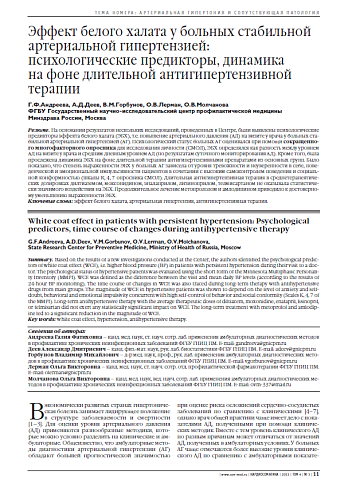
Эффект белого халата у больных стабильной артериальной гипертензией: психологические предикторы, динамика на фоне длительной антигипертензивной терапии
Материалы доступны только для специалистов сферы здравоохранения.
Чтобы посмотреть материал полностью
Авторизуйтесь
или зарегистрируйтесь.
Аннотация
На основании результатов нескольких исследований, проведенных в Центре, были выявлены психологические предикторы эффекта белого халата (ЭБХ), т.е. повышение артериального давления (АД) на визите у врача у больных стабильной артериальной гипертензией (АГ). Психологический статус больных АГ оценивался при помощи сокращенного многофакторного опросника для исследования личности (СМОЛ), ЭБХ определялся как разность между уровнем АД на визите у врача и средним дневным уровнем АД (по результатам суточного мониторирования АД). Кроме того, была прослежена динамика ЭБХ на фоне длительной терапии антигипертензивными препаратами из основных групп. Было показано, что степень выраженности ЭБХ у больных АГ зависела от уровня тревожности и неуверенности в себе, поведенческой и эмоциональной импульсивности пациентов в сочетании с высоким самоконтролем поведения и социальной конформностью (шкалы К, 4, 7 опросника СМОЛ). Длительная антигипертензивная терапия в среднетерапевтических дозировках дилтиаземом, моксонидином, эналаприлом, лизиноприлом, телмисартаном не оказывала статистически значимого воздействия на ЭБХ. Продолжительное лечение метопрололом и амлодипином приводило к достоверному уменьшению выраженности ЭБХ.
Ключевые слова: эффект белого халата, артериальная гипертензия, антигипертензивная терапия.
Key words: white coat effect, hypertension, antihypertensive therapy.
Ключевые слова: эффект белого халата, артериальная гипертензия, антигипертензивная терапия.
________________________________________________
Key words: white coat effect, hypertension, antihypertensive therapy.
Полный текст
Список литературы
1. Шальнова С.А., Оганов Р.Г., Деев А.Д. Оценка и управление риском сердечно-сосудистых заболеваний для населения России. Кардиоваск. терапия и профилактика. 2004; 4: 4–11.
2. Шальнова С.А., Деев А.Д., Оганов Р.Г. Факторы, влияющие на смертность от сердечно-сосудистых заболеваний в российской популяции. Кардиоваск. терапия и профилактика. 2005; 1: 4–8.
3. Шальнова С.А., Деев А.Д. Уроки исследования ОСКАР – «ЭпидемиОлогия и оСобенности терапии пациентов высоКого риска в реАльной клинической пРактике 2005–2006 гг.». Кардиоваск. терапия и профилактика. 2007; 6 (1): 47–53.
4. Hermida R.C. Ambulatory blood pressure monitoring in the prediction of cardiovascular events and effects of chronotherapy: rationale and design of the MAPEC study. Chronobiol Int 2007; 24 (4): 749–75.
5. Mancia G, Parati G. Guiding antihypertensive treatment decisions using ambulatory blood pressure monitoring. Curr Hypertens Rep 2006; 8: 330–7.
6. Hozawa A, Ohkubo T, Kikuya M, Ugajin T et al. Prognostic value of home heart rate for cardiovascular mortality in the general population: the Ohasama Study. Am J Hypertens 2004; 17: 1005–10.
7. Verdecchia P. Prognostic value of ambulatory blood pressure: current evidence and clinical implications. Hypertension 2000; 35: 844–51.
8. Verberk WJ, Kroon AA, Thien T et al. Prevalence of the white-coat effect at multiple visits before and during treatment. J Hypertens 2006; 24 (12): 2357–63.
9. Hong D, Su H, Li J et al. The effect of physician presence on blood pressure. Blood Press Monit 2012; 17 (4): 145–8.
10. Andreadis EA, Angelopoulos ET, Agaliotis GD et al. Why use automated office blood pressure measurements in clinical practice? High Blood Press Cardiovasc Prev 2011; 18 (3): 89–91.
11. Myers MG, Godwin M. Automated office blood pressure. Can J Cardiol 2012; 28 (3): 341–6.
12. Parati G, Ulian L, Sampieri L et al. Attenuation of the «white-coat effect» by antihypertensive treatment and regression of target organ damage. Hypertension 2000; 35 (2): 614–20.
13. Mancia G. White coat effect. Innocuous or adverse phenomenon? Eur Heart J 2000; 21: 1647–8.
14. Zakopoulos NA, Kotsis VT, Pitiriga VCh et al. White-coat effect in normotension and hypertension. Blood Press Monit 2002; 7 (5): 271–6.
15. Parati G, Ulian L, Santucciu C et al. Difference between clinic and daytime blood pressure is not a measure of the white coat effect. Hypertension 1998; 31 (5): 1185–9.
16. Owens P, Atkins N, O’Brien E. Diagnosis of white coat hypertension by ambulatory blood pressure monitoring. Hypertension 1999; 34: 267–72.
17. Зайцев В.П. Вариант психологического теста Mini-Mult. Психол. журн. 1981; 2 (3): 118–23.
18. Zuther P, Witte K, Lemmer B. ABPM-FIT and CV-SORT: an easy-to-use software package for detailed analysis of data from ambulatory blood pressure monitoring. Blood Press Monit 1996; 1: 347–54.
19. Jamner LD, Shapiro D, Hui KK et al. Hostility and differences between clinic, self-determined, and ambulatory blood pressure. Psychosom Med 1993; 55 (2): 203–11.
20. Hildrum B, Mykletun A, Stordal E et al. Association of low blood pressure with anxiety and depression: the Nord-Trøndelag Health Study. J Epidemiol Community Health 2007; 61: 53–8.
21. Pilgrim JA, Stansfeld S, Marmot M. Low blood pressure, low mood? BMJ 1992; 304 (6819): 75–8.
22. Wirtz PH, Känel R, Mohiyeddini C et al. Low social support and poor emotional regulation are associated with increased stress hormone reactivity to mental stress in systemic hypertension. J Clin Endocrinol Metab 2006; 91 (10): 3857–65.
2. Шальнова С.А., Деев А.Д., Оганов Р.Г. Факторы, влияющие на смертность от сердечно-сосудистых заболеваний в российской популяции. Кардиоваск. терапия и профилактика. 2005; 1: 4–8.
3. Шальнова С.А., Деев А.Д. Уроки исследования ОСКАР – «ЭпидемиОлогия и оСобенности терапии пациентов высоКого риска в реАльной клинической пРактике 2005–2006 гг.». Кардиоваск. терапия и профилактика. 2007; 6 (1): 47–53.
4. Hermida R.C. Ambulatory blood pressure monitoring in the prediction of cardiovascular events and effects of chronotherapy: rationale and design of the MAPEC study. Chronobiol Int 2007; 24 (4): 749–75.
5. Mancia G, Parati G. Guiding antihypertensive treatment decisions using ambulatory blood pressure monitoring. Curr Hypertens Rep 2006; 8: 330–7.
6. Hozawa A, Ohkubo T, Kikuya M, Ugajin T et al. Prognostic value of home heart rate for cardiovascular mortality in the general population: the Ohasama Study. Am J Hypertens 2004; 17: 1005–10.
7. Verdecchia P. Prognostic value of ambulatory blood pressure: current evidence and clinical implications. Hypertension 2000; 35: 844–51.
8. Verberk WJ, Kroon AA, Thien T et al. Prevalence of the white-coat effect at multiple visits before and during treatment. J Hypertens 2006; 24 (12): 2357–63.
9. Hong D, Su H, Li J et al. The effect of physician presence on blood pressure. Blood Press Monit 2012; 17 (4): 145–8.
10. Andreadis EA, Angelopoulos ET, Agaliotis GD et al. Why use automated office blood pressure measurements in clinical practice? High Blood Press Cardiovasc Prev 2011; 18 (3): 89–91.
11. Myers MG, Godwin M. Automated office blood pressure. Can J Cardiol 2012; 28 (3): 341–6.
12. Parati G, Ulian L, Sampieri L et al. Attenuation of the «white-coat effect» by antihypertensive treatment and regression of target organ damage. Hypertension 2000; 35 (2): 614–20.
13. Mancia G. White coat effect. Innocuous or adverse phenomenon? Eur Heart J 2000; 21: 1647–8.
14. Zakopoulos NA, Kotsis VT, Pitiriga VCh et al. White-coat effect in normotension and hypertension. Blood Press Monit 2002; 7 (5): 271–6.
15. Parati G, Ulian L, Santucciu C et al. Difference between clinic and daytime blood pressure is not a measure of the white coat effect. Hypertension 1998; 31 (5): 1185–9.
16. Owens P, Atkins N, O’Brien E. Diagnosis of white coat hypertension by ambulatory blood pressure monitoring. Hypertension 1999; 34: 267–72.
17. Зайцев В.П. Вариант психологического теста Mini-Mult. Психол. журн. 1981; 2 (3): 118–23.
18. Zuther P, Witte K, Lemmer B. ABPM-FIT and CV-SORT: an easy-to-use software package for detailed analysis of data from ambulatory blood pressure monitoring. Blood Press Monit 1996; 1: 347–54.
19. Jamner LD, Shapiro D, Hui KK et al. Hostility and differences between clinic, self-determined, and ambulatory blood pressure. Psychosom Med 1993; 55 (2): 203–11.
20. Hildrum B, Mykletun A, Stordal E et al. Association of low blood pressure with anxiety and depression: the Nord-Trøndelag Health Study. J Epidemiol Community Health 2007; 61: 53–8.
21. Pilgrim JA, Stansfeld S, Marmot M. Low blood pressure, low mood? BMJ 1992; 304 (6819): 75–8.
22. Wirtz PH, Känel R, Mohiyeddini C et al. Low social support and poor emotional regulation are associated with increased stress hormone reactivity to mental stress in systemic hypertension. J Clin Endocrinol Metab 2006; 91 (10): 3857–65.
Авторы
Г.Ф.Андреева*, А.Д.Деев, В.М.Горбунов, О.В.Лерман, О.В.Молчанова
ФГБУ Государственный научно-исследовательский центр профилактической медицины Минздрава России, Москва
*gandreeva@gnicpm.ru
State Research Center for Preventive Medicine, Ministry of Health of Russia, Moscow
*gandreeva@gnicpm.ru
ФГБУ Государственный научно-исследовательский центр профилактической медицины Минздрава России, Москва
*gandreeva@gnicpm.ru
________________________________________________
State Research Center for Preventive Medicine, Ministry of Health of Russia, Moscow
*gandreeva@gnicpm.ru
Цель портала OmniDoctor – предоставление профессиональной информации врачам, провизорам и фармацевтам.