

Материалы доступны только для специалистов сферы здравоохранения.
Чтобы посмотреть материал полностью
Авторизуйтесь
или зарегистрируйтесь.
Выбор антиаритмической терапии после хирургического лечения фибрилляции предсердий - Научно-практический журнал Cardioсоматика Том 6, №4 (2015)
Выбор антиаритмической терапии после хирургического лечения фибрилляции предсердий
Базылев В.В., Немченко Е.В., Абрамова Г.Н., Карнахин В.А. Выбор антиаритмической терапии после хирургического лечения фибрилляции предсердий. Кардиосоматика. 2015; 6 (4): 30–34.
________________________________________________
Материалы доступны только для специалистов сферы здравоохранения.
Чтобы посмотреть материал полностью
Авторизуйтесь
или зарегистрируйтесь.
Аннотация
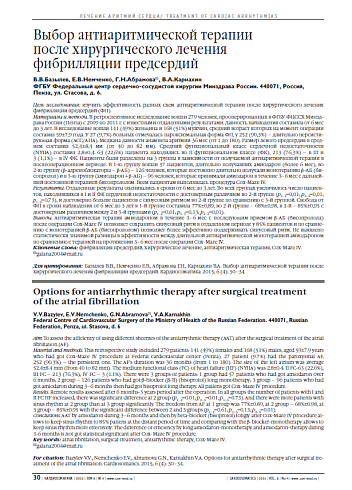
Цель исследования: изучить эффективность разных схем антиаритмической терапии после хирургического лечения фибрилляции предсердий (ФП).
Материалы и методы. В ретроспективное исследование вошли 279 человек, прооперированных в ФГБУ ФЦССХ Минздрава России (Пенза) с 2009 по 2011 г. с известными отдаленными результатами. Давность наблюдения составила от 6 мес до 3 лет. В исследование вошли 141 (49%) женщина и 168 (51%) мужчин, средний возраст которых на момент операции составил 59±7,9 года. У 27 (9,7%) больных отмечалась пароксизмальная форма ФП, у 252 (90,3%) – длительно персистирующая форма (АСС/АНА). Медиана давности анамнеза аритмии 36 мес (от 1 до 180). Размер левого предсердия в среднем составил 52,4±8,4 мм (от 40 до 82 мм). Средний функциональный класс сердечной недостаточности (NYHA) составил 2,8±0,4. 63 (22,6%) пациента находились во II функциональном классе (ФК), 213 (76,3%) – в III и 3 (1,1%) – в IV ФК. Пациенты были разделены на 3 группы в зависимости от получаемой антиаритмической терапии в послеоперационном периоде. В 1-ю группу вошли 57 пациентов, длительно получавших амиодарон (более 6 мес), во 2-ю группу (b-адреноблокаторы – b-АБ) – 126 человек, которые постоянно длительно получали монотерапию b-АБ (бисопролол) и в 3-ю группу (амиодарон + b-АБ) – 96 человек, которые принимали амиодарон в течение 3–6 мес с дальнейшей постоянной терапией бисопрололом. Всем пациентам выполнялась процедура Cox-Maze IV.
Результаты. Отдаленные результаты оценивались в сроки от 6 мес до 3 лет. Во всех группах увеличилось число пациентов, находившихся в I и II ФК сердечной недостаточности с достоверным различием во 2-й группе (p1–2=0,01; p2–3=0,01; p1–3=0,73), и достоверно больше пациентов с синусовым ритмом во 2-й группе по сравнению с 3-й группой. Свобода от ФП в сроки наблюдения от 6 мес до 3 лет в 1-й группе составила 77%±0,89, во 2-й группе – 68%±0,98, в 3-й – 85%±0,95 с достоверным различием между 2 и 3-й группами (р1–2=0,61; p1–3=0,13; p2–3=0,01).
Выводы. Антиаритмическая терапия амиодароном в течение 3–6 мес с последующим приемом b-АБ (бисопролола) после операции Cox-Maze IV позволяет сохранить синусовый ритм в отдаленном периоде у 85% пациентов и по сравнению с монотерапией b-АБ (бисопрололом) позволяет более эффективно поддерживать синусовый ритм. Не выявлено статистически значимой разницы в эффективности между длительной антиаритмической монотерапией амиодароном по сравнению с терапией на протяжении 3–6 мес после операции Cox-Maze IV.
Ключевые слова: фибрилляция предсердий, хирургическое лечение, антиаритмическая терапия, Cox-Maze IV.
Material and methods. This retrospective study included 279 patients: 141 (49%) females and 168 (51%) males, aged 59±7.9 years who had got Сox-Maze IV procedure at Federal cardiovascular center (Penza). 27 patient (9.7%) had the paroxysmal AF,
252 (90.3%) – the persistent one. The AF’s duration was 36 months (from 1 to 180). The size of the left atrium was average 52.4±8.4 mm (from 40 to 82 mm). The medium functional class (FC) of heart failure (HF) (NYHA) was 2.8±0.4: II FC-63 (22.6%), III FC – 213 (76.3%), IV FC – 3 (1.1%). There were 3 groups of patients: 1 group had 57 patients who had got amiodaron over 6 months; 2 group – 126 patients who had got b-blocker (b-B) (bisoprolol) long monotherapy; 3 group – 96 patients who had got amiodaron during 3–6 months then had got bisoprolol long therapy. All patiens got Cox-Maze IV procedure.
Results. Remote results assessed after 6 months-3 years period after the operation. In all groups the number of patients with I and II FC HF increased; there was significant difference at 2 group (p1–2=0.01; p2–3=0.01; p1–3=0.73). And there were more patients with sinus rhythm at 2 group than at 3 group significantly. The freedom from AF at 1 group was 77%±0.89, at 2 group – 68%±0.98, at 3 group – 85%±0.95 with the significant difference between 2 and 3 groups (р1–2=0.61; p1–3=0.13; p2–3=0.01).
Conclusions. AAT by amiodaron during 3–6 months and then by beta-blocker (bisoprolol) longly after Cox-Maze IV procedure allows to keep sinus rhythm to 85% patiens at the distant period of time and comparing with the b-blocker-monotherapy allows to keep sinus rhythm more effectively. The difference of efficiency by long amiodaron-monotherapy and amiodaron-therapy during 3-6 months is not got statistical significant after Cox-Maze IV procedure.
Key words: atrial fibrillation, surgical treatment, antiarrythmic therapy, Cox-Maze IV.
Материалы и методы. В ретроспективное исследование вошли 279 человек, прооперированных в ФГБУ ФЦССХ Минздрава России (Пенза) с 2009 по 2011 г. с известными отдаленными результатами. Давность наблюдения составила от 6 мес до 3 лет. В исследование вошли 141 (49%) женщина и 168 (51%) мужчин, средний возраст которых на момент операции составил 59±7,9 года. У 27 (9,7%) больных отмечалась пароксизмальная форма ФП, у 252 (90,3%) – длительно персистирующая форма (АСС/АНА). Медиана давности анамнеза аритмии 36 мес (от 1 до 180). Размер левого предсердия в среднем составил 52,4±8,4 мм (от 40 до 82 мм). Средний функциональный класс сердечной недостаточности (NYHA) составил 2,8±0,4. 63 (22,6%) пациента находились во II функциональном классе (ФК), 213 (76,3%) – в III и 3 (1,1%) – в IV ФК. Пациенты были разделены на 3 группы в зависимости от получаемой антиаритмической терапии в послеоперационном периоде. В 1-ю группу вошли 57 пациентов, длительно получавших амиодарон (более 6 мес), во 2-ю группу (b-адреноблокаторы – b-АБ) – 126 человек, которые постоянно длительно получали монотерапию b-АБ (бисопролол) и в 3-ю группу (амиодарон + b-АБ) – 96 человек, которые принимали амиодарон в течение 3–6 мес с дальнейшей постоянной терапией бисопрололом. Всем пациентам выполнялась процедура Cox-Maze IV.
Результаты. Отдаленные результаты оценивались в сроки от 6 мес до 3 лет. Во всех группах увеличилось число пациентов, находившихся в I и II ФК сердечной недостаточности с достоверным различием во 2-й группе (p1–2=0,01; p2–3=0,01; p1–3=0,73), и достоверно больше пациентов с синусовым ритмом во 2-й группе по сравнению с 3-й группой. Свобода от ФП в сроки наблюдения от 6 мес до 3 лет в 1-й группе составила 77%±0,89, во 2-й группе – 68%±0,98, в 3-й – 85%±0,95 с достоверным различием между 2 и 3-й группами (р1–2=0,61; p1–3=0,13; p2–3=0,01).
Выводы. Антиаритмическая терапия амиодароном в течение 3–6 мес с последующим приемом b-АБ (бисопролола) после операции Cox-Maze IV позволяет сохранить синусовый ритм в отдаленном периоде у 85% пациентов и по сравнению с монотерапией b-АБ (бисопрололом) позволяет более эффективно поддерживать синусовый ритм. Не выявлено статистически значимой разницы в эффективности между длительной антиаритмической монотерапией амиодароном по сравнению с терапией на протяжении 3–6 мес после операции Cox-Maze IV.
Ключевые слова: фибрилляция предсердий, хирургическое лечение, антиаритмическая терапия, Cox-Maze IV.
________________________________________________
Material and methods. This retrospective study included 279 patients: 141 (49%) females and 168 (51%) males, aged 59±7.9 years who had got Сox-Maze IV procedure at Federal cardiovascular center (Penza). 27 patient (9.7%) had the paroxysmal AF,
252 (90.3%) – the persistent one. The AF’s duration was 36 months (from 1 to 180). The size of the left atrium was average 52.4±8.4 mm (from 40 to 82 mm). The medium functional class (FC) of heart failure (HF) (NYHA) was 2.8±0.4: II FC-63 (22.6%), III FC – 213 (76.3%), IV FC – 3 (1.1%). There were 3 groups of patients: 1 group had 57 patients who had got amiodaron over 6 months; 2 group – 126 patients who had got b-blocker (b-B) (bisoprolol) long monotherapy; 3 group – 96 patients who had got amiodaron during 3–6 months then had got bisoprolol long therapy. All patiens got Cox-Maze IV procedure.
Results. Remote results assessed after 6 months-3 years period after the operation. In all groups the number of patients with I and II FC HF increased; there was significant difference at 2 group (p1–2=0.01; p2–3=0.01; p1–3=0.73). And there were more patients with sinus rhythm at 2 group than at 3 group significantly. The freedom from AF at 1 group was 77%±0.89, at 2 group – 68%±0.98, at 3 group – 85%±0.95 with the significant difference between 2 and 3 groups (р1–2=0.61; p1–3=0.13; p2–3=0.01).
Conclusions. AAT by amiodaron during 3–6 months and then by beta-blocker (bisoprolol) longly after Cox-Maze IV procedure allows to keep sinus rhythm to 85% patiens at the distant period of time and comparing with the b-blocker-monotherapy allows to keep sinus rhythm more effectively. The difference of efficiency by long amiodaron-monotherapy and amiodaron-therapy during 3-6 months is not got statistical significant after Cox-Maze IV procedure.
Key words: atrial fibrillation, surgical treatment, antiarrythmic therapy, Cox-Maze IV.
Полный текст
Список литературы
1. Camm AJ, Kirchhof P, Lip GY еt al. Guidelines for the management of atrial fibrillation: the Task Force For the Management of Atrial Fibrillation of the European Society of Cardiology (ESC). Eur Heart J 2010; 31: 2369–29.
2. Go AS, Hylek EM, Phillips KA et al. Prevalence of diagnosed atrial fibrillation in adults: national implications for rhythm management and stroke prevention: the Anticoagulation and Risk Factors in Atrial Fibrillation (ATRIA) Study. JAMA 2001; 285: 2370–5.
3. Stewart S, Hart CL, Hole DJ еt al. Population prevalence, incidence, and predictors of atrial fbrillation in the Renfrew. Paisley study Heart 2001; 86: 516–21.
4. Ngaage DL, Schaff HV, Mullany CJ et al. Infuence of preoperative atrial fibrillation on late results of mitral repair: is concomitant ablation justified. Ann Thorac Surg 2007; 84: 434–442; discussion 442–443.
5. Cox JL, Boineau JP, Schuessler RB et al. Successful surgical treatment of atrial fibrillation. Rev and Clin update. JAMA 1991; 266: 1976–80.
6. HRS/EHRA/ ECAS expert Consensus Statement on catheter and surgical ablation of atrial fibrillation: recommendations for personnel, policy, procedures and follow-up. A report of the Heart Rhythm Society (HRS) Task Force on catheter and surgical ablation of atrial fibrillation. Heart Rhythm 2007; 4: 816–61.
7. Damiano RJJr, Gaynor SL, Bailey M et al. The long-term outcome of patients with coronary disease and atrial fibrillation undergoing the Cox maze procedure. Thorac Cardiovasc Surg 2003; 126: 2016–21.
8. Natale A, Raviele A. Atrial fibrillation ablation, 2011 update: 170–5.
9. 2012 HRS/EHRA/ECAS Expert Consensus Statement on Catheter and Surgical Ablation of Atrial Fibrillation: Recommendations for Patient Selection, Procedural Techniques, Patient Management and Follow-up, Definitions, Endpoints, and Research Trial Design. Europace 2012; 14: 528–90.
10. Budera Р, Straka Z, Osmanc P et al. Comparison of cardiac surgery with left atrial surgical ablation vs. cardiac surgery with out atrial ablation in patients with coronary and/or valvular heart disease plus atrial fibrillation: final results of the PRAGUE-12 randomized multicentre study. Eur Heart J 2012; 33: 2644–52.
11. Wang J, Meng X, Li H et al. Prospective randomized comparison of left atrial and biatrial radiofrequency ablation in the treatment of atrial fibrillation. Eur j Cardio-thoracic Surg 2009; 35: 116-22.
12. Сулимов В.А., Голицын С.П., Панченко Е.П. и др. Диагностика и лечение фибрилляции предсердий. Рекомендации РКО, ВНОА и АССХ. Рос. кардиол. журн. 2014; 4 (Прил. 3): 80–98. / Sulimov V.A., Golitsyn S.P., Panchenko E.P. i dr. Diagnostika i lechenie fibrilliatsii predserdii. Rekomendatsii RKO, VNOA i ASSKh. Ros. kardiol. zhurn. 2014; 4 (Pril. 3): 80–98. [in Russian]
13. Оганов Р.Г., Салимов В.А., Бокерия Л.А. и др. Клинические рекомендации по диагностике и лечению пациентов с фибрилляцией предсердий. Вестн. аритмологии. 2010; 59: 53–77. / Oganov R.G., Salimov V.A., Bokeriia L.A. i dr. Klinicheskie rekomendatsii po diagnostike i lecheniiu patsientov s fibrilliatsiei predserdii. Vestn. aritmologii. 2010; 59: 53–77. [in Russian]
14. Lafuente-Lafuente C, Mouly S, Longas-Tejero MA et al. Antiarrhythmics for maintaining sinus rhythm after cardioversion of atrial fibrillation. Cochrane Database Syst Rev 2007; 4: CD005049.
15. Piccini JP, Hasselblad V, Peterson ED et al. Comparative efficacy of dronedarone and amiodarone for the maintenance of sinus rhythm in patients with atrial fibrillation. JACC 2009; 54: 1089–95.
16. Oral H, Knight BP, Ozaydin M et al. Clinical significance of early recurrences of a trial fibrillation after pulmonary vein isolation. J Am Coll Cardiol 2002; 40 (1): 100–4.
17. Ouyang F, Tilz R, Chun J et al. Long-term results of catheter ablation in paroxysmal atrial fibrillation: lessons from a 5-year follow-up. Circulation 2010; 122 (23): 2368–77.
18. Weerasooriya R, Khairy P, Litalien J et al. Catheter ablation for atrial fibrillation: are results maintained at 5years of follow-up? J Am Coll Cardiol 2011; 57 (2): 160–6.
19. Leong-Sit P, Roux JF, Zado E et al. Antiarrhythmics after ablation of atrial fibrillation (5A Study): six-month follow-up study. Circ Arrhythm Electrophysiol 2011; 4 (1): 11–4.
20. Roux JF, Zado E, Callans DJ et al. Antiarrhythmics After Ablation of Atrial Fibrillation (5AStudy). Circulation 2009; 120 (12): 1036–40.
2. Go AS, Hylek EM, Phillips KA et al. Prevalence of diagnosed atrial fibrillation in adults: national implications for rhythm management and stroke prevention: the Anticoagulation and Risk Factors in Atrial Fibrillation (ATRIA) Study. JAMA 2001; 285: 2370–5.
3. Stewart S, Hart CL, Hole DJ еt al. Population prevalence, incidence, and predictors of atrial fbrillation in the Renfrew. Paisley study Heart 2001; 86: 516–21.
4. Ngaage DL, Schaff HV, Mullany CJ et al. Infuence of preoperative atrial fibrillation on late results of mitral repair: is concomitant ablation justified. Ann Thorac Surg 2007; 84: 434–442; discussion 442–443.
5. Cox JL, Boineau JP, Schuessler RB et al. Successful surgical treatment of atrial fibrillation. Rev and Clin update. JAMA 1991; 266: 1976–80.
6. HRS/EHRA/ ECAS expert Consensus Statement on catheter and surgical ablation of atrial fibrillation: recommendations for personnel, policy, procedures and follow-up. A report of the Heart Rhythm Society (HRS) Task Force on catheter and surgical ablation of atrial fibrillation. Heart Rhythm 2007; 4: 816–61.
7. Damiano RJJr, Gaynor SL, Bailey M et al. The long-term outcome of patients with coronary disease and atrial fibrillation undergoing the Cox maze procedure. Thorac Cardiovasc Surg 2003; 126: 2016–21.
8. Natale A, Raviele A. Atrial fibrillation ablation, 2011 update: 170–5.
9. 2012 HRS/EHRA/ECAS Expert Consensus Statement on Catheter and Surgical Ablation of Atrial Fibrillation: Recommendations for Patient Selection, Procedural Techniques, Patient Management and Follow-up, Definitions, Endpoints, and Research Trial Design. Europace 2012; 14: 528–90.
10. Budera Р, Straka Z, Osmanc P et al. Comparison of cardiac surgery with left atrial surgical ablation vs. cardiac surgery with out atrial ablation in patients with coronary and/or valvular heart disease plus atrial fibrillation: final results of the PRAGUE-12 randomized multicentre study. Eur Heart J 2012; 33: 2644–52.
11. Wang J, Meng X, Li H et al. Prospective randomized comparison of left atrial and biatrial radiofrequency ablation in the treatment of atrial fibrillation. Eur j Cardio-thoracic Surg 2009; 35: 116-22.
12. Sulimov V.A., Golitsyn S.P., Panchenko E.P. i dr. Diagnostika i lechenie fibrilliatsii predserdii. Rekomendatsii RKO, VNOA i ASSKh. Ros. kardiol. zhurn. 2014; 4 (Pril. 3): 80–98. [in Russian]
13. Oganov R.G., Salimov V.A., Bokeriia L.A. i dr. Klinicheskie rekomendatsii po diagnostike i lecheniiu patsientov s fibrilliatsiei predserdii. Vestn. aritmologii. 2010; 59: 53–77. [in Russian]
14. Lafuente-Lafuente C, Mouly S, Longas-Tejero MA et al. Antiarrhythmics for maintaining sinus rhythm after cardioversion of atrial fibrillation. Cochrane Database Syst Rev 2007; 4: CD005049.
15. Piccini JP, Hasselblad V, Peterson ED et al. Comparative efficacy of dronedarone and amiodarone for the maintenance of sinus rhythm in patients with atrial fibrillation. JACC 2009; 54: 1089–95.
16. Oral H, Knight BP, Ozaydin M et al. Clinical significance of early recurrences of a trial fibrillation after pulmonary vein isolation. J Am Coll Cardiol 2002; 40 (1): 100–4.
17. Ouyang F, Tilz R, Chun J et al. Long-term results of catheter ablation in paroxysmal atrial fibrillation: lessons from a 5-year follow-up. Circulation 2010; 122 (23): 2368–77.
18. Weerasooriya R, Khairy P, Litalien J et al. Catheter ablation for atrial fibrillation: are results maintained at 5years of follow-up? J Am Coll Cardiol 2011; 57 (2): 160–6.
19. Leong-Sit P, Roux JF, Zado E et al. Antiarrhythmics after ablation of atrial fibrillation (5A Study): six-month follow-up study. Circ Arrhythm Electrophysiol 2011; 4 (1): 11–4.
20. Roux JF, Zado E, Callans DJ et al. Antiarrhythmics After Ablation of Atrial Fibrillation (5AStudy). Circulation 2009; 120 (12): 1036–40.
2. Go AS, Hylek EM, Phillips KA et al. Prevalence of diagnosed atrial fibrillation in adults: national implications for rhythm management and stroke prevention: the Anticoagulation and Risk Factors in Atrial Fibrillation (ATRIA) Study. JAMA 2001; 285: 2370–5.
3. Stewart S, Hart CL, Hole DJ еt al. Population prevalence, incidence, and predictors of atrial fbrillation in the Renfrew. Paisley study Heart 2001; 86: 516–21.
4. Ngaage DL, Schaff HV, Mullany CJ et al. Infuence of preoperative atrial fibrillation on late results of mitral repair: is concomitant ablation justified. Ann Thorac Surg 2007; 84: 434–442; discussion 442–443.
5. Cox JL, Boineau JP, Schuessler RB et al. Successful surgical treatment of atrial fibrillation. Rev and Clin update. JAMA 1991; 266: 1976–80.
6. HRS/EHRA/ ECAS expert Consensus Statement on catheter and surgical ablation of atrial fibrillation: recommendations for personnel, policy, procedures and follow-up. A report of the Heart Rhythm Society (HRS) Task Force on catheter and surgical ablation of atrial fibrillation. Heart Rhythm 2007; 4: 816–61.
7. Damiano RJJr, Gaynor SL, Bailey M et al. The long-term outcome of patients with coronary disease and atrial fibrillation undergoing the Cox maze procedure. Thorac Cardiovasc Surg 2003; 126: 2016–21.
8. Natale A, Raviele A. Atrial fibrillation ablation, 2011 update: 170–5.
9. 2012 HRS/EHRA/ECAS Expert Consensus Statement on Catheter and Surgical Ablation of Atrial Fibrillation: Recommendations for Patient Selection, Procedural Techniques, Patient Management and Follow-up, Definitions, Endpoints, and Research Trial Design. Europace 2012; 14: 528–90.
10. Budera Р, Straka Z, Osmanc P et al. Comparison of cardiac surgery with left atrial surgical ablation vs. cardiac surgery with out atrial ablation in patients with coronary and/or valvular heart disease plus atrial fibrillation: final results of the PRAGUE-12 randomized multicentre study. Eur Heart J 2012; 33: 2644–52.
11. Wang J, Meng X, Li H et al. Prospective randomized comparison of left atrial and biatrial radiofrequency ablation in the treatment of atrial fibrillation. Eur j Cardio-thoracic Surg 2009; 35: 116-22.
12. Сулимов В.А., Голицын С.П., Панченко Е.П. и др. Диагностика и лечение фибрилляции предсердий. Рекомендации РКО, ВНОА и АССХ. Рос. кардиол. журн. 2014; 4 (Прил. 3): 80–98. / Sulimov V.A., Golitsyn S.P., Panchenko E.P. i dr. Diagnostika i lechenie fibrilliatsii predserdii. Rekomendatsii RKO, VNOA i ASSKh. Ros. kardiol. zhurn. 2014; 4 (Pril. 3): 80–98. [in Russian]
13. Оганов Р.Г., Салимов В.А., Бокерия Л.А. и др. Клинические рекомендации по диагностике и лечению пациентов с фибрилляцией предсердий. Вестн. аритмологии. 2010; 59: 53–77. / Oganov R.G., Salimov V.A., Bokeriia L.A. i dr. Klinicheskie rekomendatsii po diagnostike i lecheniiu patsientov s fibrilliatsiei predserdii. Vestn. aritmologii. 2010; 59: 53–77. [in Russian]
14. Lafuente-Lafuente C, Mouly S, Longas-Tejero MA et al. Antiarrhythmics for maintaining sinus rhythm after cardioversion of atrial fibrillation. Cochrane Database Syst Rev 2007; 4: CD005049.
15. Piccini JP, Hasselblad V, Peterson ED et al. Comparative efficacy of dronedarone and amiodarone for the maintenance of sinus rhythm in patients with atrial fibrillation. JACC 2009; 54: 1089–95.
16. Oral H, Knight BP, Ozaydin M et al. Clinical significance of early recurrences of a trial fibrillation after pulmonary vein isolation. J Am Coll Cardiol 2002; 40 (1): 100–4.
17. Ouyang F, Tilz R, Chun J et al. Long-term results of catheter ablation in paroxysmal atrial fibrillation: lessons from a 5-year follow-up. Circulation 2010; 122 (23): 2368–77.
18. Weerasooriya R, Khairy P, Litalien J et al. Catheter ablation for atrial fibrillation: are results maintained at 5years of follow-up? J Am Coll Cardiol 2011; 57 (2): 160–6.
19. Leong-Sit P, Roux JF, Zado E et al. Antiarrhythmics after ablation of atrial fibrillation (5A Study): six-month follow-up study. Circ Arrhythm Electrophysiol 2011; 4 (1): 11–4.
20. Roux JF, Zado E, Callans DJ et al. Antiarrhythmics After Ablation of Atrial Fibrillation (5AStudy). Circulation 2009; 120 (12): 1036–40.
________________________________________________
2. Go AS, Hylek EM, Phillips KA et al. Prevalence of diagnosed atrial fibrillation in adults: national implications for rhythm management and stroke prevention: the Anticoagulation and Risk Factors in Atrial Fibrillation (ATRIA) Study. JAMA 2001; 285: 2370–5.
3. Stewart S, Hart CL, Hole DJ еt al. Population prevalence, incidence, and predictors of atrial fbrillation in the Renfrew. Paisley study Heart 2001; 86: 516–21.
4. Ngaage DL, Schaff HV, Mullany CJ et al. Infuence of preoperative atrial fibrillation on late results of mitral repair: is concomitant ablation justified. Ann Thorac Surg 2007; 84: 434–442; discussion 442–443.
5. Cox JL, Boineau JP, Schuessler RB et al. Successful surgical treatment of atrial fibrillation. Rev and Clin update. JAMA 1991; 266: 1976–80.
6. HRS/EHRA/ ECAS expert Consensus Statement on catheter and surgical ablation of atrial fibrillation: recommendations for personnel, policy, procedures and follow-up. A report of the Heart Rhythm Society (HRS) Task Force on catheter and surgical ablation of atrial fibrillation. Heart Rhythm 2007; 4: 816–61.
7. Damiano RJJr, Gaynor SL, Bailey M et al. The long-term outcome of patients with coronary disease and atrial fibrillation undergoing the Cox maze procedure. Thorac Cardiovasc Surg 2003; 126: 2016–21.
8. Natale A, Raviele A. Atrial fibrillation ablation, 2011 update: 170–5.
9. 2012 HRS/EHRA/ECAS Expert Consensus Statement on Catheter and Surgical Ablation of Atrial Fibrillation: Recommendations for Patient Selection, Procedural Techniques, Patient Management and Follow-up, Definitions, Endpoints, and Research Trial Design. Europace 2012; 14: 528–90.
10. Budera Р, Straka Z, Osmanc P et al. Comparison of cardiac surgery with left atrial surgical ablation vs. cardiac surgery with out atrial ablation in patients with coronary and/or valvular heart disease plus atrial fibrillation: final results of the PRAGUE-12 randomized multicentre study. Eur Heart J 2012; 33: 2644–52.
11. Wang J, Meng X, Li H et al. Prospective randomized comparison of left atrial and biatrial radiofrequency ablation in the treatment of atrial fibrillation. Eur j Cardio-thoracic Surg 2009; 35: 116-22.
12. Sulimov V.A., Golitsyn S.P., Panchenko E.P. i dr. Diagnostika i lechenie fibrilliatsii predserdii. Rekomendatsii RKO, VNOA i ASSKh. Ros. kardiol. zhurn. 2014; 4 (Pril. 3): 80–98. [in Russian]
13. Oganov R.G., Salimov V.A., Bokeriia L.A. i dr. Klinicheskie rekomendatsii po diagnostike i lecheniiu patsientov s fibrilliatsiei predserdii. Vestn. aritmologii. 2010; 59: 53–77. [in Russian]
14. Lafuente-Lafuente C, Mouly S, Longas-Tejero MA et al. Antiarrhythmics for maintaining sinus rhythm after cardioversion of atrial fibrillation. Cochrane Database Syst Rev 2007; 4: CD005049.
15. Piccini JP, Hasselblad V, Peterson ED et al. Comparative efficacy of dronedarone and amiodarone for the maintenance of sinus rhythm in patients with atrial fibrillation. JACC 2009; 54: 1089–95.
16. Oral H, Knight BP, Ozaydin M et al. Clinical significance of early recurrences of a trial fibrillation after pulmonary vein isolation. J Am Coll Cardiol 2002; 40 (1): 100–4.
17. Ouyang F, Tilz R, Chun J et al. Long-term results of catheter ablation in paroxysmal atrial fibrillation: lessons from a 5-year follow-up. Circulation 2010; 122 (23): 2368–77.
18. Weerasooriya R, Khairy P, Litalien J et al. Catheter ablation for atrial fibrillation: are results maintained at 5years of follow-up? J Am Coll Cardiol 2011; 57 (2): 160–6.
19. Leong-Sit P, Roux JF, Zado E et al. Antiarrhythmics after ablation of atrial fibrillation (5A Study): six-month follow-up study. Circ Arrhythm Electrophysiol 2011; 4 (1): 11–4.
20. Roux JF, Zado E, Callans DJ et al. Antiarrhythmics After Ablation of Atrial Fibrillation (5AStudy). Circulation 2009; 120 (12): 1036–40.
Авторы
В.В.Базылев, Е.В.Немченко, Г.Н.Абрамова*, В.А.Карнахин
ФГБУ Федеральный центр сердечно-сосудистой хирургии Минздрава России. 440071, Россия, Пенза, ул. Стасова, д. 6.
*galana2004@mail.ru
Federal Centre of Cardiovascular Surgery of the Ministry of Health of the Russian Federation. 440071, Russian Federation, Penza, ul. Stasova, d. 6
*galana2004@mail.ru
ФГБУ Федеральный центр сердечно-сосудистой хирургии Минздрава России. 440071, Россия, Пенза, ул. Стасова, д. 6.
*galana2004@mail.ru
________________________________________________
Federal Centre of Cardiovascular Surgery of the Ministry of Health of the Russian Federation. 440071, Russian Federation, Penza, ul. Stasova, d. 6
*galana2004@mail.ru
Цель портала OmniDoctor – предоставление профессиональной информации врачам, провизорам и фармацевтам.