

Материалы доступны только для специалистов сферы здравоохранения.
Чтобы посмотреть материал полностью
Авторизуйтесь
или зарегистрируйтесь.
Тикагрелор у пациентов с острым коронарным синдромом без подъемов ST и консервативной стратегией лечения - Научно-практический журнал Cardioсоматика Том 7, №1 (2016)
Тикагрелор у пациентов с острым коронарным синдромом без подъемов ST и консервативной стратегией лечения
Эрлих А.Д. Тикагрелор у пациентов с острым коронарным синдромом без подъемов ST и консервативной стратегией лечения. КардиоСоматика. 2016; 7 (1): 51–55.
________________________________________________
Материалы доступны только для специалистов сферы здравоохранения.
Чтобы посмотреть материал полностью
Авторизуйтесь
или зарегистрируйтесь.
Аннотация
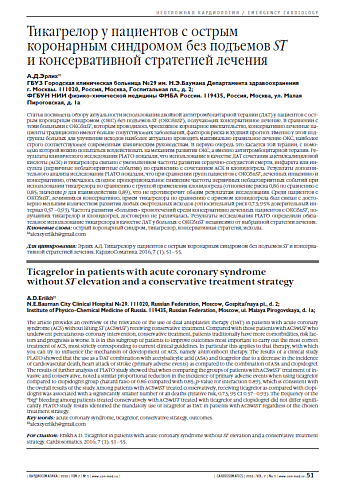
Статья посвящена обзору актуальности использования двойной антитромбоцитарной терапии (ДАТ) у пациентов с острым коронарным синдромом (ОКС) без подъемов ST (ОКСбпST), получающих консервативное лечение. В сравнении с теми больными с ОКСбпST, которым проводилось чрескожное коронарное вмешательство, консервативно леченные пациенты традиционно имеют больше сопутствующих заболеваний, факторов риска и худший прогноз. Именно у этой подгруппы больных для улучшения исходов наиболее актуально проводить максимально правильное лечение ОКС, наиболее строго соответствующее современным клиническим руководствам. В первую очередь это касается той терапии, с помощью которой можно попытаться воздействовать на механизм развития ОКС, а именно антитромбоцитарной терапии. Результаты клинического исследования PLATO показали, что использование в качестве ДАТ сочетания ацетилсалициловой кислоты (АСК) и тикагрелора связано с уменьшением частоты развития сердечно-сосудистой смерти, инфаркта или инсульта (первичные неблагоприятные события) по сравнению с сочетанием АСК и клопидогрела. Результаты дополнительного анализа исследования PLATO показали, что при сравнении групп пациентов с ОКСбпST, леченных инвазивно и консервативно, отмечалось сходное пропорциональное снижение частоты первичных неблагоприятных событий при использовании тикагрелора по сравнению с группой применения клопидогрела (отношение риска 0,86 по сравнению с 0,85; значение р для взаимодействия 0,89), что не противоречит общим результатам исследования. Среди пациентов с ОКСбпST, лечившихся консервативно, прием тикагрелора по сравнению с приемом клопидогрела был связан с достоверно меньшим количеством развития любых смертельных исходов (относительный риск 0,73; 95% доверительный интервал 0,57–0,93). Частота развития «больших» кровотечений среди консервативно леченных пациентов с ОКСбпST, получавших тикагрелор и клопидогрел, достоверно не различалась. Результаты исследования PLATO определили обязательное использование тикагрелора в качестве ДАТ у больных с ОКСбпST независимо от выбранной стратегии лечения.
Ключевые слова: острый коронарный синдром, тикагрелор, консервативная стратегия, исходы.
Key words: acute coronary syndrome, ticagrelor, conservative strategy, outcomes.
Ключевые слова: острый коронарный синдром, тикагрелор, консервативная стратегия, исходы.
________________________________________________
Key words: acute coronary syndrome, ticagrelor, conservative strategy, outcomes.
Полный текст
Список литературы
1. Roger VL, Go AS, Lloyd-Jones DM et al. Executive summary: heart disease and stroke statistics—2012 update: a report from the American Heart Association. Circulation 2012; 125: 188–97.
2. Ellis C, Gamble G, Devlin G et al. The management of acute coronary syndrome patients across New Zeland in 2012: results of a third comprehensive nationwide audit and observations of current interventional care. N Z Med J 2013; 126 (1387): 36–68.
3. Puymirat E, Schiele F, Steg PG et al. Determinants of improved one-year survival in non-ST-segment elevation myocardial infarction patients: insights from the French FAST-MI program over 15 years. Int J Cardiol 2014; 177 (1): 281–6.
4. Reibis R, Voller H, Gitt A et al. Management of Patients With ST-Segment Elevation or Non-ST-Segment Elevation Acute Coronary Syndromes in Cardiac Rehabilitation Centers. Clin Cardiol 2014; 37 (4): 213–21.
5. Эрлих А.Д., Грацианский Н.А. от имени участников регистра РЕКОРД. Регистр острых коронарных синдромов РЕКОРД. Характеристика больных и лечение до выписки из стационара. Кардиология. 2009; 7: 4–12. / Erlikh A.D., Gratsianskii N.A. ot imeni uchastnikov registra REKORD. Registr ostrykh koronarnykh sindromov REKORD. Kharakteristika bol'nykh i lechenie do vypiski iz statsionara. Kardiologiia. 2009; 7: 4–12. [in Russian]
6. Bhatt IL, Roe MT, Peterson ED et al. Utilization of early invasive management strategies for high-risk patients with non-ST-segment elevation acute coronary syndromes: results from the CRUSADE Quality Improvement Initiative. JAMA 2004; 292: 2096–104.
7. Chan MY, Mahaffey KW, Sun LJ et al. Prevalence, Predictors, and Impact of Conservative Medical Management for Patients With Non-ST-Segment Elevation Acute Coronary Syndromes Who Have Angiographically Documented Significant Coronary Disease. JACC 2008; 1 (4): 369–78.
8. O'Donoghue M, Boden WE, Braunwald E et al. Early invasive vs conservative treatment strategies in women and men with unstable angina and non-ST-segment elevation myocardial infarction: a meta-analysis. JAMA 2008; 300 (1): 71–80.
9. Bavry AA, Kumbhani DJ, Rassi AN et al. Benefit of early invasive therapy in acute coronary syndromes: a meta-analysis of contemporary randomized clinical trials. J Am Coll Cardiol 2006; 48:1319.
10. Hansen KW, Sorensen R, Madsen M et al. Effectiveness of an early versus a conservative invasive treatment strategy in acute coronary syndromes: a nationwide cohort study. Ann Intern Med 2015; 163: 737.
11. Maddox TM, Ho PM, Tsai TT et al. Clopidogrel Use and Hospital Quality in Medically Managed Patients With Non-ST-Segment-Elevation Myocardial Infarction. Circulation: Cardiovasc Quality and Outcomes 2012; 5: 523–31.
12. Jancin B. Medically treated NSTEACS patients “forgotten”. Cardiol News 2007.
13. Libby P. Current concepts of pathogenesis of the acute coronary syndromes. Circulation 2001; 104: 365–72.
14. ISIS-2 collaborative group. Randomised trial of intravenous streptokinase, oral aspirin, both, or nether among 17187 cases of suspected acute myocardial infarction: ISIS-2. Lancet 1988; 332 (8607): 349–60.
15. The Clopidogrel in Unstable Angina to Prevent Recurrent Events Trial Investigators. Effects of Clopidogrel in Addition to Aspirin in Patients with Acute Coronary Syndromes without ST-Segment Elevation. N Engl J Med 2001; 345: 494–502.
16. 2014 AHA/ACC Guideline for the Management of Patients With Nonз-ST-Elevation Acute Coronary Syndromes A Report of the American College of Cardiology/American Heart Association Task Force on Practice Guidelines. JACC 2014; 64 (24): e139-e228.
17. ESC Guidelines for the management of acute coronary syndromes in patients presenting without persistent ST-segment elevation. Eur Heart J 2015. Doi: 10.1093/eurheartj/ehv320.
18. Wiviott SD, Braunwald E, McCabe CH et al. For the TRITON-TIMI 38 Investigators. Prasugrel versus Clopidogrel in Patients with Acute Coronary Syndromes. N Engl J Med 2007; 357: 2001–15.
19. Bhatt DL, Stone GW, Mahaffey KW et al. For the CHAMPION PHOENIX Investigators Effect of Platelet Inhibition with Cangrelorduring PCI on Ischemic Events. N Engl J Med 2013; 368: 1303–13.
20. James S et al. Poster #1353 Presented at the European Society of Cardiology, Stockholm, Sweden, 28 August-1 September 2010.
21. Lindholm D, Varenhorst C, Cannon CP et al. Ticagrelor vs. clopidogrel in patients with non-ST-elevation acute coronary syndrome with or without revascularization: results from the PLATO trial. Eur Heart J 2014; 35 (31): 2083–93.
2. Ellis C, Gamble G, Devlin G et al. The management of acute coronary syndrome patients across New Zeland in 2012: results of a third comprehensive nationwide audit and observations of current interventional care. N Z Med J 2013; 126 (1387): 36–68.
3. Puymirat E, Schiele F, Steg PG et al. Determinants of improved one-year survival in non-ST-segment elevation myocardial infarction patients: insights from the French FAST-MI program over 15 years. Int J Cardiol 2014; 177 (1): 281–6.
4. Reibis R, Voller H, Gitt A et al. Management of Patients With ST-Segment Elevation or Non-ST-Segment Elevation Acute Coronary Syndromes in Cardiac Rehabilitation Centers. Clin Cardiol 2014; 37 (4): 213–21.
5. Erlikh A.D., Gratsianskii N.A. ot imeni uchastnikov registra REKORD. Registr ostrykh koronarnykh sindromov REKORD. Kharakteristika bol'nykh i lechenie do vypiski iz statsionara. Kardiologiia. 2009; 7: 4–12. [in Russian]
6. Bhatt IL, Roe MT, Peterson ED et al. Utilization of early invasive management strategies for high-risk patients with non-ST-segment elevation acute coronary syndromes: results from the CRUSADE Quality Improvement Initiative. JAMA 2004; 292: 2096–104.
7. Chan MY, Mahaffey KW, Sun LJ et al. Prevalence, Predictors, and Impact of Conservative Medical Management for Patients With Non-ST-Segment Elevation Acute Coronary Syndromes Who Have Angiographically Documented Significant Coronary Disease. JACC 2008; 1 (4): 369–78.
8. O'Donoghue M, Boden WE, Braunwald E et al. Early invasive vs conservative treatment strategies in women and men with unstable angina and non-ST-segment elevation myocardial infarction: a meta-analysis. JAMA 2008; 300 (1): 71–80.
9. Bavry AA, Kumbhani DJ, Rassi AN et al. Benefit of early invasive therapy in acute coronary syndromes: a meta-analysis of contemporary randomized clinical trials. J Am Coll Cardiol 2006; 48:1319.
10. Hansen KW, Sorensen R, Madsen M et al. Effectiveness of an early versus a conservative invasive treatment strategy in acute coronary syndromes: a nationwide cohort study. Ann Intern Med 2015; 163: 737.
11. Maddox TM, Ho PM, Tsai TT et al. Clopidogrel Use and Hospital Quality in Medically Managed Patients With Non-ST-Segment-Elevation Myocardial Infarction. Circulation: Cardiovasc Quality and Outcomes 2012; 5: 523–31.
12. Jancin B. Medically treated NSTEACS patients “forgotten”. Cardiol News 2007.
13. Libby P. Current concepts of pathogenesis of the acute coronary syndromes. Circulation 2001; 104: 365–72.
14. ISIS-2 collaborative group. Randomised trial of intravenous streptokinase, oral aspirin, both, or nether among 17187 cases of suspected acute myocardial infarction: ISIS-2. Lancet 1988; 332 (8607): 349–60.
15. The Clopidogrel in Unstable Angina to Prevent Recurrent Events Trial Investigators. Effects of Clopidogrel in Addition to Aspirin in Patients with Acute Coronary Syndromes without ST-Segment Elevation. N Engl J Med 2001; 345: 494–502.
16. 2014 AHA/ACC Guideline for the Management of Patients With Nonз-ST-Elevation Acute Coronary Syndromes A Report of the American College of Cardiology/American Heart Association Task Force on Practice Guidelines. JACC 2014; 64 (24): e139-e228.
17. ESC Guidelines for the management of acute coronary syndromes in patients presenting without persistent ST-segment elevation. Eur Heart J 2015. Doi: 10.1093/eurheartj/ehv320.
18. Wiviott SD, Braunwald E, McCabe CH et al. For the TRITON-TIMI 38 Investigators. Prasugrel versus Clopidogrel in Patients with Acute Coronary Syndromes. N Engl J Med 2007; 357: 2001–15.
19. Bhatt DL, Stone GW, Mahaffey KW et al. For the CHAMPION PHOENIX Investigators Effect of Platelet Inhibition with Cangrelorduring PCI on Ischemic Events. N Engl J Med 2013; 368: 1303–13.
20. James S et al. Poster #1353 Presented at the European Society of Cardiology, Stockholm, Sweden, 28 August-1 September 2010.
21. Lindholm D, Varenhorst C, Cannon CP et al. Ticagrelor vs. clopidogrel in patients with non-ST-elevation acute coronary syndrome with or without revascularization: results from the PLATO trial. Eur Heart J 2014; 35 (31): 2083–93.
2. Ellis C, Gamble G, Devlin G et al. The management of acute coronary syndrome patients across New Zeland in 2012: results of a third comprehensive nationwide audit and observations of current interventional care. N Z Med J 2013; 126 (1387): 36–68.
3. Puymirat E, Schiele F, Steg PG et al. Determinants of improved one-year survival in non-ST-segment elevation myocardial infarction patients: insights from the French FAST-MI program over 15 years. Int J Cardiol 2014; 177 (1): 281–6.
4. Reibis R, Voller H, Gitt A et al. Management of Patients With ST-Segment Elevation or Non-ST-Segment Elevation Acute Coronary Syndromes in Cardiac Rehabilitation Centers. Clin Cardiol 2014; 37 (4): 213–21.
5. Эрлих А.Д., Грацианский Н.А. от имени участников регистра РЕКОРД. Регистр острых коронарных синдромов РЕКОРД. Характеристика больных и лечение до выписки из стационара. Кардиология. 2009; 7: 4–12. / Erlikh A.D., Gratsianskii N.A. ot imeni uchastnikov registra REKORD. Registr ostrykh koronarnykh sindromov REKORD. Kharakteristika bol'nykh i lechenie do vypiski iz statsionara. Kardiologiia. 2009; 7: 4–12. [in Russian]
6. Bhatt IL, Roe MT, Peterson ED et al. Utilization of early invasive management strategies for high-risk patients with non-ST-segment elevation acute coronary syndromes: results from the CRUSADE Quality Improvement Initiative. JAMA 2004; 292: 2096–104.
7. Chan MY, Mahaffey KW, Sun LJ et al. Prevalence, Predictors, and Impact of Conservative Medical Management for Patients With Non-ST-Segment Elevation Acute Coronary Syndromes Who Have Angiographically Documented Significant Coronary Disease. JACC 2008; 1 (4): 369–78.
8. O'Donoghue M, Boden WE, Braunwald E et al. Early invasive vs conservative treatment strategies in women and men with unstable angina and non-ST-segment elevation myocardial infarction: a meta-analysis. JAMA 2008; 300 (1): 71–80.
9. Bavry AA, Kumbhani DJ, Rassi AN et al. Benefit of early invasive therapy in acute coronary syndromes: a meta-analysis of contemporary randomized clinical trials. J Am Coll Cardiol 2006; 48:1319.
10. Hansen KW, Sorensen R, Madsen M et al. Effectiveness of an early versus a conservative invasive treatment strategy in acute coronary syndromes: a nationwide cohort study. Ann Intern Med 2015; 163: 737.
11. Maddox TM, Ho PM, Tsai TT et al. Clopidogrel Use and Hospital Quality in Medically Managed Patients With Non-ST-Segment-Elevation Myocardial Infarction. Circulation: Cardiovasc Quality and Outcomes 2012; 5: 523–31.
12. Jancin B. Medically treated NSTEACS patients “forgotten”. Cardiol News 2007.
13. Libby P. Current concepts of pathogenesis of the acute coronary syndromes. Circulation 2001; 104: 365–72.
14. ISIS-2 collaborative group. Randomised trial of intravenous streptokinase, oral aspirin, both, or nether among 17187 cases of suspected acute myocardial infarction: ISIS-2. Lancet 1988; 332 (8607): 349–60.
15. The Clopidogrel in Unstable Angina to Prevent Recurrent Events Trial Investigators. Effects of Clopidogrel in Addition to Aspirin in Patients with Acute Coronary Syndromes without ST-Segment Elevation. N Engl J Med 2001; 345: 494–502.
16. 2014 AHA/ACC Guideline for the Management of Patients With Nonз-ST-Elevation Acute Coronary Syndromes A Report of the American College of Cardiology/American Heart Association Task Force on Practice Guidelines. JACC 2014; 64 (24): e139-e228.
17. ESC Guidelines for the management of acute coronary syndromes in patients presenting without persistent ST-segment elevation. Eur Heart J 2015. Doi: 10.1093/eurheartj/ehv320.
18. Wiviott SD, Braunwald E, McCabe CH et al. For the TRITON-TIMI 38 Investigators. Prasugrel versus Clopidogrel in Patients with Acute Coronary Syndromes. N Engl J Med 2007; 357: 2001–15.
19. Bhatt DL, Stone GW, Mahaffey KW et al. For the CHAMPION PHOENIX Investigators Effect of Platelet Inhibition with Cangrelorduring PCI on Ischemic Events. N Engl J Med 2013; 368: 1303–13.
20. James S et al. Poster #1353 Presented at the European Society of Cardiology, Stockholm, Sweden, 28 August-1 September 2010.
21. Lindholm D, Varenhorst C, Cannon CP et al. Ticagrelor vs. clopidogrel in patients with non-ST-elevation acute coronary syndrome with or without revascularization: results from the PLATO trial. Eur Heart J 2014; 35 (31): 2083–93.
________________________________________________
2. Ellis C, Gamble G, Devlin G et al. The management of acute coronary syndrome patients across New Zeland in 2012: results of a third comprehensive nationwide audit and observations of current interventional care. N Z Med J 2013; 126 (1387): 36–68.
3. Puymirat E, Schiele F, Steg PG et al. Determinants of improved one-year survival in non-ST-segment elevation myocardial infarction patients: insights from the French FAST-MI program over 15 years. Int J Cardiol 2014; 177 (1): 281–6.
4. Reibis R, Voller H, Gitt A et al. Management of Patients With ST-Segment Elevation or Non-ST-Segment Elevation Acute Coronary Syndromes in Cardiac Rehabilitation Centers. Clin Cardiol 2014; 37 (4): 213–21.
5. Erlikh A.D., Gratsianskii N.A. ot imeni uchastnikov registra REKORD. Registr ostrykh koronarnykh sindromov REKORD. Kharakteristika bol'nykh i lechenie do vypiski iz statsionara. Kardiologiia. 2009; 7: 4–12. [in Russian]
6. Bhatt IL, Roe MT, Peterson ED et al. Utilization of early invasive management strategies for high-risk patients with non-ST-segment elevation acute coronary syndromes: results from the CRUSADE Quality Improvement Initiative. JAMA 2004; 292: 2096–104.
7. Chan MY, Mahaffey KW, Sun LJ et al. Prevalence, Predictors, and Impact of Conservative Medical Management for Patients With Non-ST-Segment Elevation Acute Coronary Syndromes Who Have Angiographically Documented Significant Coronary Disease. JACC 2008; 1 (4): 369–78.
8. O'Donoghue M, Boden WE, Braunwald E et al. Early invasive vs conservative treatment strategies in women and men with unstable angina and non-ST-segment elevation myocardial infarction: a meta-analysis. JAMA 2008; 300 (1): 71–80.
9. Bavry AA, Kumbhani DJ, Rassi AN et al. Benefit of early invasive therapy in acute coronary syndromes: a meta-analysis of contemporary randomized clinical trials. J Am Coll Cardiol 2006; 48:1319.
10. Hansen KW, Sorensen R, Madsen M et al. Effectiveness of an early versus a conservative invasive treatment strategy in acute coronary syndromes: a nationwide cohort study. Ann Intern Med 2015; 163: 737.
11. Maddox TM, Ho PM, Tsai TT et al. Clopidogrel Use and Hospital Quality in Medically Managed Patients With Non-ST-Segment-Elevation Myocardial Infarction. Circulation: Cardiovasc Quality and Outcomes 2012; 5: 523–31.
12. Jancin B. Medically treated NSTEACS patients “forgotten”. Cardiol News 2007.
13. Libby P. Current concepts of pathogenesis of the acute coronary syndromes. Circulation 2001; 104: 365–72.
14. ISIS-2 collaborative group. Randomised trial of intravenous streptokinase, oral aspirin, both, or nether among 17187 cases of suspected acute myocardial infarction: ISIS-2. Lancet 1988; 332 (8607): 349–60.
15. The Clopidogrel in Unstable Angina to Prevent Recurrent Events Trial Investigators. Effects of Clopidogrel in Addition to Aspirin in Patients with Acute Coronary Syndromes without ST-Segment Elevation. N Engl J Med 2001; 345: 494–502.
16. 2014 AHA/ACC Guideline for the Management of Patients With Nonз-ST-Elevation Acute Coronary Syndromes A Report of the American College of Cardiology/American Heart Association Task Force on Practice Guidelines. JACC 2014; 64 (24): e139-e228.
17. ESC Guidelines for the management of acute coronary syndromes in patients presenting without persistent ST-segment elevation. Eur Heart J 2015. Doi: 10.1093/eurheartj/ehv320.
18. Wiviott SD, Braunwald E, McCabe CH et al. For the TRITON-TIMI 38 Investigators. Prasugrel versus Clopidogrel in Patients with Acute Coronary Syndromes. N Engl J Med 2007; 357: 2001–15.
19. Bhatt DL, Stone GW, Mahaffey KW et al. For the CHAMPION PHOENIX Investigators Effect of Platelet Inhibition with Cangrelorduring PCI on Ischemic Events. N Engl J Med 2013; 368: 1303–13.
20. James S et al. Poster #1353 Presented at the European Society of Cardiology, Stockholm, Sweden, 28 August-1 September 2010.
21. Lindholm D, Varenhorst C, Cannon CP et al. Ticagrelor vs. clopidogrel in patients with non-ST-elevation acute coronary syndrome with or without revascularization: results from the PLATO trial. Eur Heart J 2014; 35 (31): 2083–93.
Авторы
А.Д.Эрлих
ГБУЗ Городская клиническая больница №29 им. Н.Э.Баумана Департамента здравоохранения г. Москвы. 111020, Россия, Москва, Госпитальная пл., д. 2;
ФГБУН НИИ физико-химической медицины ФМБА России. 119435, Россия, Москва, ул. Малая Пироговская, д. 1а
alexeyerlikh@gmail.com
N.E.Bauman City Clinical Hospital №29. 111020, Russian Federation, Moscow, Gospital'naya pl., d. 2;
Institute of Physico-Chemical Medicine of Russia. 119435, Russian Federation, Moscow, ul. Malaya Pirogovskaya, d. 1a;
alexeyerlikh@gmail.com
ГБУЗ Городская клиническая больница №29 им. Н.Э.Баумана Департамента здравоохранения г. Москвы. 111020, Россия, Москва, Госпитальная пл., д. 2;
ФГБУН НИИ физико-химической медицины ФМБА России. 119435, Россия, Москва, ул. Малая Пироговская, д. 1а
alexeyerlikh@gmail.com
________________________________________________
N.E.Bauman City Clinical Hospital №29. 111020, Russian Federation, Moscow, Gospital'naya pl., d. 2;
Institute of Physico-Chemical Medicine of Russia. 119435, Russian Federation, Moscow, ul. Malaya Pirogovskaya, d. 1a;
alexeyerlikh@gmail.com
Цель портала OmniDoctor – предоставление профессиональной информации врачам, провизорам и фармацевтам.