

Материалы доступны только для специалистов сферы здравоохранения.
Чтобы посмотреть материал полностью
Авторизуйтесь
или зарегистрируйтесь.
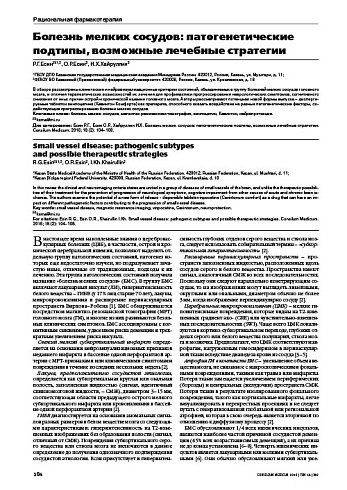
Болезнь мелких сосудов: патогенетические подтипы, возможные лечебные стратегии
Болезнь мелких сосудов: патогенетические подтипы, возможные лечебные стратегии
Есин Р.Г., Есин О.Р., Хайруллин И.Х. Болезнь мелких сосудов: патогенетические подтипы, возможные лечебные стратегии. Consilum Mediсum. 2016; 18 (2): 104–108. DOI: 10.26442/2075-1753_2016.2.104-108
________________________________________________
Материалы доступны только для специалистов сферы здравоохранения.
Чтобы посмотреть материал полностью
Авторизуйтесь
или зарегистрируйтесь.
Аннотация
В обзоре рассмотрены клинические и нейровизуализационные критерии состояний, объединяемых в группу болезней мелких сосудов головного мозга, и отличия терапевтических возможностей их лечения для профилактики прогрессирования неврологических симптомов, когнитивного снижения от иных причин острой и хронической ишемии головного мозга. Авторы рассматривают потенциал новой формы выпуска – диспергируемые таблетки винпоцетина (Кавинтон Комфорте) как препарата, способного оказать воздействие на разные патогенетические факторы, содействующие прогрессированию болезни мелких сосудов.
Ключевые слова: болезнь мелких сосудов, магнитно-резонансная томография, винпоцетин, Кавинтон, нейропротекция.
Key words: small vessel disease, magnetic resonance imaging, vinpocetine, Cavintonum, neuroprotection.
Ключевые слова: болезнь мелких сосудов, магнитно-резонансная томография, винпоцетин, Кавинтон, нейропротекция.
________________________________________________
Key words: small vessel disease, magnetic resonance imaging, vinpocetine, Cavintonum, neuroprotection.
Полный текст
Список литературы
1. Pantoni L. Cerebral small vessel disease: from pathogenesis and clinical characteristics to therapeutic challenges. Lancet Neurol 2010; 9: 689–701.
2. Wardlaw J, Smith E, Biessels G et al. Neuroimaging standards for research into small vessel disease and its contribution to ageing and neurodegeneration. Lancet Neurol 2013; 12 (8): 822–38. Doi: 10.1016/s1474-4422(13)70124-8.
3. Gouw A, Seewann A, Van der Flier W et al. Heterogeneity of small vessel disease: a systematic review of MRI and histopathology correlations. J Neurol Neurosurg Psychiatry 2010; 82 (2): 126–35. Doi: 10.1136/jnnp.2009.204685.
4. Shoamanesh A, Kwok C, Benavente O. Cerebral Microbleeds: Histopathological Correlation of Neuroimaging. Cerebrovasc Dis. 2011; 32 (6): 528–34. Doi: 10.1159/000331466.
5. De Reuck J, Auger F, Cordonnier C et al. Comparison of 7.0-T T2*-Magnetic Resonance Imaging of Cerebral Bleeds in Post-Mortem Brain Sections of Alzheimer Patients with Their Neuropathological Correlates. Cerebrovasc Dis 2011; 31 (5): 511–7. Doi: 10.1159/000324391.
6. Warlow C, Sudlow C, Dennis M et al. Stroke. Lancet 2003; 362: 1211–24.
7. Debette S, Markus HS. The clinical importance of white matter hyperintensities on brain magnetic resonance imaging: systematic review and meta-analysis. BMJ 2010; 341: c3666.
8. Morris Z, Whiteley WN, Jr. Longstreth WT et al. Incidental findings on brain magnetic resonance imaging: systematic review and metaanalysis. BMJ 2009; 339: b3016.
9. Jackson CA, Hutchison A, Dennis MS et al. Differences between ischemic stroke subtypes in vascular outcomes support a distinct lacunar ischemic stroke arteriopathy: a prospective, hospital-based study. Stroke 2009; 40: 3679–84.
10. Makin SD, Turpin S, Dennis MS, Wardlaw JM. Cognitive impairment after lacunar stroke: systematic review and meta-analysis of incidence, prevalence and comparison with other stroke subtypes. J Neurol Neurosurg Psychiatry 2013; 84: 893–900.
11. Windham BG, Griswold ME, Shibata D et al. Covert neurological symptoms associated with silent infarcts from midlife to older age: the Atherosclerosis Risk in Communities study. Stroke 2012; 43: 1218–23.
12. Bath PM, Wardlaw JM. Pharmacological treatment and prevention of cerebral small vessel disease: a review of potential interventions. Int J Stroke 2015; 10 (4): 469–78.
13. Фисенко В.П. Кавинтон (винпоцетин): новые возможности клинического применения. Эксперим. и клин. фармакология. 2015; 78 (10): 31–9. / Fisenko V.P. Kavinton (vinpotsetin): novye vozmozhnosti klinicheskogo primeneniia. Eksperim. i klin. farmakologiia. 2015; 78 (10): 31–9. [in Russian]
14. Topol E, Easton D, Harrington R et al. Randomised, double-blind,placebo-controlled, international trial of the oral IIb/IIIa antagonist lotrafiban in coronary and cerebrovascular disease. Am Heart Assoc 2003; 108: 399–406.
15. Bath PMW, Blann A, Smith N, Butterworth RJ. Von Willebrand factor, p-selectin and fibrinogen levels in patients with acute ischaemic and haemorrhagic stroke, and their relationship with stroke sub-type and functional outcome. Platelets 1998; 9: 155–9.
16. Lavallee PC, Labreuche J, Faille D et al. Circulating markers of endothelial dysfunction and platelet activation in patients with severe symptomatic cerebral small vessel disease. Cerebrovasc Dis 2013; 36: 131–8.
17. Allen CL, Bayraktutan U. Antioxidants attenuate hyperglycaemiamediated brain endothelial cell dysfunction and blood-brain barrier ghypermeability. Diabetes Obes Metab 2009; 11: 480–90.
18. Allen C, Srivastava K, Bayraktutan U. Small GTPase RhoA and its effector rho kinase mediate oxygen glucose deprivation-evoked in vitro cerebral barrier dysfunction. Stroke 2010; 41: 2056–63.
19. Shao B, Bayraktutan U. Hyperglycaemia promotes cerebral barrier dysfunction through activation of protein kinase C-beta. Diabetes Obes Metab 2013; 15: 993–9.
20. Farrall AJ, Wardlaw JM. Blood-brain barrier: ageing and microvascular disease–systematic review and meta-analysis. Neurobiol Aging 2009; 30: 337–52.
21. Böhm M, Cotton D, Foster L et al. Impact of resting heart rate on mortality, disability and cognitive decline in patients after ischaemicstroke. Eur Heart J 2012; 33: 2804–12.
22. Rothwell PM, Howard SC, Dolan E et al. Prognostic significance of visit-to-visit variability, maximum systolic blood pressure, and episodic hypertension. Lancet 2010; 375: 895–905.
23. Козловский В.И., Фисенко В.П. Кавинтон (Винпоцетин): фармакологические эффекты, принципы действия и применение в клинической практике. М.: Коти-Принт, 2014. / Kozlovskii V.I., Fisenko V.P. Kavinton (Vinpotsetin): farmakologicheskie effekty, printsipy deistviia i primenenie v klinicheskoi praktike. M.: Koti-Print, 2014. [in Russian]
24. Bereczki D, Fekete I. A systematic review of vinpocetine therapy in acute ischaemic stroke. Eur J Clin Pharmacol 1999; 55: 349–52.
25. Kiss B, Kárpáti E. Mechanism of action of vinpocetine. Acta Pharm Hung 1996; 66 (5): 213–24.
26. Milusheva E, Sperlagh B, Kiss B et al. Inhibitory effect of hypoxic condition on acetylcholine release is partly due to the effect of adenosine released from the tissue. Brain Res Bull 1990; 24: 369–73.
27. Yan C. Cyclic nucleotide phosphodiesterase 1 and vascular aging. Clin Sci (Lond) 2015; 129 (12): 1077–81. Doi: 10.1042/CS20150605.
28. Vas A, Christer H, Sóvágó J et al. Human positron emission tomography with oral 11C-vinpocetine. Orv Hetil 2003; 144 (46): 2271–6.
29. Szakáll S, Boros I, Balkay L et al. Cerebral effects of a single dose of intravenous vinpocetine in chronic stroke patients: A PET study. J Neuroimaging 1998; 8: 197–204.
30. Hadjiev D. Asymptomatic ischemic cerebrovascular disorders and neuroprotection with vinpocetine. Ideggyogy Sz 2003; 56: 166–72.
31. Бурцев Е.М., Савков В.С., Ширах В.В., Бурцев М.Е. 10-летний опыт применения кавинтона при цереброваскулярных нарушениях. Журн. невропатологии и психиатрии им. С.С.Корсакова. 1992; 92 (1): 56–60. / Burcev E.M., Savkov V.S., Shirah V.V., Burcev M.E. 10-letnij opyt primenenija kavintona pri cerebrovaskuljarnyh narushenijah. Zhurn. nevropatologii i psihiatrii im. S.S.Korsakova. 1992; 92 (1): 56–60. [in Russian]
32. Ваизова O.E., Венгеровский А.И., Алифирова В.М. Влияние винпоцетина (Кавинтона) на эндотелиальную функцию у больных с хронической недостаточностью мозгового кровообращения. Журн. неврологии и психиатрии им. С.С.Корсакова. 2006; 16: 46–50. / Vaizova O.E., Vengerovskij A.I., Alifirova V.M. Vlijanie vinpocetina (Kavintona) na jendotelial'nuju funkciju u bol'nyh s hronicheskoj nedostatochnost'ju mozgovogo krovoobrashhenija. Zhurn. nevrologii i psihiatrii im. S.S.Korsakova. 2006; 16: 46–50. [in Russian]
33. Szobor A, Klein M. Ethyl apovincaminate therapy in neurovascular diseases. Arzneimittelforschung 1976; 26: 1984–9.
34. Feher G, Koltai K, Kesmarky G et al. Effect of parenteral or oral vinpocetine on the hemorheological parameters of patients with chronic cerebrovascular diseases. Phytomedicine 2009; 16: 111–7.
35. Szapary L, Horvath B, Marton Zs et al. Hemorheological disturbances in patients with chronic cerebrovascular diseases. Clin Hemorheol Microcirc 2004; 31: 1–9.
36. Hayakawa M. Effect of vinpocetine on red blood cell deformability in stroke patients. Arzneimittelforschung 1992; 42: 425–7.
37. Sitges M, Aldana BI, Reed RC. Effect of the Anti-depressant Sertraline, the Novel Anti-seizur Drug Vinpocetine and Several Conventional Antiepileptic Drugs on the Epileptiform EEG Activity Induced by 4-Aminopyridine. Neurochem Res 2016. [Epub ahead of print].
38. Клинические рекомендации по ведению больных с ишемическим инсультом и транзиторными ишемическими атаками. Утверждены решением Президиума Всероссийского общества неврологов. 17.02.2015. (Под ред. Л.В.Стаховской). М., 2015. / Klinicheskie rekomendatsii po vedeniiu bol'nykh s ishemicheskim insul'tom i tranzitornymi ishemicheskimi atakami. Utverzhdeny resheniem Prezidiuma Vserossiiskogo obshchestva nevrologov. 17.02.2015. (Pod red. L.V.Stakhovskoi). M., 2015. [in Russian]
39. Карпов А.В. Применение препарата кавинтон Форте у больных с дисциркуляторной энцефалопатией. http://www.rmj.ru/articles/nevrologiya/Primenenie_preparata_kavinton_Forte_u_bolynyh_s_discirkulyato... / Karpov A.V. Primenenie preparata kavinton Forte u bol'nykh s distsirkuliatornoi entsefalopatiei. http://www.rmj.ru/articles/nevrologiya/Primenenie_preparata_kavinton_Forte_u_bolynyh_s_discirkulyato...) [in Russian]
40. Танашян М.М., Домашенко М.А. Опыт применения винпоцетина (Кавинтона) в клинической ангионеврологии. Атмосфера. Нервные болезни. 2011; 2: 12–4. / Tanashian M.M., Domashenko M.A. Opyt primeneniia vinpotsetina (Kavintona) v klinicheskoi angionevrologii. Atmosfera. Nervnye bolezni. 2011; 2: 12–4. [in Russian]
41. Patyar S, Prakash A, Modi M, Medhi B. Role of vinpocetine in cerebrovascular diseases. Pharmacol Rep 2011; 63 (3): 618–28.
42. Табеева Г.Р. Клиническая феноменология, механизмы формирования и патогенетическая терапия ранних проявлений хронической ишемии мозга. Клин. фармакология и терапия. 2015; 24 (4): 11–7. / Tabeeva G.R. Klinicheskaia fenomenologiia, mekhanizmy formirovaniia i patogeneticheskaia terapiia rannikh proiavlenii khronicheskoi ishemii mozga. Klin. farmakologiia i terapiia. 2015; 24 (4): 11–7. [in Russian]
43. Государственный реестр лекарственных средств. Инструкция по применению лекарственного препарата для медицинского применения Кавинтон® Комфорте. http://grls.rosminzdrav.ru/Grls_View_v2.aspx?idReg=143680&t= / Gosudarstvennyi reestr lekarstvennykh sredstv. Instruktsiia po primeneniiu lekarstvennogo preparata dlia meditsinskogo primeneniia Kavinton® Komforte. http://grls.rosminzdrav.ru/Grls_View_v2.aspx?idReg=143680&t=
2. Wardlaw J, Smith E, Biessels G et al. Neuroimaging standards for research into small vessel disease and its contribution to ageing and neurodegeneration. Lancet Neurol 2013; 12 (8): 822–38. Doi: 10.1016/s1474-4422(13)70124-8.
3. Gouw A, Seewann A, Van der Flier W et al. Heterogeneity of small vessel disease: a systematic review of MRI and histopathology correlations. J Neurol Neurosurg Psychiatry 2010; 82 (2): 126–35. Doi: 10.1136/jnnp.2009.204685.
4. Shoamanesh A, Kwok C, Benavente O. Cerebral Microbleeds: Histopathological Correlation of Neuroimaging. Cerebrovasc Dis. 2011; 32 (6): 528–34. Doi: 10.1159/000331466.
5. De Reuck J, Auger F, Cordonnier C et al. Comparison of 7.0-T T2*-Magnetic Resonance Imaging of Cerebral Bleeds in Post-Mortem Brain Sections of Alzheimer Patients with Their Neuropathological Correlates. Cerebrovasc Dis 2011; 31 (5): 511–7. Doi: 10.1159/000324391.
6. Warlow C, Sudlow C, Dennis M et al. Stroke. Lancet 2003; 362: 1211–24.
7. Debette S, Markus HS. The clinical importance of white matter hyperintensities on brain magnetic resonance imaging: systematic review and meta-analysis. BMJ 2010; 341: c3666.
8. Morris Z, Whiteley WN, Jr. Longstreth WT et al. Incidental findings on brain magnetic resonance imaging: systematic review and metaanalysis. BMJ 2009; 339: b3016.
9. Jackson CA, Hutchison A, Dennis MS et al. Differences between ischemic stroke subtypes in vascular outcomes support a distinct lacunar ischemic stroke arteriopathy: a prospective, hospital-based study. Stroke 2009; 40: 3679–84.
10. Makin SD, Turpin S, Dennis MS, Wardlaw JM. Cognitive impairment after lacunar stroke: systematic review and meta-analysis of incidence, prevalence and comparison with other stroke subtypes. J Neurol Neurosurg Psychiatry 2013; 84: 893–900.
11. Windham BG, Griswold ME, Shibata D et al. Covert neurological symptoms associated with silent infarcts from midlife to older age: the Atherosclerosis Risk in Communities study. Stroke 2012; 43: 1218–23.
12. Bath PM, Wardlaw JM. Pharmacological treatment and prevention of cerebral small vessel disease: a review of potential interventions. Int J Stroke 2015; 10 (4): 469–78.
13. Fisenko V.P. Kavinton (vinpotsetin): novye vozmozhnosti klinicheskogo primeneniia. Eksperim. i klin. farmakologiia. 2015; 78 (10): 31–9. [in Russian]
14. Topol E, Easton D, Harrington R et al. Randomised, double-blind,placebo-controlled, international trial of the oral IIb/IIIa antagonist lotrafiban in coronary and cerebrovascular disease. Am Heart Assoc 2003; 108: 399–406.
15. Bath PMW, Blann A, Smith N, Butterworth RJ. Von Willebrand factor, p-selectin and fibrinogen levels in patients with acute ischaemic and haemorrhagic stroke, and their relationship with stroke sub-type and functional outcome. Platelets 1998; 9: 155–9.
16. Lavallee PC, Labreuche J, Faille D et al. Circulating markers of endothelial dysfunction and platelet activation in patients with severe symptomatic cerebral small vessel disease. Cerebrovasc Dis 2013; 36: 131–8.
17. Allen CL, Bayraktutan U. Antioxidants attenuate hyperglycaemiamediated brain endothelial cell dysfunction and blood-brain barrier ghypermeability. Diabetes Obes Metab 2009; 11: 480–90.
18. Allen C, Srivastava K, Bayraktutan U. Small GTPase RhoA and its effector rho kinase mediate oxygen glucose deprivation-evoked in vitro cerebral barrier dysfunction. Stroke 2010; 41: 2056–63.
19. Shao B, Bayraktutan U. Hyperglycaemia promotes cerebral barrier dysfunction through activation of protein kinase C-beta. Diabetes Obes Metab 2013; 15: 993–9.
20. Farrall AJ, Wardlaw JM. Blood-brain barrier: ageing and microvascular disease–systematic review and meta-analysis. Neurobiol Aging 2009; 30: 337–52.
21. Böhm M, Cotton D, Foster L et al. Impact of resting heart rate on mortality, disability and cognitive decline in patients after ischaemicstroke. Eur Heart J 2012; 33: 2804–12.
22. Rothwell PM, Howard SC, Dolan E et al. Prognostic significance of visit-to-visit variability, maximum systolic blood pressure, and episodic hypertension. Lancet 2010; 375: 895–905.
23. Kozlovskii V.I., Fisenko V.P. Kavinton (Vinpotsetin): farmakologicheskie effekty, printsipy deistviia i primenenie v klinicheskoi praktike. M.: Koti-Print, 2014. [in Russian]
24. Bereczki D, Fekete I. A systematic review of vinpocetine therapy in acute ischaemic stroke. Eur J Clin Pharmacol 1999; 55: 349–52.
25. Kiss B, Kárpáti E. Mechanism of action of vinpocetine. Acta Pharm Hung 1996; 66 (5): 213–24.
26. Milusheva E, Sperlagh B, Kiss B et al. Inhibitory effect of hypoxic condition on acetylcholine release is partly due to the effect of adenosine released from the tissue. Brain Res Bull 1990; 24: 369–73.
27. Yan C. Cyclic nucleotide phosphodiesterase 1 and vascular aging. Clin Sci (Lond) 2015; 129 (12): 1077–81. Doi: 10.1042/CS20150605.
28. Vas A, Christer H, Sóvágó J et al. Human positron emission tomography with oral 11C-vinpocetine. Orv Hetil 2003; 144 (46): 2271–6.
29. Szakáll S, Boros I, Balkay L et al. Cerebral effects of a single dose of intravenous vinpocetine in chronic stroke patients: A PET study. J Neuroimaging 1998; 8: 197–204.
30. Hadjiev D. Asymptomatic ischemic cerebrovascular disorders and neuroprotection with vinpocetine. Ideggyogy Sz 2003; 56: 166–72.
31. Burcev E.M., Savkov V.S., Shirah V.V., Burcev M.E. 10-letnij opyt primenenija kavintona pri cerebrovaskuljarnyh narushenijah. Zhurn. nevropatologii i psihiatrii im. S.S.Korsakova. 1992; 92 (1): 56–60. [in Russian]
32. Vaizova O.E., Vengerovskij A.I., Alifirova V.M. Vlijanie vinpocetina (Kavintona) na jendotelial'nuju funkciju u bol'nyh s hronicheskoj nedostatochnost'ju mozgovogo krovoobrashhenija. Zhurn. nevrologii i psihiatrii im. S.S.Korsakova. 2006; 16: 46–50. [in Russian]
33. Szobor A, Klein M. Ethyl apovincaminate therapy in neurovascular diseases. Arzneimittelforschung 1976; 26: 1984–9.
34. Feher G, Koltai K, Kesmarky G et al. Effect of parenteral or oral vinpocetine on the hemorheological parameters of patients with chronic cerebrovascular diseases. Phytomedicine 2009; 16: 111–7.
35. Szapary L, Horvath B, Marton Zs et al. Hemorheological disturbances in patients with chronic cerebrovascular diseases. Clin Hemorheol Microcirc 2004; 31: 1–9.
36. Hayakawa M. Effect of vinpocetine on red blood cell deformability in stroke patients. Arzneimittelforschung 1992; 42: 425–7.
37. Sitges M, Aldana BI, Reed RC. Effect of the Anti-depressant Sertraline, the Novel Anti-seizur Drug Vinpocetine and Several Conventional Antiepileptic Drugs on the Epileptiform EEG Activity Induced by 4-Aminopyridine. Neurochem Res 2016. [Epub ahead of print].
38. Klinicheskie rekomendatsii po vedeniiu bol'nykh s ishemicheskim insul'tom i tranzitornymi ishemicheskimi atakami. Utverzhdeny resheniem Prezidiuma Vserossiiskogo obshchestva nevrologov. 17.02.2015. (Pod red. L.V.Stakhovskoi). M., 2015. [in Russian]
39. Karpov A.V. Primenenie preparata kavinton Forte u bol'nykh s distsirkuliatornoi entsefalopatiei. http://www.rmj.ru/articles/nevrologiya/Primenenie_preparata_kavinton_Forte_u_bolynyh_s_discirkulyato...) [in Russian]
40. Tanashian M.M., Domashenko M.A. Opyt primeneniia vinpotsetina (Kavintona) v klinicheskoi angionevrologii. Atmosfera. Nervnye bolezni. 2011; 2: 12–4. [in Russian]
41. Patyar S, Prakash A, Modi M, Medhi B. Role of vinpocetine in cerebrovascular diseases. Pharmacol Rep 2011; 63 (3): 618–28.
42. Tabeeva G.R. Klinicheskaia fenomenologiia, mekhanizmy formirovaniia i patogeneticheskaia terapiia rannikh proiavlenii khronicheskoi ishemii mozga. Klin. farmakologiia i terapiia. 2015; 24 (4): 11–7. [in Russian]
43. Gosudarstvennyi reestr lekarstvennykh sredstv. Instruktsiia po primeneniiu lekarstvennogo preparata dlia meditsinskogo primeneniia Kavinton® Komforte. http://grls.rosminzdrav.ru/Grls_View_v2.aspx?idReg=143680&t=
2. Wardlaw J, Smith E, Biessels G et al. Neuroimaging standards for research into small vessel disease and its contribution to ageing and neurodegeneration. Lancet Neurol 2013; 12 (8): 822–38. Doi: 10.1016/s1474-4422(13)70124-8.
3. Gouw A, Seewann A, Van der Flier W et al. Heterogeneity of small vessel disease: a systematic review of MRI and histopathology correlations. J Neurol Neurosurg Psychiatry 2010; 82 (2): 126–35. Doi: 10.1136/jnnp.2009.204685.
4. Shoamanesh A, Kwok C, Benavente O. Cerebral Microbleeds: Histopathological Correlation of Neuroimaging. Cerebrovasc Dis. 2011; 32 (6): 528–34. Doi: 10.1159/000331466.
5. De Reuck J, Auger F, Cordonnier C et al. Comparison of 7.0-T T2*-Magnetic Resonance Imaging of Cerebral Bleeds in Post-Mortem Brain Sections of Alzheimer Patients with Their Neuropathological Correlates. Cerebrovasc Dis 2011; 31 (5): 511–7. Doi: 10.1159/000324391.
6. Warlow C, Sudlow C, Dennis M et al. Stroke. Lancet 2003; 362: 1211–24.
7. Debette S, Markus HS. The clinical importance of white matter hyperintensities on brain magnetic resonance imaging: systematic review and meta-analysis. BMJ 2010; 341: c3666.
8. Morris Z, Whiteley WN, Jr. Longstreth WT et al. Incidental findings on brain magnetic resonance imaging: systematic review and metaanalysis. BMJ 2009; 339: b3016.
9. Jackson CA, Hutchison A, Dennis MS et al. Differences between ischemic stroke subtypes in vascular outcomes support a distinct lacunar ischemic stroke arteriopathy: a prospective, hospital-based study. Stroke 2009; 40: 3679–84.
10. Makin SD, Turpin S, Dennis MS, Wardlaw JM. Cognitive impairment after lacunar stroke: systematic review and meta-analysis of incidence, prevalence and comparison with other stroke subtypes. J Neurol Neurosurg Psychiatry 2013; 84: 893–900.
11. Windham BG, Griswold ME, Shibata D et al. Covert neurological symptoms associated with silent infarcts from midlife to older age: the Atherosclerosis Risk in Communities study. Stroke 2012; 43: 1218–23.
12. Bath PM, Wardlaw JM. Pharmacological treatment and prevention of cerebral small vessel disease: a review of potential interventions. Int J Stroke 2015; 10 (4): 469–78.
13. Фисенко В.П. Кавинтон (винпоцетин): новые возможности клинического применения. Эксперим. и клин. фармакология. 2015; 78 (10): 31–9. / Fisenko V.P. Kavinton (vinpotsetin): novye vozmozhnosti klinicheskogo primeneniia. Eksperim. i klin. farmakologiia. 2015; 78 (10): 31–9. [in Russian]
14. Topol E, Easton D, Harrington R et al. Randomised, double-blind,placebo-controlled, international trial of the oral IIb/IIIa antagonist lotrafiban in coronary and cerebrovascular disease. Am Heart Assoc 2003; 108: 399–406.
15. Bath PMW, Blann A, Smith N, Butterworth RJ. Von Willebrand factor, p-selectin and fibrinogen levels in patients with acute ischaemic and haemorrhagic stroke, and their relationship with stroke sub-type and functional outcome. Platelets 1998; 9: 155–9.
16. Lavallee PC, Labreuche J, Faille D et al. Circulating markers of endothelial dysfunction and platelet activation in patients with severe symptomatic cerebral small vessel disease. Cerebrovasc Dis 2013; 36: 131–8.
17. Allen CL, Bayraktutan U. Antioxidants attenuate hyperglycaemiamediated brain endothelial cell dysfunction and blood-brain barrier ghypermeability. Diabetes Obes Metab 2009; 11: 480–90.
18. Allen C, Srivastava K, Bayraktutan U. Small GTPase RhoA and its effector rho kinase mediate oxygen glucose deprivation-evoked in vitro cerebral barrier dysfunction. Stroke 2010; 41: 2056–63.
19. Shao B, Bayraktutan U. Hyperglycaemia promotes cerebral barrier dysfunction through activation of protein kinase C-beta. Diabetes Obes Metab 2013; 15: 993–9.
20. Farrall AJ, Wardlaw JM. Blood-brain barrier: ageing and microvascular disease–systematic review and meta-analysis. Neurobiol Aging 2009; 30: 337–52.
21. Böhm M, Cotton D, Foster L et al. Impact of resting heart rate on mortality, disability and cognitive decline in patients after ischaemicstroke. Eur Heart J 2012; 33: 2804–12.
22. Rothwell PM, Howard SC, Dolan E et al. Prognostic significance of visit-to-visit variability, maximum systolic blood pressure, and episodic hypertension. Lancet 2010; 375: 895–905.
23. Козловский В.И., Фисенко В.П. Кавинтон (Винпоцетин): фармакологические эффекты, принципы действия и применение в клинической практике. М.: Коти-Принт, 2014. / Kozlovskii V.I., Fisenko V.P. Kavinton (Vinpotsetin): farmakologicheskie effekty, printsipy deistviia i primenenie v klinicheskoi praktike. M.: Koti-Print, 2014. [in Russian]
24. Bereczki D, Fekete I. A systematic review of vinpocetine therapy in acute ischaemic stroke. Eur J Clin Pharmacol 1999; 55: 349–52.
25. Kiss B, Kárpáti E. Mechanism of action of vinpocetine. Acta Pharm Hung 1996; 66 (5): 213–24.
26. Milusheva E, Sperlagh B, Kiss B et al. Inhibitory effect of hypoxic condition on acetylcholine release is partly due to the effect of adenosine released from the tissue. Brain Res Bull 1990; 24: 369–73.
27. Yan C. Cyclic nucleotide phosphodiesterase 1 and vascular aging. Clin Sci (Lond) 2015; 129 (12): 1077–81. Doi: 10.1042/CS20150605.
28. Vas A, Christer H, Sóvágó J et al. Human positron emission tomography with oral 11C-vinpocetine. Orv Hetil 2003; 144 (46): 2271–6.
29. Szakáll S, Boros I, Balkay L et al. Cerebral effects of a single dose of intravenous vinpocetine in chronic stroke patients: A PET study. J Neuroimaging 1998; 8: 197–204.
30. Hadjiev D. Asymptomatic ischemic cerebrovascular disorders and neuroprotection with vinpocetine. Ideggyogy Sz 2003; 56: 166–72.
31. Бурцев Е.М., Савков В.С., Ширах В.В., Бурцев М.Е. 10-летний опыт применения кавинтона при цереброваскулярных нарушениях. Журн. невропатологии и психиатрии им. С.С.Корсакова. 1992; 92 (1): 56–60. / Burcev E.M., Savkov V.S., Shirah V.V., Burcev M.E. 10-letnij opyt primenenija kavintona pri cerebrovaskuljarnyh narushenijah. Zhurn. nevropatologii i psihiatrii im. S.S.Korsakova. 1992; 92 (1): 56–60. [in Russian]
32. Ваизова O.E., Венгеровский А.И., Алифирова В.М. Влияние винпоцетина (Кавинтона) на эндотелиальную функцию у больных с хронической недостаточностью мозгового кровообращения. Журн. неврологии и психиатрии им. С.С.Корсакова. 2006; 16: 46–50. / Vaizova O.E., Vengerovskij A.I., Alifirova V.M. Vlijanie vinpocetina (Kavintona) na jendotelial'nuju funkciju u bol'nyh s hronicheskoj nedostatochnost'ju mozgovogo krovoobrashhenija. Zhurn. nevrologii i psihiatrii im. S.S.Korsakova. 2006; 16: 46–50. [in Russian]
33. Szobor A, Klein M. Ethyl apovincaminate therapy in neurovascular diseases. Arzneimittelforschung 1976; 26: 1984–9.
34. Feher G, Koltai K, Kesmarky G et al. Effect of parenteral or oral vinpocetine on the hemorheological parameters of patients with chronic cerebrovascular diseases. Phytomedicine 2009; 16: 111–7.
35. Szapary L, Horvath B, Marton Zs et al. Hemorheological disturbances in patients with chronic cerebrovascular diseases. Clin Hemorheol Microcirc 2004; 31: 1–9.
36. Hayakawa M. Effect of vinpocetine on red blood cell deformability in stroke patients. Arzneimittelforschung 1992; 42: 425–7.
37. Sitges M, Aldana BI, Reed RC. Effect of the Anti-depressant Sertraline, the Novel Anti-seizur Drug Vinpocetine and Several Conventional Antiepileptic Drugs on the Epileptiform EEG Activity Induced by 4-Aminopyridine. Neurochem Res 2016. [Epub ahead of print].
38. Клинические рекомендации по ведению больных с ишемическим инсультом и транзиторными ишемическими атаками. Утверждены решением Президиума Всероссийского общества неврологов. 17.02.2015. (Под ред. Л.В.Стаховской). М., 2015. / Klinicheskie rekomendatsii po vedeniiu bol'nykh s ishemicheskim insul'tom i tranzitornymi ishemicheskimi atakami. Utverzhdeny resheniem Prezidiuma Vserossiiskogo obshchestva nevrologov. 17.02.2015. (Pod red. L.V.Stakhovskoi). M., 2015. [in Russian]
39. Карпов А.В. Применение препарата кавинтон Форте у больных с дисциркуляторной энцефалопатией. http://www.rmj.ru/articles/nevrologiya/Primenenie_preparata_kavinton_Forte_u_bolynyh_s_discirkulyato... / Karpov A.V. Primenenie preparata kavinton Forte u bol'nykh s distsirkuliatornoi entsefalopatiei. http://www.rmj.ru/articles/nevrologiya/Primenenie_preparata_kavinton_Forte_u_bolynyh_s_discirkulyato...) [in Russian]
40. Танашян М.М., Домашенко М.А. Опыт применения винпоцетина (Кавинтона) в клинической ангионеврологии. Атмосфера. Нервные болезни. 2011; 2: 12–4. / Tanashian M.M., Domashenko M.A. Opyt primeneniia vinpotsetina (Kavintona) v klinicheskoi angionevrologii. Atmosfera. Nervnye bolezni. 2011; 2: 12–4. [in Russian]
41. Patyar S, Prakash A, Modi M, Medhi B. Role of vinpocetine in cerebrovascular diseases. Pharmacol Rep 2011; 63 (3): 618–28.
42. Табеева Г.Р. Клиническая феноменология, механизмы формирования и патогенетическая терапия ранних проявлений хронической ишемии мозга. Клин. фармакология и терапия. 2015; 24 (4): 11–7. / Tabeeva G.R. Klinicheskaia fenomenologiia, mekhanizmy formirovaniia i patogeneticheskaia terapiia rannikh proiavlenii khronicheskoi ishemii mozga. Klin. farmakologiia i terapiia. 2015; 24 (4): 11–7. [in Russian]
43. Государственный реестр лекарственных средств. Инструкция по применению лекарственного препарата для медицинского применения Кавинтон® Комфорте. http://grls.rosminzdrav.ru/Grls_View_v2.aspx?idReg=143680&t= / Gosudarstvennyi reestr lekarstvennykh sredstv. Instruktsiia po primeneniiu lekarstvennogo preparata dlia meditsinskogo primeneniia Kavinton® Komforte. http://grls.rosminzdrav.ru/Grls_View_v2.aspx?idReg=143680&t=
________________________________________________
2. Wardlaw J, Smith E, Biessels G et al. Neuroimaging standards for research into small vessel disease and its contribution to ageing and neurodegeneration. Lancet Neurol 2013; 12 (8): 822–38. Doi: 10.1016/s1474-4422(13)70124-8.
3. Gouw A, Seewann A, Van der Flier W et al. Heterogeneity of small vessel disease: a systematic review of MRI and histopathology correlations. J Neurol Neurosurg Psychiatry 2010; 82 (2): 126–35. Doi: 10.1136/jnnp.2009.204685.
4. Shoamanesh A, Kwok C, Benavente O. Cerebral Microbleeds: Histopathological Correlation of Neuroimaging. Cerebrovasc Dis. 2011; 32 (6): 528–34. Doi: 10.1159/000331466.
5. De Reuck J, Auger F, Cordonnier C et al. Comparison of 7.0-T T2*-Magnetic Resonance Imaging of Cerebral Bleeds in Post-Mortem Brain Sections of Alzheimer Patients with Their Neuropathological Correlates. Cerebrovasc Dis 2011; 31 (5): 511–7. Doi: 10.1159/000324391.
6. Warlow C, Sudlow C, Dennis M et al. Stroke. Lancet 2003; 362: 1211–24.
7. Debette S, Markus HS. The clinical importance of white matter hyperintensities on brain magnetic resonance imaging: systematic review and meta-analysis. BMJ 2010; 341: c3666.
8. Morris Z, Whiteley WN, Jr. Longstreth WT et al. Incidental findings on brain magnetic resonance imaging: systematic review and metaanalysis. BMJ 2009; 339: b3016.
9. Jackson CA, Hutchison A, Dennis MS et al. Differences between ischemic stroke subtypes in vascular outcomes support a distinct lacunar ischemic stroke arteriopathy: a prospective, hospital-based study. Stroke 2009; 40: 3679–84.
10. Makin SD, Turpin S, Dennis MS, Wardlaw JM. Cognitive impairment after lacunar stroke: systematic review and meta-analysis of incidence, prevalence and comparison with other stroke subtypes. J Neurol Neurosurg Psychiatry 2013; 84: 893–900.
11. Windham BG, Griswold ME, Shibata D et al. Covert neurological symptoms associated with silent infarcts from midlife to older age: the Atherosclerosis Risk in Communities study. Stroke 2012; 43: 1218–23.
12. Bath PM, Wardlaw JM. Pharmacological treatment and prevention of cerebral small vessel disease: a review of potential interventions. Int J Stroke 2015; 10 (4): 469–78.
13. Fisenko V.P. Kavinton (vinpotsetin): novye vozmozhnosti klinicheskogo primeneniia. Eksperim. i klin. farmakologiia. 2015; 78 (10): 31–9. [in Russian]
14. Topol E, Easton D, Harrington R et al. Randomised, double-blind,placebo-controlled, international trial of the oral IIb/IIIa antagonist lotrafiban in coronary and cerebrovascular disease. Am Heart Assoc 2003; 108: 399–406.
15. Bath PMW, Blann A, Smith N, Butterworth RJ. Von Willebrand factor, p-selectin and fibrinogen levels in patients with acute ischaemic and haemorrhagic stroke, and their relationship with stroke sub-type and functional outcome. Platelets 1998; 9: 155–9.
16. Lavallee PC, Labreuche J, Faille D et al. Circulating markers of endothelial dysfunction and platelet activation in patients with severe symptomatic cerebral small vessel disease. Cerebrovasc Dis 2013; 36: 131–8.
17. Allen CL, Bayraktutan U. Antioxidants attenuate hyperglycaemiamediated brain endothelial cell dysfunction and blood-brain barrier ghypermeability. Diabetes Obes Metab 2009; 11: 480–90.
18. Allen C, Srivastava K, Bayraktutan U. Small GTPase RhoA and its effector rho kinase mediate oxygen glucose deprivation-evoked in vitro cerebral barrier dysfunction. Stroke 2010; 41: 2056–63.
19. Shao B, Bayraktutan U. Hyperglycaemia promotes cerebral barrier dysfunction through activation of protein kinase C-beta. Diabetes Obes Metab 2013; 15: 993–9.
20. Farrall AJ, Wardlaw JM. Blood-brain barrier: ageing and microvascular disease–systematic review and meta-analysis. Neurobiol Aging 2009; 30: 337–52.
21. Böhm M, Cotton D, Foster L et al. Impact of resting heart rate on mortality, disability and cognitive decline in patients after ischaemicstroke. Eur Heart J 2012; 33: 2804–12.
22. Rothwell PM, Howard SC, Dolan E et al. Prognostic significance of visit-to-visit variability, maximum systolic blood pressure, and episodic hypertension. Lancet 2010; 375: 895–905.
23. Kozlovskii V.I., Fisenko V.P. Kavinton (Vinpotsetin): farmakologicheskie effekty, printsipy deistviia i primenenie v klinicheskoi praktike. M.: Koti-Print, 2014. [in Russian]
24. Bereczki D, Fekete I. A systematic review of vinpocetine therapy in acute ischaemic stroke. Eur J Clin Pharmacol 1999; 55: 349–52.
25. Kiss B, Kárpáti E. Mechanism of action of vinpocetine. Acta Pharm Hung 1996; 66 (5): 213–24.
26. Milusheva E, Sperlagh B, Kiss B et al. Inhibitory effect of hypoxic condition on acetylcholine release is partly due to the effect of adenosine released from the tissue. Brain Res Bull 1990; 24: 369–73.
27. Yan C. Cyclic nucleotide phosphodiesterase 1 and vascular aging. Clin Sci (Lond) 2015; 129 (12): 1077–81. Doi: 10.1042/CS20150605.
28. Vas A, Christer H, Sóvágó J et al. Human positron emission tomography with oral 11C-vinpocetine. Orv Hetil 2003; 144 (46): 2271–6.
29. Szakáll S, Boros I, Balkay L et al. Cerebral effects of a single dose of intravenous vinpocetine in chronic stroke patients: A PET study. J Neuroimaging 1998; 8: 197–204.
30. Hadjiev D. Asymptomatic ischemic cerebrovascular disorders and neuroprotection with vinpocetine. Ideggyogy Sz 2003; 56: 166–72.
31. Burcev E.M., Savkov V.S., Shirah V.V., Burcev M.E. 10-letnij opyt primenenija kavintona pri cerebrovaskuljarnyh narushenijah. Zhurn. nevropatologii i psihiatrii im. S.S.Korsakova. 1992; 92 (1): 56–60. [in Russian]
32. Vaizova O.E., Vengerovskij A.I., Alifirova V.M. Vlijanie vinpocetina (Kavintona) na jendotelial'nuju funkciju u bol'nyh s hronicheskoj nedostatochnost'ju mozgovogo krovoobrashhenija. Zhurn. nevrologii i psihiatrii im. S.S.Korsakova. 2006; 16: 46–50. [in Russian]
33. Szobor A, Klein M. Ethyl apovincaminate therapy in neurovascular diseases. Arzneimittelforschung 1976; 26: 1984–9.
34. Feher G, Koltai K, Kesmarky G et al. Effect of parenteral or oral vinpocetine on the hemorheological parameters of patients with chronic cerebrovascular diseases. Phytomedicine 2009; 16: 111–7.
35. Szapary L, Horvath B, Marton Zs et al. Hemorheological disturbances in patients with chronic cerebrovascular diseases. Clin Hemorheol Microcirc 2004; 31: 1–9.
36. Hayakawa M. Effect of vinpocetine on red blood cell deformability in stroke patients. Arzneimittelforschung 1992; 42: 425–7.
37. Sitges M, Aldana BI, Reed RC. Effect of the Anti-depressant Sertraline, the Novel Anti-seizur Drug Vinpocetine and Several Conventional Antiepileptic Drugs on the Epileptiform EEG Activity Induced by 4-Aminopyridine. Neurochem Res 2016. [Epub ahead of print].
38. Klinicheskie rekomendatsii po vedeniiu bol'nykh s ishemicheskim insul'tom i tranzitornymi ishemicheskimi atakami. Utverzhdeny resheniem Prezidiuma Vserossiiskogo obshchestva nevrologov. 17.02.2015. (Pod red. L.V.Stakhovskoi). M., 2015. [in Russian]
39. Karpov A.V. Primenenie preparata kavinton Forte u bol'nykh s distsirkuliatornoi entsefalopatiei. http://www.rmj.ru/articles/nevrologiya/Primenenie_preparata_kavinton_Forte_u_bolynyh_s_discirkulyato...) [in Russian]
40. Tanashian M.M., Domashenko M.A. Opyt primeneniia vinpotsetina (Kavintona) v klinicheskoi angionevrologii. Atmosfera. Nervnye bolezni. 2011; 2: 12–4. [in Russian]
41. Patyar S, Prakash A, Modi M, Medhi B. Role of vinpocetine in cerebrovascular diseases. Pharmacol Rep 2011; 63 (3): 618–28.
42. Tabeeva G.R. Klinicheskaia fenomenologiia, mekhanizmy formirovaniia i patogeneticheskaia terapiia rannikh proiavlenii khronicheskoi ishemii mozga. Klin. farmakologiia i terapiia. 2015; 24 (4): 11–7. [in Russian]
43. Gosudarstvennyi reestr lekarstvennykh sredstv. Instruktsiia po primeneniiu lekarstvennogo preparata dlia meditsinskogo primeneniia Kavinton® Komforte. http://grls.rosminzdrav.ru/Grls_View_v2.aspx?idReg=143680&t=
Авторы
Р.Г.Есин*1,2, О.Р.Есин2, И.Х.Хайруллин2
1 ГБОУ ДПО Казанская государственная медицинская академия Минздрава России. 420012, Россия, Казань, ул. Муштари, д. 11;
2 ФГАОУ ВО Казанский (Приволжский) федеральный университет. 420008, Россия, Казань, ул. Кремлевская, д. 18
*ksma@mi.ru
1 Kazan State Medical Academy of the Ministry of Health of the Russian Federation. 420012, Russian Federation, Kazan, ul. Mushtari, d. 11;
2 Kazan (Volga region) Federal University. 420008, Russian Federation, Kazan, ul. Kremlevskaia, d. 18
*ksma@mi.ru
1 ГБОУ ДПО Казанская государственная медицинская академия Минздрава России. 420012, Россия, Казань, ул. Муштари, д. 11;
2 ФГАОУ ВО Казанский (Приволжский) федеральный университет. 420008, Россия, Казань, ул. Кремлевская, д. 18
*ksma@mi.ru
________________________________________________
1 Kazan State Medical Academy of the Ministry of Health of the Russian Federation. 420012, Russian Federation, Kazan, ul. Mushtari, d. 11;
2 Kazan (Volga region) Federal University. 420008, Russian Federation, Kazan, ul. Kremlevskaia, d. 18
*ksma@mi.ru
Цель портала OmniDoctor – предоставление профессиональной информации врачам, провизорам и фармацевтам.