

Материалы доступны только для специалистов сферы здравоохранения.
Чтобы посмотреть материал полностью
Авторизуйтесь
или зарегистрируйтесь.
Кардиотоксичность хлорохина и гидроксихлорохина при лечении инфекции COVID-19
Кардиотоксичность хлорохина и гидроксихлорохина при лечении инфекции COVID-19
Леонова М.В. Кардиотоксичность хлорохина и гидроксихлорохина при лечении инфекции COVID-19. Consilium Medicum. 2020; 22 (10): 15–21. DOI: 10.26442/20751753.2020.10.200270
________________________________________________
Материалы доступны только для специалистов сферы здравоохранения.
Чтобы посмотреть материал полностью
Авторизуйтесь
или зарегистрируйтесь.
Аннотация
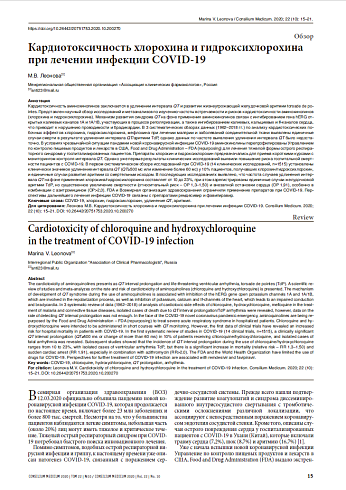
Кардиотоксичность аминохинолинов заключается в удлинении интервала QT и развитии жизнеугрожающей желудочковой аритмии torsade de pointes. Представлен научный обзор исследований и метаанализов по изучению частоты встречаемости и рисков кардиотоксичности аминохинолинов (хлорохина и гидроксихлорохина). Механизм развития синдрома QT на фоне применения аминохинолинов связан с ингибированием гена hERG открытых калиевых каналов 1A и 1A/1B, участвующих в процессе реполяризации, а также ингибированием калиевых, кальциевых и If-каналов сердца, что приводит к нарушению проводимости и брадикардии. В 3 систематических обзорах данных (1962–2018 гг.) по анализу кардиотоксических побочных эффектов хлорохина, гидроксихлорохина, мефлохина при лечении малярии и заболеваний соединительной ткани выявлены единичные случаи смерти в результате удлинения интервала QT/аритмии TdP, однако данных по частоте выявления удлинения интервала QT было недостаточно. В условиях чрезвычайной ситуации пандемии новой коронавирусной инфекции COVID-19 аминохинолины перепрофилированы Управлением по контролю пищевых продуктов и лекарств в США, Food and Drug Administration – FDA (repurposing) для лечения тяжелой формы острого респираторного синдрома у госпитализированных пациентов. Препараты хлорохин и гидроксихлорохин предназначались для приема короткими курсами с мониторингом контроля интервала QT. Однако уже первые результаты клинических исследований выявили повышение риска госпитальной смертности пациентов с COVID-19. В первом систематическом обзоре исследований при COVID-19 (14 клинических исследований, n=1515) установлены клинически значимое удлинение интервала QT (QT≥500 мс или изменение более 60 мс) у 10% пациентов, получавших хлорохин/гидроксихлорохин, и единичные случаи развития аритмии со смертельным исходом. В последующих исследованиях выявлено, что частота случаев удлинения интервала QT на фоне применения хлорохина/гидроксихлорохина составляет от 10 до 23%, при этом зарегистрированы единичные случаи желудочковой аритмии TdP, но существенное увеличение смертности (относительный риск – ОР 1,3–1,50) и внезапной остановки сердца (ОР 1,91), особенно в комбинации с азитромицином (ОР>2,0). FDA и Всемирная организация здравоохранения ограничили применение препаратов при COVID-19. Перспективы дальнейшего лечения инфекции COVID-19 связаны с препаратами ремдесивир и фавипиравир.
Ключевые слова: COVID-19, хлорохин, гидроксихлорохин, удлинение QT, аритмия.
Key words: COVID-19, chloroquine, hydroxychloroquine, QT prolongation, arrhythmia.
Ключевые слова: COVID-19, хлорохин, гидроксихлорохин, удлинение QT, аритмия.
________________________________________________
Key words: COVID-19, chloroquine, hydroxychloroquine, QT prolongation, arrhythmia.
Полный текст
Список литературы
1. Wang D, Hu B, Hu C et al. Clinical characteristics of 138 hospitalized patients with 2019 novel coronavirus‐infected pneumonia in Wuhan, China. JAMA 2020; 323: 1061–9. DOI: 10.1001/jama.2020.1585
2. Fact Sheet for health care providers. Emergency use authorization (EUA) of chloroquine phosphate supplied from the strategic national stockpile for treatment of COVID-19 in certain hospitalized patients. U.S Food and Drug Administration (FDA). Accessed April 3, 2020. https://www.fda.gov/media/136535/download
3. Liu J, Cao R, Xu M et al. Hydroxychloroquine, a less toxic derivative of chloroquine, is effective in inhibiting SARS‐CoV‐2 infection in vitro. Cell Discov 2020; 6: 16. DOI: 10.1038/s41421-020-0156-0
4. Yao X, Ye F, Zhang M et al. In vitro antiviral activity and projection of optimized dosing design of hydroxychloroquine for the treatment of severe acute respiratory syndrome coronavirus 2 (SARS-CoV-2). Clin Infect Dis 2020; ciaa237. DOI: 10.1093/cid/ciaa237
5. WHO Evidence Review Group. The cardiotoxicity of antimalarials. 2017. http://www.who.int/malaria/mpac/mpac-mar2017-erg-cardiotoxicity-report-session2.pdf
6. Chatre C, Roubille F, Vernhet H et al. Cardiac complications attributed to chloroquine and hydroxychloroquine: a systematic review of the literature. Drug Saf 2018; 41: 919–31. DOI: 10.1007/s40264-018-0689-4
7. Capel RA, Herring N, Kalla M et al. Hydroxychloroquine reduces heart rate by modulating the hyperpolarization-activated current If: Novel electrophysiological insights and therapeutic potential. Heart Rhythm 2015; 12 (10): 2186–94. DOI: 10.1016/j.hrthm.2015.05.027
8. Frustaci A, Morgante E, Antuzzi D et al. Inhibition of cardiomyocyte lysosomal activity in hydroxychloroquine cardiomyopathy. Int J Cardiol 2012; 157 (1): 117–9. DOI: 10.1016/j.ijcard.2012.03.112
9. Haeusler IL, Chan XHS, Guérin PJ, White NJ. The arrhythmogenic cardiotoxicity of the quinoline and structurally related antimalarial drugs: a systematic review. BMC Med 2018; 16 (1): 200. DOI: 10.1186/s12916-018-1188-2
10. COVID-19 Treatment Guidelines Panel. Coronavirus Disease 2019 (COVID-19) Treatment Guidelines. National Institutes of Health. https://www.covid19treatmentguidelines.nih.gov/whats-new/
11. Jankelson L, Karam G, Becker ML et al. QT prolongation, torsades de pointes, and sudden death with short courses of chloroquine or hydroxychloroquine as used in COVID-19: а systematic review. Heart Rhythm 2020. DOI: 10.1016/j.hrthm.2020.05.008
12. Borba MGS, Val FFA, Sampaio VS et al. Effect of high vs low doses of chloroquine diphosphate as adjunctive therapy for patients hospitalized with severe acute respiratory syndrome coronavirus 2 (SARS-CoV-2) infection: a randomized clinical trial. JAMA Netw Open 2020; 3 (4): e208857. DOI: 10.1001/jamanetworkopen.2020.8857
13. Mahévas M, Tran VT, Roumier M et al. Clinical efficacy of hydroxychloroquine in patients with covid-19 pneumonia who require oxygen: observational comparative study using routine care data. BMJ 2020; 369: m1844. DOI: 10.1136/bmj.m1844
14. Chorin E, Dai M, Shulman E et al. The QT interval in patients with COVID-19 treated with hydroxychloroquine and azithromycin. Nat Med 2020; 26: 808–9. DOI: 10.1038/s41591-020-0888-2
15. Molina JM, Delaugerre C, Goff JL et al. No evidence of rapid antiviral clearance or clinical benefit with the combination of hydroxychloroquine and azithromycin in patients with severe COVID-19 infection. Med Mal Infect 2020; 50 (4): 384. DOI: 10.1016/j.medmal.2020.03.006
16. Perinel S, Launay M, Botelho-Nevers E et al. Towards optimization of hydroxychloroquine dosing in intensive care unit COVID-19 patients. Clin Infect Dis 2020; ciaa394. DOI: 10.1093/cid/ciaa394
17. Tang W, Cao Z, Han M et al. Hydroxychloroquine in patients with mainly mild to moderate coronavirus disease 2019: open label, randomised controlled trial. BMJ 2020; 369: m1849. DOI: 10.1136/bmj.m1849
18. Million M, Lagier JC, Gautret P et al. Early treatment of COVID-19 patients with hydroxychloroquine and azithromycin: a retrospective analysis of 1061 cases in Marseille, France. Travel Med Infect Dis 2020; 35: 101738. DOI: 10.1016/j.tmaid.2020.101738
19. Mercuro NJ, Yen CF, Shim DJ et al. Risk of QT interval prolongation associated with use of hydroxychloroquine with or without concomitant azithromycin among hospitalized patients testing positive for coronavirus disease 2019 (COVID-19). JAMA Cardiol 2020: e201834. DOI: 10.1001/jamacardio.2020.1834
20. Ramireddy A, Chugh HS, Reinier K et al. Experience with hydroxychloroquine and azithromycin in the COVID-19 pandemic: Iiplications for QT interval monitoring. J Am Heart Assoc 2020; 9 (12): e017144. DOI: 10.1101/2020.04.22.20075671
21. Jain S, Workman V, Ganeshan R et al. LE Enhanced ECG monitoring of COVID-19 patients. Heart Rhythm. 2020. DOI: 10.1016/j.hrthm.2020.04.047
22. Saleh M, Gabriels J, Chang D et al. The effect of chloroquine, hydroxychloroquine and azithromycin on the corrected QT interval in patients with SARS-CoV-2 infection. Circ Arrhythm Electrophysiol 2020; 13 (6): e008662. DOI: 10.1161/CIRCEP.120.008662
23. Sridhar AR, Chatterjee NA, Saour B et al. QT interval and arrhythmic safety of hydroxychloroquine monotherapy in coronavirus disease 2019. Heart Rhythm 2020; DOI: 10.1016/j.hroo.2020.06.002
24. Rosenberg ES, Dufort EM, Udo T et al. Association of treatment with hydroxychloroquine or azithromycin with in-hospital mortality in patients with COVID-19 in New York State. JAMA 2020; 323 (24): 2493–502. DOI: 10.1001/jama.2020.8630
25. Mehra MR, Desai SS, Ruschitzka F, Patel AN. RETRACTED: Hydroxychloroquine or chloroquine with or without a macrolide for treatment of COVID-19: a multinational registry analysis. Lancet 2020; S0140-6736(20)31180-6. DOI: 10.1016/S0140-6736(20)31180-6
26. Driggin E, Madhavan MV, Bikdeli B et al. Cardiovascular Considerations for Patients, Health Care Workers, and Health Systems During the Coronavirus Disease 2019 (COVID-19) Pandemic. J Am Coll Cardiol 2020. DOI: 10.1016/j.jacc.2020.03.031
27. Lazzerini PE, Boutjdir M, Capecchi PL. COVID-19, arrhythmic risk and inflammation: mind the gap! Circulation 2020. DOI: 10.1161/CIRCULATIONAHA.120.047293
28. Plant LD, Xiong D, Romero J et al. Hypoxia produces pro-arrhythmic late sodium current in cardiac myocytes by SUMOylation of NaV1.5 channels. Cell Rep 2020; 30: 2225–36.e4. DOI: 10.1016/j.celrep.2020.01.025
29. Matsunaga N, Oki Y, Prigollini A. A case of QT-interval prolongation precipitated by azithromycin.
N Z Med J 2003; 116: U666. https://pubmed.ncbi.nlm.nih.gov/14615808/
30. Ray W, Murray K, Hall K et al. Azithromycin and the risk of cardiovascular death. New Engl J Med 2012; 366: 1881–90. https://www.nejm.org/doi/pdf/10.1056/NEJMoa1003833
31. Choi Y, Lim HS, Chung D et al. Risk evaluation of azithromycin-iInduced QT prolongation in real-world practice. BioMed Research International 2018. DOI: 10.1155/2018/1574806
32. Yang Z, Prinsen JK, Bersell KR et al. Azithromycin causes a novel proarrhythmic syndrome. Circ Arrhythm Electrophysiol 2017; 10: e003560. DOI: 10.1161/CIRCEP.115.003560
33. Zhang M, Xie M, Li S et al. Electrophysiologic studies on the risks and potential mechanism underlying the proarrhythmic nature of azithromycin. Cardiovasc Toxicol 2017; 17: 434–40. DOI: 10.1007/s12012-017-9401-7
34. Pfizer Inc. Zithromax. Published 2019. http://labeling.pfizer.com/ShowLabeling.aspx?id=650
35. Gérard A, Romani S, Fresse A et al, French Network of Pharmacovigilance Centers. "Off-label" use of hydroxychloroquine, azithromycin, lopinavir-ritonavir and chloroquine in COVID-19: A survey of cardiac adverse drug reactions by the French Network of Pharmacovigilance Centers. Therapie 2020. DOI: 10.1016/j.therap.2020.05.002
36. US Food and Drug Administration Emergency use authorization: coronavirus disease 2019 (COVID-19) EUA information. https://www.fda.gov/emergency-preparedness-and-response/mcm-legal-regulatory-and-policy-framework/em...
37. WHO drops hydroxychloroquine from Covid-19 clinical trial. https://www.statnews.com/
2020/06/17/who-drops-hydroxychloroquine-covid-19-clinical-trial/
38. Временные методические рекомендации «Профилактика, диагностика и лечение новой коронавирусной инфекции (COVID-19)». Минздрав России. Версия 6 (28.04.2020). file: ///C:/Users/mv/Downloads/28042020_%D0%9CR_COVID-19_v6.pdf
[Vremennye metodicheskie rekomendatsii "Profilaktika, diagnostika i lechenie novoi koronavirusnoi infektsii (COVID-19)". Minzdrav Rossii. Versiia 6 (28.04.2020). file: ///C:/Users/mv/Downloads/
28042020_MR_COVID-19_v6.pdf (in Russian).]
2. Fact Sheet for health care providers. Emergency use authorization (EUA) of chloroquine phosphate supplied from the strategic national stockpile for treatment of COVID-19 in certain hospitalized patients. U.S Food and Drug Administration (FDA). Accessed April 3, 2020. https://www.fda.gov/media/136535/download
3. Liu J, Cao R, Xu M et al. Hydroxychloroquine, a less toxic derivative of chloroquine, is effective in inhibiting SARS‐CoV‐2 infection in vitro. Cell Discov 2020; 6: 16. DOI: 10.1038/s41421-020-0156-0
4. Yao X, Ye F, Zhang M et al. In vitro antiviral activity and projection of optimized dosing design of hydroxychloroquine for the treatment of severe acute respiratory syndrome coronavirus 2 (SARS-CoV-2). Clin Infect Dis 2020; ciaa237. DOI: 10.1093/cid/ciaa237
5. WHO Evidence Review Group. The cardiotoxicity of antimalarials. 2017. http://www.who.int/malaria/mpac/mpac-mar2017-erg-cardiotoxicity-report-session2.pdf
6. Chatre C, Roubille F, Vernhet H et al. Cardiac complications attributed to chloroquine and hydroxychloroquine: a systematic review of the literature. Drug Saf 2018; 41: 919–31. DOI: 10.1007/s40264-018-0689-4
7. Capel RA, Herring N, Kalla M et al. Hydroxychloroquine reduces heart rate by modulating the hyperpolarization-activated current If: Novel electrophysiological insights and therapeutic potential. Heart Rhythm 2015; 12 (10): 2186–94. DOI: 10.1016/j.hrthm.2015.05.027
8. Frustaci A, Morgante E, Antuzzi D et al. Inhibition of cardiomyocyte lysosomal activity in hydroxychloroquine cardiomyopathy. Int J Cardiol 2012; 157 (1): 117–9. DOI: 10.1016/j.ijcard.2012.03.112
9. Haeusler IL, Chan XHS, Guérin PJ, White NJ. The arrhythmogenic cardiotoxicity of the quinoline and structurally related antimalarial drugs: a systematic review. BMC Med 2018; 16 (1): 200. DOI: 10.1186/s12916-018-1188-2
10. COVID-19 Treatment Guidelines Panel. Coronavirus Disease 2019 (COVID-19) Treatment Guidelines. National Institutes of Health. https://www.covid19treatmentguidelines.nih.gov/whats-new/
11. Jankelson L, Karam G, Becker ML et al. QT prolongation, torsades de pointes, and sudden death with short courses of chloroquine or hydroxychloroquine as used in COVID-19: а systematic review. Heart Rhythm 2020. DOI: 10.1016/j.hrthm.2020.05.008
12. Borba MGS, Val FFA, Sampaio VS et al. Effect of high vs low doses of chloroquine diphosphate as adjunctive therapy for patients hospitalized with severe acute respiratory syndrome coronavirus 2 (SARS-CoV-2) infection: a randomized clinical trial. JAMA Netw Open 2020; 3 (4): e208857. DOI: 10.1001/jamanetworkopen.2020.8857
13. Mahévas M, Tran VT, Roumier M et al. Clinical efficacy of hydroxychloroquine in patients with covid-19 pneumonia who require oxygen: observational comparative study using routine care data. BMJ 2020; 369: m1844. DOI: 10.1136/bmj.m1844
14. Chorin E, Dai M, Shulman E et al. The QT interval in patients with COVID-19 treated with hydroxychloroquine and azithromycin. Nat Med 2020; 26: 808–9. DOI: 10.1038/s41591-020-0888-2
15. Molina JM, Delaugerre C, Goff JL et al. No evidence of rapid antiviral clearance or clinical benefit with the combination of hydroxychloroquine and azithromycin in patients with severe COVID-19 infection. Med Mal Infect 2020; 50 (4): 384. DOI: 10.1016/j.medmal.2020.03.006
16. Perinel S, Launay M, Botelho-Nevers E et al. Towards optimization of hydroxychloroquine dosing in intensive care unit COVID-19 patients. Clin Infect Dis 2020; ciaa394. DOI: 10.1093/cid/ciaa394
17. Tang W, Cao Z, Han M et al. Hydroxychloroquine in patients with mainly mild to moderate coronavirus disease 2019: open label, randomised controlled trial. BMJ 2020; 369: m1849. DOI: 10.1136/bmj.m1849
18. Million M, Lagier JC, Gautret P et al. Early treatment of COVID-19 patients with hydroxychloroquine and azithromycin: a retrospective analysis of 1061 cases in Marseille, France. Travel Med Infect Dis 2020; 35: 101738. DOI: 10.1016/j.tmaid.2020.101738
19. Mercuro NJ, Yen CF, Shim DJ et al. Risk of QT interval prolongation associated with use of hydroxychloroquine with or without concomitant azithromycin among hospitalized patients testing positive for coronavirus disease 2019 (COVID-19). JAMA Cardiol 2020: e201834. DOI: 10.1001/jamacardio.2020.1834
20. Ramireddy A, Chugh HS, Reinier K et al. Experience with hydroxychloroquine and azithromycin in the COVID-19 pandemic: Iiplications for QT interval monitoring. J Am Heart Assoc 2020; 9 (12): e017144. DOI: 10.1101/2020.04.22.20075671
21. Jain S, Workman V, Ganeshan R et al. LE Enhanced ECG monitoring of COVID-19 patients. Heart Rhythm. 2020. DOI: 10.1016/j.hrthm.2020.04.047
22. Saleh M, Gabriels J, Chang D et al. The effect of chloroquine, hydroxychloroquine and azithromycin on the corrected QT interval in patients with SARS-CoV-2 infection. Circ Arrhythm Electrophysiol 2020; 13 (6): e008662. DOI: 10.1161/CIRCEP.120.008662
23. Sridhar AR, Chatterjee NA, Saour B et al. QT interval and arrhythmic safety of hydroxychloroquine monotherapy in coronavirus disease 2019. Heart Rhythm 2020; DOI: 10.1016/j.hroo.2020.06.002
24. Rosenberg ES, Dufort EM, Udo T et al. Association of treatment with hydroxychloroquine or azithromycin with in-hospital mortality in patients with COVID-19 in New York State. JAMA 2020; 323 (24): 2493–502. DOI: 10.1001/jama.2020.8630
25. Mehra MR, Desai SS, Ruschitzka F, Patel AN. RETRACTED: Hydroxychloroquine or chloroquine with or without a macrolide for treatment of COVID-19: a multinational registry analysis. Lancet 2020; S0140-6736(20)31180-6. DOI: 10.1016/S0140-6736(20)31180-6
26. Driggin E, Madhavan MV, Bikdeli B et al. Cardiovascular Considerations for Patients, Health Care Workers, and Health Systems During the Coronavirus Disease 2019 (COVID-19) Pandemic. J Am Coll Cardiol 2020. DOI: 10.1016/j.jacc.2020.03.031
27. Lazzerini PE, Boutjdir M, Capecchi PL. COVID-19, arrhythmic risk and inflammation: mind the gap! Circulation 2020. DOI: 10.1161/CIRCULATIONAHA.120.047293
28. Plant LD, Xiong D, Romero J et al. Hypoxia produces pro-arrhythmic late sodium current in cardiac myocytes by SUMOylation of NaV1.5 channels. Cell Rep 2020; 30: 2225–36.e4. DOI: 10.1016/j.celrep.2020.01.025
29. Matsunaga N, Oki Y, Prigollini A. A case of QT-interval prolongation precipitated by azithromycin.
N Z Med J 2003; 116: U666. https://pubmed.ncbi.nlm.nih.gov/14615808/
30. Ray W, Murray K, Hall K et al. Azithromycin and the risk of cardiovascular death. New Engl J Med 2012; 366: 1881–90. https://www.nejm.org/doi/pdf/10.1056/NEJMoa1003833
31. Choi Y, Lim HS, Chung D et al. Risk evaluation of azithromycin-iInduced QT prolongation in real-world practice. BioMed Research International 2018. DOI: 10.1155/2018/1574806
32. Yang Z, Prinsen JK, Bersell KR et al. Azithromycin causes a novel proarrhythmic syndrome. Circ Arrhythm Electrophysiol 2017; 10: e003560. DOI: 10.1161/CIRCEP.115.003560
33. Zhang M, Xie M, Li S et al. Electrophysiologic studies on the risks and potential mechanism underlying the proarrhythmic nature of azithromycin. Cardiovasc Toxicol 2017; 17: 434–40. DOI: 10.1007/s12012-017-9401-7
34. Pfizer Inc. Zithromax. Published 2019. http://labeling.pfizer.com/ShowLabeling.aspx?id=650
35. Gérard A, Romani S, Fresse A et al, French Network of Pharmacovigilance Centers. "Off-label" use of hydroxychloroquine, azithromycin, lopinavir-ritonavir and chloroquine in COVID-19: A survey of cardiac adverse drug reactions by the French Network of Pharmacovigilance Centers. Therapie 2020. DOI: 10.1016/j.therap.2020.05.002
36. US Food and Drug Administration Emergency use authorization: coronavirus disease 2019 (COVID-19) EUA information. https://www.fda.gov/emergency-preparedness-and-response/mcm-legal-regulatory-and-policy-framework/em...
37. WHO drops hydroxychloroquine from Covid-19 clinical trial. https://www.statnews.com/
2020/06/17/who-drops-hydroxychloroquine-covid-19-clinical-trial/
38. Vremennye metodicheskie rekomendatsii "Profilaktika, diagnostika i lechenie novoi koronavirusnoi infektsii (COVID-19)". Minzdrav Rossii. Versiia 6 (28.04.2020). file: ///C:/Users/mv/Downloads/
28042020_MR_COVID-19_v6.pdf (in Russian).
2. Fact Sheet for health care providers. Emergency use authorization (EUA) of chloroquine phosphate supplied from the strategic national stockpile for treatment of COVID-19 in certain hospitalized patients. U.S Food and Drug Administration (FDA). Accessed April 3, 2020. https://www.fda.gov/media/136535/download
3. Liu J, Cao R, Xu M et al. Hydroxychloroquine, a less toxic derivative of chloroquine, is effective in inhibiting SARS‐CoV‐2 infection in vitro. Cell Discov 2020; 6: 16. DOI: 10.1038/s41421-020-0156-0
4. Yao X, Ye F, Zhang M et al. In vitro antiviral activity and projection of optimized dosing design of hydroxychloroquine for the treatment of severe acute respiratory syndrome coronavirus 2 (SARS-CoV-2). Clin Infect Dis 2020; ciaa237. DOI: 10.1093/cid/ciaa237
5. WHO Evidence Review Group. The cardiotoxicity of antimalarials. 2017. http://www.who.int/malaria/mpac/mpac-mar2017-erg-cardiotoxicity-report-session2.pdf
6. Chatre C, Roubille F, Vernhet H et al. Cardiac complications attributed to chloroquine and hydroxychloroquine: a systematic review of the literature. Drug Saf 2018; 41: 919–31. DOI: 10.1007/s40264-018-0689-4
7. Capel RA, Herring N, Kalla M et al. Hydroxychloroquine reduces heart rate by modulating the hyperpolarization-activated current If: Novel electrophysiological insights and therapeutic potential. Heart Rhythm 2015; 12 (10): 2186–94. DOI: 10.1016/j.hrthm.2015.05.027
8. Frustaci A, Morgante E, Antuzzi D et al. Inhibition of cardiomyocyte lysosomal activity in hydroxychloroquine cardiomyopathy. Int J Cardiol 2012; 157 (1): 117–9. DOI: 10.1016/j.ijcard.2012.03.112
9. Haeusler IL, Chan XHS, Guérin PJ, White NJ. The arrhythmogenic cardiotoxicity of the quinoline and structurally related antimalarial drugs: a systematic review. BMC Med 2018; 16 (1): 200. DOI: 10.1186/s12916-018-1188-2
10. COVID-19 Treatment Guidelines Panel. Coronavirus Disease 2019 (COVID-19) Treatment Guidelines. National Institutes of Health. https://www.covid19treatmentguidelines.nih.gov/whats-new/
11. Jankelson L, Karam G, Becker ML et al. QT prolongation, torsades de pointes, and sudden death with short courses of chloroquine or hydroxychloroquine as used in COVID-19: а systematic review. Heart Rhythm 2020. DOI: 10.1016/j.hrthm.2020.05.008
12. Borba MGS, Val FFA, Sampaio VS et al. Effect of high vs low doses of chloroquine diphosphate as adjunctive therapy for patients hospitalized with severe acute respiratory syndrome coronavirus 2 (SARS-CoV-2) infection: a randomized clinical trial. JAMA Netw Open 2020; 3 (4): e208857. DOI: 10.1001/jamanetworkopen.2020.8857
13. Mahévas M, Tran VT, Roumier M et al. Clinical efficacy of hydroxychloroquine in patients with covid-19 pneumonia who require oxygen: observational comparative study using routine care data. BMJ 2020; 369: m1844. DOI: 10.1136/bmj.m1844
14. Chorin E, Dai M, Shulman E et al. The QT interval in patients with COVID-19 treated with hydroxychloroquine and azithromycin. Nat Med 2020; 26: 808–9. DOI: 10.1038/s41591-020-0888-2
15. Molina JM, Delaugerre C, Goff JL et al. No evidence of rapid antiviral clearance or clinical benefit with the combination of hydroxychloroquine and azithromycin in patients with severe COVID-19 infection. Med Mal Infect 2020; 50 (4): 384. DOI: 10.1016/j.medmal.2020.03.006
16. Perinel S, Launay M, Botelho-Nevers E et al. Towards optimization of hydroxychloroquine dosing in intensive care unit COVID-19 patients. Clin Infect Dis 2020; ciaa394. DOI: 10.1093/cid/ciaa394
17. Tang W, Cao Z, Han M et al. Hydroxychloroquine in patients with mainly mild to moderate coronavirus disease 2019: open label, randomised controlled trial. BMJ 2020; 369: m1849. DOI: 10.1136/bmj.m1849
18. Million M, Lagier JC, Gautret P et al. Early treatment of COVID-19 patients with hydroxychloroquine and azithromycin: a retrospective analysis of 1061 cases in Marseille, France. Travel Med Infect Dis 2020; 35: 101738. DOI: 10.1016/j.tmaid.2020.101738
19. Mercuro NJ, Yen CF, Shim DJ et al. Risk of QT interval prolongation associated with use of hydroxychloroquine with or without concomitant azithromycin among hospitalized patients testing positive for coronavirus disease 2019 (COVID-19). JAMA Cardiol 2020: e201834. DOI: 10.1001/jamacardio.2020.1834
20. Ramireddy A, Chugh HS, Reinier K et al. Experience with hydroxychloroquine and azithromycin in the COVID-19 pandemic: Iiplications for QT interval monitoring. J Am Heart Assoc 2020; 9 (12): e017144. DOI: 10.1101/2020.04.22.20075671
21. Jain S, Workman V, Ganeshan R et al. LE Enhanced ECG monitoring of COVID-19 patients. Heart Rhythm. 2020. DOI: 10.1016/j.hrthm.2020.04.047
22. Saleh M, Gabriels J, Chang D et al. The effect of chloroquine, hydroxychloroquine and azithromycin on the corrected QT interval in patients with SARS-CoV-2 infection. Circ Arrhythm Electrophysiol 2020; 13 (6): e008662. DOI: 10.1161/CIRCEP.120.008662
23. Sridhar AR, Chatterjee NA, Saour B et al. QT interval and arrhythmic safety of hydroxychloroquine monotherapy in coronavirus disease 2019. Heart Rhythm 2020; DOI: 10.1016/j.hroo.2020.06.002
24. Rosenberg ES, Dufort EM, Udo T et al. Association of treatment with hydroxychloroquine or azithromycin with in-hospital mortality in patients with COVID-19 in New York State. JAMA 2020; 323 (24): 2493–502. DOI: 10.1001/jama.2020.8630
25. Mehra MR, Desai SS, Ruschitzka F, Patel AN. RETRACTED: Hydroxychloroquine or chloroquine with or without a macrolide for treatment of COVID-19: a multinational registry analysis. Lancet 2020; S0140-6736(20)31180-6. DOI: 10.1016/S0140-6736(20)31180-6
26. Driggin E, Madhavan MV, Bikdeli B et al. Cardiovascular Considerations for Patients, Health Care Workers, and Health Systems During the Coronavirus Disease 2019 (COVID-19) Pandemic. J Am Coll Cardiol 2020. DOI: 10.1016/j.jacc.2020.03.031
27. Lazzerini PE, Boutjdir M, Capecchi PL. COVID-19, arrhythmic risk and inflammation: mind the gap! Circulation 2020. DOI: 10.1161/CIRCULATIONAHA.120.047293
28. Plant LD, Xiong D, Romero J et al. Hypoxia produces pro-arrhythmic late sodium current in cardiac myocytes by SUMOylation of NaV1.5 channels. Cell Rep 2020; 30: 2225–36.e4. DOI: 10.1016/j.celrep.2020.01.025
29. Matsunaga N, Oki Y, Prigollini A. A case of QT-interval prolongation precipitated by azithromycin.
N Z Med J 2003; 116: U666. https://pubmed.ncbi.nlm.nih.gov/14615808/
30. Ray W, Murray K, Hall K et al. Azithromycin and the risk of cardiovascular death. New Engl J Med 2012; 366: 1881–90. https://www.nejm.org/doi/pdf/10.1056/NEJMoa1003833
31. Choi Y, Lim HS, Chung D et al. Risk evaluation of azithromycin-iInduced QT prolongation in real-world practice. BioMed Research International 2018. DOI: 10.1155/2018/1574806
32. Yang Z, Prinsen JK, Bersell KR et al. Azithromycin causes a novel proarrhythmic syndrome. Circ Arrhythm Electrophysiol 2017; 10: e003560. DOI: 10.1161/CIRCEP.115.003560
33. Zhang M, Xie M, Li S et al. Electrophysiologic studies on the risks and potential mechanism underlying the proarrhythmic nature of azithromycin. Cardiovasc Toxicol 2017; 17: 434–40. DOI: 10.1007/s12012-017-9401-7
34. Pfizer Inc. Zithromax. Published 2019. http://labeling.pfizer.com/ShowLabeling.aspx?id=650
35. Gérard A, Romani S, Fresse A et al, French Network of Pharmacovigilance Centers. "Off-label" use of hydroxychloroquine, azithromycin, lopinavir-ritonavir and chloroquine in COVID-19: A survey of cardiac adverse drug reactions by the French Network of Pharmacovigilance Centers. Therapie 2020. DOI: 10.1016/j.therap.2020.05.002
36. US Food and Drug Administration Emergency use authorization: coronavirus disease 2019 (COVID-19) EUA information. https://www.fda.gov/emergency-preparedness-and-response/mcm-legal-regulatory-and-policy-framework/em...
37. WHO drops hydroxychloroquine from Covid-19 clinical trial. https://www.statnews.com/
2020/06/17/who-drops-hydroxychloroquine-covid-19-clinical-trial/
38. Временные методические рекомендации «Профилактика, диагностика и лечение новой коронавирусной инфекции (COVID-19)». Минздрав России. Версия 6 (28.04.2020). file: ///C:/Users/mv/Downloads/28042020_%D0%9CR_COVID-19_v6.pdf
[Vremennye metodicheskie rekomendatsii "Profilaktika, diagnostika i lechenie novoi koronavirusnoi infektsii (COVID-19)". Minzdrav Rossii. Versiia 6 (28.04.2020). file: ///C:/Users/mv/Downloads/
28042020_MR_COVID-19_v6.pdf (in Russian).]
________________________________________________
2. Fact Sheet for health care providers. Emergency use authorization (EUA) of chloroquine phosphate supplied from the strategic national stockpile for treatment of COVID-19 in certain hospitalized patients. U.S Food and Drug Administration (FDA). Accessed April 3, 2020. https://www.fda.gov/media/136535/download
3. Liu J, Cao R, Xu M et al. Hydroxychloroquine, a less toxic derivative of chloroquine, is effective in inhibiting SARS‐CoV‐2 infection in vitro. Cell Discov 2020; 6: 16. DOI: 10.1038/s41421-020-0156-0
4. Yao X, Ye F, Zhang M et al. In vitro antiviral activity and projection of optimized dosing design of hydroxychloroquine for the treatment of severe acute respiratory syndrome coronavirus 2 (SARS-CoV-2). Clin Infect Dis 2020; ciaa237. DOI: 10.1093/cid/ciaa237
5. WHO Evidence Review Group. The cardiotoxicity of antimalarials. 2017. http://www.who.int/malaria/mpac/mpac-mar2017-erg-cardiotoxicity-report-session2.pdf
6. Chatre C, Roubille F, Vernhet H et al. Cardiac complications attributed to chloroquine and hydroxychloroquine: a systematic review of the literature. Drug Saf 2018; 41: 919–31. DOI: 10.1007/s40264-018-0689-4
7. Capel RA, Herring N, Kalla M et al. Hydroxychloroquine reduces heart rate by modulating the hyperpolarization-activated current If: Novel electrophysiological insights and therapeutic potential. Heart Rhythm 2015; 12 (10): 2186–94. DOI: 10.1016/j.hrthm.2015.05.027
8. Frustaci A, Morgante E, Antuzzi D et al. Inhibition of cardiomyocyte lysosomal activity in hydroxychloroquine cardiomyopathy. Int J Cardiol 2012; 157 (1): 117–9. DOI: 10.1016/j.ijcard.2012.03.112
9. Haeusler IL, Chan XHS, Guérin PJ, White NJ. The arrhythmogenic cardiotoxicity of the quinoline and structurally related antimalarial drugs: a systematic review. BMC Med 2018; 16 (1): 200. DOI: 10.1186/s12916-018-1188-2
10. COVID-19 Treatment Guidelines Panel. Coronavirus Disease 2019 (COVID-19) Treatment Guidelines. National Institutes of Health. https://www.covid19treatmentguidelines.nih.gov/whats-new/
11. Jankelson L, Karam G, Becker ML et al. QT prolongation, torsades de pointes, and sudden death with short courses of chloroquine or hydroxychloroquine as used in COVID-19: а systematic review. Heart Rhythm 2020. DOI: 10.1016/j.hrthm.2020.05.008
12. Borba MGS, Val FFA, Sampaio VS et al. Effect of high vs low doses of chloroquine diphosphate as adjunctive therapy for patients hospitalized with severe acute respiratory syndrome coronavirus 2 (SARS-CoV-2) infection: a randomized clinical trial. JAMA Netw Open 2020; 3 (4): e208857. DOI: 10.1001/jamanetworkopen.2020.8857
13. Mahévas M, Tran VT, Roumier M et al. Clinical efficacy of hydroxychloroquine in patients with covid-19 pneumonia who require oxygen: observational comparative study using routine care data. BMJ 2020; 369: m1844. DOI: 10.1136/bmj.m1844
14. Chorin E, Dai M, Shulman E et al. The QT interval in patients with COVID-19 treated with hydroxychloroquine and azithromycin. Nat Med 2020; 26: 808–9. DOI: 10.1038/s41591-020-0888-2
15. Molina JM, Delaugerre C, Goff JL et al. No evidence of rapid antiviral clearance or clinical benefit with the combination of hydroxychloroquine and azithromycin in patients with severe COVID-19 infection. Med Mal Infect 2020; 50 (4): 384. DOI: 10.1016/j.medmal.2020.03.006
16. Perinel S, Launay M, Botelho-Nevers E et al. Towards optimization of hydroxychloroquine dosing in intensive care unit COVID-19 patients. Clin Infect Dis 2020; ciaa394. DOI: 10.1093/cid/ciaa394
17. Tang W, Cao Z, Han M et al. Hydroxychloroquine in patients with mainly mild to moderate coronavirus disease 2019: open label, randomised controlled trial. BMJ 2020; 369: m1849. DOI: 10.1136/bmj.m1849
18. Million M, Lagier JC, Gautret P et al. Early treatment of COVID-19 patients with hydroxychloroquine and azithromycin: a retrospective analysis of 1061 cases in Marseille, France. Travel Med Infect Dis 2020; 35: 101738. DOI: 10.1016/j.tmaid.2020.101738
19. Mercuro NJ, Yen CF, Shim DJ et al. Risk of QT interval prolongation associated with use of hydroxychloroquine with or without concomitant azithromycin among hospitalized patients testing positive for coronavirus disease 2019 (COVID-19). JAMA Cardiol 2020: e201834. DOI: 10.1001/jamacardio.2020.1834
20. Ramireddy A, Chugh HS, Reinier K et al. Experience with hydroxychloroquine and azithromycin in the COVID-19 pandemic: Iiplications for QT interval monitoring. J Am Heart Assoc 2020; 9 (12): e017144. DOI: 10.1101/2020.04.22.20075671
21. Jain S, Workman V, Ganeshan R et al. LE Enhanced ECG monitoring of COVID-19 patients. Heart Rhythm. 2020. DOI: 10.1016/j.hrthm.2020.04.047
22. Saleh M, Gabriels J, Chang D et al. The effect of chloroquine, hydroxychloroquine and azithromycin on the corrected QT interval in patients with SARS-CoV-2 infection. Circ Arrhythm Electrophysiol 2020; 13 (6): e008662. DOI: 10.1161/CIRCEP.120.008662
23. Sridhar AR, Chatterjee NA, Saour B et al. QT interval and arrhythmic safety of hydroxychloroquine monotherapy in coronavirus disease 2019. Heart Rhythm 2020; DOI: 10.1016/j.hroo.2020.06.002
24. Rosenberg ES, Dufort EM, Udo T et al. Association of treatment with hydroxychloroquine or azithromycin with in-hospital mortality in patients with COVID-19 in New York State. JAMA 2020; 323 (24): 2493–502. DOI: 10.1001/jama.2020.8630
25. Mehra MR, Desai SS, Ruschitzka F, Patel AN. RETRACTED: Hydroxychloroquine or chloroquine with or without a macrolide for treatment of COVID-19: a multinational registry analysis. Lancet 2020; S0140-6736(20)31180-6. DOI: 10.1016/S0140-6736(20)31180-6
26. Driggin E, Madhavan MV, Bikdeli B et al. Cardiovascular Considerations for Patients, Health Care Workers, and Health Systems During the Coronavirus Disease 2019 (COVID-19) Pandemic. J Am Coll Cardiol 2020. DOI: 10.1016/j.jacc.2020.03.031
27. Lazzerini PE, Boutjdir M, Capecchi PL. COVID-19, arrhythmic risk and inflammation: mind the gap! Circulation 2020. DOI: 10.1161/CIRCULATIONAHA.120.047293
28. Plant LD, Xiong D, Romero J et al. Hypoxia produces pro-arrhythmic late sodium current in cardiac myocytes by SUMOylation of NaV1.5 channels. Cell Rep 2020; 30: 2225–36.e4. DOI: 10.1016/j.celrep.2020.01.025
29. Matsunaga N, Oki Y, Prigollini A. A case of QT-interval prolongation precipitated by azithromycin.
N Z Med J 2003; 116: U666. https://pubmed.ncbi.nlm.nih.gov/14615808/
30. Ray W, Murray K, Hall K et al. Azithromycin and the risk of cardiovascular death. New Engl J Med 2012; 366: 1881–90. https://www.nejm.org/doi/pdf/10.1056/NEJMoa1003833
31. Choi Y, Lim HS, Chung D et al. Risk evaluation of azithromycin-iInduced QT prolongation in real-world practice. BioMed Research International 2018. DOI: 10.1155/2018/1574806
32. Yang Z, Prinsen JK, Bersell KR et al. Azithromycin causes a novel proarrhythmic syndrome. Circ Arrhythm Electrophysiol 2017; 10: e003560. DOI: 10.1161/CIRCEP.115.003560
33. Zhang M, Xie M, Li S et al. Electrophysiologic studies on the risks and potential mechanism underlying the proarrhythmic nature of azithromycin. Cardiovasc Toxicol 2017; 17: 434–40. DOI: 10.1007/s12012-017-9401-7
34. Pfizer Inc. Zithromax. Published 2019. http://labeling.pfizer.com/ShowLabeling.aspx?id=650
35. Gérard A, Romani S, Fresse A et al, French Network of Pharmacovigilance Centers. "Off-label" use of hydroxychloroquine, azithromycin, lopinavir-ritonavir and chloroquine in COVID-19: A survey of cardiac adverse drug reactions by the French Network of Pharmacovigilance Centers. Therapie 2020. DOI: 10.1016/j.therap.2020.05.002
36. US Food and Drug Administration Emergency use authorization: coronavirus disease 2019 (COVID-19) EUA information. https://www.fda.gov/emergency-preparedness-and-response/mcm-legal-regulatory-and-policy-framework/em...
37. WHO drops hydroxychloroquine from Covid-19 clinical trial. https://www.statnews.com/
2020/06/17/who-drops-hydroxychloroquine-covid-19-clinical-trial/
38. Vremennye metodicheskie rekomendatsii "Profilaktika, diagnostika i lechenie novoi koronavirusnoi infektsii (COVID-19)". Minzdrav Rossii. Versiia 6 (28.04.2020). file: ///C:/Users/mv/Downloads/
28042020_MR_COVID-19_v6.pdf (in Russian).
Авторы
М.В. Леонова*
Межрегиональная общественная организация «Ассоциация клинических фармакологов», Россия
*anti23@mail.ru
Interregional Public Organization "Association of Clinical Pharmacologists", Russia
*anti23@mail.ru
Межрегиональная общественная организация «Ассоциация клинических фармакологов», Россия
*anti23@mail.ru
________________________________________________
Interregional Public Organization "Association of Clinical Pharmacologists", Russia
*anti23@mail.ru
Цель портала OmniDoctor – предоставление профессиональной информации врачам, провизорам и фармацевтам.