

Материалы доступны только для специалистов сферы здравоохранения.
Чтобы посмотреть материал полностью
Авторизуйтесь
или зарегистрируйтесь.
Диагностика и лечение стерномедиастинита: обзор литературы
Диагностика и лечение стерномедиастинита: обзор литературы
Моисеев Д.А., Ховрин В.В., Винокуров И.А., Тагабилев Д.Г. Диагностика и лечение стерномедиастинита: обзор литературы. Consilium Medicum. 2026;28(1):52–59. DOI: 10.26442/20751753.2026.1.203526
________________________________________________
Материалы доступны только для специалистов сферы здравоохранения.
Чтобы посмотреть материал полностью
Авторизуйтесь
или зарегистрируйтесь.
Аннотация
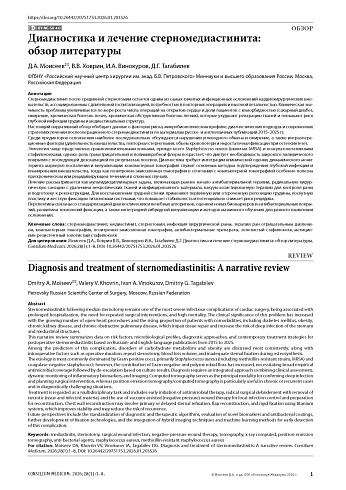
Стерномедиастинит после срединной стернотомии остается одним из самых тяжелых инфекционных осложнений кардиохирургических вмешательств, ассоциирован с длительной госпитализацией, потребностью в повторных операциях и высокой летальностью. Клиническая значимость проблемы увеличивается по мере роста числа операций на открытом сердце и доли пациентов с коморбидностью (сахарный диабет, ожирение, хроническая болезнь почек, хроническая обструктивная болезнь легких), которые ухудшают репарацию тканей и повышают риск глубокой инфекции грудины и медиастинальных структур. Настоящий нарративный обзор обобщает данные о факторах риска, микробиологическом профиле, диагностических подходах и современных стратегиях лечения послеоперационного стерномедиастинита по материалам русско- и англоязычных публикаций 2015–2025 гг. Среди предикторов осложнения наиболее последовательно обсуждаются нарушения углеводного обмена и ожирение, а также интраоперационные факторы (длительность вмешательства, повторная стернотомия, объем кровопотери и недостаточная фиксация при остеосинтезе). Этиология чаще представлена грамположительными кокками, прежде всего Staphylococcus aureus (включая MRSA) и коагулазонегативными стафилококками, однако роль грамотрицательной и полимикробной флоры возрастает, что диктует необходимость широкого эмпирического покрытия с последующей деэскалацией по результатам посевов. Диагностика требует интеграции клинической оценки, динамического мониторинга маркеров воспаления и визуализации: компьютерная томография служит основным методом подтверждения глубокой инфекции и планирования вмешательства, тогда как позитронно-эмиссионная томография в сочетании с компьютерной томографией особенно полезна при хроническом или рецидивирующем течении и в сложных случаях. Лечение рассматривается как мультидисциплинарная задача, включающая раннее начало антибактериальной терапии, радикальную хирургическую санацию с удалением некротических тканей и инфицированного материала, вакуум-ассистированную терапию для контроля раны и подготовку к реконструкции. Для восстановления грудной стенки применяют первичную или отсроченную репозицию грудины, лоскутную пластику и жесткую фиксацию титановыми системами, что повышает стабильность и потенциально снижает риск рецидива. Перспективы связаны со стандартизацией диагностических и лечебных алгоритмов, оценкой новых биомаркеров и антибактериальных покрытий, развитием технологий фиксации, а также интеграцией гибридной визуализации и методов машинного обучения для раннего выявления осложнения.
Ключевые слова: медиастинит, стернотомия, инфекция послеоперационной раны, терапия ран отрицательным давлением, компьютерная томография, позитронно-эмиссионная томография, антибактериальные препараты, метициллин-резистентный Staphylococcus aureus
Keywords: mediastinitis, sternotomy, surgical wound infection, negative-pressure wound therapy, x-ray computed tomography, positron-emission tomography, anti-bacterial agents, methicillin-resistant Staphylococcus aureus
Ключевые слова: медиастинит, стернотомия, инфекция послеоперационной раны, терапия ран отрицательным давлением, компьютерная томография, позитронно-эмиссионная томография, антибактериальные препараты, метициллин-резистентный Staphylococcus aureus
________________________________________________
Keywords: mediastinitis, sternotomy, surgical wound infection, negative-pressure wound therapy, x-ray computed tomography, positron-emission tomography, anti-bacterial agents, methicillin-resistant Staphylococcus aureus
Полный текст
Список литературы
1. Sahu MK, Siddharth B, Choudhury A, et al. Incidence, microbiological profile of nosocomial infections, and their antibiotic resistance patterns in a high volume Cardiac Surgical Intensive Care Unit. Ann Card Anaesth. 2016;19(2):281-7. DOI:10.4103/0971-9784.179625
2. De Tymowski C, Provenchere S, Para M, et al. Deep sternal wound infection after cardiac surgery: A combination of 2 distinct infection types, deep incisional surgical-site infection and mediastinitis: Results of a retrospective study. Surgery. 2025;181:109255. DOI:10.1016/j.surg.2025.109255
3. Abu-Omar Y, Kocher GJ, Bosco P, et al. European Association for Cardio-Thoracic Surgery expert consensus statement on the prevention and management of mediastinitis. Eur J Cardiothorac Surg. 2017;51(1):10-29. DOI:10.1093/ejcts/ezw326
4. Jung Y, Lee KS, Oh SG, Jeong Y. Routine Mediastinal Drainage Fluid Culture for Early Diagnosis of Poststernotomy Mediastinitis. Thorac Cardiovasc Surg. 2023;71(1):46-52. DOI:10.1055/s-0042-1742617
5. Медведчиков-Ардия М.А., Корымасов Е.А., Бенян А.С. Методы лучевой диагностики инфекционных поражений грудины и ребер. Наука и инновации в медицине. 2022;7(3):212-6. DOI:10.35693/2500-1388-2022-7-3-212-216
6. Glaab J, Lobo-Ploch N, Cho HK, et al. Skin tolerant inactivation of multiresistant pathogens using far-UVC LEDs. Sci Rep. 2021;11(1):649. DOI:10.1038/s41598-021-94070-2
7. Винокуров И.А., Иванов К.П., Тагабилев Д.Г., и др. Новая парадигма лечения стерномедиастинита. Хирургия. Журнал им. Н.И. Пирогова. 2023;(12):52 [Vinokurov IA, Ivanov KP, Tagabilev DG, et al. A new paradigm for the treatment of sternomediastinitis. Surgery. Journal named after N.I. Pirogov. 2023;(12):52 (in Russian)]. DOI:10.17116/hirurgia202312152
8. Forrester JD, Faliks B, Cardarelli C, et al. Surgical Infection Society – Chest Wall Injury Society Recommendations for Management of Surgical Site or Implant-Related Infections After Surgical Stabilization of Traumatic Rib or Sternal Fractures. Surg Infect (Larchmt). 2023;24(5):414-24. DOI:10.1089/sur.2023.086
9. Винник Ю.С., Сакович В.А., Чередниченко М.В., Дунаевская С.С. Анализ развития стернальной инфекции у кардиохирургических больных. Дальневосточный медицинский журнал. 2020;(1):51-4 [Vinnik YuS, Sakovich VA, Cherednichenko MB, Dunaevkaya SS. Analysis of development of sternal infection in cardiac patients. Far Eastern Medical Journal. 2020;(1):51-4 (in Russian)]. DOI:10.35177/1994-5191-2020-1-51-54
10. Ivert T, Berge A, Bratt S, Dalen M. Incidence and healing times of postoperative sternal wound infections: a retrospective observational single-centre study. Scand Cardiovasc J. 2024;58(1):2330349. DOI:10.1080/14017431.2024.2330349
11. Balachandran S, Lee A, Denehy L, et al. Risk Factors for Sternal Complications After Cardiac Operations: A Systematic Review. Ann Thorac Surg. 2016;102(6):2109-17. DOI:10.1016/j.athoracsur.2016.05.047
12. Chen D, Zhang J, Wang Y, et al. Risk factors for sternal wound infection after open-heart operations: A systematic review and meta-analysis. Int Wound J. 2024;21(3):e14457. DOI:10.1111/iwj.14457
13. Cheng H, Chen BPH, Soleas IM, et al. Prolonged Operative Duration Increases Risk of Surgical Site Infections: A Systematic Review. Surg Infect (Larchmt). 2017;18(6):722-35. DOI:10.1089/sur.2017.089
14. Dell’Amore A, Congiu S, Campisi A, et al. Sternal reconstruction after post-sternotomy dehiscence and mediastinitis. Indian J Thorac Cardiovasc Surg. 2020;36(4):388-96. DOI:10.1007/s12055-019-00880-5
15. Tam DY, Nedadur R, Yu M, et al. Rigid Plate Fixation Versus Wire Cerclage for Sternotomy After Cardiac Surgery: A Meta-Analysis. Ann Thorac Surg. 2018;106(1):298-304. DOI:10.1016/j.athoracsur.2018.02.043
16. Remy KE, Hall MW, Cholette J, et al. Mechanisms of red blood cell transfusion-related immunomodulation. Transfusion. 2018;58(3):804-15. DOI:10.1111/trf.14488
17. Касатов А.В., Горовиц Э.С. Значение различных этиопатогенов в развитии инфекционных осложнений после кардиохирургических вмешательств через стернальный доступ. Вестник хирургии им. И.И. Грекова. 2022;181(5):78-82 [Kasatov AV, Gorowitz ES. The value of various etiopathogens in the development of infectious complications after cardiac surgery with sternal access. Grekov's Bulletin of Surgery. 2022;181(5):78-82 (in Russian)]. DOI:10.24884/0042-4625-2022-181-5-78-82
18. Heilmann C, Ziebuhr W, Becker K. Are coagulase-negative staphylococci virulent? Clin Microbiol Infect. 2019;25(9):1071-80. DOI:10.1016/j.cmi.2018.11.012
19. Aleidan F, Alkhelaifi H, Alsenaid A, et al. Incidence and risk factors of carbapenem-resistant Enterobacteriaceae infection in intensive care units: a matched case-control study. Expert Rev Anti Infect Ther. 2021;19(3):393-8. DOI:10.1080/14787210.2020.1822736
20. Fernandez-Billon M, Llambias-Cabot AE, Jordana-Lluch E, et al. Mechanisms of antibiotic resistance in Pseudomonas aeruginosa biofilms. Biofilm. 2023;5:100129. DOI:10.1016/j.bioflm.2023.100129
21. Khan MS, Azam M, Khan MN, et al. Identification of contributing factors, microorganisms and antimicrobial resistance involved in the complication of diabetic foot ulcer treatment. Microb Pathog. 2023;184:106363. DOI:10.1016/j.micpath.2023.106363
22. Cirkovic I, Jocic D, Bozic DD, et al. The Effect of Vacuum-Assisted Closure Therapy on Methicillin-Resistant Staphylococcus aureus Wound Biofilms. Adv Skin Wound Care. 2018;31(8):361-4. DOI:10.1097/01.asw.0000540070.07040.70
23. Сопрун Л.А., Мироненко О.В., Тованова А.А., Обухов Д.А. Epidemiological and clinical features of the course of postoperative sternomediastinitis (clinical case). Вестник Санкт-Петербургского университета. Медицина. 2021;16(1):56-73 [Soprun LA, Mironenko OV, Tovanova AA, Obuchov DA. Epidemiological and clinical features of the course of postoperative sternomediastinitis (clinical case). Vestnik of Saint-Petersburg University. Medicine. 2021;16(1):56-73]. DOI:10.21638/spbu11.2021.107
24. Ocampo DA, Hernandez CA, Mendoza F, et al. Sternal Osteomyelitis Caused by Mycobacterium tuberculosis in a Heart Transplant Patient. JACC Case Rep. 2025;30(5):103088. DOI:10.1016/j.jaccas.2024.103088
25. Winarto H, Habiburrahman M, Anggraeni TD, et al. The Utility of Pre-Treatment Inflammation Markers as Associative Factors to the Adverse Outcomes of Vulvar Cancer: A Study on Staging, Nodal Involvement, and Metastasis Models. J Clin Med. 2022;12(1):96. DOI:10.3390/jcm12010096
26. Shevchuk VA, Odushkina NV, Tkachenko MV, et al. Etiological characteristics and antibiotic sensitivity of causative agents of purulent-inflammatory diseases of the maxillofacial region. Child’s Health. 2025;20(2):136-43. DOI:10.22141/2224-0551.20.2.2025.1804
27. Винокуров И.А., Белов Ю.В., Тагабилев Д.Г., Юсупов С.А. Послеоперационный стерномедиастинит: морфология поражения, тактика лечения. Хирургия. Журнал им. Н.И. Пирогова. 2024;(7):78 [Vinokurov IA, Belov YuV, Tagabilev DG, Yusupov SA. Postoperative sternomediastinitis: morphology of lesion, treatment strategy. Surgery. Journal named after N.I. Pirogov. 2024;(7):78 (in Russian)]. DOI:10.17116/hirurgia202407178
28. Yang Q, Li M, Cao X, et al. An umbrella review of meta-analyses on diagnostic accuracy of C-reactive protein. Int J Surg. 2022;104:106788. DOI:10.1016/j.ijsu.2022.106788
29. Falk G, Fahey T. C-reactive protein and community-acquired pneumonia in ambulatory care: systematic review of diagnostic accuracy studies. Fam Pract. 2008;26(1):10-21. DOI:10.1093/fampra/cmn095
30. Kondo Y, Umemura Y, Hayashida K, et al. Diagnostic value of procalcitonin and presepsin for sepsis in critically ill adult patients: a systematic review and meta-analysis. J Intensive Care. 2019;7(1):22. DOI:10.1186/s40560-019-0374-4
31. Hoeboer SH, Van Der Geest PJ, Nieboer D, Groeneveld ABJ. The diagnostic accuracy of procalcitonin for bacteraemia: a systematic review and meta-analysis. Clin Microbiol Infect. 2015;21(5):474-81. DOI:10.1016/j.cmi.2014.12.026
32. Liu X, Lian J, Liu F, et al. Clinical application of combined CRP and PCT detection in diagnosing and prognosing fracture-related infections. Front Cell Infect Microbiol. 2025;15:1563170. DOI:10.3389/fcimb.2025.1563170
33. Li B. C-reactive Protein (CRP) and Procalcitonin (PCT) Combined Testing in the Diagnosis of Elderly Patients with Bacterial Pneumonia. J Clin Nurs Res. 2025;9(1):299-304. DOI:10.26689/jcnr.v9i1.9516
34. Shirke MM, Dominic C, Debnath P, et al. Computed Tomography Scanning for Sternal Wound Infections: A Systematic Review. Ulster Med J. 2024;92(3):139-47.
35. Jolles H, Henry DA, Roberson JP, et al. Mediastinitis following median sternotomy: CT findings. Radiology. 1996;201(2):463-6. DOI:10.1148/radiology.201.2.8888241
36. Arnon-Sheleg E, Israel O, Keidar Z. PET/CT Imaging in Soft Tissue Infection and Inflammation – An Update. Semin Nucl Med. 2020;50(1):35-49. DOI:10.1053/j.semnuclmed.2019.07.005
37. Zhang R, Feng Z, Zhang Y, et al. Diagnostic value of fluorine-18 deoxyglucose positron emission tomography/computed tomography in deep sternal wound infection. J Plast Reconstr Aesthet Surg. 2018;71(12):1768-76. DOI:10.1016/j.bjps.2018.07.017
38. Cai A, Bakhshi M, Lamarche Y, et al. Prospective evaluation of the diagnostic accuracy of FDG-PET/CT for the detection of sternal wound infection post-sternotomy. EJNMMI Rep. 2025;9(1):6. DOI:10.1186/s41824-024-00237-1
39. Liu S, Zhang J, Yin H, et al. The value of 18F-FDG PET/CT in diagnosing and localising deep sternal wound infection to guide surgical debridement. Int Wound J. 2020;17(4):1019-27. DOI:10.1111/iwj.13368
40. Van Leer B, Haitsma Mulier JLG, Van Stee CP, et al. [18F]FDG PET/CT identifies infectious and inflammatory foci in persistent critical illness. Ann Intensive Care. 2025;15(1):24. DOI:10.1186/s13613-025-01444-0
41. Vaidyanathan S, Patel CN, Scarsbrook AF, Chowdhury FU. FDG PET/CT in infection and inflammation-current and emerging clinical applications. Clin Radiol. 2015;70(7):787-800. DOI:10.1016/j.crad.2015.03.010
42. Lawal I, Sathekge M. F-18 FDG PET/CT imaging of cardiac and vascular inflammation and infection. Br Med Bull. 2016;120(1):55-74. DOI:10.1093/bmb/ldw035
43. Besson FL, Nocturne G, Noël N, et al. PET/CT in Inflammatory and Auto-immune Disorders: Focus on Several Key Molecular Concepts, FDG, and Radiolabeled Probe Perspectives. Semin Nucl Med. 2024;54(3):379-93. DOI:10.1053/j.semnuclmed.2023.10.005
44. Pijl JP, Nienhuis PH, Kwee TC, et al. Limitations and Pitfalls of FDG-PET/CT in Infection and Inflammation. Semin Nucl Med. 2021;51(6):633-45. DOI:10.1053/j.semnuclmed.2021.06.008
45. Mayerhoefer ME, Prosch H, Beer L, et al. PET/MRI versus PET/CT in oncology: a prospective single-center study of 330 examinations focusing on implications for patient management and cost considerations. Eur J Nucl Med Mol Imaging. 2020;47(1):51-60. DOI:10.1007/s00259-019-04452-y
46. Потапов В.А., Конах Е.П., Асанов О.Н., Мусайлов В.А. Применение вакуум-терапии и бактериофагов в комплексном лечении глубокой стернальной инфекции. Вестник Национального медико-хирургического центра им. Н.И. Пирогова. 2021;16(2):66-71 [Potapov VA, Kohan EP, Asanov ON, Musailov VA. Use of vacuum therapy and bacteriophages in the complex treatment of deep sternal wound infection. Bulletin of Pirogov National Medical & Surgical center. 2021;16(2):66-71 (in Russian)]. DOI:10.25881/20728255_2021_16_2_66
47. Шафер Я.В. Современная эмпирическая антибактериальная терапия у больных с послеоперационным стерномедиастинитом. World Science. 2019;2(3):42-5 [Shafer IaV. Modern Aspect of Empirical Antibacterial Therapy in Patients with Postoperative Purulent Sternomediastinitis. World Science. 2019;2(3):42-5 (in Russian)]. DOI:10.31435/rsglobal_ws/31032019/6410
48. De Waele JJ, Schouten J, Beovic B, et al. Antimicrobial de-escalation as part of antimicrobial stewardship in intensive care: no simple answers to simple questions – a viewpoint of experts. Intensive Care Med. 2020;46(2):236-44. DOI:10.1007/s00134-019-05871-z
49. Timsit JF, Bassetti M, Cremer O, et al. Rationalizing antimicrobial therapy in the ICU: a narrative review. Intensive Care Med. 2019;45(2):172-89. DOI:10.1007/s00134-019-05520-5
50. Agarwal JP, Ogilvie M, Wu LC, et al. Vacuum-Assisted Closure for Sternal Wounds: A First-Line Therapeutic Management Approach. Plast Reconstr Surg. 2005;116(4):1035-40. DOI:10.1097/01.prs.0000178401.52143.32
51. Yu AW, Rippel RA, Smock E, Jarral OA. In patients with post-sternotomy mediastinitis is vacuum-assisted closure superior to conventional therapy? Interact Cardiovasc Thorac Surg. 2013;17(5):861-6. DOI:10.1093/icvts/ivt326
52. Tulain UR, Mahmood A, Aslam S, et al. Formulation and Evaluation of Linum usitatissimum Mucilage-Based Nanoparticles for Effective Delivery of Ezetimibe. Int J Nanomedicine. 2021;16:4579-96. DOI:10.2147/IJN.S308790
53. Pericleous A, Dimitrakakis G, Photiades R, Von Oppell UO. Assessment of vacuum-assisted closure therapy on the wound healing process in cardiac surgery. Int Wound J. 2016;13(6):1142-9. DOI:10.1111/iwj.12430
54. Шевченко А.А., Топалов К.П., Жила Н.Г., Кашкаров Е.А. Хирургическое лечение остеомиелита грудины и стерномедиастинита вследствие кардиохирургических операций. Хирургия. Журнал им. Н.И. Пирогова. 2021;(9):34 [Shevchenko AA, Topalov KP, Zhila NG, Kashkarov EA. Surgical treatment of sternal osteomyelitis and sternomediastinitis following cardiac surgery. Surgery. Journal named after N.I. Pirogov. 2021;(9):34 (in Russian)]. DOI:10.17116/hirurgia202109134
55. Брюсов П.Г., Лищук А.Н., Потапов В.А. Развитие концепции комплексного лечения послеоперационного стерномедиастинита. Клиническая медицина. 2022;100(9-10):439-46 [Bryusov PG, Lishchuk AN, Potapov VA. Development of the concept of complex treatment postoperative sternomediastinitis. Clinical Medicine (Russian Journal). 2022;100(9-10):439-46 (in Russian)]. DOI:10.30629/0023-2149-2022-100-9-10-439-446
56. Потапов В.А., Брюсов П.Г., Сурова М.В., Мусаилов В.А. Реконструктивное лечение больных глубокой стернальной инфекцией. Вестник Национального медико-хирургического центра им. Н.И. Пирогова. 2022;17(2):87-94 [Potapov VA, Bryusov PG, Surova MV, Musailov VA. Reconstructive treatment of patients with deep sternal infection. Bulletin of Pirogov National Medical & Surgical Center. 2022;17(2):87-94 (in Russian)]. DOI:10.25881/20728255_2022_17_2_87
57. Kaul P. Sternal reconstruction after post-sternotomy mediastinitis. J Cardiothorac Surg. 2017;12(1):94. DOI:10.1186/s13019-017-0656-7
58. Qiu X, Sun X, Huang G. Immediate flap increases patient safety for deep sternal wound infection: a meta-analysis. Int Wound J. 2023;20(8):3271-8. DOI:10.1111/iwj.14207
59. Hever P, Singh P, Eiben I, et al. The management of deep sternal wound infection: literature review and reconstructive algorithm. JPRAS Open. 2021;28:77-89. DOI:10.1016/j.jpra.2021.02.007
60. Tamura K, Maruyama T, Sakurai S. Usefulness of sternal closure with bioresorbable plate in respiratory function after coronary artery bypass grafting. Gen Thorac Cardiovasc Surg. 2019;67(3):277-82. DOI:10.1007/s11748-018-1010-2
61. Makrygiannis IH, Nikolaidis AK, Tilaveridis I, et al. Coated sutures for use in oral surgery: a comprehensive review. Clin Oral Investig. 2025;29(2):109. DOI:10.1007/s00784-025-06176-w
2. De Tymowski C, Provenchere S, Para M, et al. Deep sternal wound infection after cardiac surgery: A combination of 2 distinct infection types, deep incisional surgical-site infection and mediastinitis: Results of a retrospective study. Surgery. 2025;181:109255. DOI:10.1016/j.surg.2025.109255
3. Abu-Omar Y, Kocher GJ, Bosco P, et al. European Association for Cardio-Thoracic Surgery expert consensus statement on the prevention and management of mediastinitis. Eur J Cardiothorac Surg. 2017;51(1):10-29. DOI:10.1093/ejcts/ezw326
4. Jung Y, Lee KS, Oh SG, Jeong Y. Routine Mediastinal Drainage Fluid Culture for Early Diagnosis of Poststernotomy Mediastinitis. Thorac Cardiovasc Surg. 2023;71(1):46-52. DOI:10.1055/s-0042-1742617
5. Медведчиков-Ардия М.А., Корымасов Е.А., Бенян А.С. Методы лучевой диагностики инфекционных поражений грудины и ребер. Наука и инновации в медицине. 2022;7(3):212-6. DOI:10.35693/2500-1388-2022-7-3-212-216
6. Glaab J, Lobo-Ploch N, Cho HK, et al. Skin tolerant inactivation of multiresistant pathogens using far-UVC LEDs. Sci Rep. 2021;11(1):649. DOI:10.1038/s41598-021-94070-2
7. Vinokurov IA, Ivanov KP, Tagabilev DG, et al. A new paradigm for the treatment of sternomediastinitis. Surgery. Journal named after N.I. Pirogov. 2023;(12):52 (in Russian). DOI:10.17116/hirurgia202312152
8. Forrester JD, Faliks B, Cardarelli C, et al. Surgical Infection Society – Chest Wall Injury Society Recommendations for Management of Surgical Site or Implant-Related Infections After Surgical Stabilization of Traumatic Rib or Sternal Fractures. Surg Infect (Larchmt). 2023;24(5):414-24. DOI:10.1089/sur.2023.086
9. Vinnik YuS, Sakovich VA, Cherednichenko MB, Dunaevkaya SS. Analysis of development of sternal infection in cardiac patients. Far Eastern Medical Journal. 2020;(1):51-4 (in Russian). DOI:10.35177/1994-5191-2020-1-51-54
10. Ivert T, Berge A, Bratt S, Dalen M. Incidence and healing times of postoperative sternal wound infections: a retrospective observational single-centre study. Scand Cardiovasc J. 2024;58(1):2330349. DOI:10.1080/14017431.2024.2330349
11. Balachandran S, Lee A, Denehy L, et al. Risk Factors for Sternal Complications After Cardiac Operations: A Systematic Review. Ann Thorac Surg. 2016;102(6):2109-17. DOI:10.1016/j.athoracsur.2016.05.047
12. Chen D, Zhang J, Wang Y, et al. Risk factors for sternal wound infection after open-heart operations: A systematic review and meta-analysis. Int Wound J. 2024;21(3):e14457. DOI:10.1111/iwj.14457
13. Cheng H, Chen BPH, Soleas IM, et al. Prolonged Operative Duration Increases Risk of Surgical Site Infections: A Systematic Review. Surg Infect (Larchmt). 2017;18(6):722-35. DOI:10.1089/sur.2017.089
14. Dell’Amore A, Congiu S, Campisi A, et al. Sternal reconstruction after post-sternotomy dehiscence and mediastinitis. Indian J Thorac Cardiovasc Surg. 2020;36(4):388-96. DOI:10.1007/s12055-019-00880-5
15. Tam DY, Nedadur R, Yu M, et al. Rigid Plate Fixation Versus Wire Cerclage for Sternotomy After Cardiac Surgery: A Meta-Analysis. Ann Thorac Surg. 2018;106(1):298-304. DOI:10.1016/j.athoracsur.2018.02.043
16. Remy KE, Hall MW, Cholette J, et al. Mechanisms of red blood cell transfusion-related immunomodulation. Transfusion. 2018;58(3):804-15. DOI:10.1111/trf.14488
17. Kasatov AV, Gorowitz ES. The value of various etiopathogens in the development of infectious complications after cardiac surgery with sternal access. Grekov's Bulletin of Surgery. 2022;181(5):78-82 (in Russian). DOI:10.24884/0042-4625-2022-181-5-78-82
18. Heilmann C, Ziebuhr W, Becker K. Are coagulase-negative staphylococci virulent? Clin Microbiol Infect. 2019;25(9):1071-80. DOI:10.1016/j.cmi.2018.11.012
19. Aleidan F, Alkhelaifi H, Alsenaid A, et al. Incidence and risk factors of carbapenem-resistant Enterobacteriaceae infection in intensive care units: a matched case-control study. Expert Rev Anti Infect Ther. 2021;19(3):393-8. DOI:10.1080/14787210.2020.1822736
20. Fernandez-Billon M, Llambias-Cabot AE, Jordana-Lluch E, et al. Mechanisms of antibiotic resistance in Pseudomonas aeruginosa biofilms. Biofilm. 2023;5:100129. DOI:10.1016/j.bioflm.2023.100129
21. Khan MS, Azam M, Khan MN, et al. Identification of contributing factors, microorganisms and antimicrobial resistance involved in the complication of diabetic foot ulcer treatment. Microb Pathog. 2023;184:106363. DOI:10.1016/j.micpath.2023.106363
22. Cirkovic I, Jocic D, Bozic DD, et al. The Effect of Vacuum-Assisted Closure Therapy on Methicillin-Resistant Staphylococcus aureus Wound Biofilms. Adv Skin Wound Care. 2018;31(8):361-4. DOI:10.1097/01.asw.0000540070.07040.70
23. Soprun LA, Mironenko OV, Tovanova AA, Obuchov DA. Epidemiological and clinical features of the course of postoperative sternomediastinitis (clinical case). Vestnik of Saint-Petersburg University. Medicine. 2021;16(1):56-73. DOI:10.21638/spbu11.2021.107
24. Ocampo DA, Hernandez CA, Mendoza F, et al. Sternal Osteomyelitis Caused by Mycobacterium tuberculosis in a Heart Transplant Patient. JACC Case Rep. 2025;30(5):103088. DOI:10.1016/j.jaccas.2024.103088
25. Winarto H, Habiburrahman M, Anggraeni TD, et al. The Utility of Pre-Treatment Inflammation Markers as Associative Factors to the Adverse Outcomes of Vulvar Cancer: A Study on Staging, Nodal Involvement, and Metastasis Models. J Clin Med. 2022;12(1):96. DOI:10.3390/jcm12010096
26. Shevchuk VA, Odushkina NV, Tkachenko MV, et al. Etiological characteristics and antibiotic sensitivity of causative agents of purulent-inflammatory diseases of the maxillofacial region. Child’s Health. 2025;20(2):136-43. DOI:10.22141/2224-0551.20.2.2025.1804
27. Vinokurov IA, Belov YuV, Tagabilev DG, Yusupov SA. Postoperative sternomediastinitis: morphology of lesion, treatment strategy. Surgery. Journal named after N.I. Pirogov. 2024;(7):78 (in Russian). DOI:10.17116/hirurgia202407178
28. Yang Q, Li M, Cao X, et al. An umbrella review of meta-analyses on diagnostic accuracy of C-reactive protein. Int J Surg. 2022;104:106788. DOI:10.1016/j.ijsu.2022.106788
29. Falk G, Fahey T. C-reactive protein and community-acquired pneumonia in ambulatory care: systematic review of diagnostic accuracy studies. Fam Pract. 2008;26(1):10-21. DOI:10.1093/fampra/cmn095
30. Kondo Y, Umemura Y, Hayashida K, et al. Diagnostic value of procalcitonin and presepsin for sepsis in critically ill adult patients: a systematic review and meta-analysis. J Intensive Care. 2019;7(1):22. DOI:10.1186/s40560-019-0374-4
31. Hoeboer SH, Van Der Geest PJ, Nieboer D, Groeneveld ABJ. The diagnostic accuracy of procalcitonin for bacteraemia: a systematic review and meta-analysis. Clin Microbiol Infect. 2015;21(5):474-81. DOI:10.1016/j.cmi.2014.12.026
32. Liu X, Lian J, Liu F, et al. Clinical application of combined CRP and PCT detection in diagnosing and prognosing fracture-related infections. Front Cell Infect Microbiol. 2025;15:1563170. DOI:10.3389/fcimb.2025.1563170
33. Li B. C-reactive Protein (CRP) and Procalcitonin (PCT) Combined Testing in the Diagnosis of Elderly Patients with Bacterial Pneumonia. J Clin Nurs Res. 2025;9(1):299-304. DOI:10.26689/jcnr.v9i1.9516
34. Shirke MM, Dominic C, Debnath P, et al. Computed Tomography Scanning for Sternal Wound Infections: A Systematic Review. Ulster Med J. 2024;92(3):139-47.
35. Jolles H, Henry DA, Roberson JP, et al. Mediastinitis following median sternotomy: CT findings. Radiology. 1996;201(2):463-6. DOI:10.1148/radiology.201.2.8888241
36. Arnon-Sheleg E, Israel O, Keidar Z. PET/CT Imaging in Soft Tissue Infection and Inflammation – An Update. Semin Nucl Med. 2020;50(1):35-49. DOI:10.1053/j.semnuclmed.2019.07.005
37. Zhang R, Feng Z, Zhang Y, et al. Diagnostic value of fluorine-18 deoxyglucose positron emission tomography/computed tomography in deep sternal wound infection. J Plast Reconstr Aesthet Surg. 2018;71(12):1768-76. DOI:10.1016/j.bjps.2018.07.017
38. Cai A, Bakhshi M, Lamarche Y, et al. Prospective evaluation of the diagnostic accuracy of FDG-PET/CT for the detection of sternal wound infection post-sternotomy. EJNMMI Rep. 2025;9(1):6. DOI:10.1186/s41824-024-00237-1
39. Liu S, Zhang J, Yin H, et al. The value of 18F-FDG PET/CT in diagnosing and localising deep sternal wound infection to guide surgical debridement. Int Wound J. 2020;17(4):1019-27. DOI:10.1111/iwj.13368
40. Van Leer B, Haitsma Mulier JLG, Van Stee CP, et al. [18F]FDG PET/CT identifies infectious and inflammatory foci in persistent critical illness. Ann Intensive Care. 2025;15(1):24. DOI:10.1186/s13613-025-01444-0
41. Vaidyanathan S, Patel CN, Scarsbrook AF, Chowdhury FU. FDG PET/CT in infection and inflammation-current and emerging clinical applications. Clin Radiol. 2015;70(7):787-800. DOI:10.1016/j.crad.2015.03.010
42. Lawal I, Sathekge M. F-18 FDG PET/CT imaging of cardiac and vascular inflammation and infection. Br Med Bull. 2016;120(1):55-74. DOI:10.1093/bmb/ldw035
43. Besson FL, Nocturne G, Noël N, et al. PET/CT in Inflammatory and Auto-immune Disorders: Focus on Several Key Molecular Concepts, FDG, and Radiolabeled Probe Perspectives. Semin Nucl Med. 2024;54(3):379-93. DOI:10.1053/j.semnuclmed.2023.10.005
44. Pijl JP, Nienhuis PH, Kwee TC, et al. Limitations and Pitfalls of FDG-PET/CT in Infection and Inflammation. Semin Nucl Med. 2021;51(6):633-45. DOI:10.1053/j.semnuclmed.2021.06.008
45. Mayerhoefer ME, Prosch H, Beer L, et al. PET/MRI versus PET/CT in oncology: a prospective single-center study of 330 examinations focusing on implications for patient management and cost considerations. Eur J Nucl Med Mol Imaging. 2020;47(1):51-60. DOI:10.1007/s00259-019-04452-y
46. Potapov VA, Kohan EP, Asanov ON, Musailov VA. Use of vacuum therapy and bacteriophages in the complex treatment of deep sternal wound infection. Bulletin of Pirogov National Medical & Surgical center. 2021;16(2):66-71 (in Russian). DOI:10.25881/20728255_2021_16_2_66
47. Shafer IaV. Modern Aspect of Empirical Antibacterial Therapy in Patients with Postoperative Purulent Sternomediastinitis. World Science. 2019;2(3):42-5 (in Russian). DOI:10.31435/rsglobal_ws/31032019/6410
48. De Waele JJ, Schouten J, Beovic B, et al. Antimicrobial de-escalation as part of antimicrobial stewardship in intensive care: no simple answers to simple questions – a viewpoint of experts. Intensive Care Med. 2020;46(2):236-44. DOI:10.1007/s00134-019-05871-z
49. Timsit JF, Bassetti M, Cremer O, et al. Rationalizing antimicrobial therapy in the ICU: a narrative review. Intensive Care Med. 2019;45(2):172-89. DOI:10.1007/s00134-019-05520-5
50. Agarwal JP, Ogilvie M, Wu LC, et al. Vacuum-Assisted Closure for Sternal Wounds: A First-Line Therapeutic Management Approach. Plast Reconstr Surg. 2005;116(4):1035-40. DOI:10.1097/01.prs.0000178401.52143.32
51. Yu AW, Rippel RA, Smock E, Jarral OA. In patients with post-sternotomy mediastinitis is vacuum-assisted closure superior to conventional therapy? Interact Cardiovasc Thorac Surg. 2013;17(5):861-6. DOI:10.1093/icvts/ivt326
52. Tulain UR, Mahmood A, Aslam S, et al. Formulation and Evaluation of Linum usitatissimum Mucilage-Based Nanoparticles for Effective Delivery of Ezetimibe. Int J Nanomedicine. 2021;16:4579-96. DOI:10.2147/IJN.S308790
53. Pericleous A, Dimitrakakis G, Photiades R, Von Oppell UO. Assessment of vacuum-assisted closure therapy on the wound healing process in cardiac surgery. Int Wound J. 2016;13(6):1142-9. DOI:10.1111/iwj.12430
54. Shevchenko AA, Topalov KP, Zhila NG, Kashkarov EA. Surgical treatment of sternal osteomyelitis and sternomediastinitis following cardiac surgery. Surgery. Journal named after N.I. Pirogov. 2021;(9):34 (in Russian). DOI:10.17116/hirurgia202109134
55. Bryusov PG, Lishchuk AN, Potapov VA. Development of the concept of complex treatment postoperative sternomediastinitis. Clinical Medicine (Russian Journal). 2022;100(9-10):439-46 (in Russian). DOI:10.30629/0023-2149-2022-100-9-10-439-446
56. Potapov VA, Bryusov PG, Surova MV, Musailov VA. Reconstructive treatment of patients with deep sternal infection. Bulletin of Pirogov National Medical & Surgical Center. 2022;17(2):87-94 (in Russian). DOI:10.25881/20728255_2022_17_2_87
57. Kaul P. Sternal reconstruction after post-sternotomy mediastinitis. J Cardiothorac Surg. 2017;12(1):94. DOI:10.1186/s13019-017-0656-7
58. Qiu X, Sun X, Huang G. Immediate flap increases patient safety for deep sternal wound infection: a meta-analysis. Int Wound J. 2023;20(8):3271-8. DOI:10.1111/iwj.14207
59. Hever P, Singh P, Eiben I, et al. The management of deep sternal wound infection: literature review and reconstructive algorithm. JPRAS Open. 2021;28:77-89. DOI:10.1016/j.jpra.2021.02.007
60. Tamura K, Maruyama T, Sakurai S. Usefulness of sternal closure with bioresorbable plate in respiratory function after coronary artery bypass grafting. Gen Thorac Cardiovasc Surg. 2019;67(3):277-82. DOI:10.1007/s11748-018-1010-2
61. Makrygiannis IH, Nikolaidis AK, Tilaveridis I, et al. Coated sutures for use in oral surgery: a comprehensive review. Clin Oral Investig. 2025;29(2):109. DOI:10.1007/s00784-025-06176-w
2. De Tymowski C, Provenchere S, Para M, et al. Deep sternal wound infection after cardiac surgery: A combination of 2 distinct infection types, deep incisional surgical-site infection and mediastinitis: Results of a retrospective study. Surgery. 2025;181:109255. DOI:10.1016/j.surg.2025.109255
3. Abu-Omar Y, Kocher GJ, Bosco P, et al. European Association for Cardio-Thoracic Surgery expert consensus statement on the prevention and management of mediastinitis. Eur J Cardiothorac Surg. 2017;51(1):10-29. DOI:10.1093/ejcts/ezw326
4. Jung Y, Lee KS, Oh SG, Jeong Y. Routine Mediastinal Drainage Fluid Culture for Early Diagnosis of Poststernotomy Mediastinitis. Thorac Cardiovasc Surg. 2023;71(1):46-52. DOI:10.1055/s-0042-1742617
5. Медведчиков-Ардия М.А., Корымасов Е.А., Бенян А.С. Методы лучевой диагностики инфекционных поражений грудины и ребер. Наука и инновации в медицине. 2022;7(3):212-6. DOI:10.35693/2500-1388-2022-7-3-212-216
6. Glaab J, Lobo-Ploch N, Cho HK, et al. Skin tolerant inactivation of multiresistant pathogens using far-UVC LEDs. Sci Rep. 2021;11(1):649. DOI:10.1038/s41598-021-94070-2
7. Винокуров И.А., Иванов К.П., Тагабилев Д.Г., и др. Новая парадигма лечения стерномедиастинита. Хирургия. Журнал им. Н.И. Пирогова. 2023;(12):52 [Vinokurov IA, Ivanov KP, Tagabilev DG, et al. A new paradigm for the treatment of sternomediastinitis. Surgery. Journal named after N.I. Pirogov. 2023;(12):52 (in Russian)]. DOI:10.17116/hirurgia202312152
8. Forrester JD, Faliks B, Cardarelli C, et al. Surgical Infection Society – Chest Wall Injury Society Recommendations for Management of Surgical Site or Implant-Related Infections After Surgical Stabilization of Traumatic Rib or Sternal Fractures. Surg Infect (Larchmt). 2023;24(5):414-24. DOI:10.1089/sur.2023.086
9. Винник Ю.С., Сакович В.А., Чередниченко М.В., Дунаевская С.С. Анализ развития стернальной инфекции у кардиохирургических больных. Дальневосточный медицинский журнал. 2020;(1):51-4 [Vinnik YuS, Sakovich VA, Cherednichenko MB, Dunaevkaya SS. Analysis of development of sternal infection in cardiac patients. Far Eastern Medical Journal. 2020;(1):51-4 (in Russian)]. DOI:10.35177/1994-5191-2020-1-51-54
10. Ivert T, Berge A, Bratt S, Dalen M. Incidence and healing times of postoperative sternal wound infections: a retrospective observational single-centre study. Scand Cardiovasc J. 2024;58(1):2330349. DOI:10.1080/14017431.2024.2330349
11. Balachandran S, Lee A, Denehy L, et al. Risk Factors for Sternal Complications After Cardiac Operations: A Systematic Review. Ann Thorac Surg. 2016;102(6):2109-17. DOI:10.1016/j.athoracsur.2016.05.047
12. Chen D, Zhang J, Wang Y, et al. Risk factors for sternal wound infection after open-heart operations: A systematic review and meta-analysis. Int Wound J. 2024;21(3):e14457. DOI:10.1111/iwj.14457
13. Cheng H, Chen BPH, Soleas IM, et al. Prolonged Operative Duration Increases Risk of Surgical Site Infections: A Systematic Review. Surg Infect (Larchmt). 2017;18(6):722-35. DOI:10.1089/sur.2017.089
14. Dell’Amore A, Congiu S, Campisi A, et al. Sternal reconstruction after post-sternotomy dehiscence and mediastinitis. Indian J Thorac Cardiovasc Surg. 2020;36(4):388-96. DOI:10.1007/s12055-019-00880-5
15. Tam DY, Nedadur R, Yu M, et al. Rigid Plate Fixation Versus Wire Cerclage for Sternotomy After Cardiac Surgery: A Meta-Analysis. Ann Thorac Surg. 2018;106(1):298-304. DOI:10.1016/j.athoracsur.2018.02.043
16. Remy KE, Hall MW, Cholette J, et al. Mechanisms of red blood cell transfusion-related immunomodulation. Transfusion. 2018;58(3):804-15. DOI:10.1111/trf.14488
17. Касатов А.В., Горовиц Э.С. Значение различных этиопатогенов в развитии инфекционных осложнений после кардиохирургических вмешательств через стернальный доступ. Вестник хирургии им. И.И. Грекова. 2022;181(5):78-82 [Kasatov AV, Gorowitz ES. The value of various etiopathogens in the development of infectious complications after cardiac surgery with sternal access. Grekov's Bulletin of Surgery. 2022;181(5):78-82 (in Russian)]. DOI:10.24884/0042-4625-2022-181-5-78-82
18. Heilmann C, Ziebuhr W, Becker K. Are coagulase-negative staphylococci virulent? Clin Microbiol Infect. 2019;25(9):1071-80. DOI:10.1016/j.cmi.2018.11.012
19. Aleidan F, Alkhelaifi H, Alsenaid A, et al. Incidence and risk factors of carbapenem-resistant Enterobacteriaceae infection in intensive care units: a matched case-control study. Expert Rev Anti Infect Ther. 2021;19(3):393-8. DOI:10.1080/14787210.2020.1822736
20. Fernandez-Billon M, Llambias-Cabot AE, Jordana-Lluch E, et al. Mechanisms of antibiotic resistance in Pseudomonas aeruginosa biofilms. Biofilm. 2023;5:100129. DOI:10.1016/j.bioflm.2023.100129
21. Khan MS, Azam M, Khan MN, et al. Identification of contributing factors, microorganisms and antimicrobial resistance involved in the complication of diabetic foot ulcer treatment. Microb Pathog. 2023;184:106363. DOI:10.1016/j.micpath.2023.106363
22. Cirkovic I, Jocic D, Bozic DD, et al. The Effect of Vacuum-Assisted Closure Therapy on Methicillin-Resistant Staphylococcus aureus Wound Biofilms. Adv Skin Wound Care. 2018;31(8):361-4. DOI:10.1097/01.asw.0000540070.07040.70
23. Сопрун Л.А., Мироненко О.В., Тованова А.А., Обухов Д.А. Epidemiological and clinical features of the course of postoperative sternomediastinitis (clinical case). Вестник Санкт-Петербургского университета. Медицина. 2021;16(1):56-73 [Soprun LA, Mironenko OV, Tovanova AA, Obuchov DA. Epidemiological and clinical features of the course of postoperative sternomediastinitis (clinical case). Vestnik of Saint-Petersburg University. Medicine. 2021;16(1):56-73]. DOI:10.21638/spbu11.2021.107
24. Ocampo DA, Hernandez CA, Mendoza F, et al. Sternal Osteomyelitis Caused by Mycobacterium tuberculosis in a Heart Transplant Patient. JACC Case Rep. 2025;30(5):103088. DOI:10.1016/j.jaccas.2024.103088
25. Winarto H, Habiburrahman M, Anggraeni TD, et al. The Utility of Pre-Treatment Inflammation Markers as Associative Factors to the Adverse Outcomes of Vulvar Cancer: A Study on Staging, Nodal Involvement, and Metastasis Models. J Clin Med. 2022;12(1):96. DOI:10.3390/jcm12010096
26. Shevchuk VA, Odushkina NV, Tkachenko MV, et al. Etiological characteristics and antibiotic sensitivity of causative agents of purulent-inflammatory diseases of the maxillofacial region. Child’s Health. 2025;20(2):136-43. DOI:10.22141/2224-0551.20.2.2025.1804
27. Винокуров И.А., Белов Ю.В., Тагабилев Д.Г., Юсупов С.А. Послеоперационный стерномедиастинит: морфология поражения, тактика лечения. Хирургия. Журнал им. Н.И. Пирогова. 2024;(7):78 [Vinokurov IA, Belov YuV, Tagabilev DG, Yusupov SA. Postoperative sternomediastinitis: morphology of lesion, treatment strategy. Surgery. Journal named after N.I. Pirogov. 2024;(7):78 (in Russian)]. DOI:10.17116/hirurgia202407178
28. Yang Q, Li M, Cao X, et al. An umbrella review of meta-analyses on diagnostic accuracy of C-reactive protein. Int J Surg. 2022;104:106788. DOI:10.1016/j.ijsu.2022.106788
29. Falk G, Fahey T. C-reactive protein and community-acquired pneumonia in ambulatory care: systematic review of diagnostic accuracy studies. Fam Pract. 2008;26(1):10-21. DOI:10.1093/fampra/cmn095
30. Kondo Y, Umemura Y, Hayashida K, et al. Diagnostic value of procalcitonin and presepsin for sepsis in critically ill adult patients: a systematic review and meta-analysis. J Intensive Care. 2019;7(1):22. DOI:10.1186/s40560-019-0374-4
31. Hoeboer SH, Van Der Geest PJ, Nieboer D, Groeneveld ABJ. The diagnostic accuracy of procalcitonin for bacteraemia: a systematic review and meta-analysis. Clin Microbiol Infect. 2015;21(5):474-81. DOI:10.1016/j.cmi.2014.12.026
32. Liu X, Lian J, Liu F, et al. Clinical application of combined CRP and PCT detection in diagnosing and prognosing fracture-related infections. Front Cell Infect Microbiol. 2025;15:1563170. DOI:10.3389/fcimb.2025.1563170
33. Li B. C-reactive Protein (CRP) and Procalcitonin (PCT) Combined Testing in the Diagnosis of Elderly Patients with Bacterial Pneumonia. J Clin Nurs Res. 2025;9(1):299-304. DOI:10.26689/jcnr.v9i1.9516
34. Shirke MM, Dominic C, Debnath P, et al. Computed Tomography Scanning for Sternal Wound Infections: A Systematic Review. Ulster Med J. 2024;92(3):139-47.
35. Jolles H, Henry DA, Roberson JP, et al. Mediastinitis following median sternotomy: CT findings. Radiology. 1996;201(2):463-6. DOI:10.1148/radiology.201.2.8888241
36. Arnon-Sheleg E, Israel O, Keidar Z. PET/CT Imaging in Soft Tissue Infection and Inflammation – An Update. Semin Nucl Med. 2020;50(1):35-49. DOI:10.1053/j.semnuclmed.2019.07.005
37. Zhang R, Feng Z, Zhang Y, et al. Diagnostic value of fluorine-18 deoxyglucose positron emission tomography/computed tomography in deep sternal wound infection. J Plast Reconstr Aesthet Surg. 2018;71(12):1768-76. DOI:10.1016/j.bjps.2018.07.017
38. Cai A, Bakhshi M, Lamarche Y, et al. Prospective evaluation of the diagnostic accuracy of FDG-PET/CT for the detection of sternal wound infection post-sternotomy. EJNMMI Rep. 2025;9(1):6. DOI:10.1186/s41824-024-00237-1
39. Liu S, Zhang J, Yin H, et al. The value of 18F-FDG PET/CT in diagnosing and localising deep sternal wound infection to guide surgical debridement. Int Wound J. 2020;17(4):1019-27. DOI:10.1111/iwj.13368
40. Van Leer B, Haitsma Mulier JLG, Van Stee CP, et al. [18F]FDG PET/CT identifies infectious and inflammatory foci in persistent critical illness. Ann Intensive Care. 2025;15(1):24. DOI:10.1186/s13613-025-01444-0
41. Vaidyanathan S, Patel CN, Scarsbrook AF, Chowdhury FU. FDG PET/CT in infection and inflammation-current and emerging clinical applications. Clin Radiol. 2015;70(7):787-800. DOI:10.1016/j.crad.2015.03.010
42. Lawal I, Sathekge M. F-18 FDG PET/CT imaging of cardiac and vascular inflammation and infection. Br Med Bull. 2016;120(1):55-74. DOI:10.1093/bmb/ldw035
43. Besson FL, Nocturne G, Noël N, et al. PET/CT in Inflammatory and Auto-immune Disorders: Focus on Several Key Molecular Concepts, FDG, and Radiolabeled Probe Perspectives. Semin Nucl Med. 2024;54(3):379-93. DOI:10.1053/j.semnuclmed.2023.10.005
44. Pijl JP, Nienhuis PH, Kwee TC, et al. Limitations and Pitfalls of FDG-PET/CT in Infection and Inflammation. Semin Nucl Med. 2021;51(6):633-45. DOI:10.1053/j.semnuclmed.2021.06.008
45. Mayerhoefer ME, Prosch H, Beer L, et al. PET/MRI versus PET/CT in oncology: a prospective single-center study of 330 examinations focusing on implications for patient management and cost considerations. Eur J Nucl Med Mol Imaging. 2020;47(1):51-60. DOI:10.1007/s00259-019-04452-y
46. Потапов В.А., Конах Е.П., Асанов О.Н., Мусайлов В.А. Применение вакуум-терапии и бактериофагов в комплексном лечении глубокой стернальной инфекции. Вестник Национального медико-хирургического центра им. Н.И. Пирогова. 2021;16(2):66-71 [Potapov VA, Kohan EP, Asanov ON, Musailov VA. Use of vacuum therapy and bacteriophages in the complex treatment of deep sternal wound infection. Bulletin of Pirogov National Medical & Surgical center. 2021;16(2):66-71 (in Russian)]. DOI:10.25881/20728255_2021_16_2_66
47. Шафер Я.В. Современная эмпирическая антибактериальная терапия у больных с послеоперационным стерномедиастинитом. World Science. 2019;2(3):42-5 [Shafer IaV. Modern Aspect of Empirical Antibacterial Therapy in Patients with Postoperative Purulent Sternomediastinitis. World Science. 2019;2(3):42-5 (in Russian)]. DOI:10.31435/rsglobal_ws/31032019/6410
48. De Waele JJ, Schouten J, Beovic B, et al. Antimicrobial de-escalation as part of antimicrobial stewardship in intensive care: no simple answers to simple questions – a viewpoint of experts. Intensive Care Med. 2020;46(2):236-44. DOI:10.1007/s00134-019-05871-z
49. Timsit JF, Bassetti M, Cremer O, et al. Rationalizing antimicrobial therapy in the ICU: a narrative review. Intensive Care Med. 2019;45(2):172-89. DOI:10.1007/s00134-019-05520-5
50. Agarwal JP, Ogilvie M, Wu LC, et al. Vacuum-Assisted Closure for Sternal Wounds: A First-Line Therapeutic Management Approach. Plast Reconstr Surg. 2005;116(4):1035-40. DOI:10.1097/01.prs.0000178401.52143.32
51. Yu AW, Rippel RA, Smock E, Jarral OA. In patients with post-sternotomy mediastinitis is vacuum-assisted closure superior to conventional therapy? Interact Cardiovasc Thorac Surg. 2013;17(5):861-6. DOI:10.1093/icvts/ivt326
52. Tulain UR, Mahmood A, Aslam S, et al. Formulation and Evaluation of Linum usitatissimum Mucilage-Based Nanoparticles for Effective Delivery of Ezetimibe. Int J Nanomedicine. 2021;16:4579-96. DOI:10.2147/IJN.S308790
53. Pericleous A, Dimitrakakis G, Photiades R, Von Oppell UO. Assessment of vacuum-assisted closure therapy on the wound healing process in cardiac surgery. Int Wound J. 2016;13(6):1142-9. DOI:10.1111/iwj.12430
54. Шевченко А.А., Топалов К.П., Жила Н.Г., Кашкаров Е.А. Хирургическое лечение остеомиелита грудины и стерномедиастинита вследствие кардиохирургических операций. Хирургия. Журнал им. Н.И. Пирогова. 2021;(9):34 [Shevchenko AA, Topalov KP, Zhila NG, Kashkarov EA. Surgical treatment of sternal osteomyelitis and sternomediastinitis following cardiac surgery. Surgery. Journal named after N.I. Pirogov. 2021;(9):34 (in Russian)]. DOI:10.17116/hirurgia202109134
55. Брюсов П.Г., Лищук А.Н., Потапов В.А. Развитие концепции комплексного лечения послеоперационного стерномедиастинита. Клиническая медицина. 2022;100(9-10):439-46 [Bryusov PG, Lishchuk AN, Potapov VA. Development of the concept of complex treatment postoperative sternomediastinitis. Clinical Medicine (Russian Journal). 2022;100(9-10):439-46 (in Russian)]. DOI:10.30629/0023-2149-2022-100-9-10-439-446
56. Потапов В.А., Брюсов П.Г., Сурова М.В., Мусаилов В.А. Реконструктивное лечение больных глубокой стернальной инфекцией. Вестник Национального медико-хирургического центра им. Н.И. Пирогова. 2022;17(2):87-94 [Potapov VA, Bryusov PG, Surova MV, Musailov VA. Reconstructive treatment of patients with deep sternal infection. Bulletin of Pirogov National Medical & Surgical Center. 2022;17(2):87-94 (in Russian)]. DOI:10.25881/20728255_2022_17_2_87
57. Kaul P. Sternal reconstruction after post-sternotomy mediastinitis. J Cardiothorac Surg. 2017;12(1):94. DOI:10.1186/s13019-017-0656-7
58. Qiu X, Sun X, Huang G. Immediate flap increases patient safety for deep sternal wound infection: a meta-analysis. Int Wound J. 2023;20(8):3271-8. DOI:10.1111/iwj.14207
59. Hever P, Singh P, Eiben I, et al. The management of deep sternal wound infection: literature review and reconstructive algorithm. JPRAS Open. 2021;28:77-89. DOI:10.1016/j.jpra.2021.02.007
60. Tamura K, Maruyama T, Sakurai S. Usefulness of sternal closure with bioresorbable plate in respiratory function after coronary artery bypass grafting. Gen Thorac Cardiovasc Surg. 2019;67(3):277-82. DOI:10.1007/s11748-018-1010-2
61. Makrygiannis IH, Nikolaidis AK, Tilaveridis I, et al. Coated sutures for use in oral surgery: a comprehensive review. Clin Oral Investig. 2025;29(2):109. DOI:10.1007/s00784-025-06176-w
________________________________________________
2. De Tymowski C, Provenchere S, Para M, et al. Deep sternal wound infection after cardiac surgery: A combination of 2 distinct infection types, deep incisional surgical-site infection and mediastinitis: Results of a retrospective study. Surgery. 2025;181:109255. DOI:10.1016/j.surg.2025.109255
3. Abu-Omar Y, Kocher GJ, Bosco P, et al. European Association for Cardio-Thoracic Surgery expert consensus statement on the prevention and management of mediastinitis. Eur J Cardiothorac Surg. 2017;51(1):10-29. DOI:10.1093/ejcts/ezw326
4. Jung Y, Lee KS, Oh SG, Jeong Y. Routine Mediastinal Drainage Fluid Culture for Early Diagnosis of Poststernotomy Mediastinitis. Thorac Cardiovasc Surg. 2023;71(1):46-52. DOI:10.1055/s-0042-1742617
5. Медведчиков-Ардия М.А., Корымасов Е.А., Бенян А.С. Методы лучевой диагностики инфекционных поражений грудины и ребер. Наука и инновации в медицине. 2022;7(3):212-6. DOI:10.35693/2500-1388-2022-7-3-212-216
6. Glaab J, Lobo-Ploch N, Cho HK, et al. Skin tolerant inactivation of multiresistant pathogens using far-UVC LEDs. Sci Rep. 2021;11(1):649. DOI:10.1038/s41598-021-94070-2
7. Vinokurov IA, Ivanov KP, Tagabilev DG, et al. A new paradigm for the treatment of sternomediastinitis. Surgery. Journal named after N.I. Pirogov. 2023;(12):52 (in Russian). DOI:10.17116/hirurgia202312152
8. Forrester JD, Faliks B, Cardarelli C, et al. Surgical Infection Society – Chest Wall Injury Society Recommendations for Management of Surgical Site or Implant-Related Infections After Surgical Stabilization of Traumatic Rib or Sternal Fractures. Surg Infect (Larchmt). 2023;24(5):414-24. DOI:10.1089/sur.2023.086
9. Vinnik YuS, Sakovich VA, Cherednichenko MB, Dunaevkaya SS. Analysis of development of sternal infection in cardiac patients. Far Eastern Medical Journal. 2020;(1):51-4 (in Russian). DOI:10.35177/1994-5191-2020-1-51-54
10. Ivert T, Berge A, Bratt S, Dalen M. Incidence and healing times of postoperative sternal wound infections: a retrospective observational single-centre study. Scand Cardiovasc J. 2024;58(1):2330349. DOI:10.1080/14017431.2024.2330349
11. Balachandran S, Lee A, Denehy L, et al. Risk Factors for Sternal Complications After Cardiac Operations: A Systematic Review. Ann Thorac Surg. 2016;102(6):2109-17. DOI:10.1016/j.athoracsur.2016.05.047
12. Chen D, Zhang J, Wang Y, et al. Risk factors for sternal wound infection after open-heart operations: A systematic review and meta-analysis. Int Wound J. 2024;21(3):e14457. DOI:10.1111/iwj.14457
13. Cheng H, Chen BPH, Soleas IM, et al. Prolonged Operative Duration Increases Risk of Surgical Site Infections: A Systematic Review. Surg Infect (Larchmt). 2017;18(6):722-35. DOI:10.1089/sur.2017.089
14. Dell’Amore A, Congiu S, Campisi A, et al. Sternal reconstruction after post-sternotomy dehiscence and mediastinitis. Indian J Thorac Cardiovasc Surg. 2020;36(4):388-96. DOI:10.1007/s12055-019-00880-5
15. Tam DY, Nedadur R, Yu M, et al. Rigid Plate Fixation Versus Wire Cerclage for Sternotomy After Cardiac Surgery: A Meta-Analysis. Ann Thorac Surg. 2018;106(1):298-304. DOI:10.1016/j.athoracsur.2018.02.043
16. Remy KE, Hall MW, Cholette J, et al. Mechanisms of red blood cell transfusion-related immunomodulation. Transfusion. 2018;58(3):804-15. DOI:10.1111/trf.14488
17. Kasatov AV, Gorowitz ES. The value of various etiopathogens in the development of infectious complications after cardiac surgery with sternal access. Grekov's Bulletin of Surgery. 2022;181(5):78-82 (in Russian). DOI:10.24884/0042-4625-2022-181-5-78-82
18. Heilmann C, Ziebuhr W, Becker K. Are coagulase-negative staphylococci virulent? Clin Microbiol Infect. 2019;25(9):1071-80. DOI:10.1016/j.cmi.2018.11.012
19. Aleidan F, Alkhelaifi H, Alsenaid A, et al. Incidence and risk factors of carbapenem-resistant Enterobacteriaceae infection in intensive care units: a matched case-control study. Expert Rev Anti Infect Ther. 2021;19(3):393-8. DOI:10.1080/14787210.2020.1822736
20. Fernandez-Billon M, Llambias-Cabot AE, Jordana-Lluch E, et al. Mechanisms of antibiotic resistance in Pseudomonas aeruginosa biofilms. Biofilm. 2023;5:100129. DOI:10.1016/j.bioflm.2023.100129
21. Khan MS, Azam M, Khan MN, et al. Identification of contributing factors, microorganisms and antimicrobial resistance involved in the complication of diabetic foot ulcer treatment. Microb Pathog. 2023;184:106363. DOI:10.1016/j.micpath.2023.106363
22. Cirkovic I, Jocic D, Bozic DD, et al. The Effect of Vacuum-Assisted Closure Therapy on Methicillin-Resistant Staphylococcus aureus Wound Biofilms. Adv Skin Wound Care. 2018;31(8):361-4. DOI:10.1097/01.asw.0000540070.07040.70
23. Soprun LA, Mironenko OV, Tovanova AA, Obuchov DA. Epidemiological and clinical features of the course of postoperative sternomediastinitis (clinical case). Vestnik of Saint-Petersburg University. Medicine. 2021;16(1):56-73. DOI:10.21638/spbu11.2021.107
24. Ocampo DA, Hernandez CA, Mendoza F, et al. Sternal Osteomyelitis Caused by Mycobacterium tuberculosis in a Heart Transplant Patient. JACC Case Rep. 2025;30(5):103088. DOI:10.1016/j.jaccas.2024.103088
25. Winarto H, Habiburrahman M, Anggraeni TD, et al. The Utility of Pre-Treatment Inflammation Markers as Associative Factors to the Adverse Outcomes of Vulvar Cancer: A Study on Staging, Nodal Involvement, and Metastasis Models. J Clin Med. 2022;12(1):96. DOI:10.3390/jcm12010096
26. Shevchuk VA, Odushkina NV, Tkachenko MV, et al. Etiological characteristics and antibiotic sensitivity of causative agents of purulent-inflammatory diseases of the maxillofacial region. Child’s Health. 2025;20(2):136-43. DOI:10.22141/2224-0551.20.2.2025.1804
27. Vinokurov IA, Belov YuV, Tagabilev DG, Yusupov SA. Postoperative sternomediastinitis: morphology of lesion, treatment strategy. Surgery. Journal named after N.I. Pirogov. 2024;(7):78 (in Russian). DOI:10.17116/hirurgia202407178
28. Yang Q, Li M, Cao X, et al. An umbrella review of meta-analyses on diagnostic accuracy of C-reactive protein. Int J Surg. 2022;104:106788. DOI:10.1016/j.ijsu.2022.106788
29. Falk G, Fahey T. C-reactive protein and community-acquired pneumonia in ambulatory care: systematic review of diagnostic accuracy studies. Fam Pract. 2008;26(1):10-21. DOI:10.1093/fampra/cmn095
30. Kondo Y, Umemura Y, Hayashida K, et al. Diagnostic value of procalcitonin and presepsin for sepsis in critically ill adult patients: a systematic review and meta-analysis. J Intensive Care. 2019;7(1):22. DOI:10.1186/s40560-019-0374-4
31. Hoeboer SH, Van Der Geest PJ, Nieboer D, Groeneveld ABJ. The diagnostic accuracy of procalcitonin for bacteraemia: a systematic review and meta-analysis. Clin Microbiol Infect. 2015;21(5):474-81. DOI:10.1016/j.cmi.2014.12.026
32. Liu X, Lian J, Liu F, et al. Clinical application of combined CRP and PCT detection in diagnosing and prognosing fracture-related infections. Front Cell Infect Microbiol. 2025;15:1563170. DOI:10.3389/fcimb.2025.1563170
33. Li B. C-reactive Protein (CRP) and Procalcitonin (PCT) Combined Testing in the Diagnosis of Elderly Patients with Bacterial Pneumonia. J Clin Nurs Res. 2025;9(1):299-304. DOI:10.26689/jcnr.v9i1.9516
34. Shirke MM, Dominic C, Debnath P, et al. Computed Tomography Scanning for Sternal Wound Infections: A Systematic Review. Ulster Med J. 2024;92(3):139-47.
35. Jolles H, Henry DA, Roberson JP, et al. Mediastinitis following median sternotomy: CT findings. Radiology. 1996;201(2):463-6. DOI:10.1148/radiology.201.2.8888241
36. Arnon-Sheleg E, Israel O, Keidar Z. PET/CT Imaging in Soft Tissue Infection and Inflammation – An Update. Semin Nucl Med. 2020;50(1):35-49. DOI:10.1053/j.semnuclmed.2019.07.005
37. Zhang R, Feng Z, Zhang Y, et al. Diagnostic value of fluorine-18 deoxyglucose positron emission tomography/computed tomography in deep sternal wound infection. J Plast Reconstr Aesthet Surg. 2018;71(12):1768-76. DOI:10.1016/j.bjps.2018.07.017
38. Cai A, Bakhshi M, Lamarche Y, et al. Prospective evaluation of the diagnostic accuracy of FDG-PET/CT for the detection of sternal wound infection post-sternotomy. EJNMMI Rep. 2025;9(1):6. DOI:10.1186/s41824-024-00237-1
39. Liu S, Zhang J, Yin H, et al. The value of 18F-FDG PET/CT in diagnosing and localising deep sternal wound infection to guide surgical debridement. Int Wound J. 2020;17(4):1019-27. DOI:10.1111/iwj.13368
40. Van Leer B, Haitsma Mulier JLG, Van Stee CP, et al. [18F]FDG PET/CT identifies infectious and inflammatory foci in persistent critical illness. Ann Intensive Care. 2025;15(1):24. DOI:10.1186/s13613-025-01444-0
41. Vaidyanathan S, Patel CN, Scarsbrook AF, Chowdhury FU. FDG PET/CT in infection and inflammation-current and emerging clinical applications. Clin Radiol. 2015;70(7):787-800. DOI:10.1016/j.crad.2015.03.010
42. Lawal I, Sathekge M. F-18 FDG PET/CT imaging of cardiac and vascular inflammation and infection. Br Med Bull. 2016;120(1):55-74. DOI:10.1093/bmb/ldw035
43. Besson FL, Nocturne G, Noël N, et al. PET/CT in Inflammatory and Auto-immune Disorders: Focus on Several Key Molecular Concepts, FDG, and Radiolabeled Probe Perspectives. Semin Nucl Med. 2024;54(3):379-93. DOI:10.1053/j.semnuclmed.2023.10.005
44. Pijl JP, Nienhuis PH, Kwee TC, et al. Limitations and Pitfalls of FDG-PET/CT in Infection and Inflammation. Semin Nucl Med. 2021;51(6):633-45. DOI:10.1053/j.semnuclmed.2021.06.008
45. Mayerhoefer ME, Prosch H, Beer L, et al. PET/MRI versus PET/CT in oncology: a prospective single-center study of 330 examinations focusing on implications for patient management and cost considerations. Eur J Nucl Med Mol Imaging. 2020;47(1):51-60. DOI:10.1007/s00259-019-04452-y
46. Potapov VA, Kohan EP, Asanov ON, Musailov VA. Use of vacuum therapy and bacteriophages in the complex treatment of deep sternal wound infection. Bulletin of Pirogov National Medical & Surgical center. 2021;16(2):66-71 (in Russian). DOI:10.25881/20728255_2021_16_2_66
47. Shafer IaV. Modern Aspect of Empirical Antibacterial Therapy in Patients with Postoperative Purulent Sternomediastinitis. World Science. 2019;2(3):42-5 (in Russian). DOI:10.31435/rsglobal_ws/31032019/6410
48. De Waele JJ, Schouten J, Beovic B, et al. Antimicrobial de-escalation as part of antimicrobial stewardship in intensive care: no simple answers to simple questions – a viewpoint of experts. Intensive Care Med. 2020;46(2):236-44. DOI:10.1007/s00134-019-05871-z
49. Timsit JF, Bassetti M, Cremer O, et al. Rationalizing antimicrobial therapy in the ICU: a narrative review. Intensive Care Med. 2019;45(2):172-89. DOI:10.1007/s00134-019-05520-5
50. Agarwal JP, Ogilvie M, Wu LC, et al. Vacuum-Assisted Closure for Sternal Wounds: A First-Line Therapeutic Management Approach. Plast Reconstr Surg. 2005;116(4):1035-40. DOI:10.1097/01.prs.0000178401.52143.32
51. Yu AW, Rippel RA, Smock E, Jarral OA. In patients with post-sternotomy mediastinitis is vacuum-assisted closure superior to conventional therapy? Interact Cardiovasc Thorac Surg. 2013;17(5):861-6. DOI:10.1093/icvts/ivt326
52. Tulain UR, Mahmood A, Aslam S, et al. Formulation and Evaluation of Linum usitatissimum Mucilage-Based Nanoparticles for Effective Delivery of Ezetimibe. Int J Nanomedicine. 2021;16:4579-96. DOI:10.2147/IJN.S308790
53. Pericleous A, Dimitrakakis G, Photiades R, Von Oppell UO. Assessment of vacuum-assisted closure therapy on the wound healing process in cardiac surgery. Int Wound J. 2016;13(6):1142-9. DOI:10.1111/iwj.12430
54. Shevchenko AA, Topalov KP, Zhila NG, Kashkarov EA. Surgical treatment of sternal osteomyelitis and sternomediastinitis following cardiac surgery. Surgery. Journal named after N.I. Pirogov. 2021;(9):34 (in Russian). DOI:10.17116/hirurgia202109134
55. Bryusov PG, Lishchuk AN, Potapov VA. Development of the concept of complex treatment postoperative sternomediastinitis. Clinical Medicine (Russian Journal). 2022;100(9-10):439-46 (in Russian). DOI:10.30629/0023-2149-2022-100-9-10-439-446
56. Potapov VA, Bryusov PG, Surova MV, Musailov VA. Reconstructive treatment of patients with deep sternal infection. Bulletin of Pirogov National Medical & Surgical Center. 2022;17(2):87-94 (in Russian). DOI:10.25881/20728255_2022_17_2_87
57. Kaul P. Sternal reconstruction after post-sternotomy mediastinitis. J Cardiothorac Surg. 2017;12(1):94. DOI:10.1186/s13019-017-0656-7
58. Qiu X, Sun X, Huang G. Immediate flap increases patient safety for deep sternal wound infection: a meta-analysis. Int Wound J. 2023;20(8):3271-8. DOI:10.1111/iwj.14207
59. Hever P, Singh P, Eiben I, et al. The management of deep sternal wound infection: literature review and reconstructive algorithm. JPRAS Open. 2021;28:77-89. DOI:10.1016/j.jpra.2021.02.007
60. Tamura K, Maruyama T, Sakurai S. Usefulness of sternal closure with bioresorbable plate in respiratory function after coronary artery bypass grafting. Gen Thorac Cardiovasc Surg. 2019;67(3):277-82. DOI:10.1007/s11748-018-1010-2
61. Makrygiannis IH, Nikolaidis AK, Tilaveridis I, et al. Coated sutures for use in oral surgery: a comprehensive review. Clin Oral Investig. 2025;29(2):109. DOI:10.1007/s00784-025-06176-w
Авторы
Д.А. Моисеев*, В.В. Ховрин, И.А. Винокуров, Д.Г. Тагабилев
ФГБНУ «Российский научный центр хирургии им. акад. Б.В. Петровского» Минобрнауки России, Москва, Российская Федерация
*dimois2005@mail.ru
Petrovsky Russian Scientific Center of Surgery, Moscow, Russian Federation
*dimois2005@mail.ru
ФГБНУ «Российский научный центр хирургии им. акад. Б.В. Петровского» Минобрнауки России, Москва, Российская Федерация
*dimois2005@mail.ru
________________________________________________
Petrovsky Russian Scientific Center of Surgery, Moscow, Russian Federation
*dimois2005@mail.ru
Цель портала OmniDoctor – предоставление профессиональной информации врачам, провизорам и фармацевтам.