

Материалы доступны только для специалистов сферы здравоохранения.
Чтобы посмотреть материал полностью
Авторизуйтесь
или зарегистрируйтесь.
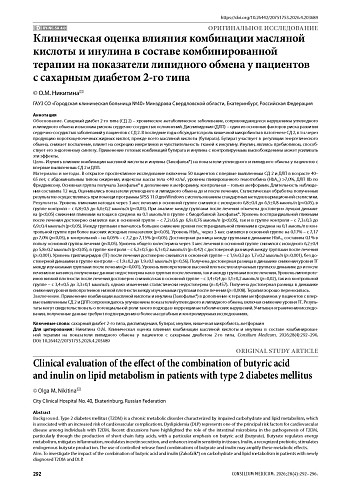
Клиническая оценка влияния комбинации масляной кислоты и инулина в составе комбинированной терапии на показатели липидного обмена у пациентов с сахарным диабетом 2-го типа
Клиническая оценка влияния комбинации масляной кислоты и инулина в составе комбинированной терапии на показатели липидного обмена у пациентов с сахарным диабетом 2-го типа
Никитина О.М. Клиническая оценка влияния комбинации масляной кислоты и инулина в составе комбинированной терапии на показатели липидного обмена у пациентов с сахарным диабетом 2-го типа. Consilium Medicum. 2026;28(4):292–296. DOI: 10.26442/20751753.2026.4.203689
________________________________________________
Материалы доступны только для специалистов сферы здравоохранения.
Чтобы посмотреть материал полностью
Авторизуйтесь
или зарегистрируйтесь.
Аннотация
Обоснование. Сахарный диабет 2-го типа (СД 2) – хроническое метаболическое заболевание, сопровождающееся нарушением углеводного и липидного обмена и высоким риском сердечно-сосудистых осложнений. Дислипидемия (ДЛП) – один из основных факторов риска развития сердечно-сосудистых заболеваний у пациентов с СД 2. В последние годы обсуждается роль кишечной микробиоты в патогенезе СД 2, в т.ч. через продукцию короткоцепочечных жирных кислот, прежде всего масляной кислоты (бутирата). Бутират участвует в регуляции энергетического обмена, снижает воспаление, влияет на секрецию инкретинов и чувствительность тканей к инсулину. Инулин, являясь пребиотиком, способствует его эндогенному синтезу. Применение готовых комбинаций бутирата и инулина с контролируемым высвобождением может усиливать эти эффекты.
Цель. Изучить влияние комбинации масляной кислоты и инулина (Закофальк®) на показатели углеводного и липидного обмена у пациентов с впервые выявленным СД 2 и ДЛП.
Материалы и методы. В открытое проспективное исследование включены 50 пациентов с впервые выявленным СД 2 и ДЛП в возрасте 40–65 лет, с абдоминальным типом ожирения, индексом массы тела <40 кг/м2, уровнем гликированного гемоглобина (HbA1c) >7,0%, ДЛП IIb по Фредриксону. Основная группа получала Закофальк® в дополнение к метформину, контрольная – только метформин. Длительность наблюдения составила 12 нед. Оценивались показатели углеводного и липидного обмена до и после лечения. Статистическая обработка полученных результатов осуществлялась при помощи программы SPSS 11.0 для Windows с использованием стандартных методов вариационной статистики.
Результаты. Уровень гликемии натощак через 3 мес лечения в основной группе снизился с исходного 6,8±0,4 до 6,5±0,8 ммоль/л (р<0,05), в группе контроля – с 6,8±0,5 до 6,6±0,2 ммоль/л (р<0,05). При анализе между группами после лечения отмечена достоверно лучшая динамика (р<0,05) снижения гликемии натощак в среднем на 0,1 ммоль/л в группе с биодобавкой Закофальк®. Уровень постпрандиальной гликемии после лечения достоверно снизился как в основной группе – с 7,2±0,6 до 6,9±0,76 ммоль/л (р<0,05), так и в группе контроля – с 7,3±0,3 до 6,9±0,4 ммоль/л (р<0,05). Между группами отмечалось большее снижение уровня постпрандиальной гликемии в среднем на 0,1 ммоль/л в контрольной группе при более высоких исходных показателях (р<0,05). Уровень HbA1c через 3 мес снизился в основной группе на 0,17% – с 7,17 до 7,0% (р<0,05), в контрольной – на 0,05% – с 7,2 до 7,15% (р<0,05). Достоверная разница между группами в динамике HbA1c составила 0,1% в пользу основной группы лечения (р<0,05). Уровень общего холестерина через 3 мес лечения в основной группе снизился с исходного 6,2±0,4 до 5,8±0,2 ммоль/л (р<0,05), в группе контроля – с 6,2±0,5 до 6,1±0,2 ммоль/л (р=0,42) с достоверной разницей между группами после лечения (р=0,001). Уровень триглицеридов (ТГ) после лечения достоверно снизился в основной группе – с 1,9±0,3 до 1,7±0,2 ммоль/л (р=0,001), без достоверной динамики в группе контроля – с 1,9±0,2 до 1,9±0,1 ммоль/л (р=0,56). Получена достоверная разница в динамике снижения уровня ТГ между изучаемыми группами после лечения (р=0,001). Уровень липопротеинов высокой плотности в изучаемых группах в динамике до и после лечения не менялся, полученные данные недостоверны как в группах после лечения, так и между группами после лечения. Уровень липопротеинов низкой плотности после лечения достоверно снизился как в основной группе – с 3,4±0,4 до 3,1±0,2 ммоль/л (р=0,02), так и в контрольной группе – с 3,4±0,5 до 3,3±0,1 ммоль/л, однако изменения статистически недостоверны (р=0,457). Получена достоверная разница в динамике снижения уровня липопротеинов низкой плотности между изучаемыми группами после лечения (р=0,008). Терапия хорошо переносилась.
Заключение. Применение комбинации масляной кислоты и инулина (Закофальк®) в дополнение к терапии метформином у пациентов с впервые выявленным СД 2 и ДЛП сопровождалось улучшением показателей углеводного и липидного обмена, включая снижение уровня ТГ. Результаты могут свидетельствовать о потенциальной роли такого подхода в коррекции метаболических нарушений. Учитывая ограничения исследования, полученные данные требуют подтверждения в более масштабных и контролируемых исследованиях.
Ключевые слова: сахарный диабет 2-го типа, дислипидемия, бутират, инулин, кишечная микробиота, метформин
Aim. To investigate the impact of the combination of butyric acid and inulin (Zakofalk®) on carbohydrate and lipid metabolism in patients with newly diagnosed T2DM and DLP.
Materials and methods. This open-label prospective study involved 50 patients aged 40 to 65 years with newly diagnosed T2DM and DLP, all presenting with abdominal obesity, a body mass index of less than 40 kg/m2, glycated hemoglobin (HbA1c) levels exceeding 7.0%, and classified under Frederickson type IIb DLP. The test group received Zakofalk® alongside metformin, while the control group received metformin only. The follow-up period was 12 weeks. Сarbohydrate and lipid metabolism was assessed before and after the intervention. Statistical analyses were performed using SPSS 11.0 for Windows, applying standard methods of variational statistics.
Results. The fasting glycemia level after three months of treatment in the test group decreased from a baseline of 6.8±0.4 to 6.5±0.8 mmol/L (p<0.05). In contrast, the control group noted a reduction from 6.8±0.5 to 6.6±0.2 mmol/L (p<0.05). Inter-group analysis revealed a significantly greater improvement (p<0.05) in fasting glycemia in the Zakofalk® group, with an average reduction of 0.1 mmol/L. The postprandial glycemia level also declined significantly in both groups post-treatment, with the test group decreasing from 7.2±0.6 to 6.9±0.76 mmol/L (p<0.05) and the control group decreasing from 7.3±0.3 to 6.9±0.4 mmol/L (p<0.05). The changes in postprandial glycemia indicated a more pronounced decrease, averaging 0.1 mmol/L, within the control group exhibiting higher baseline values (p<0.05). The HbA1c level at three months decreased by 0.17% in the test group, from 7.17 to 7.0% (p<0.05), whereas in the control group, it decreased by 0.05%, from 7.2 to 7.15% (p<0.05). Notably, there was a significant difference between the groups in the change of HbA1c of 0.1%, favoring the test treatment group (p<0.05). Additionally, total cholesterol levels in the test group decreased from 6.2±0.4 to 5.8±0.2 mmol/L after 3 months (p<0.05). Conversely, the control group showed a reduction from 6.2±0.5 to 6.1±0.2 mmol/L (p=0.42), with a statistically significant difference between the groups post-treatment (p=0.001). The level of triglycerides (TG) in the test group significantly fell from 1.9±0.3 to 1.7±0.2 mmol/L (p=0.001), whereas the control group exhibited no change (1.9±0.2 mmol/L at baseline vs. 1.9±0.1 mmol/L) (p=0.56). A significant inter-group difference in TG reduction was observed after treatment (p=0.001). High-density lipoprotein levels did not show any significant changes pre- or post-treatment in either group, yielding unreliable data. Low-density lipoprotein levels decreased significantly post-treatment in both groups, with the test group showing a reduction from 3.4±0.4 to 3.1±0.2 mmol/L (p=0.02), and the control group from 3.4±0.5 to 3.3±0.1 mmol/L; however, these changes were not statistically significant (p=0.457). A significant difference in the decrease in TG level was observed between the study groups after treatment (p=0.008). The treatment was well tolerated.
Conclusion. The introduction of a combination of butyric acid and inulin (Zakofalk®) alongside metformin therapy improved carbohydrate and lipid metabolism in patients with newly diagnosed T2DM and DLP, including a reduction in TG levels. These results suggest a potential therapeutic role for this approach in addressing metabolic disorders. Given the limitations of this study, further confirmation of these findings in larger and controlled trials is warranted.
Keywords: type 2 diabetes mellitus, dyslipidemias, butyrates, inulin, gastrointestinal microbiome, metformin
Цель. Изучить влияние комбинации масляной кислоты и инулина (Закофальк®) на показатели углеводного и липидного обмена у пациентов с впервые выявленным СД 2 и ДЛП.
Материалы и методы. В открытое проспективное исследование включены 50 пациентов с впервые выявленным СД 2 и ДЛП в возрасте 40–65 лет, с абдоминальным типом ожирения, индексом массы тела <40 кг/м2, уровнем гликированного гемоглобина (HbA1c) >7,0%, ДЛП IIb по Фредриксону. Основная группа получала Закофальк® в дополнение к метформину, контрольная – только метформин. Длительность наблюдения составила 12 нед. Оценивались показатели углеводного и липидного обмена до и после лечения. Статистическая обработка полученных результатов осуществлялась при помощи программы SPSS 11.0 для Windows с использованием стандартных методов вариационной статистики.
Результаты. Уровень гликемии натощак через 3 мес лечения в основной группе снизился с исходного 6,8±0,4 до 6,5±0,8 ммоль/л (р<0,05), в группе контроля – с 6,8±0,5 до 6,6±0,2 ммоль/л (р<0,05). При анализе между группами после лечения отмечена достоверно лучшая динамика (р<0,05) снижения гликемии натощак в среднем на 0,1 ммоль/л в группе с биодобавкой Закофальк®. Уровень постпрандиальной гликемии после лечения достоверно снизился как в основной группе – с 7,2±0,6 до 6,9±0,76 ммоль/л (р<0,05), так и в группе контроля – с 7,3±0,3 до 6,9±0,4 ммоль/л (р<0,05). Между группами отмечалось большее снижение уровня постпрандиальной гликемии в среднем на 0,1 ммоль/л в контрольной группе при более высоких исходных показателях (р<0,05). Уровень HbA1c через 3 мес снизился в основной группе на 0,17% – с 7,17 до 7,0% (р<0,05), в контрольной – на 0,05% – с 7,2 до 7,15% (р<0,05). Достоверная разница между группами в динамике HbA1c составила 0,1% в пользу основной группы лечения (р<0,05). Уровень общего холестерина через 3 мес лечения в основной группе снизился с исходного 6,2±0,4 до 5,8±0,2 ммоль/л (р<0,05), в группе контроля – с 6,2±0,5 до 6,1±0,2 ммоль/л (р=0,42) с достоверной разницей между группами после лечения (р=0,001). Уровень триглицеридов (ТГ) после лечения достоверно снизился в основной группе – с 1,9±0,3 до 1,7±0,2 ммоль/л (р=0,001), без достоверной динамики в группе контроля – с 1,9±0,2 до 1,9±0,1 ммоль/л (р=0,56). Получена достоверная разница в динамике снижения уровня ТГ между изучаемыми группами после лечения (р=0,001). Уровень липопротеинов высокой плотности в изучаемых группах в динамике до и после лечения не менялся, полученные данные недостоверны как в группах после лечения, так и между группами после лечения. Уровень липопротеинов низкой плотности после лечения достоверно снизился как в основной группе – с 3,4±0,4 до 3,1±0,2 ммоль/л (р=0,02), так и в контрольной группе – с 3,4±0,5 до 3,3±0,1 ммоль/л, однако изменения статистически недостоверны (р=0,457). Получена достоверная разница в динамике снижения уровня липопротеинов низкой плотности между изучаемыми группами после лечения (р=0,008). Терапия хорошо переносилась.
Заключение. Применение комбинации масляной кислоты и инулина (Закофальк®) в дополнение к терапии метформином у пациентов с впервые выявленным СД 2 и ДЛП сопровождалось улучшением показателей углеводного и липидного обмена, включая снижение уровня ТГ. Результаты могут свидетельствовать о потенциальной роли такого подхода в коррекции метаболических нарушений. Учитывая ограничения исследования, полученные данные требуют подтверждения в более масштабных и контролируемых исследованиях.
Ключевые слова: сахарный диабет 2-го типа, дислипидемия, бутират, инулин, кишечная микробиота, метформин
________________________________________________
Aim. To investigate the impact of the combination of butyric acid and inulin (Zakofalk®) on carbohydrate and lipid metabolism in patients with newly diagnosed T2DM and DLP.
Materials and methods. This open-label prospective study involved 50 patients aged 40 to 65 years with newly diagnosed T2DM and DLP, all presenting with abdominal obesity, a body mass index of less than 40 kg/m2, glycated hemoglobin (HbA1c) levels exceeding 7.0%, and classified under Frederickson type IIb DLP. The test group received Zakofalk® alongside metformin, while the control group received metformin only. The follow-up period was 12 weeks. Сarbohydrate and lipid metabolism was assessed before and after the intervention. Statistical analyses were performed using SPSS 11.0 for Windows, applying standard methods of variational statistics.
Results. The fasting glycemia level after three months of treatment in the test group decreased from a baseline of 6.8±0.4 to 6.5±0.8 mmol/L (p<0.05). In contrast, the control group noted a reduction from 6.8±0.5 to 6.6±0.2 mmol/L (p<0.05). Inter-group analysis revealed a significantly greater improvement (p<0.05) in fasting glycemia in the Zakofalk® group, with an average reduction of 0.1 mmol/L. The postprandial glycemia level also declined significantly in both groups post-treatment, with the test group decreasing from 7.2±0.6 to 6.9±0.76 mmol/L (p<0.05) and the control group decreasing from 7.3±0.3 to 6.9±0.4 mmol/L (p<0.05). The changes in postprandial glycemia indicated a more pronounced decrease, averaging 0.1 mmol/L, within the control group exhibiting higher baseline values (p<0.05). The HbA1c level at three months decreased by 0.17% in the test group, from 7.17 to 7.0% (p<0.05), whereas in the control group, it decreased by 0.05%, from 7.2 to 7.15% (p<0.05). Notably, there was a significant difference between the groups in the change of HbA1c of 0.1%, favoring the test treatment group (p<0.05). Additionally, total cholesterol levels in the test group decreased from 6.2±0.4 to 5.8±0.2 mmol/L after 3 months (p<0.05). Conversely, the control group showed a reduction from 6.2±0.5 to 6.1±0.2 mmol/L (p=0.42), with a statistically significant difference between the groups post-treatment (p=0.001). The level of triglycerides (TG) in the test group significantly fell from 1.9±0.3 to 1.7±0.2 mmol/L (p=0.001), whereas the control group exhibited no change (1.9±0.2 mmol/L at baseline vs. 1.9±0.1 mmol/L) (p=0.56). A significant inter-group difference in TG reduction was observed after treatment (p=0.001). High-density lipoprotein levels did not show any significant changes pre- or post-treatment in either group, yielding unreliable data. Low-density lipoprotein levels decreased significantly post-treatment in both groups, with the test group showing a reduction from 3.4±0.4 to 3.1±0.2 mmol/L (p=0.02), and the control group from 3.4±0.5 to 3.3±0.1 mmol/L; however, these changes were not statistically significant (p=0.457). A significant difference in the decrease in TG level was observed between the study groups after treatment (p=0.008). The treatment was well tolerated.
Conclusion. The introduction of a combination of butyric acid and inulin (Zakofalk®) alongside metformin therapy improved carbohydrate and lipid metabolism in patients with newly diagnosed T2DM and DLP, including a reduction in TG levels. These results suggest a potential therapeutic role for this approach in addressing metabolic disorders. Given the limitations of this study, further confirmation of these findings in larger and controlled trials is warranted.
Keywords: type 2 diabetes mellitus, dyslipidemias, butyrates, inulin, gastrointestinal microbiome, metformin
Полный текст
Список литературы
1. Алгоритмы специализированной медицинской помощи больным сахарным диабетом. Под ред. И.И. Дедова, М.В. Шестаковой, А.Ю. Майорова. 11-й выпуск. М., 2023 [Algoritmy spetsializirovannoi meditsinskoi pomoshchi bolnym sakharnym diabetom. Pod red. II Dedova, MV Shestakovoi, AIu Maiorova. 11-i vypusk. Moscow, 2023 (in Russian)]. DOI:10.14341/DM13042
2. Wang W, Qiao J, Zhang L, et al. Prevalence of very high cardiovascular disease risk in patients with type 2 diabetes mellitus: A population-based cross-sectional screening study. Diabetes Obes Metab. 2024;26(10):4251-60. DOI:10.1111/dom.15763
3. Kelemework B, Woubshet K, Tadesse SA, et al. The Burden of Dyslipidemia and Determinant Factors Among Type 2 Diabetes Mellitus Patients at Hawassa University Comprehensive Specialized Hospital, Hawassa, Ethiopia. Diabetes Metab Syndr Obes. 2024;17:825-32. DOI:10.2147/DMSO.S448350
4. Cassataro G, Geraci G, Giusti MA, et al. The Cardiovascular Burden of Diabetes: Risk Factors, Clinical Phenotypes, and Personalized Cardiometabolic Management. J Clin Med. 2026;15(6):2358. DOI:10.3390/jcm15062358
5. American Diabetes Association Professional Practice Committee for Diabetes; Bajaj M, McCoy RG, Balapattabi K, et al. Cardiovascular Disease and Risk Management: Standards of Care in Diabetes-2026. Diabetes Care. 2025;49(Suppl. 1):S216-45. DOI:10.2337/dc26-s010
6. Hang B, Wang Y. Interplay between gut microbiota and intestinal lipid metabolism: mechanisms and implications. J Zhejiang Univ Sci B. 2025;26(10):961-71. DOI:10.1631/jzus.B2500102
7. Menezes GA, Sekar P, Akhter A, et al. Gut Microbiota and Dyslipidemia in Type 2 Diabetes: A Pilot Study of 16S rRNA Profiles and Predicted Functional Shifts. J Diabetes Res. 2026;2026(1):e9317962. DOI:10.1155/jdr/9317962
8. Juhász AE, Greff D, Teutsch B, et al. Galactomannans are the most effective soluble dietary fibers in type 2 diabetes: a systematic review and network meta-analysis. Am J Clin Nutr. 2023;117(2):266-77. DOI:10.1016/j.ajcnut.2022.12.015
9. Chen S, Peng D, Shan Y, et al. Black Tea drinks with inulin and dextrin reduced postprandial plasma glucose fluctuations in patients with type 2 diabetes: an acute, randomized, placebo-controlled, single-blind crossover study. Nutr Diabetes. 2024;14(1):95. DOI:10.1038/s41387-024-00351-w
10. Testa R, Vitale M, Giosuè A, et al. Targeting weight loss and blood glucose control with oral sodium butyrate in overweight/obese adults with and without type 2 diabetes: A proof-of-concept randomized controlled trial. Clin Nutr. 2026;60:106624. DOI:10.1016/j.clnu.2026.106624
11. Fogacci F, Giovannini M, Di Micoli V, et al. Effect of Supplementation of a Butyrate-Based Formula in Individuals with Liver Steatosis and Metabolic Syndrome: A Randomized Double-Blind Placebo-Controlled Clinical Trial. Nutrients. 2024;16(15):2454. DOI:10.3390/nu16152454
12. Panufnik P, Wiecek M, Szwarc P, et al. 610-P: Effect of Butyrate on GI Signs, SIBO, and Diabetes Control-Randomized, Placebo-Controlled Study in Patients with Type 2 Diabetes. Diabetes. 2024;73(Supplement_1). DOI:10.2337/db24-610-p
13. Coppola S, Nocerino R, Paparo L, et al. Therapeutic Effects of Butyrate on Pediatric Obesity: A Randomized Clinical Trial. JAMA Netw Open. 2022;5(12):e2244912. DOI:10.1001/jamanetworkopen.2022.44912
14. Ojetti V, Saviano A, Rizzi A, et al. Efficacy of inulin supplementation in metabolic control and Akkermansia muciniphila levels in subjects with type 1 diabetes: a pilot study. Eur Rev Med Pharmacol Sci. 2026;30(1):15-26. DOI:10.26355/eurrev_202601_37645
15. Сахарный диабет 2 типа у взрослых. Клинические рекомендации Минздрава России, 2022. Режим доступа: https://cr.minzdrav.gov.ru/view-cr/290_2. Ссылка активна на 03.03.2026 [Sakharnyi diabet 2 tipa u vzroslykh. Klinicheskie rekomendatsii Minzdrava Rossii. 2022. Available at: https://cr.minzdrav.gov.ru/view-cr/290_2. Accessed: 03.03.2026 (in Russian)].
16. Birkeland E, Gharagozlian S, Birkeland KI, et al. Effect of inulin-type fructans on appetite in patients with type 2 diabetes: a randomised controlled crossover trial. J Nutr Sci. 2021;10:e72. DOI:10.1017/jns.2021.70
17. Krauze W, Busz N, Pikuła W, et al. Effect of Sodium Butyrate Supplementation on Type 2 Diabetes-Literature Review. Nutrients. 2025;17(11):1753. DOI:10.3390/nu17111753
18. Zhang L, Liu C, Jiang Q, Yin Y. Butyrate in Energy Metabolism: There Is Still More to Learn. Trends Endocrinol Metab. 2021;32(3):159-69. DOI:10.1016/j.tem.2020.12.003
19. Nakhleh A, Said W, Hadad S, et al. The effect of oral l-arginine alone or in combination with sodium butyrate on glucagon-like peptide-1 secretion in non-diabetic adults with obesity. Nutr Health. 2025:2601060251356584. DOI:10.1177/02601060251356584
20. Shapira E, Voinsky I, Klin H, Gurwitz D. Butyrate-Mediated Upregulation of Insulin Pathway Gene Expression Suggests Potential Antidiabetic Effects. Drug Dev Res. 2025;86(8):e70203. DOI:10.1002/ddr.70203
21. Amiri P, Arefhosseini S, Bakhshimoghaddam F, et al. Mechanistic insights into the pleiotropic effects of butyrate as a potential therapeutic agent on NAFLD management: A systematic review. Front Nutr. 2022;9:1037696. DOI:10.3389/fnut.2022.1037696
2. Wang W, Qiao J, Zhang L, et al. Prevalence of very high cardiovascular disease risk in patients with type 2 diabetes mellitus: A population-based cross-sectional screening study. Diabetes Obes Metab. 2024;26(10):4251-60. DOI:10.1111/dom.15763
3. Kelemework B, Woubshet K, Tadesse SA, et al. The Burden of Dyslipidemia and Determinant Factors Among Type 2 Diabetes Mellitus Patients at Hawassa University Comprehensive Specialized Hospital, Hawassa, Ethiopia. Diabetes Metab Syndr Obes. 2024;17:825-32. DOI:10.2147/DMSO.S448350
4. Cassataro G, Geraci G, Giusti MA, et al. The Cardiovascular Burden of Diabetes: Risk Factors, Clinical Phenotypes, and Personalized Cardiometabolic Management. J Clin Med. 2026;15(6):2358. DOI:10.3390/jcm15062358
5. American Diabetes Association Professional Practice Committee for Diabetes; Bajaj M, McCoy RG, Balapattabi K, et al. Cardiovascular Disease and Risk Management: Standards of Care in Diabetes-2026. Diabetes Care. 2025;49(Suppl. 1):S216-45. DOI:10.2337/dc26-s010
6. Hang B, Wang Y. Interplay between gut microbiota and intestinal lipid metabolism: mechanisms and implications. J Zhejiang Univ Sci B. 2025;26(10):961-71. DOI:10.1631/jzus.B2500102
7. Menezes GA, Sekar P, Akhter A, et al. Gut Microbiota and Dyslipidemia in Type 2 Diabetes: A Pilot Study of 16S rRNA Profiles and Predicted Functional Shifts. J Diabetes Res. 2026;2026(1):e9317962. DOI:10.1155/jdr/9317962
8. Juhász AE, Greff D, Teutsch B, et al. Galactomannans are the most effective soluble dietary fibers in type 2 diabetes: a systematic review and network meta-analysis. Am J Clin Nutr. 2023;117(2):266-77. DOI:10.1016/j.ajcnut.2022.12.015
9. Chen S, Peng D, Shan Y, et al. Black Tea drinks with inulin and dextrin reduced postprandial plasma glucose fluctuations in patients with type 2 diabetes: an acute, randomized, placebo-controlled, single-blind crossover study. Nutr Diabetes. 2024;14(1):95. DOI:10.1038/s41387-024-00351-w
10. Testa R, Vitale M, Giosuè A, et al. Targeting weight loss and blood glucose control with oral sodium butyrate in overweight/obese adults with and without type 2 diabetes: A proof-of-concept randomized controlled trial. Clin Nutr. 2026;60:106624. DOI:10.1016/j.clnu.2026.106624
11. Fogacci F, Giovannini M, Di Micoli V, et al. Effect of Supplementation of a Butyrate-Based Formula in Individuals with Liver Steatosis and Metabolic Syndrome: A Randomized Double-Blind Placebo-Controlled Clinical Trial. Nutrients. 2024;16(15):2454. DOI:10.3390/nu16152454
12. Panufnik P, Wiecek M, Szwarc P, et al. 610-P: Effect of Butyrate on GI Signs, SIBO, and Diabetes Control-Randomized, Placebo-Controlled Study in Patients with Type 2 Diabetes. Diabetes. 2024;73(Supplement_1). DOI:10.2337/db24-610-p
13. Coppola S, Nocerino R, Paparo L, et al. Therapeutic Effects of Butyrate on Pediatric Obesity: A Randomized Clinical Trial. JAMA Netw Open. 2022;5(12):e2244912. DOI:10.1001/jamanetworkopen.2022.44912
14. Ojetti V, Saviano A, Rizzi A, et al. Efficacy of inulin supplementation in metabolic control and Akkermansia muciniphila levels in subjects with type 1 diabetes: a pilot study. Eur Rev Med Pharmacol Sci. 2026;30(1):15-26. DOI:10.26355/eurrev_202601_37645
15. Sakharnyi diabet 2 tipa u vzroslykh. Klinicheskie rekomendatsii Minzdrava Rossii. 2022. Available at: https://cr.minzdrav.gov.ru/view-cr/290_2. Accessed: 03.03.2026 (in Russian).
16. Birkeland E, Gharagozlian S, Birkeland KI, et al. Effect of inulin-type fructans on appetite in patients with type 2 diabetes: a randomised controlled crossover trial. J Nutr Sci. 2021;10:e72. DOI:10.1017/jns.2021.70
17. Krauze W, Busz N, Pikuła W, et al. Effect of Sodium Butyrate Supplementation on Type 2 Diabetes-Literature Review. Nutrients. 2025;17(11):1753. DOI:10.3390/nu17111753
18. Zhang L, Liu C, Jiang Q, Yin Y. Butyrate in Energy Metabolism: There Is Still More to Learn. Trends Endocrinol Metab. 2021;32(3):159-69. DOI:10.1016/j.tem.2020.12.003
19. Nakhleh A, Said W, Hadad S, et al. The effect of oral l-arginine alone or in combination with sodium butyrate on glucagon-like peptide-1 secretion in non-diabetic adults with obesity. Nutr Health. 2025:2601060251356584. DOI:10.1177/02601060251356584
20. Shapira E, Voinsky I, Klin H, Gurwitz D. Butyrate-Mediated Upregulation of Insulin Pathway Gene Expression Suggests Potential Antidiabetic Effects. Drug Dev Res. 2025;86(8):e70203. DOI:10.1002/ddr.70203
21. Amiri P, Arefhosseini S, Bakhshimoghaddam F, et al. Mechanistic insights into the pleiotropic effects of butyrate as a potential therapeutic agent on NAFLD management: A systematic review. Front Nutr. 2022;9:1037696. DOI:10.3389/fnut.2022.1037696
2. Wang W, Qiao J, Zhang L, et al. Prevalence of very high cardiovascular disease risk in patients with type 2 diabetes mellitus: A population-based cross-sectional screening study. Diabetes Obes Metab. 2024;26(10):4251-60. DOI:10.1111/dom.15763
3. Kelemework B, Woubshet K, Tadesse SA, et al. The Burden of Dyslipidemia and Determinant Factors Among Type 2 Diabetes Mellitus Patients at Hawassa University Comprehensive Specialized Hospital, Hawassa, Ethiopia. Diabetes Metab Syndr Obes. 2024;17:825-32. DOI:10.2147/DMSO.S448350
4. Cassataro G, Geraci G, Giusti MA, et al. The Cardiovascular Burden of Diabetes: Risk Factors, Clinical Phenotypes, and Personalized Cardiometabolic Management. J Clin Med. 2026;15(6):2358. DOI:10.3390/jcm15062358
5. American Diabetes Association Professional Practice Committee for Diabetes; Bajaj M, McCoy RG, Balapattabi K, et al. Cardiovascular Disease and Risk Management: Standards of Care in Diabetes-2026. Diabetes Care. 2025;49(Suppl. 1):S216-45. DOI:10.2337/dc26-s010
6. Hang B, Wang Y. Interplay between gut microbiota and intestinal lipid metabolism: mechanisms and implications. J Zhejiang Univ Sci B. 2025;26(10):961-71. DOI:10.1631/jzus.B2500102
7. Menezes GA, Sekar P, Akhter A, et al. Gut Microbiota and Dyslipidemia in Type 2 Diabetes: A Pilot Study of 16S rRNA Profiles and Predicted Functional Shifts. J Diabetes Res. 2026;2026(1):e9317962. DOI:10.1155/jdr/9317962
8. Juhász AE, Greff D, Teutsch B, et al. Galactomannans are the most effective soluble dietary fibers in type 2 diabetes: a systematic review and network meta-analysis. Am J Clin Nutr. 2023;117(2):266-77. DOI:10.1016/j.ajcnut.2022.12.015
9. Chen S, Peng D, Shan Y, et al. Black Tea drinks with inulin and dextrin reduced postprandial plasma glucose fluctuations in patients with type 2 diabetes: an acute, randomized, placebo-controlled, single-blind crossover study. Nutr Diabetes. 2024;14(1):95. DOI:10.1038/s41387-024-00351-w
10. Testa R, Vitale M, Giosuè A, et al. Targeting weight loss and blood glucose control with oral sodium butyrate in overweight/obese adults with and without type 2 diabetes: A proof-of-concept randomized controlled trial. Clin Nutr. 2026;60:106624. DOI:10.1016/j.clnu.2026.106624
11. Fogacci F, Giovannini M, Di Micoli V, et al. Effect of Supplementation of a Butyrate-Based Formula in Individuals with Liver Steatosis and Metabolic Syndrome: A Randomized Double-Blind Placebo-Controlled Clinical Trial. Nutrients. 2024;16(15):2454. DOI:10.3390/nu16152454
12. Panufnik P, Wiecek M, Szwarc P, et al. 610-P: Effect of Butyrate on GI Signs, SIBO, and Diabetes Control-Randomized, Placebo-Controlled Study in Patients with Type 2 Diabetes. Diabetes. 2024;73(Supplement_1). DOI:10.2337/db24-610-p
13. Coppola S, Nocerino R, Paparo L, et al. Therapeutic Effects of Butyrate on Pediatric Obesity: A Randomized Clinical Trial. JAMA Netw Open. 2022;5(12):e2244912. DOI:10.1001/jamanetworkopen.2022.44912
14. Ojetti V, Saviano A, Rizzi A, et al. Efficacy of inulin supplementation in metabolic control and Akkermansia muciniphila levels in subjects with type 1 diabetes: a pilot study. Eur Rev Med Pharmacol Sci. 2026;30(1):15-26. DOI:10.26355/eurrev_202601_37645
15. Сахарный диабет 2 типа у взрослых. Клинические рекомендации Минздрава России, 2022. Режим доступа: https://cr.minzdrav.gov.ru/view-cr/290_2. Ссылка активна на 03.03.2026 [Sakharnyi diabet 2 tipa u vzroslykh. Klinicheskie rekomendatsii Minzdrava Rossii. 2022. Available at: https://cr.minzdrav.gov.ru/view-cr/290_2. Accessed: 03.03.2026 (in Russian)].
16. Birkeland E, Gharagozlian S, Birkeland KI, et al. Effect of inulin-type fructans on appetite in patients with type 2 diabetes: a randomised controlled crossover trial. J Nutr Sci. 2021;10:e72. DOI:10.1017/jns.2021.70
17. Krauze W, Busz N, Pikuła W, et al. Effect of Sodium Butyrate Supplementation on Type 2 Diabetes-Literature Review. Nutrients. 2025;17(11):1753. DOI:10.3390/nu17111753
18. Zhang L, Liu C, Jiang Q, Yin Y. Butyrate in Energy Metabolism: There Is Still More to Learn. Trends Endocrinol Metab. 2021;32(3):159-69. DOI:10.1016/j.tem.2020.12.003
19. Nakhleh A, Said W, Hadad S, et al. The effect of oral l-arginine alone or in combination with sodium butyrate on glucagon-like peptide-1 secretion in non-diabetic adults with obesity. Nutr Health. 2025:2601060251356584. DOI:10.1177/02601060251356584
20. Shapira E, Voinsky I, Klin H, Gurwitz D. Butyrate-Mediated Upregulation of Insulin Pathway Gene Expression Suggests Potential Antidiabetic Effects. Drug Dev Res. 2025;86(8):e70203. DOI:10.1002/ddr.70203
21. Amiri P, Arefhosseini S, Bakhshimoghaddam F, et al. Mechanistic insights into the pleiotropic effects of butyrate as a potential therapeutic agent on NAFLD management: A systematic review. Front Nutr. 2022;9:1037696. DOI:10.3389/fnut.2022.1037696
________________________________________________
2. Wang W, Qiao J, Zhang L, et al. Prevalence of very high cardiovascular disease risk in patients with type 2 diabetes mellitus: A population-based cross-sectional screening study. Diabetes Obes Metab. 2024;26(10):4251-60. DOI:10.1111/dom.15763
3. Kelemework B, Woubshet K, Tadesse SA, et al. The Burden of Dyslipidemia and Determinant Factors Among Type 2 Diabetes Mellitus Patients at Hawassa University Comprehensive Specialized Hospital, Hawassa, Ethiopia. Diabetes Metab Syndr Obes. 2024;17:825-32. DOI:10.2147/DMSO.S448350
4. Cassataro G, Geraci G, Giusti MA, et al. The Cardiovascular Burden of Diabetes: Risk Factors, Clinical Phenotypes, and Personalized Cardiometabolic Management. J Clin Med. 2026;15(6):2358. DOI:10.3390/jcm15062358
5. American Diabetes Association Professional Practice Committee for Diabetes; Bajaj M, McCoy RG, Balapattabi K, et al. Cardiovascular Disease and Risk Management: Standards of Care in Diabetes-2026. Diabetes Care. 2025;49(Suppl. 1):S216-45. DOI:10.2337/dc26-s010
6. Hang B, Wang Y. Interplay between gut microbiota and intestinal lipid metabolism: mechanisms and implications. J Zhejiang Univ Sci B. 2025;26(10):961-71. DOI:10.1631/jzus.B2500102
7. Menezes GA, Sekar P, Akhter A, et al. Gut Microbiota and Dyslipidemia in Type 2 Diabetes: A Pilot Study of 16S rRNA Profiles and Predicted Functional Shifts. J Diabetes Res. 2026;2026(1):e9317962. DOI:10.1155/jdr/9317962
8. Juhász AE, Greff D, Teutsch B, et al. Galactomannans are the most effective soluble dietary fibers in type 2 diabetes: a systematic review and network meta-analysis. Am J Clin Nutr. 2023;117(2):266-77. DOI:10.1016/j.ajcnut.2022.12.015
9. Chen S, Peng D, Shan Y, et al. Black Tea drinks with inulin and dextrin reduced postprandial plasma glucose fluctuations in patients with type 2 diabetes: an acute, randomized, placebo-controlled, single-blind crossover study. Nutr Diabetes. 2024;14(1):95. DOI:10.1038/s41387-024-00351-w
10. Testa R, Vitale M, Giosuè A, et al. Targeting weight loss and blood glucose control with oral sodium butyrate in overweight/obese adults with and without type 2 diabetes: A proof-of-concept randomized controlled trial. Clin Nutr. 2026;60:106624. DOI:10.1016/j.clnu.2026.106624
11. Fogacci F, Giovannini M, Di Micoli V, et al. Effect of Supplementation of a Butyrate-Based Formula in Individuals with Liver Steatosis and Metabolic Syndrome: A Randomized Double-Blind Placebo-Controlled Clinical Trial. Nutrients. 2024;16(15):2454. DOI:10.3390/nu16152454
12. Panufnik P, Wiecek M, Szwarc P, et al. 610-P: Effect of Butyrate on GI Signs, SIBO, and Diabetes Control-Randomized, Placebo-Controlled Study in Patients with Type 2 Diabetes. Diabetes. 2024;73(Supplement_1). DOI:10.2337/db24-610-p
13. Coppola S, Nocerino R, Paparo L, et al. Therapeutic Effects of Butyrate on Pediatric Obesity: A Randomized Clinical Trial. JAMA Netw Open. 2022;5(12):e2244912. DOI:10.1001/jamanetworkopen.2022.44912
14. Ojetti V, Saviano A, Rizzi A, et al. Efficacy of inulin supplementation in metabolic control and Akkermansia muciniphila levels in subjects with type 1 diabetes: a pilot study. Eur Rev Med Pharmacol Sci. 2026;30(1):15-26. DOI:10.26355/eurrev_202601_37645
15. Sakharnyi diabet 2 tipa u vzroslykh. Klinicheskie rekomendatsii Minzdrava Rossii. 2022. Available at: https://cr.minzdrav.gov.ru/view-cr/290_2. Accessed: 03.03.2026 (in Russian).
16. Birkeland E, Gharagozlian S, Birkeland KI, et al. Effect of inulin-type fructans on appetite in patients with type 2 diabetes: a randomised controlled crossover trial. J Nutr Sci. 2021;10:e72. DOI:10.1017/jns.2021.70
17. Krauze W, Busz N, Pikuła W, et al. Effect of Sodium Butyrate Supplementation on Type 2 Diabetes-Literature Review. Nutrients. 2025;17(11):1753. DOI:10.3390/nu17111753
18. Zhang L, Liu C, Jiang Q, Yin Y. Butyrate in Energy Metabolism: There Is Still More to Learn. Trends Endocrinol Metab. 2021;32(3):159-69. DOI:10.1016/j.tem.2020.12.003
19. Nakhleh A, Said W, Hadad S, et al. The effect of oral l-arginine alone or in combination with sodium butyrate on glucagon-like peptide-1 secretion in non-diabetic adults with obesity. Nutr Health. 2025:2601060251356584. DOI:10.1177/02601060251356584
20. Shapira E, Voinsky I, Klin H, Gurwitz D. Butyrate-Mediated Upregulation of Insulin Pathway Gene Expression Suggests Potential Antidiabetic Effects. Drug Dev Res. 2025;86(8):e70203. DOI:10.1002/ddr.70203
21. Amiri P, Arefhosseini S, Bakhshimoghaddam F, et al. Mechanistic insights into the pleiotropic effects of butyrate as a potential therapeutic agent on NAFLD management: A systematic review. Front Nutr. 2022;9:1037696. DOI:10.3389/fnut.2022.1037696
Авторы
О.М. Никитина*
ГАУЗ СО «Городская клиническая больница №40» Минздрава Свердловской области, Екатеринбург, Российская Федерация
*olganikitina872@gmail.com
City Clinical Hospital No. 40, Ekaterinburg, Russian Federation
*olganikitina872@gmail.com
ГАУЗ СО «Городская клиническая больница №40» Минздрава Свердловской области, Екатеринбург, Российская Федерация
*olganikitina872@gmail.com
________________________________________________
City Clinical Hospital No. 40, Ekaterinburg, Russian Federation
*olganikitina872@gmail.com
Цель портала OmniDoctor – предоставление профессиональной информации врачам, провизорам и фармацевтам.