

Материалы доступны только для специалистов сферы здравоохранения.
Чтобы посмотреть материал полностью
Авторизуйтесь
или зарегистрируйтесь.
Оценка эффективности альтернативных методов лечения менопаузальных симптомов у женщин в постменопаузе
Оценка эффективности альтернативных методов лечения менопаузальных симптомов у женщин в постменопаузе
Юренева С.В., Ермакова Е.И. Оценка эффективности альтернативных методов лечения менопаузальных симптомов у женщин в постменопаузе. Гинекология. 2017; 19 (1): 21–26.
________________________________________________
Материалы доступны только для специалистов сферы здравоохранения.
Чтобы посмотреть материал полностью
Авторизуйтесь
или зарегистрируйтесь.
Аннотация
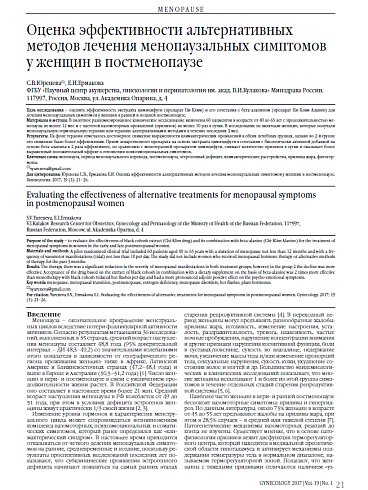
Цель исследования – оценить эффективность экстракта цимицифуги (препарат Ци-Клим) и его сочетания с бета-аланином (препарат Ци-Клим Аланин) для лечения менопаузальных симптомов у женщин в ранней и поздней постменопаузе.
Материалы и методы. В пилотное рандомизированное клиническое исследование включены 60 пациенток в возрасте от 40 до 65 лет с продолжительностью менопаузы не менее 12 мес и с частотой вазомоторных проявлений (приливов) не менее 10 раз в сутки. В исследование не включали женщин, которые получали менопаузальную гормональную терапию или терапию альтернативными методами в течение последних 3 мес.
Результаты. На фоне терапии отмечалось достоверное снижение выраженности климактерических проявлений в обеих лечебных группах, однако во 2-й группе это снижение было более эффективным. Прием лекарственного препарата на основе экстракта цимицифуги в сочетании с биологически активной добавкой на основе бета-аланина в 2 раза эффективнее, по сравнению с монотерапией препаратом цимицифуги, снижает количество приливов в сутки и оказывает более выраженный положительный эффект в отношении психоэмоциональных симптомов.
Ключевые слова: менопауза, период менопаузального перехода, постменопауза, эстрогенный дефицит, климактерические расстройства, приливы жара, фитогормоны.
Materials and methods. A pilot randomized clinical trial included 60 patients aged 40 to 65 years with a duration of menopause not less than 12 months and with a frequency of vasomotor manifestations (tidal) not less than 10 per day. The study did not include women who received menopausal hormone therapy or alternative methods of therapy for the past 3 months.
Results. The therapy there was a significant reduction in the severity of menopausal manifestations in both treatment groups, however, in the group 2 the decline was more effective. Acceptance of the drug based on the extract of black cohosh in combination with a dietary supplement on the basis of beta-alanine was 2 times more effective than monotherapy with black cohosh reduced hot flushes per day and had a more pronounced adjoint positive effect on the psycho-emotional symptoms.
Key words: menopause, menopausal transition, postmenopause, estrogen deficiency, menopause disorders, hot flushes, plant hormones.
Материалы и методы. В пилотное рандомизированное клиническое исследование включены 60 пациенток в возрасте от 40 до 65 лет с продолжительностью менопаузы не менее 12 мес и с частотой вазомоторных проявлений (приливов) не менее 10 раз в сутки. В исследование не включали женщин, которые получали менопаузальную гормональную терапию или терапию альтернативными методами в течение последних 3 мес.
Результаты. На фоне терапии отмечалось достоверное снижение выраженности климактерических проявлений в обеих лечебных группах, однако во 2-й группе это снижение было более эффективным. Прием лекарственного препарата на основе экстракта цимицифуги в сочетании с биологически активной добавкой на основе бета-аланина в 2 раза эффективнее, по сравнению с монотерапией препаратом цимицифуги, снижает количество приливов в сутки и оказывает более выраженный положительный эффект в отношении психоэмоциональных симптомов.
Ключевые слова: менопауза, период менопаузального перехода, постменопауза, эстрогенный дефицит, климактерические расстройства, приливы жара, фитогормоны.
________________________________________________
Materials and methods. A pilot randomized clinical trial included 60 patients aged 40 to 65 years with a duration of menopause not less than 12 months and with a frequency of vasomotor manifestations (tidal) not less than 10 per day. The study did not include women who received menopausal hormone therapy or alternative methods of therapy for the past 3 months.
Results. The therapy there was a significant reduction in the severity of menopausal manifestations in both treatment groups, however, in the group 2 the decline was more effective. Acceptance of the drug based on the extract of black cohosh in combination with a dietary supplement on the basis of beta-alanine was 2 times more effective than monotherapy with black cohosh reduced hot flushes per day and had a more pronounced adjoint positive effect on the psycho-emotional symptoms.
Key words: menopause, menopausal transition, postmenopause, estrogen deficiency, menopause disorders, hot flushes, plant hormones.
Полный текст
Список литературы
1. Schoenaker DA, Jackson CA, Rowlands JV, Mishra GD. Socioeconomic position, lifestyle factors and age at natural menopause: a systematic review and meta-analyses of studies across six continents. Int J Epidemiol 2014; 43: 1542–62.
2. Сметник В.П. и др. Менопаузальная гормонотерапия и сохранение здоровья женщин зрелого возраста. Климактерий. 2014; 4: 8. / Smetnik V.P. i dr. Menopauzal'naia gormonoterapiia i sokhranenie zdorov'ia zhenshchin zrelogo vozrasta. Klimakterii. 2014; 4: 8. [in Russian]
3. Григорян О.Р., Андреева Е.Н. Менопаузальный синдром у женщин с нарушениями углеводного обмена: научно-практическое руководство. Изд. 2-е, доп. М., 2011; с. 60–9. / Grigorian O.R., Andreeva E.N. Menopauzal'nyi sindrom u zhenshchin s narusheniiami uglevodnogo obmena: nauchno-prakticheskoe rukovodstvo. Izd. 2-e, dop. M., 2011; s. 60–9. [in Russian]
4. Mishra GD, Dobson AJ. Using longitudinal profiles to characterize women’s symptoms through midlife: results fr om a large prospective study. Menopause 2012; 19: 549–55.
5. Gartoulla P, Islam MR, Bell RJ, Davis SR. Prevalence of menopausal symptoms in Australian women at midlife: a systematic review. Climacteric 2014; 17: 529–39.
6. Faubion SS, Kuhle CL, Shuster LT, Rocca WA. Long-term health consequences of premature or early menopause and considerations for management. Climacteric 2015; 18: 1–9.
7. Archer DF, Sturdee DW, Baber R et al. Menopausal hot flushes and night sweats: wh ere are we now? Climacteric 2011; 14: 515–28.
8. Duffy OK, Iversen L, Aucott L, Hannaford PC. Factors associated with resilience or vulnerability to hot flushes and night sweats during the menopausal transition. Menopause 2013; 20: 383–92.
9. Freeman EW, Sammel MD, Sanders RJ. Risk of long-term hot flashes after natural menopause: evidence from the Penn Ovarian Aging Study cohort. Menopause 2014; 21 (4): 339–46.
10. Thurston RC, Sutton-Tyrrell K, Everson-Rose S et al. Hot flashes and subclinical disease: findings from the Study of Women’s Health Across the Nation Heart Study. Circulation 2008; 118: 1234–40.
11. Lambrinoudaki I, Augoulea A, Armeni E et al. Menopausal symptoms are associated with subclinical atherosclerosis in healthy recently postmenopausal women. Climacteric 2012; 15: 350–7.
12. Thurston RC, Chang Y, Mancuso P, Matthews KA. Adipokines, adiposity,and vasomotor symptoms during the menopause transition: findings from the Study of Women’s Health Across the Nation. Fertil Steril 2013; 100: 793–800.
13. Lee SW, Jo HH, Kim MR et al. Association between menopausal symptoms and metabolic syndrome in postmenopausal women. Arch Gynecol Obstet 2012; 285: 541–8.
14. Herber-Gast Gerrie-Cor M, Mishra GD. Early severe vasomotor menopausal symptoms are associated with diabetes. Menopause 2014; 21 (8): 855–60.
15. Santen RJ, Allred DC, Ardoin SP et al. Postmenopausal hormone therapy: an Endocrine Society scientific statement. J Clin Endocrinol Metab 2010; 95 (Suppl. 1): 1–66.
16. The 2012 Hormone Therapy Position Statement of The North American Menopause Society. Menopause 2012; 19 (3): 257–71.
17. De Villiers TJ, Gass ML, Haines CJ et al. Global Consensus Statement on menopausal hormone therapy. Climacteric 2013; 16: 203–4.
18. Leach MJ, Moore V. Black cohosh (Cimicifuga spp.) for menopausal symptoms. Cochrane Database of Systematic Reviews 2012; Issue 9. Art. No.: CD007244.
19. Рафаэлян И.В., Балан В.Е., Ковалева Л.А. Эффективность и безопасность применения экстракта цимицифуги рацемозы в терапии климактерического синдрома в течение года (результаты собственного исследования). Мед. совет. 2014; 7: 54–7. / Rafaelian I.V., Balan V.E., Kovaleva L.A. Effektivnost' i bezopasnost' primeneniia ekstrakta tsimitsifugi ratsemozy v terapii klimaktericheskogo sindroma v techenie goda (rezul'taty sobstvennogo issledovaniia). Med. sovet. 2014; 7: 54–7. [in Russian]
20. Nelson HD, Vesco KK, Haney E et al. Nonhormonal therapies for menopausal hot flashes: systematic review and meta-analysis. JAMA 2006; 295 (17): 2057–71.
21. Hill CA, Harris RC, Kim HJ et al. Influence of beta-alanine supplementation on skeletal muscle carnosine concentrations and high intensity cycling capacity. Amino Acids 2007; 32 (2): 225–33.
2. Smetnik V.P. i dr. Menopauzal'naia gormonoterapiia i sokhranenie zdorov'ia zhenshchin zrelogo vozrasta. Klimakterii. 2014; 4: 8. [in Russian]
3. Grigorian O.R., Andreeva E.N. Menopauzal'nyi sindrom u zhenshchin s narusheniiami uglevodnogo obmena: nauchno-prakticheskoe rukovodstvo. Izd. 2-e, dop. M., 2011; s. 60–9. [in Russian]
4. Mishra GD, Dobson AJ. Using longitudinal profiles to characterize women’s symptoms through midlife: results fr om a large prospective study. Menopause 2012; 19: 549–55.
5. Gartoulla P, Islam MR, Bell RJ, Davis SR. Prevalence of menopausal symptoms in Australian women at midlife: a systematic review. Climacteric 2014; 17: 529–39.
6. Faubion SS, Kuhle CL, Shuster LT, Rocca WA. Long-term health consequences of premature or early menopause and considerations for management. Climacteric 2015; 18: 1–9.
7. Archer DF, Sturdee DW, Baber R et al. Menopausal hot flushes and night sweats: wh ere are we now? Climacteric 2011; 14: 515–28.
8. Duffy OK, Iversen L, Aucott L, Hannaford PC. Factors associated with resilience or vulnerability to hot flushes and night sweats during the menopausal transition. Menopause 2013; 20: 383–92.
9. Freeman EW, Sammel MD, Sanders RJ. Risk of long-term hot flashes after natural menopause: evidence from the Penn Ovarian Aging Study cohort. Menopause 2014; 21 (4): 339–46.
10. Thurston RC, Sutton-Tyrrell K, Everson-Rose S et al. Hot flashes and subclinical disease: findings from the Study of Women’s Health Across the Nation Heart Study. Circulation 2008; 118: 1234–40.
11. Lambrinoudaki I, Augoulea A, Armeni E et al. Menopausal symptoms are associated with subclinical atherosclerosis in healthy recently postmenopausal women. Climacteric 2012; 15: 350–7.
12. Thurston RC, Chang Y, Mancuso P, Matthews KA. Adipokines, adiposity,and vasomotor symptoms during the menopause transition: findings from the Study of Women’s Health Across the Nation. Fertil Steril 2013; 100: 793–800.
13. Lee SW, Jo HH, Kim MR et al. Association between menopausal symptoms and metabolic syndrome in postmenopausal women. Arch Gynecol Obstet 2012; 285: 541–8.
14. Herber-Gast Gerrie-Cor M, Mishra GD. Early severe vasomotor menopausal symptoms are associated with diabetes. Menopause 2014; 21 (8): 855–60.
15. Santen RJ, Allred DC, Ardoin SP et al. Postmenopausal hormone therapy: an Endocrine Society scientific statement. J Clin Endocrinol Metab 2010; 95 (Suppl. 1): 1–66.
16. The 2012 Hormone Therapy Position Statement of The North American Menopause Society. Menopause 2012; 19 (3): 257–71.
17. De Villiers TJ, Gass ML, Haines CJ et al. Global Consensus Statement on menopausal hormone therapy. Climacteric 2013; 16: 203–4.
18. Leach MJ, Moore V. Black cohosh (Cimicifuga spp.) for menopausal symptoms. Cochrane Database of Systematic Reviews 2012; Issue 9. Art. No.: CD007244.
19. Rafaelian I.V., Balan V.E., Kovaleva L.A. Effektivnost' i bezopasnost' primeneniia ekstrakta tsimitsifugi ratsemozy v terapii klimaktericheskogo sindroma v techenie goda (rezul'taty sobstvennogo issledovaniia). Med. sovet. 2014; 7: 54–7. [in Russian]
20. Nelson HD, Vesco KK, Haney E et al. Nonhormonal therapies for menopausal hot flashes: systematic review and meta-analysis. JAMA 2006; 295 (17): 2057–71.
21. Hill CA, Harris RC, Kim HJ et al. Influence of beta-alanine supplementation on skeletal muscle carnosine concentrations and high intensity cycling capacity. Amino Acids 2007; 32 (2): 225–33.
2. Сметник В.П. и др. Менопаузальная гормонотерапия и сохранение здоровья женщин зрелого возраста. Климактерий. 2014; 4: 8. / Smetnik V.P. i dr. Menopauzal'naia gormonoterapiia i sokhranenie zdorov'ia zhenshchin zrelogo vozrasta. Klimakterii. 2014; 4: 8. [in Russian]
3. Григорян О.Р., Андреева Е.Н. Менопаузальный синдром у женщин с нарушениями углеводного обмена: научно-практическое руководство. Изд. 2-е, доп. М., 2011; с. 60–9. / Grigorian O.R., Andreeva E.N. Menopauzal'nyi sindrom u zhenshchin s narusheniiami uglevodnogo obmena: nauchno-prakticheskoe rukovodstvo. Izd. 2-e, dop. M., 2011; s. 60–9. [in Russian]
4. Mishra GD, Dobson AJ. Using longitudinal profiles to characterize women’s symptoms through midlife: results fr om a large prospective study. Menopause 2012; 19: 549–55.
5. Gartoulla P, Islam MR, Bell RJ, Davis SR. Prevalence of menopausal symptoms in Australian women at midlife: a systematic review. Climacteric 2014; 17: 529–39.
6. Faubion SS, Kuhle CL, Shuster LT, Rocca WA. Long-term health consequences of premature or early menopause and considerations for management. Climacteric 2015; 18: 1–9.
7. Archer DF, Sturdee DW, Baber R et al. Menopausal hot flushes and night sweats: wh ere are we now? Climacteric 2011; 14: 515–28.
8. Duffy OK, Iversen L, Aucott L, Hannaford PC. Factors associated with resilience or vulnerability to hot flushes and night sweats during the menopausal transition. Menopause 2013; 20: 383–92.
9. Freeman EW, Sammel MD, Sanders RJ. Risk of long-term hot flashes after natural menopause: evidence from the Penn Ovarian Aging Study cohort. Menopause 2014; 21 (4): 339–46.
10. Thurston RC, Sutton-Tyrrell K, Everson-Rose S et al. Hot flashes and subclinical disease: findings from the Study of Women’s Health Across the Nation Heart Study. Circulation 2008; 118: 1234–40.
11. Lambrinoudaki I, Augoulea A, Armeni E et al. Menopausal symptoms are associated with subclinical atherosclerosis in healthy recently postmenopausal women. Climacteric 2012; 15: 350–7.
12. Thurston RC, Chang Y, Mancuso P, Matthews KA. Adipokines, adiposity,and vasomotor symptoms during the menopause transition: findings from the Study of Women’s Health Across the Nation. Fertil Steril 2013; 100: 793–800.
13. Lee SW, Jo HH, Kim MR et al. Association between menopausal symptoms and metabolic syndrome in postmenopausal women. Arch Gynecol Obstet 2012; 285: 541–8.
14. Herber-Gast Gerrie-Cor M, Mishra GD. Early severe vasomotor menopausal symptoms are associated with diabetes. Menopause 2014; 21 (8): 855–60.
15. Santen RJ, Allred DC, Ardoin SP et al. Postmenopausal hormone therapy: an Endocrine Society scientific statement. J Clin Endocrinol Metab 2010; 95 (Suppl. 1): 1–66.
16. The 2012 Hormone Therapy Position Statement of The North American Menopause Society. Menopause 2012; 19 (3): 257–71.
17. De Villiers TJ, Gass ML, Haines CJ et al. Global Consensus Statement on menopausal hormone therapy. Climacteric 2013; 16: 203–4.
18. Leach MJ, Moore V. Black cohosh (Cimicifuga spp.) for menopausal symptoms. Cochrane Database of Systematic Reviews 2012; Issue 9. Art. No.: CD007244.
19. Рафаэлян И.В., Балан В.Е., Ковалева Л.А. Эффективность и безопасность применения экстракта цимицифуги рацемозы в терапии климактерического синдрома в течение года (результаты собственного исследования). Мед. совет. 2014; 7: 54–7. / Rafaelian I.V., Balan V.E., Kovaleva L.A. Effektivnost' i bezopasnost' primeneniia ekstrakta tsimitsifugi ratsemozy v terapii klimaktericheskogo sindroma v techenie goda (rezul'taty sobstvennogo issledovaniia). Med. sovet. 2014; 7: 54–7. [in Russian]
20. Nelson HD, Vesco KK, Haney E et al. Nonhormonal therapies for menopausal hot flashes: systematic review and meta-analysis. JAMA 2006; 295 (17): 2057–71.
21. Hill CA, Harris RC, Kim HJ et al. Influence of beta-alanine supplementation on skeletal muscle carnosine concentrations and high intensity cycling capacity. Amino Acids 2007; 32 (2): 225–33.
________________________________________________
2. Smetnik V.P. i dr. Menopauzal'naia gormonoterapiia i sokhranenie zdorov'ia zhenshchin zrelogo vozrasta. Klimakterii. 2014; 4: 8. [in Russian]
3. Grigorian O.R., Andreeva E.N. Menopauzal'nyi sindrom u zhenshchin s narusheniiami uglevodnogo obmena: nauchno-prakticheskoe rukovodstvo. Izd. 2-e, dop. M., 2011; s. 60–9. [in Russian]
4. Mishra GD, Dobson AJ. Using longitudinal profiles to characterize women’s symptoms through midlife: results fr om a large prospective study. Menopause 2012; 19: 549–55.
5. Gartoulla P, Islam MR, Bell RJ, Davis SR. Prevalence of menopausal symptoms in Australian women at midlife: a systematic review. Climacteric 2014; 17: 529–39.
6. Faubion SS, Kuhle CL, Shuster LT, Rocca WA. Long-term health consequences of premature or early menopause and considerations for management. Climacteric 2015; 18: 1–9.
7. Archer DF, Sturdee DW, Baber R et al. Menopausal hot flushes and night sweats: wh ere are we now? Climacteric 2011; 14: 515–28.
8. Duffy OK, Iversen L, Aucott L, Hannaford PC. Factors associated with resilience or vulnerability to hot flushes and night sweats during the menopausal transition. Menopause 2013; 20: 383–92.
9. Freeman EW, Sammel MD, Sanders RJ. Risk of long-term hot flashes after natural menopause: evidence from the Penn Ovarian Aging Study cohort. Menopause 2014; 21 (4): 339–46.
10. Thurston RC, Sutton-Tyrrell K, Everson-Rose S et al. Hot flashes and subclinical disease: findings from the Study of Women’s Health Across the Nation Heart Study. Circulation 2008; 118: 1234–40.
11. Lambrinoudaki I, Augoulea A, Armeni E et al. Menopausal symptoms are associated with subclinical atherosclerosis in healthy recently postmenopausal women. Climacteric 2012; 15: 350–7.
12. Thurston RC, Chang Y, Mancuso P, Matthews KA. Adipokines, adiposity,and vasomotor symptoms during the menopause transition: findings from the Study of Women’s Health Across the Nation. Fertil Steril 2013; 100: 793–800.
13. Lee SW, Jo HH, Kim MR et al. Association between menopausal symptoms and metabolic syndrome in postmenopausal women. Arch Gynecol Obstet 2012; 285: 541–8.
14. Herber-Gast Gerrie-Cor M, Mishra GD. Early severe vasomotor menopausal symptoms are associated with diabetes. Menopause 2014; 21 (8): 855–60.
15. Santen RJ, Allred DC, Ardoin SP et al. Postmenopausal hormone therapy: an Endocrine Society scientific statement. J Clin Endocrinol Metab 2010; 95 (Suppl. 1): 1–66.
16. The 2012 Hormone Therapy Position Statement of The North American Menopause Society. Menopause 2012; 19 (3): 257–71.
17. De Villiers TJ, Gass ML, Haines CJ et al. Global Consensus Statement on menopausal hormone therapy. Climacteric 2013; 16: 203–4.
18. Leach MJ, Moore V. Black cohosh (Cimicifuga spp.) for menopausal symptoms. Cochrane Database of Systematic Reviews 2012; Issue 9. Art. No.: CD007244.
19. Rafaelian I.V., Balan V.E., Kovaleva L.A. Effektivnost' i bezopasnost' primeneniia ekstrakta tsimitsifugi ratsemozy v terapii klimaktericheskogo sindroma v techenie goda (rezul'taty sobstvennogo issledovaniia). Med. sovet. 2014; 7: 54–7. [in Russian]
20. Nelson HD, Vesco KK, Haney E et al. Nonhormonal therapies for menopausal hot flashes: systematic review and meta-analysis. JAMA 2006; 295 (17): 2057–71.
21. Hill CA, Harris RC, Kim HJ et al. Influence of beta-alanine supplementation on skeletal muscle carnosine concentrations and high intensity cycling capacity. Amino Acids 2007; 32 (2): 225–33.
Авторы
С.В.Юренева*, Е.И.Ермакова
ФГБУ «Научный центр акушерства, гинекологии и перинатологии им. акад. В.И.Кулакова» Минздрава России. 117997, Россия, Москва, ул. Академика Опарина, д. 4
*syureneva@gmail.com
V.I.Kulakov Research Center for Obstetrics, Gynecology and Perinatology of the Ministry of Health of the Russian Federation. 117997,
Russian Federation, Moscow, ul. Akademika Oparina, d. 4
*syureneva@gmail.com
ФГБУ «Научный центр акушерства, гинекологии и перинатологии им. акад. В.И.Кулакова» Минздрава России. 117997, Россия, Москва, ул. Академика Опарина, д. 4
*syureneva@gmail.com
________________________________________________
V.I.Kulakov Research Center for Obstetrics, Gynecology and Perinatology of the Ministry of Health of the Russian Federation. 117997,
Russian Federation, Moscow, ul. Akademika Oparina, d. 4
*syureneva@gmail.com
Цель портала OmniDoctor – предоставление профессиональной информации врачам, провизорам и фармацевтам.