

Материалы доступны только для специалистов сферы здравоохранения.
Чтобы посмотреть материал полностью
Авторизуйтесь
или зарегистрируйтесь.
Влияние антигипертензивной терапии Микардисом Плюс на функцию почек (клинический пример) - Журнал Системные Гипертензии №2 (2010)

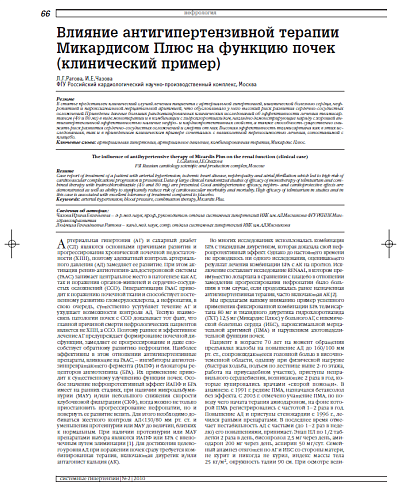
Влияние антигипертензивной терапии Микардисом Плюс на функцию почек (клинический пример)
Материалы доступны только для специалистов сферы здравоохранения.
Чтобы посмотреть материал полностью
Авторизуйтесь
или зарегистрируйтесь.
Аннотация
В статье представлен клинический случай лечения пациента с артериальной гипертонией, ишемической болезнью сердца, нефропатией и пароксизмальной мерцательной аритмией, что обусловливало у него высокий риск развития сердечно-сосудистых осложнений. Приведены данные больших рандомизированных клинических исследований об эффективности лечения телмисартаном (40 и 80 мг) в виде монотерапии и в комбинации с гидрохлоротиазидом, наглядно демонстрирующие наряду с хорошей антигипертензивной эффективностью наличие нефро- и кардиопротективных свойств, а также способность существенно снижать риск развития сердечно-сосудистых осложнений и смерти от них. Высокая эффективность телмисартана как в этих исследованиях, так и в приведенном клиническом примере сочеталась с великолепной переносимостью лечения, сопоставимой с плацебо.
Ключевые слова: артериальная гипертония, артериальное давление, комбинированная терапия, Микардис Плюс.
Keywords: arterial hypertension, blood pressure, combination therapy, Micardis Plus.
Ключевые слова: артериальная гипертония, артериальное давление, комбинированная терапия, Микардис Плюс.
________________________________________________
Keywords: arterial hypertension, blood pressure, combination therapy, Micardis Plus.
Полный текст
Список литературы
1. Диагностика и лечение артериальной гипертонии. Рекомендации Российского медицинского общества по артериальной гипертонии и Всероссийского научного общества кардиологов. Кардиоваск. тер. и проф. 2008; Прил. 2: 7 (6).
2. Brenner BM, Cooper ME, de Zeeuw D et al. RENAAL Study Investigators. Effects of losartan on renal and cardiovascular outcomes in patients with type 2 diabetes and nephropathy. N Engl J Med 2001; 345: 861–9.
3. Kakuta H, Sudoh K, Sasamata M, Yamagishi S. Telmisartan has the strongest binding affinity to angiotensin II type 1 receptor: comparison with other angiotensin II type 1 receptor blockers. Int J Clin Pharmacol Res 2005; 25 (1): 41–6.
4. Burnier M, Brunner HR. Angiotensin II receptor antagonists. Lancet 2000; 355: 637–45.
5. Brunner HR The new oral angiotensin II antagonist olmesartan medoxomil: a concise overview. J Hum Hypertens 2002; 16 (Suppl. 2): S13–6.
6. ONTARGET Investigators, Yusuf S, Teo KK, Pogue J et al. Telmisartan, ramipril, or both in patients at high risk for vascular events. N Engl J Med 2008; 358: 1547–59.
7. Galzerano D, Tammaro P, Viscovo L et al. Three-Dimensional Echocardiographic and Magnetic Resonance Assessment of the Effect of Telmisartan Compared With Carvedilol on Left Ventricular Mass. Am J Hypertens 2005; 18: 1563–9.
8. Bakris G et al. Abstr P-65, 22nd Ann Sci Meeting of the American Society of Hypertension, Chicago, 19–22 may 2007.
9. Uchida et al. Hypertens Res 2004; 27: 545–50.
10. Vitale et al. Cardiovasc Diabetol 2005; 4: 6.
11. Derosa et al. Hypertens Res 2004; 27: 457–64.
12. Benson et al. Hypertension 2004; 43: 993–1002.
13. Mancia. Am J Hypertens 2002; 15 (Supp. 1): 54.
14. Song JC, White CM. Olmesartan medoxomil (CS-866). An angiotensin II receptor blocker for treatment of hypertension. Formulary 2001; 36: 487–99.
15. Williams B, Gosse P, Lowe L, PRISMA I Study Group. The prospective, randomized investigation of the safety and efficacy of telmisartan versus ramipril using ambulatory blood pressure monitoring (PRISMA I). J Hypertens 2006; 24: 193–200.
16. Lacourci?re Y, Neutel JM, Davidai G, Koval S. A multicenter, 14-week study of telmisartan and ramipril in patients with mild-to-moderate hypertension using ambulatory blood pressure monitoring. Am J Hypertens 2006; 19: 104–12.
17. Gosse P, Neutel JM, Schumacher H et al. The effect of telmisartan and ramipril on early morning blood pressure surge: a pooled analysis of two randomized clinical trials. Blood Press Monit 2007; 12: 141–7.
18. Williams B, Lacourci?re Y, Schumacher H et al. Antihypertensive efficacy of telmisartan vs ramipril over the 24-h dosing period, including the critical early morning hours: a pooled analysis of the PRISMA I and II randomized trials. J Hum Hypertens 2009; 23 (9): 610–9.
19. Sharma AM, Davidson JA, Gavin JR III, DeSousa NJ. Comparison of the antihypertensive efficacy of telmisartan/hydrochlorothiazide vs valsartan/hydrochlorothiazide in high-risk overweight/obese patients with hypertension and type 2 diabetes. Hypertension 2005; 46: 898–9.
20. Muller JE, Stone PH, Turi ZG et al. Circadian variation in the frequency of onset of acute myocardial infarction. N Engl J Med 1985; 313: 1315–22.
21. Marler JR, Price TR, Clark GL et al. Morning increase in onset of ischemic stroke. Stroke 1989; 20: 473–6.
22. Lewington S, Clarke R, Qizilbash N et al. Age-specific relevance of usual blood pressure to vascular mortality: a meta-analysis of individual data for one million adults in 61 prospective studies. Lancet 2002; 360: 1903–13.
23. Staessen JA et al. Predicting cardiovascular risk using conventional vs ambulatory blood pressure in older patients with systolic hypertension. Systolic Hypertension in Europe Trial Investigators. JAMA 1999; 282: 539–46.
24. Neldam S, Edwards C, ATHOS Study Group. Telmisartan plus hydrochlorothiazide compared with amlodipine plus hydrochlorothiazide in older patients with systolic hypertension: Results from a large ABPM study. Am J Geriat Cardiol 2006; 15: 151–60.
25. Neutel JM et al. Telmisartan/hydrochlorothiazide in comparison with losartan/hydrochlorothiazide in managing patients with mild-to-moderate hypertension. Hypertens Res 2005; 28: 555–63.
26. Siscovick DS et al. Diuretic therapy for hypertension and the risk of primary cardiac arrest. N Engl J Med 1994; 330: 1852–7.
27. McGill JB, Reilly PA. Telmisartan plus hydrochlorothiazide versus telmisartan or hydrochlorothiazide monotherapy in patients with mild to moderate hypertension: a multicenter, randomized, double-blind, placebo-controlled, parallel-group trial. Clin Ther 2001; 23: 833–50.
28. Ragot S, Ezzaher A, Meunier A et al. Comparison of trough effect of telmisartan vs perindopril using self blood pressure measurement: EVERESTE study. J Hum Hypertens 2002; 16 (12): 865–73.
29. Redon J et al. 2004.
30. Cupisti A. et al. 2003.
31. Makino H et al. Prevention of transition from incipient to overt nephropathy with telmisartan in patients with type 2 diabetes. Diabetes Care 2007; 30: 1577–8.
32. Rossing K et al. Progression of nephropathy in type 2 diabetic patients. Kidney Int 2004; 66: 1596–605.
33. Barnett A et al. Angiotensin-receptor blockade versus converting-enzyme inhibition in type 2 diabetes and nephropathy. N Engl J Med 2004; 351: 1952–61.
34. Barnett AH. Preventing renal complications in diabetic patients: the Diabetics Exposed to Telmisartan And enalaprIL (DETAIL) study. Acta Diabetol 2005; 42 (Suppl. 1): S42–9.
35. Abbott KC, Bakris GL. What have we learned from the current trials? Med Clin North Am 2004; 88: 189–207.
36. Galle J, Schwedhelm E, Pinnetti S et al. Antiproteinuric effects of telmisartan versus valsartan in patients with type 2 diabetes and overt nephropathy. Nephrology Dialysis Transplantation 2008; 23 (10): 3174–83.
37. Bakris G, Burgess E, Weir M et al.; on behalf of the AMADEO Study Investigators. Telmisartan is more effective than losartan in reducing proteinuria in patients with diabetic nephropathy. Kidney Int 2008; 74 (3): 364–9.
38. Stehouwer CD. Microalbuminuria is associated with impaired brachial artery, flow-mediated vasodilation in elderly individuals without and with diabetes: further evidence for a link between microalbuminuria and endothelial dysfunction–the Hoorn Study. Kidney Int Suppl 2004; 66: S42–4.
39. Schmieder RE, Delles C, Mimran A et al. Impact of telmisartan versus ramipril on renal endothelial function in patients with hypertension and type 2 diabetes. Diabetes Care 2007; 30 (6): 1351–6.
40. Sharma AM, Hollander A, Koster J; on behalf of the Efficacy and Safety in Patients with Renal Impairment treated with Telmisartan (ESPRIT) Study Group. Telmisartan in patients with mild/moderate hypertension and chronic kidney disease. Clinical Nephrology 2005; 63 (4): 250–7.
41. Mann JFE, Schmieder RE, McQueen M et al.; on behalf of the ONTARGET investigators. Renal outcomes with telmisartan, ramipril, or both, in people at high vascular risk (the ONTARGET study): a multicentre, randomised, double-blind, controlled trial. Lancet 2008; 372 (9638): 547–53.
42. Telmisartan Randomised AssessmeNt Study in ACE iNtolerant subjects with cardiovascular Disease (TRANSCEND) Investigators, Yusuf S, Teo K, Anderson C et al. Effects of the angiotensin-receptor blocker telmisartan on cardiovascular events in high-risk patients intolerant to angiotensin-converting enzyme inhibitors: a randomised controlled trial. Lancet 2008; 372 (9644): 1174–83.
2. Brenner BM, Cooper ME, de Zeeuw D et al. RENAAL Study Investigators. Effects of losartan on renal and cardiovascular outcomes in patients with type 2 diabetes and nephropathy. N Engl J Med 2001; 345: 861–9.
3. Kakuta H, Sudoh K, Sasamata M, Yamagishi S. Telmisartan has the strongest binding affinity to angiotensin II type 1 receptor: comparison with other angiotensin II type 1 receptor blockers. Int J Clin Pharmacol Res 2005; 25 (1): 41–6.
4. Burnier M, Brunner HR. Angiotensin II receptor antagonists. Lancet 2000; 355: 637–45.
5. Brunner HR The new oral angiotensin II antagonist olmesartan medoxomil: a concise overview. J Hum Hypertens 2002; 16 (Suppl. 2): S13–6.
6. ONTARGET Investigators, Yusuf S, Teo KK, Pogue J et al. Telmisartan, ramipril, or both in patients at high risk for vascular events. N Engl J Med 2008; 358: 1547–59.
7. Galzerano D, Tammaro P, Viscovo L et al. Three-Dimensional Echocardiographic and Magnetic Resonance Assessment of the Effect of Telmisartan Compared With Carvedilol on Left Ventricular Mass. Am J Hypertens 2005; 18: 1563–9.
8. Bakris G et al. Abstr P-65, 22nd Ann Sci Meeting of the American Society of Hypertension, Chicago, 19–22 may 2007.
9. Uchida et al. Hypertens Res 2004; 27: 545–50.
10. Vitale et al. Cardiovasc Diabetol 2005; 4: 6.
11. Derosa et al. Hypertens Res 2004; 27: 457–64.
12. Benson et al. Hypertension 2004; 43: 993–1002.
13. Mancia. Am J Hypertens 2002; 15 (Supp. 1): 54.
14. Song JC, White CM. Olmesartan medoxomil (CS-866). An angiotensin II receptor blocker for treatment of hypertension. Formulary 2001; 36: 487–99.
15. Williams B, Gosse P, Lowe L, PRISMA I Study Group. The prospective, randomized investigation of the safety and efficacy of telmisartan versus ramipril using ambulatory blood pressure monitoring (PRISMA I). J Hypertens 2006; 24: 193–200.
16. Lacourci?re Y, Neutel JM, Davidai G, Koval S. A multicenter, 14-week study of telmisartan and ramipril in patients with mild-to-moderate hypertension using ambulatory blood pressure monitoring. Am J Hypertens 2006; 19: 104–12.
17. Gosse P, Neutel JM, Schumacher H et al. The effect of telmisartan and ramipril on early morning blood pressure surge: a pooled analysis of two randomized clinical trials. Blood Press Monit 2007; 12: 141–7.
18. Williams B, Lacourci?re Y, Schumacher H et al. Antihypertensive efficacy of telmisartan vs ramipril over the 24-h dosing period, including the critical early morning hours: a pooled analysis of the PRISMA I and II randomized trials. J Hum Hypertens 2009; 23 (9): 610–9.
19. Sharma AM, Davidson JA, Gavin JR III, DeSousa NJ. Comparison of the antihypertensive efficacy of telmisartan/hydrochlorothiazide vs valsartan/hydrochlorothiazide in high-risk overweight/obese patients with hypertension and type 2 diabetes. Hypertension 2005; 46: 898–9.
20. Muller JE, Stone PH, Turi ZG et al. Circadian variation in the frequency of onset of acute myocardial infarction. N Engl J Med 1985; 313: 1315–22.
21. Marler JR, Price TR, Clark GL et al. Morning increase in onset of ischemic stroke. Stroke 1989; 20: 473–6.
22. Lewington S, Clarke R, Qizilbash N et al. Age-specific relevance of usual blood pressure to vascular mortality: a meta-analysis of individual data for one million adults in 61 prospective studies. Lancet 2002; 360: 1903–13.
23. Staessen JA et al. Predicting cardiovascular risk using conventional vs ambulatory blood pressure in older patients with systolic hypertension. Systolic Hypertension in Europe Trial Investigators. JAMA 1999; 282: 539–46.
24. Neldam S, Edwards C, ATHOS Study Group. Telmisartan plus hydrochlorothiazide compared with amlodipine plus hydrochlorothiazide in older patients with systolic hypertension: Results from a large ABPM study. Am J Geriat Cardiol 2006; 15: 151–60.
25. Neutel JM et al. Telmisartan/hydrochlorothiazide in comparison with losartan/hydrochlorothiazide in managing patients with mild-to-moderate hypertension. Hypertens Res 2005; 28: 555–63.
26. Siscovick DS et al. Diuretic therapy for hypertension and the risk of primary cardiac arrest. N Engl J Med 1994; 330: 1852–7.
27. McGill JB, Reilly PA. Telmisartan plus hydrochlorothiazide versus telmisartan or hydrochlorothiazide monotherapy in patients with mild to moderate hypertension: a multicenter, randomized, double-blind, placebo-controlled, parallel-group trial. Clin Ther 2001; 23: 833–50.
28. Ragot S, Ezzaher A, Meunier A et al. Comparison of trough effect of telmisartan vs perindopril using self blood pressure measurement: EVERESTE study. J Hum Hypertens 2002; 16 (12): 865–73.
29. Redon J et al. 2004.
30. Cupisti A. et al. 2003.
31. Makino H et al. Prevention of transition from incipient to overt nephropathy with telmisartan in patients with type 2 diabetes. Diabetes Care 2007; 30: 1577–8.
32. Rossing K et al. Progression of nephropathy in type 2 diabetic patients. Kidney Int 2004; 66: 1596–605.
33. Barnett A et al. Angiotensin-receptor blockade versus converting-enzyme inhibition in type 2 diabetes and nephropathy. N Engl J Med 2004; 351: 1952–61.
34. Barnett AH. Preventing renal complications in diabetic patients: the Diabetics Exposed to Telmisartan And enalaprIL (DETAIL) study. Acta Diabetol 2005; 42 (Suppl. 1): S42–9.
35. Abbott KC, Bakris GL. What have we learned from the current trials? Med Clin North Am 2004; 88: 189–207.
36. Galle J, Schwedhelm E, Pinnetti S et al. Antiproteinuric effects of telmisartan versus valsartan in patients with type 2 diabetes and overt nephropathy. Nephrology Dialysis Transplantation 2008; 23 (10): 3174–83.
37. Bakris G, Burgess E, Weir M et al.; on behalf of the AMADEO Study Investigators. Telmisartan is more effective than losartan in reducing proteinuria in patients with diabetic nephropathy. Kidney Int 2008; 74 (3): 364–9.
38. Stehouwer CD. Microalbuminuria is associated with impaired brachial artery, flow-mediated vasodilation in elderly individuals without and with diabetes: further evidence for a link between microalbuminuria and endothelial dysfunction–the Hoorn Study. Kidney Int Suppl 2004; 66: S42–4.
39. Schmieder RE, Delles C, Mimran A et al. Impact of telmisartan versus ramipril on renal endothelial function in patients with hypertension and type 2 diabetes. Diabetes Care 2007; 30 (6): 1351–6.
40. Sharma AM, Hollander A, Koster J; on behalf of the Efficacy and Safety in Patients with Renal Impairment treated with Telmisartan (ESPRIT) Study Group. Telmisartan in patients with mild/moderate hypertension and chronic kidney disease. Clinical Nephrology 2005; 63 (4): 250–7.
41. Mann JFE, Schmieder RE, McQueen M et al.; on behalf of the ONTARGET investigators. Renal outcomes with telmisartan, ramipril, or both, in people at high vascular risk (the ONTARGET study): a multicentre, randomised, double-blind, controlled trial. Lancet 2008; 372 (9638): 547–53.
42. Telmisartan Randomised AssessmeNt Study in ACE iNtolerant subjects with cardiovascular Disease (TRANSCEND) Investigators, Yusuf S, Teo K, Anderson C et al. Effects of the angiotensin-receptor blocker telmisartan on cardiovascular events in high-risk patients intolerant to angiotensin-converting enzyme inhibitors: a randomised controlled trial. Lancet 2008; 372 (9644): 1174–83.
Авторы
Л.Г.Ратова, И.Е.Чазова
ФГУ Российский кардиологический научно-производственный комплекс, Москва
FSI Russian cardiology scientific and production complex, Moscow
ФГУ Российский кардиологический научно-производственный комплекс, Москва
________________________________________________
FSI Russian cardiology scientific and production complex, Moscow
Цель портала OmniDoctor – предоставление профессиональной информации врачам, провизорам и фармацевтам.