

Материалы доступны только для специалистов сферы здравоохранения.
Чтобы посмотреть материал полностью
Авторизуйтесь
или зарегистрируйтесь.
Торасемид: дополнительные преимущества применения при артериальной гипертензии у женщин в постменопаузе - Журнал Системные Гипертензии Том 10, №2
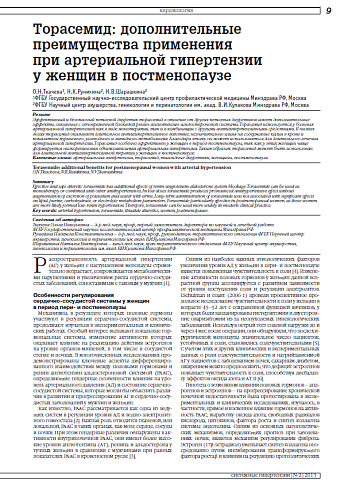
Торасемид: дополнительные преимущества применения при артериальной гипертензии у женщин в постменопаузе
Материалы доступны только для специалистов сферы здравоохранения.
Чтобы посмотреть материал полностью
Авторизуйтесь
или зарегистрируйтесь.
Аннотация
Эффективный и безопасный петлевой диуретик торасемид в отличие от других петлевых диуретиков имеет дополнительные эффекты, связанные с одновременной блокадой ренин-ангиотензин-альдостероновой системы. Торасемид используется у больных артериальной гипертензией как в виде монотерапии, так и в комбинации с другими антигипертензивными средствами. В низких дозах торасемид оказывает длительное антигипертензивное действие, незначительно влияя на содержание калия в крови и показатели пуринового, углеводного и липидного метаболизма. Благодаря этому он может использоваться для длительного лечения артериальной гипертензии. Торасемид особенно эффективен у женщин в период постменопаузы, так как у этих женщин чаще формируется низкорениновая объемозависимая артериальная гипертензия. Таким образом, торасемид может быть использован для длительной антигипертензивной терапии у женщин в постменопаузе.
Ключевые слова: артериальная гипертензия, торасемид, тиазидные диуретики, женщины, постменопауза.
Key words: arterial hypertension, torasemide, thiazide diuretics, women, postmenopause.
Ключевые слова: артериальная гипертензия, торасемид, тиазидные диуретики, женщины, постменопауза.
________________________________________________
Key words: arterial hypertension, torasemide, thiazide diuretics, women, postmenopause.
Полный текст
Список литературы
1. Vasan RS, Beiser A, Seshadri S et al. Residual lifetime risk for developing hypertension in middle-aged women and men: the Framingham Heart Study. JAMA 2002; 287: 1003–10.
2. Navar LG, Harrison-Bernard LM, Nishiyama A, Kobori H. Regulation of intrarenal angiotensin II in hypertension. Hypertension 2002; 39 (2 Pt 2): 316–22.
3. Thethi T, Kamiyama M, Kobori H. The link between the renin-angiotensin-aldosterone system and renal injury in obesity and the metabolic syndrome. Curr Hypertens Rep 2012; 14 (2): 160–9.
4. Weinberger MH. Pathogenesis of salt sensitivity of blood pressure. Curr Hypertens Rep 2006; 8: 166–70.
5. Schulman IH, Aranda P, Raij L et al. Surgical menopause increases salt sensitivity of blood pressure. Hypertension 2006; 47: 1168–74.
6. Schulman IH, Raij L. Salt sensitivity and hypertension after menopause: role of nitric oxide and angiotensin II. Am J Nephrol 2006; 26: 170–80.
7. Grzegorczyk K, Krajewska M, Weyde W et al. Gender and kidney diseases: the clinical importance and mechanisms of modifying effects. Postepy Hig Med Dosw (Online) 2011; 65: 849–57.
8. Boschitsch E, Mayerhofer S, Magometschnigg D. Hypertension in women: the role of progesterone and aldosterone. Climacteric 2010; 13: 307–13.
9. Rossi GP, Pessina AC, Heagerthy AM. Primary aldosteronism an updateon screening diagnosis and treatment. J Hypertens 2008; 26: 613–21.
10. Joffe HV, Alder KA. Effect of aldosterone and mineralocorticoid receptor blockade on vascular inflammation. Heart Fail Rev 2005; 10: 31–7.
11. Schlaich MP, Schobel HP, Hilgers K, Schmieder RE. Impact of aldosterone on left ventricular structure and function in young normotensive and mildly hypertensive subjects. Am J Cardiol 2000; 85: 1199–206. Freel EM, Connell JM. Mechanisms of hypertension: the expanding role of aldosterone. J Am Soc Nephrol 2004; 15: 1993–2001.
12. Rahmouni K, Correia MLG, Haynes WG, Mark AL. Obesity-associated hypertension. New insights into mechanisms. Hypertension 2005; 45: 9–14.
13. Brilla CG, Weber KT. Mineralocorticoid excess, dietary sodium, and myocardial fibrosis. J Lab Clin Med 1992; 120 (6): 893–901.
14. Calhoun DA. Aldosterone and cardiovascular disease: smoke and fire. Circulation 2006; 114: 2572–4.
15. Christine Jellis. J Am Coll Cardiol 2010; 56 (2).
16. Stas S, Whaley-Connell A, Habibi J et al. Mineralocorticoid receptor blockade attenuates chronic overexpression of the renin-angiotensin-aldosterone system stimulation of reduced nicotinamide adenine dinucleotide phosphate oxidase and cardiac remodeling. Endocrinology 2007; 148 (8): 3773–80.
17. Lastra G, Whaley-Connell A, Manrique C et al. Low-dose spironolactone reduces reactive oxygen species generation and improves insulin-stimulated glucose transport in skeletal muscle in the TG(mRen2)27 rat. Am J Physiol Endocrinol Metab 2008; 295 (1): E110–6.
18. Bochud M, Nussberger J, Bovet P et al. Plasma aldosterone is independently associated with the metabolic syndrome. Hypertension 2006; 48 (2): 239–45.
19. Fujita T. Mineralocorticoid receptors, salt-sensitive hypertension and metabolic syndrome. Hypertension 2010; 55 (4): 813–8.
20. Zannad F, Alla F, Dousset B et al. Limitation of excessive exracellular matrix turnover may contribute to survival benefit of spironolactone therapy in patients with congestive heart failure: insight from the randomized aldactone evaluation study (RALES). Circulation 2000; 102: 2700–6.
21. Taddei S, Virdis A, Ghiadoni L et al. Effects of antihypertensive drugs on endothelial dysfunction: clinical implications. Drugs 2002; 62: 265–84.
22. Landmesser U, Drexler H. Effect of angiotensin II type 1 receptor antagonism on endothelial function: role of bradykinin and nitric oxide. J Hypertens (Suppl.) 2006; 24: S39–S43. Rizzoni D, Porteri E, De Ciuceis C et al. Effect of treatment with candesartan or enalapril on subcutaneous small artery structure in hypertensive patients with noninsulin-dependent diabetes mellitus. Hypertension 2005; 45: 659–65.
23. Rossi R, Nuzzo A, Iaccarino D et al. Effects of antihypertensive treatment on endothelial function in postmenopausal hypertensive women. A significant role for aldosterone inhibition. J Renin-Angiotensin-Aldosterone System 2011; 12: 446.
24. Cachofeiro V, Miana M, de Las Heras N et al. Aldosterone and the vascular system. J Steroid Biochem Mol Biol 2008; 109: 331–5.
25. Pitt B, Reichek N, Willenbrock R et al. Effects of eplerenone, enalapril, and eplerenone/enalapril in patients with essential hypertension and left ventricular hypertrophy: the 4E-left ventricular hypertrophy study. Circulation 2003; 108: 1831–8.
26. Zillich AJ, Garg J, Basu S et al. Thiazide diuretics, potassium, and the development of diabetes: a quantitative review. Hypertension 2006; 48 (2): 219–24.
27. Fortuño A, Muñiz P, Ravassa S et al. Torasemide inhibits angiotensin II-induced vasoconstriction and intracellular calcium increase in the aorta of spontaneously hypertensive rats. Hypertension 1999; 34 (1):138–43.
28. Bоlke T, Achhammer I. Torasemide: review of its pharmacology and therapeutic use. Drugs Today 1994; 8: 1–28.
29. López B. J Am Coll Cardiol 2004; 43 (11): 2028–35.
30. DiNicolantonio JJ. Should torsemide be the loop diuretic of choice in systolic heart failure? Future Cardiol 2012; 8 (5): 707–28.
31. Kasama S, Toyama T, Hatori T et al. Effects of torasemide on cardiac sympathetic nerve activity and left ventricular remodelling in patients with congestive heart failure. Heart 2006; 92 (10): 1434–40.
32. Cosin J, Diez J. On behalf of the TORIC investigators. Eur J Heart Fail 2002; 4: 507–13.
33. Hermida RC, Ayala DE, Mojón A et al. Comparison of the effects on ambulatory blood pressure of awakening versus bedtime administration of torasemide in essential hypertension. Chronobiol Int 2008; 25 (6): 950–70.
34. Karagueuzian HS. Targeting cardiac fibrosis: a new frontier in antiarrhythmic therapy? Am J Cardiovasc Dis 2011; 1 (2): 101–9.
35. Werner U, Werner D, Heinbüchner S et al. Gender is an important determinant of the disposition of the loop diuretic torasemide. J Clin Pharmacol 2010; 50 (2): 160–8.
2. Navar LG, Harrison-Bernard LM, Nishiyama A, Kobori H. Regulation of intrarenal angiotensin II in hypertension. Hypertension 2002; 39 (2 Pt 2): 316–22.
3. Thethi T, Kamiyama M, Kobori H. The link between the renin-angiotensin-aldosterone system and renal injury in obesity and the metabolic syndrome. Curr Hypertens Rep 2012; 14 (2): 160–9.
4. Weinberger MH. Pathogenesis of salt sensitivity of blood pressure. Curr Hypertens Rep 2006; 8: 166–70.
5. Schulman IH, Aranda P, Raij L et al. Surgical menopause increases salt sensitivity of blood pressure. Hypertension 2006; 47: 1168–74.
6. Schulman IH, Raij L. Salt sensitivity and hypertension after menopause: role of nitric oxide and angiotensin II. Am J Nephrol 2006; 26: 170–80.
7. Grzegorczyk K, Krajewska M, Weyde W et al. Gender and kidney diseases: the clinical importance and mechanisms of modifying effects. Postepy Hig Med Dosw (Online) 2011; 65: 849–57.
8. Boschitsch E, Mayerhofer S, Magometschnigg D. Hypertension in women: the role of progesterone and aldosterone. Climacteric 2010; 13: 307–13.
9. Rossi GP, Pessina AC, Heagerthy AM. Primary aldosteronism an updateon screening diagnosis and treatment. J Hypertens 2008; 26: 613–21.
10. Joffe HV, Alder KA. Effect of aldosterone and mineralocorticoid receptor blockade on vascular inflammation. Heart Fail Rev 2005; 10: 31–7.
11. Schlaich MP, Schobel HP, Hilgers K, Schmieder RE. Impact of aldosterone on left ventricular structure and function in young normotensive and mildly hypertensive subjects. Am J Cardiol 2000; 85: 1199–206. Freel EM, Connell JM. Mechanisms of hypertension: the expanding role of aldosterone. J Am Soc Nephrol 2004; 15: 1993–2001.
12. Rahmouni K, Correia MLG, Haynes WG, Mark AL. Obesity-associated hypertension. New insights into mechanisms. Hypertension 2005; 45: 9–14.
13. Brilla CG, Weber KT. Mineralocorticoid excess, dietary sodium, and myocardial fibrosis. J Lab Clin Med 1992; 120 (6): 893–901.
14. Calhoun DA. Aldosterone and cardiovascular disease: smoke and fire. Circulation 2006; 114: 2572–4.
15. Christine Jellis. J Am Coll Cardiol 2010; 56 (2).
16. Stas S, Whaley-Connell A, Habibi J et al. Mineralocorticoid receptor blockade attenuates chronic overexpression of the renin-angiotensin-aldosterone system stimulation of reduced nicotinamide adenine dinucleotide phosphate oxidase and cardiac remodeling. Endocrinology 2007; 148 (8): 3773–80.
17. Lastra G, Whaley-Connell A, Manrique C et al. Low-dose spironolactone reduces reactive oxygen species generation and improves insulin-stimulated glucose transport in skeletal muscle in the TG(mRen2)27 rat. Am J Physiol Endocrinol Metab 2008; 295 (1): E110–6.
18. Bochud M, Nussberger J, Bovet P et al. Plasma aldosterone is independently associated with the metabolic syndrome. Hypertension 2006; 48 (2): 239–45.
19. Fujita T. Mineralocorticoid receptors, salt-sensitive hypertension and metabolic syndrome. Hypertension 2010; 55 (4): 813–8.
20. Zannad F, Alla F, Dousset B et al. Limitation of excessive exracellular matrix turnover may contribute to survival benefit of spironolactone therapy in patients with congestive heart failure: insight from the randomized aldactone evaluation study (RALES). Circulation 2000; 102: 2700–6.
21. Taddei S, Virdis A, Ghiadoni L et al. Effects of antihypertensive drugs on endothelial dysfunction: clinical implications. Drugs 2002; 62: 265–84.
22. Landmesser U, Drexler H. Effect of angiotensin II type 1 receptor antagonism on endothelial function: role of bradykinin and nitric oxide. J Hypertens (Suppl.) 2006; 24: S39–S43. Rizzoni D, Porteri E, De Ciuceis C et al. Effect of treatment with candesartan or enalapril on subcutaneous small artery structure in hypertensive patients with noninsulin-dependent diabetes mellitus. Hypertension 2005; 45: 659–65.
23. Rossi R, Nuzzo A, Iaccarino D et al. Effects of antihypertensive treatment on endothelial function in postmenopausal hypertensive women. A significant role for aldosterone inhibition. J Renin-Angiotensin-Aldosterone System 2011; 12: 446.
24. Cachofeiro V, Miana M, de Las Heras N et al. Aldosterone and the vascular system. J Steroid Biochem Mol Biol 2008; 109: 331–5.
25. Pitt B, Reichek N, Willenbrock R et al. Effects of eplerenone, enalapril, and eplerenone/enalapril in patients with essential hypertension and left ventricular hypertrophy: the 4E-left ventricular hypertrophy study. Circulation 2003; 108: 1831–8.
26. Zillich AJ, Garg J, Basu S et al. Thiazide diuretics, potassium, and the development of diabetes: a quantitative review. Hypertension 2006; 48 (2): 219–24.
27. Fortuño A, Muñiz P, Ravassa S et al. Torasemide inhibits angiotensin II-induced vasoconstriction and intracellular calcium increase in the aorta of spontaneously hypertensive rats. Hypertension 1999; 34 (1):138–43.
28. Bоlke T, Achhammer I. Torasemide: review of its pharmacology and therapeutic use. Drugs Today 1994; 8: 1–28.
29. López B. J Am Coll Cardiol 2004; 43 (11): 2028–35.
30. DiNicolantonio JJ. Should torsemide be the loop diuretic of choice in systolic heart failure? Future Cardiol 2012; 8 (5): 707–28.
31. Kasama S, Toyama T, Hatori T et al. Effects of torasemide on cardiac sympathetic nerve activity and left ventricular remodelling in patients with congestive heart failure. Heart 2006; 92 (10): 1434–40.
32. Cosin J, Diez J. On behalf of the TORIC investigators. Eur J Heart Fail 2002; 4: 507–13.
33. Hermida RC, Ayala DE, Mojón A et al. Comparison of the effects on ambulatory blood pressure of awakening versus bedtime administration of torasemide in essential hypertension. Chronobiol Int 2008; 25 (6): 950–70.
34. Karagueuzian HS. Targeting cardiac fibrosis: a new frontier in antiarrhythmic therapy? Am J Cardiovasc Dis 2011; 1 (2): 101–9.
35. Werner U, Werner D, Heinbüchner S et al. Gender is an important determinant of the disposition of the loop diuretic torasemide. J Clin Pharmacol 2010; 50 (2): 160–8.
Авторы
О.Н.Ткачева1, Н.К.Рунихина2, Н.В.Шарашкина2
1 ФГБУ Государственный научно-исследовательский центр профилактической медицины Минздрава РФ, Москва
2 ФГБУ Научный центр акушерства, гинекологии и перинатологии им. акад. В.И.Кулакова Минздрава РФ, Москва
1 ФГБУ Государственный научно-исследовательский центр профилактической медицины Минздрава РФ, Москва
2 ФГБУ Научный центр акушерства, гинекологии и перинатологии им. акад. В.И.Кулакова Минздрава РФ, Москва
________________________________________________
Цель портала OmniDoctor – предоставление профессиональной информации врачам, провизорам и фармацевтам.