

Материалы доступны только для специалистов сферы здравоохранения.
Чтобы посмотреть материал полностью
Авторизуйтесь
или зарегистрируйтесь.
Лечение синдрома раздраженного кишечника: равнение на пробиотики - Справочник поликлинического врача №7 (2014)
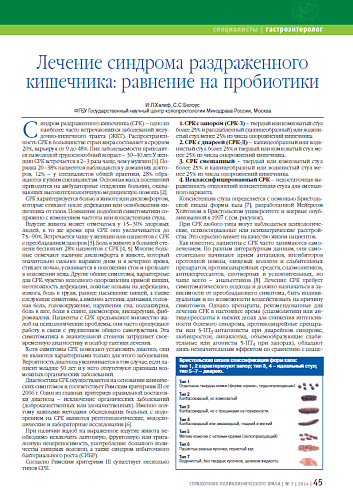
Лечение синдрома раздраженного кишечника: равнение на пробиотики
И.Л.Халиф, С.С.Белоус. Лечение синдрома раздраженного кишечника: равнение на пробиотики. Справочник поликлинического врача. 2014; 7: 45–49.
Материалы доступны только для специалистов сферы здравоохранения.
Чтобы посмотреть материал полностью
Авторизуйтесь
или зарегистрируйтесь.
Полный текст
Список литературы
1. Bixquert Jiménez M. Treatment of irritable bowel syndrome with probiotics. An etiopathogenic approach at last? Rev Esp Enferm Dig 2009; 101: 553–64 [PMID: 19785495].
2. Gilkin RJ. The spectrum of irritable bowel syndrome: A clinical review. Clin Ther 2005; 27: 1696–1709 [PMID: 16368443. DOI: 10.1016/j.clinthera.2005.11.012].
3. Hammer J, Eslick GD, Howell SC et al. Diagnostic yield of alarm features in irritable bowel syndrome and functional dyspepsia. Gut 2004; 53: 666–72 [PMID: 15082584].
4. Maratka Z. Abdominal bloating and distension in functional gastrointestinal disorders – epidemiology and possible mechanisms. Aliment Pharmacol Ther 2008; 27: 713–4; author reply 714 [PMID: 18194494. DOI: 10.1111/ j.1365-2036.2008.03616.x].
5. Agrawal A, Whorwell PJ. Review article: abdominal bloating and distension in functional gastrointestinal disorders – epidemiology and exploration of possible mechanisms. Aliment Pharmacol Ther 2008; 27: 2–10 [PMID: 17931344. DOI: 10.1111/j.1365-2036.2007.03549.x].
6. Longstreth GF, Thompson WG, Chey WD et al. Functional bowel disorders. Gastroenterology 2006; 130: 1480–91 [PMID: 16678561. DOI: 10.1053/ j.gastro.2005.11.061].
7. Парфенов А.И., Ручкина И.Н., Сильвестрова С.Ю. Профилактика и лечение функциональных запоров в свете консенсуса Рим III. РМЖ. 2006; 8 (2): 109.
8. Harris LA, Hansel S, DiBaise J, Crowell MD. Irritable bowel syndrome and chronic constipation: emerging drugs, devices, and surgical treatments. Curr Gastroenterol Rep 2006; 8: 282–90 [PMID: 16888869].
9. Hussain Z, Quigley EM. Systematic review: Complementary and alternative medicine in the irritable bowel syndrome. Aliment Pharmacol Ther 2006; 23: 465–71 [PMID: 16441466].
10. Jarcho JM, Chang L, Berman M et al. Neural and psychological predictors of treatment response in irritable bowel syndrome patients with a 5-HT3-receptor antagonist: a pilot study. Aliment Pharmacol Ther 2008; 28: 344–52 [PMID: 19086332].
11. Ford AC, Talley NJ, Spiegel BM et al. Effect of fibre, antispasmodics, and peppermint oil in the treatment of irritable bowel syndrome: systematic review and meta-analysis. BMJ 2008; 337: a2313 [PMID: 19008265. DOI: 10.1136/bmj.a2313].
12. Jones R. Treatment of irritable bowel syndrome in primary care. BMJ 2008; 337: a2213 [PMID: 19008267. DOI: 10.1136/bmj.a2213].
13. Layer P, Keller J, Mueller-Lissner S et al. Tegaserod: long-term treatment for irritable bowel syndrome patients with constipation in primary care. Digestion 2005; 71: 238–44 [PMID: 16024929. DOI: 10.1159/000087049].
14. Hoveyda N, Heneghan C, Mahtani KR et al. A systematic review and meta-analysis: probiotics in the treatment of irritable bowel syndrome. BMC Gastroenterol 2009; 9: 15 [PMID: 19220890. DOI: 10.1186/1471-230X-9-15].
15. Полуэктова Е.А., Кучумова С.Ю., Шептулин А.А., Ивашкин В.Т. Лечение синдрома раздраженного кишечника с позиций современных представлений о патогенезе заболевания. Рос. журн. гастроэнтерологии, гепатологии, колопроктологии. 2013; 23 (1): 57–65.
16. Quigley EM. Bacterial flora in irritable bowel syndrome: role in pathophysiology, implications for management. J Dig Dis 2007; 8: 2–7 [PMID: 17261128. DOI: 10.1111/ j.1443-9573.2007.00277.x].
17. Kassinen A, Krogius-Kurikka L, Mäkivuokko H et al. The fecal microbiota of irritable bowel syndrome patients differs significantly from that of healthy subjects. Gastroenterology 2007; 133: 24–33 [PMID: 17631127. DOI: 10.1053/j.gastro.2007.04.005].
18. Ардатская М.Д., Минушкин О.М. Дисбактериоз кишечника: эволюция взглядов. Современные принципы диагностики и фармакологической коррекции. Cons. Med. Гастроэнтерология. (Прил.) 2006; 1: 4–17.
19. Фролов С.А., Гатауллин И.Г., Савинков В.Г., Мальцева Н.В. Особенности микрофлоры, связанной со злокачественными опухолями толстой кишки. Колопроктология. 2013; 4: 18–21.
20. Balsari A, Ceccarelli A, Dubini F et al. The fecal microbial population in the irritable bowel syndrome. Microbiologica 1982; 5: 185e94.
21. Wyatt GM, Bayliss CE, Lakey AF et al. The faecal flora of two patients with food-related irritable bowel syndrome during challenge with symptom-provoking foods. J Med Microbiol 1988; 26: 295e9.
22. Rajilic-Stojanovic M, Biagi E, Heilig HG et al. Global and deep molecular analysis of microbiota signatures in fecal samples from patients with irritable bowel syndrome. Gastroenterology 2011; 141: 1792e801.
23. Шептулин А.А., Кучумова С.Ю. Новое в изучении проблемы синдрома раздраженного кишечника (По материалам докладов 16-й Объединенной Европейской Недели Гастроэнтерологии, Вена, 2008). Рос. журн. гастроэнтерологии, гепатологии, колопроктологии. 2009; 19 (4): 81–5.
24. Metchnikoff E. In: Mitchell PC editor. The Prolongation of Life. Optimistic Studies. New York: G P Putnam’s Sons, 1910.
25. Brandt LJ, Chey WD, Foxx-Orenstein AE et al. American College of Gastroenterology Task Force on Irritable Bowel Syndrome. An evidence-based position statement on the management of irritable bowel syndrome. Am J Gastroenterol 2009; 104 (Suppl. 1): S1–S35.
26. Spiller R, Garsed K. Postinfectious irritable bowel syndrome. Gastroenterology 2009; 136: 1979–88.
27. Hoveyda N, Heneghan C, Mahani KR et al. A systematic review and meta-analysis: probiotics in the treatment of irritable bowel syndrome. BMC Gastroenterol 2009; 9: 15–26.
28. Moayyedi P, Ford AC, Talley NJ et al. The efficacy of probiotics in the treatment of irritable bowel syndrome: a systematic review. Gut 2010; 59: 325–32.
29. Ki Cha B, Mun Jung S, Hwan Choi C et al. The effect of a multispecies probiotic mixture on the symptoms and fecal microbiota in diarrhea-dominant irritable bowel syndrome: a randomized, double-blind, placebo-controlled trial. J Clin Gastreonterol 2012; 46: 220–7.
30. Ивашкин В.Т., Шелыгин Ю.А., Баранская Е.К. и др. Клинические рекомендации Российской гастроэнтерологической ассоциации, Ассоциации колопроктологов России по диагностике и лечению больных с синдромом раздраженного кишечника. Рос. журн. гастроэнтерологии, гепатологии, колопроктологии. 2014; 24 (2): 92–101.
31. McKenzie YA, Alder A, Anderson W et al. British Dietetic Association evidence-based guidelines for the dietary management of irritable bowel syndrome in adults. J Hum Nutr Diet 2012; 25: 260–74.
32. Ciorba MA. A gastroenterologist's guide to probiotics. Clin Gastroenterol Hepatol 2012; 10: 960–8.
33. Яковенко Э.П., Аникина Е.В., Яковенко А.В. и др. Инновационные многовидовые мультиштаммовые пробиотики в клинической практике. Лечащий врач. 2014; 5.
2. Gilkin RJ. The spectrum of irritable bowel syndrome: A clinical review. Clin Ther 2005; 27: 1696–1709 [PMID: 16368443. DOI: 10.1016/j.clinthera.2005.11.012].
3. Hammer J, Eslick GD, Howell SC et al. Diagnostic yield of alarm features in irritable bowel syndrome and functional dyspepsia. Gut 2004; 53: 666–72 [PMID: 15082584].
4. Maratka Z. Abdominal bloating and distension in functional gastrointestinal disorders – epidemiology and possible mechanisms. Aliment Pharmacol Ther 2008; 27: 713–4; author reply 714 [PMID: 18194494. DOI: 10.1111/ j.1365-2036.2008.03616.x].
5. Agrawal A, Whorwell PJ. Review article: abdominal bloating and distension in functional gastrointestinal disorders – epidemiology and exploration of possible mechanisms. Aliment Pharmacol Ther 2008; 27: 2–10 [PMID: 17931344. DOI: 10.1111/j.1365-2036.2007.03549.x].
6. Longstreth GF, Thompson WG, Chey WD et al. Functional bowel disorders. Gastroenterology 2006; 130: 1480–91 [PMID: 16678561. DOI: 10.1053/ j.gastro.2005.11.061].
7. Парфенов А.И., Ручкина И.Н., Сильвестрова С.Ю. Профилактика и лечение функциональных запоров в свете консенсуса Рим III. РМЖ. 2006; 8 (2): 109.
8. Harris LA, Hansel S, DiBaise J, Crowell MD. Irritable bowel syndrome and chronic constipation: emerging drugs, devices, and surgical treatments. Curr Gastroenterol Rep 2006; 8: 282–90 [PMID: 16888869].
9. Hussain Z, Quigley EM. Systematic review: Complementary and alternative medicine in the irritable bowel syndrome. Aliment Pharmacol Ther 2006; 23: 465–71 [PMID: 16441466].
10. Jarcho JM, Chang L, Berman M et al. Neural and psychological predictors of treatment response in irritable bowel syndrome patients with a 5-HT3-receptor antagonist: a pilot study. Aliment Pharmacol Ther 2008; 28: 344–52 [PMID: 19086332].
11. Ford AC, Talley NJ, Spiegel BM et al. Effect of fibre, antispasmodics, and peppermint oil in the treatment of irritable bowel syndrome: systematic review and meta-analysis. BMJ 2008; 337: a2313 [PMID: 19008265. DOI: 10.1136/bmj.a2313].
12. Jones R. Treatment of irritable bowel syndrome in primary care. BMJ 2008; 337: a2213 [PMID: 19008267. DOI: 10.1136/bmj.a2213].
13. Layer P, Keller J, Mueller-Lissner S et al. Tegaserod: long-term treatment for irritable bowel syndrome patients with constipation in primary care. Digestion 2005; 71: 238–44 [PMID: 16024929. DOI: 10.1159/000087049].
14. Hoveyda N, Heneghan C, Mahtani KR et al. A systematic review and meta-analysis: probiotics in the treatment of irritable bowel syndrome. BMC Gastroenterol 2009; 9: 15 [PMID: 19220890. DOI: 10.1186/1471-230X-9-15].
15. Полуэктова Е.А., Кучумова С.Ю., Шептулин А.А., Ивашкин В.Т. Лечение синдрома раздраженного кишечника с позиций современных представлений о патогенезе заболевания. Рос. журн. гастроэнтерологии, гепатологии, колопроктологии. 2013; 23 (1): 57–65.
16. Quigley EM. Bacterial flora in irritable bowel syndrome: role in pathophysiology, implications for management. J Dig Dis 2007; 8: 2–7 [PMID: 17261128. DOI: 10.1111/ j.1443-9573.2007.00277.x].
17. Kassinen A, Krogius-Kurikka L, Mäkivuokko H et al. The fecal microbiota of irritable bowel syndrome patients differs significantly from that of healthy subjects. Gastroenterology 2007; 133: 24–33 [PMID: 17631127. DOI: 10.1053/j.gastro.2007.04.005].
18. Ардатская М.Д., Минушкин О.М. Дисбактериоз кишечника: эволюция взглядов. Современные принципы диагностики и фармакологической коррекции. Cons. Med. Гастроэнтерология. (Прил.) 2006; 1: 4–17.
19. Фролов С.А., Гатауллин И.Г., Савинков В.Г., Мальцева Н.В. Особенности микрофлоры, связанной со злокачественными опухолями толстой кишки. Колопроктология. 2013; 4: 18–21.
20. Balsari A, Ceccarelli A, Dubini F et al. The fecal microbial population in the irritable bowel syndrome. Microbiologica 1982; 5: 185e94.
21. Wyatt GM, Bayliss CE, Lakey AF et al. The faecal flora of two patients with food-related irritable bowel syndrome during challenge with symptom-provoking foods. J Med Microbiol 1988; 26: 295e9.
22. Rajilic-Stojanovic M, Biagi E, Heilig HG et al. Global and deep molecular analysis of microbiota signatures in fecal samples from patients with irritable bowel syndrome. Gastroenterology 2011; 141: 1792e801.
23. Шептулин А.А., Кучумова С.Ю. Новое в изучении проблемы синдрома раздраженного кишечника (По материалам докладов 16-й Объединенной Европейской Недели Гастроэнтерологии, Вена, 2008). Рос. журн. гастроэнтерологии, гепатологии, колопроктологии. 2009; 19 (4): 81–5.
24. Metchnikoff E. In: Mitchell PC editor. The Prolongation of Life. Optimistic Studies. New York: G P Putnam’s Sons, 1910.
25. Brandt LJ, Chey WD, Foxx-Orenstein AE et al. American College of Gastroenterology Task Force on Irritable Bowel Syndrome. An evidence-based position statement on the management of irritable bowel syndrome. Am J Gastroenterol 2009; 104 (Suppl. 1): S1–S35.
26. Spiller R, Garsed K. Postinfectious irritable bowel syndrome. Gastroenterology 2009; 136: 1979–88.
27. Hoveyda N, Heneghan C, Mahani KR et al. A systematic review and meta-analysis: probiotics in the treatment of irritable bowel syndrome. BMC Gastroenterol 2009; 9: 15–26.
28. Moayyedi P, Ford AC, Talley NJ et al. The efficacy of probiotics in the treatment of irritable bowel syndrome: a systematic review. Gut 2010; 59: 325–32.
29. Ki Cha B, Mun Jung S, Hwan Choi C et al. The effect of a multispecies probiotic mixture on the symptoms and fecal microbiota in diarrhea-dominant irritable bowel syndrome: a randomized, double-blind, placebo-controlled trial. J Clin Gastreonterol 2012; 46: 220–7.
30. Ивашкин В.Т., Шелыгин Ю.А., Баранская Е.К. и др. Клинические рекомендации Российской гастроэнтерологической ассоциации, Ассоциации колопроктологов России по диагностике и лечению больных с синдромом раздраженного кишечника. Рос. журн. гастроэнтерологии, гепатологии, колопроктологии. 2014; 24 (2): 92–101.
31. McKenzie YA, Alder A, Anderson W et al. British Dietetic Association evidence-based guidelines for the dietary management of irritable bowel syndrome in adults. J Hum Nutr Diet 2012; 25: 260–74.
32. Ciorba MA. A gastroenterologist's guide to probiotics. Clin Gastroenterol Hepatol 2012; 10: 960–8.
33. Яковенко Э.П., Аникина Е.В., Яковенко А.В. и др. Инновационные многовидовые мультиштаммовые пробиотики в клинической практике. Лечащий врач. 2014; 5.
Авторы
И.Л.Халиф, С.С.Белоус
ФГБУ Государственный научный центр колопроктологии Минздрава России, Москва
ФГБУ Государственный научный центр колопроктологии Минздрава России, Москва
Цель портала OmniDoctor – предоставление профессиональной информации врачам, провизорам и фармацевтам.