

Материалы доступны только для специалистов сферы здравоохранения.
Чтобы посмотреть материал полностью
Авторизуйтесь
или зарегистрируйтесь.
Значимость мочевой кислоты для клинических исходов у пациентов с острой декомпенсацией хронической сердечной недостаточности - Журнал Терапевтический архив №9 Вопросы кардиологии 2021
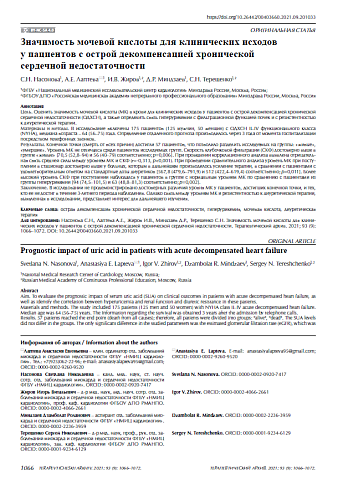
Значимость мочевой кислоты для клинических исходов у пациентов с острой декомпенсацией хронической сердечной недостаточности
Насонова С.Н., Лаптева А.Е., Жиров И.В., Миндзаев Д.Р., Терещенко С.Н. Значимость мочевой кислоты для клинических исходов у пациентов с острой декомпенсацией хронической сердечной недостаточности. Терапевтический архив. 2021; 93 (9): 1066–1072. DOI: 10.26442/00403660.2021.09.201033
________________________________________________
Материалы доступны только для специалистов сферы здравоохранения.
Чтобы посмотреть материал полностью
Авторизуйтесь
или зарегистрируйтесь.
Аннотация
Цель. Оценить значимость мочевой кислоты (МК) в крови для клинических исходов у пациентов с острой декомпенсацией хронической сердечной недостаточности (ОДХСН), а также определить связь гиперурикемии с фильтрационной функцией почек и с резистентностью к диуретической терапии.
Материалы и методы. В исследование включены 175 пациентов (125 мужчин, 50 женщин) с ОДХСН II–IV функционального класса (NYHA), медиана возраста – 64 (56–75) года. Определение отдаленного прогноза производилось через 3 года от момента госпитализации посредством телефонных звонков.
Результаты. Конечной точки (смерть от всех причин) достигли 57 пациентов, что позволило разделить исследуемых на группы: «живые», «умершие». Уровень МК не отличался среди пациентов исследуемых групп. Скорость клубочковой фильтрации (СКФ) достоверно выше в группе «живые» [70,5 (52,8–94) и 56 (40–79) соответственно; р=0,006]. При проведении корреляционного анализа выявлена отрицательная связь средней силы между уровнем МК и СКФ (r=-0,313, p<0,001). При проведении сравнительного анализа уровень МК при поступлении в стационар достоверно выше у больных, которым в дальнейшем производилось усиление терапии, в сравнении с пациентами с удовлетворительным ответом на стандартные дозы диуретиков [567,8 (479,6–791,9) и 512 (422,4–619,4) соответственно; р=0,011]. Более высокий уровень СКФ при поступлении наблюдался у пациентов в группе с нормальным уровнем МК по сравнению с пациентами из группы гиперурикемии [94 (74,5–101,5) и 63 (48,8–81,3) соответственно; р=0,002].
Заключение. В исследовании не продемонстрировано достоверных различий уровня МК у пациентов, достигших конечной точки, и тех, кто ее не достиг в течение 3-летнего периода наблюдения. Однако связь между уровнем МК и резистентностью к диуретической терапии, выявленная в исследовании, представляет интерес для дальнейшего изучения.
Ключевые слова: острая декомпенсация хронической сердечной недостаточности, гиперурикемия, мочевая кислота, диуретическая терапия
Materials and methods. The study included 175 patients (125 men and 50 women) with NYHA class II–IV acute decompensated heart failure. Median age was 64 (56–75) years. The Information regarding the survival was obtained 3 years after the admission by telephone calls.
Results. 57 patients reached the end point (death from all causes); therefore, all patients were divided into groups: "alive", "dead". The SUA levels did not differ in the groups. The only significant difference in the studied parameters was the estimated glomerular filtration rate (eGFR), which was significantly higher in the "alive" group [70.5 (52.8–94) and 56 (40–79), respectively; p=0.006]. A moderate negative correlation was found between SUA levels and eGFR in the correlation analysis (r=-0.313, p<0.001). A comparative analysis showed, that SUA level on admission was significantly higher in patients who subsequently received increased doses of diuretics than in patients with a satisfactory response to standard doses of diuretics [567.8 (479.6–791.9) and 512 (422.4–619.4), respectively; p=0.011]. Also, higher eGFR level on admission was observed in patients from the normal SUA level group than in patients from the hyperuricemia group [94 (74.5–101.5) and 63 (48.8–81.3), respectively; p=0.002].
Conclusion. We found no significant differences in the uric acid level in patients who reached the end point and those who did not reach it during the three-year follow-up. However, the found correlation between uric acid levels and diuretic resistance calls for further research.
Keywords: acute decompensated heart failure, hyperuricemia, serumuric acid, diuretic therapy
Материалы и методы. В исследование включены 175 пациентов (125 мужчин, 50 женщин) с ОДХСН II–IV функционального класса (NYHA), медиана возраста – 64 (56–75) года. Определение отдаленного прогноза производилось через 3 года от момента госпитализации посредством телефонных звонков.
Результаты. Конечной точки (смерть от всех причин) достигли 57 пациентов, что позволило разделить исследуемых на группы: «живые», «умершие». Уровень МК не отличался среди пациентов исследуемых групп. Скорость клубочковой фильтрации (СКФ) достоверно выше в группе «живые» [70,5 (52,8–94) и 56 (40–79) соответственно; р=0,006]. При проведении корреляционного анализа выявлена отрицательная связь средней силы между уровнем МК и СКФ (r=-0,313, p<0,001). При проведении сравнительного анализа уровень МК при поступлении в стационар достоверно выше у больных, которым в дальнейшем производилось усиление терапии, в сравнении с пациентами с удовлетворительным ответом на стандартные дозы диуретиков [567,8 (479,6–791,9) и 512 (422,4–619,4) соответственно; р=0,011]. Более высокий уровень СКФ при поступлении наблюдался у пациентов в группе с нормальным уровнем МК по сравнению с пациентами из группы гиперурикемии [94 (74,5–101,5) и 63 (48,8–81,3) соответственно; р=0,002].
Заключение. В исследовании не продемонстрировано достоверных различий уровня МК у пациентов, достигших конечной точки, и тех, кто ее не достиг в течение 3-летнего периода наблюдения. Однако связь между уровнем МК и резистентностью к диуретической терапии, выявленная в исследовании, представляет интерес для дальнейшего изучения.
Ключевые слова: острая декомпенсация хронической сердечной недостаточности, гиперурикемия, мочевая кислота, диуретическая терапия
________________________________________________
Materials and methods. The study included 175 patients (125 men and 50 women) with NYHA class II–IV acute decompensated heart failure. Median age was 64 (56–75) years. The Information regarding the survival was obtained 3 years after the admission by telephone calls.
Results. 57 patients reached the end point (death from all causes); therefore, all patients were divided into groups: "alive", "dead". The SUA levels did not differ in the groups. The only significant difference in the studied parameters was the estimated glomerular filtration rate (eGFR), which was significantly higher in the "alive" group [70.5 (52.8–94) and 56 (40–79), respectively; p=0.006]. A moderate negative correlation was found between SUA levels and eGFR in the correlation analysis (r=-0.313, p<0.001). A comparative analysis showed, that SUA level on admission was significantly higher in patients who subsequently received increased doses of diuretics than in patients with a satisfactory response to standard doses of diuretics [567.8 (479.6–791.9) and 512 (422.4–619.4), respectively; p=0.011]. Also, higher eGFR level on admission was observed in patients from the normal SUA level group than in patients from the hyperuricemia group [94 (74.5–101.5) and 63 (48.8–81.3), respectively; p=0.002].
Conclusion. We found no significant differences in the uric acid level in patients who reached the end point and those who did not reach it during the three-year follow-up. However, the found correlation between uric acid levels and diuretic resistance calls for further research.
Keywords: acute decompensated heart failure, hyperuricemia, serumuric acid, diuretic therapy
Полный текст
Список литературы
1. Chong VH, Singh J, Parry H, et al. Management of Noncardiac Comorbidities in Chronic Heart Failure. Cardiovasc Ther. 2015;33(5):300-15. DOI:10.1111/1755-5922.12141
2. Фомин И.В. Хроническая сердечная недостаточность в Российской Федерации: что сегодня мы знаем и что должны делать. Рос. кардиол. журн. 2016;(8):7-13 [Fomin IV. Chronic heart failure in russian federation: What do we know and what to do. Russian Journal of Cardiology. 2016;(8):7-13 (in Russian)]. DOI:10.15829/1560-4071-2016-8-7-13
3. Van Deursen VM, Urso R, Laroche C, et al. Co-morbidities in patients with heart failure: an analysis of the European Heart Failure Pilot Survey. Eur J Heart Fail. 2014;16(1):103-11. DOI:10.1002/ejhf.30
4. Hamaguchi S, Furumoto T, Tsuchihashi-Makaya M, et al. JCARE-CARD Investigators. Hyperuricemia predicts adverse outcomes in patients with heart failure. J Cardiol. 2011;151(2):143-7. DOI:10.1016/j.ijcard.2010.05.002
5. Martinez A, Gonzalez A, Cerda C, et al. Prognostic value of hyperuricemia in chronic heart failure. Rev Med Chil. 2004;132(9):1031-6. DOI:10.4067/s0034-98872004000900002
6. Anker SD, Doehner W, Rauchhaus M, et al. Uric acid and survival in chronic heart failure: validation and application in metabolic, functional, and hemodynamic staging. Circulation. 2003;107:19917. DOI:10.1161/01.CIR.0000065637.10517.A0
7. Ревматология: национальное руководство. Под ред. Е.Л. Насонова, В.А. Насоновой. М.: ГЭОТАР-Медиа, 2010; с. 720 [Rheumatology: national guidelines. Eds. EL Nasonov, VA Nasonova. Moscow: GEOTAR-Media, 2010; p. 720 (in Russian)].
8. Hamaguchi S, Furumoto T, Tsuchihashi-Makaya M, et al. Hyperuricemia predicts adverse outcomes in patients with heart failure. Int J Cardiol. 2011;151:143-7. DOI:10.1016/j.ijcard.2010.05.002
9. Hare J, Johnson R. Uric acid predicts clinical outcomes in heart failure. Insights regarding the role of xantine oxidase and uric acid in disease pathophysiology. Circulation. 2003;107:1951-3. DOI:10.1161/01.CIR.0000066420.36123.35
10. Zhang Z, Bian L, Choi Y. Serum uric acid: A marker of metabolic syndrome and subclinical atherosclerosis in Korean men. Angiology. 2012;63:420-8. DOI:10.1177/0003319711423806
11. Wang J, Qin T, Chen J, et al. Hyperuricemia and risk of incident hypertension: A systematic review and meta-analysis of observational studies. PLoS One. 2014;9(12):e114259. DOI:10.1371/journal.pone.0114259
12. Krishnan E, Pandya BJ, Chung L, et al. Hyperuricemia and the risk for subclinical coronary atherosclerosis – data from a prospective observational cohort study. Arthritis Res Ther. 2011;13:R66. DOI:10.1186/ar3322
13. Billiet L, Doaty S, Katz JD, et al. Review of hyperuricemia as new marker for metabolic syndrome. ISRN Rheumatol. 2014;2014:852954. DOI:10.1155/2014/852954
14. Choi BG, Kim DJ, Baek MJ, et al. Hyperuricaemia and development of type 2 diabetes mellitus in Asian population. Clin Exp Pharmacol Physiol. 2018;45:499-506. DOI:10.1111/1440-1681.12911
15. Huang H, Huang B, Li Y, et al. Uric acid and risk of heart failure: a systematic review and meta-analysis. Eur J Heart Fail. 2014;16(1):15-24. DOI:10.1093/eurjhf/hft132
16. Palazzuoli A, Ruocco G, Pellegrini M, et al. Prognostic Significance of Hyperuricemia in Patients With Acute Heart Failure. Am J Cardiol. 2016;117(10):1616-21. DOI:10.1016/j.amjcard.2016.02.039
17. Grossman C, Grossman E, Goldbourt U. Uric acid variability at midlife as an independent predictor of coronary heart disease and all-cause mortality. PLoS One. 2019;14(8):e0220532. DOI:10.1371/journal.pone.0220532
18. Wattad M, Darawsha W, Solomonica A, et al. Interaction between worsening renal function and persistent congestion in acute decompensated heart failure. Am J Cardiol. 2015;115(7):932-7. DOI:10.1016/j.amjcard.2015.01.019
19. Metra M, Davison B, Bettari L, et al. Is worsening renal function an ominous prognostic sign in patients with acute heart failure? The role of congestion and its interaction with renal function. Circ Heart Fail. 2012;5(1):54-62. DOI:10.1161/CIRCHEARTFAILURE.111.963413
20. Резник Е.В. Состояние почечной гемодинамики и функции почек у больных с хронической сердечной недостаточностью. М., 2007; с. 161 [Reznik EV. Sostoyanie pochechnoj gemodinamiki i funkcii pochek u bol'nyh s hronicheskoj serdechnoj nedostatochnost'yu. Moscow, 2007; p. 161 (in Russian)].
21. Серов В.А., Шутов А.М., Сучков В.Н., и др. Прогностическое значение снижения функции почек у больных с хронической сердечной недостаточностью. Нефрология и диализ. 2008;10:3-4 [Serov VA, Shutov AM, Suchkov VN, et al. Decrease of kidney function and prognosis in patients with chronic heart failure. Nephrology and Dialysis. 2008;10:3-4 (in Russian)].
22. Ларина В.Н., Барт Б.Я., Ларин В.Г., Донсков А.С. Высокая концентрация сывороточной мочевой кислоты: клиническое и прогностическое значение при хронической сердечной недостаточности. Кардиология. 2016;5:68-75 [Larina VN, Bart BY, Larin VG, Donskov AS. High Serum Concentrations of Uric Acid: Clinical and Prognostic Significance in Chronic Heart Failure. Kardiologiia. 2016;56(5):68-75 (in Russian)]. DOI:10.18565/cardio.2016.5.68-75
23. Sanchez-Lozada LG, Tapia E, Santamaria J, et al. Mild hyperuricemia induces vasoconstriction and maintains glomerular hypertension in normal and remnant kidney rats. Kidney Int. 2005;67(1):23747. DOI:10.1111/j.1523-1755.2005.00074.x
24. Kang DH, Nakagawa T, Feng L, et al. A role for uric acid in the progression of renal disease. J Am Soc Nephrol. 2002;13(12):2888-97. DOI:10.1097/01.asn.0000034910.58454.fd
25. Mazzali M, Hughes J, Kim YG, et al. Elevated uric acid increases blood pressure in the rat by a novel crystal – independent mechanism. Hypertension. 2001;38(5):1101-6. DOI:10.1161/hy1101.092839
26. Ледяхова М.В., Насонова С.Н., Терещенко С.Н. Гиперурикемия как предиктор хронической сердечной недостаточности. Рацион. фармакотерапия в кардиологии. 2015;11(4):355-8 [Ledyakhova MV, Nasonova SN, Tereshchenko SN. Hyperuricemia as a predictor of chronic heart failure. Ration Pharmacother Cardiol. 2015;11(4):355-8 (in Russian)].
27. Ponikowski P, Voors AA, Anker SD, et al. ESC Guidelines for the diagnosis and treatment of acute and chronic heart failure: The Task Force for the diagnosis and treatment of acute and chronic heart failure of the European Society of Cardiology (ESC) Developed with the special contribution of the Heart Failure Association (HFA) of the ESC. Eur Heart J. 2016:37:2129-200. DOI:10.1093/eurheartj/ehw128
28. Zhou HB, Xu TY, Liu SR, et al. Association of serum uric acid change with mortality, renal function and diuretic dose administered in treatment of acute heart failure. Nutr Metab Cardiovasc Dis. 2019;29(4):351-9. DOI:10.1016/j.numecd.2019.01.001
29. Neuberg GW, Miller AB, O'Connor CM, et al. Prospective Randomized Amlodipine Survival Evaluation. Diuretic resistance predicts mortality in patients with advanced heart failure. Am Heart J. 2002;144(1):31-8. DOI:10.1067/mhj.2002.123144
30. Testani JM, Brisco MA, Turner JM, et al. Loop diuretic efficiency: a metric of diuretic responsiveness with prognostic importance in acute decompensated heart failure. Circ Heart Fail. 2014;7(2):261-70. DOI:10.1161/CIRCHEARTFAILURE.113.000895
31. Palazzuoli A, Testani JM, Ruocco G, et al. Different diuretic dose and response in acute decompensated heart failure: Clinical characteristics and prognostic significance. Int J Cardiol. 2016;224:213-9. DOI:10.1016/j.ijcard.2016.09.005
32. Valente MA, Voors AA, Damman K, et al. Diuretic response in acute heart failure: clinical characteristics and prognostic significance. Eur Heart J. 2014;35(19):1284-93. DOI:10.1093/eurheartj/ehu065
33. Chiu TH, Wu PY, Huang JC, et al. Hyperuricemia Is Associated with Left Ventricular Dysfunction and Inappropriate Left Ventricular Mass in Chronic Kidney Disease. Diagnostics (Basel). 2020;10(8):514. DOI:10.3390/diagnostics10080514
34. Palazzuoli A, Ruocco G, De Vivo O, et al. Prevalence of Hyperuricemia in Patients With Acute Heart Failure With Either Reduced or Preserved Ejection Fraction. Am J Cardiol. 2017;120(7):1146-50. DOI:10.1016/j.amjcard.2017.06.057
35. Krishnan E, Akhras KS, Sharma H, et al. Relative and attributable diabetes risk associated with hyperuricemia in US veterans with gout. QJM. 2013;106(8):721-9. DOI:10.1093/qjmed/hct093
36. Juraschek SP, McAdams-Demarco M, Miller ER, et al. Temporal relationship between uric acid concentration and risk of diabetes in a community-based study population. Am J Epidemiol. 2014;179(6):684-91. DOI:10.1093/aje/kwt320
37. Liu J, Tao L, Zhao Z, et al. Two-year changes in hyperuricemia and risk of diabetes: a five-year prospective cohort study. J Diabetes Res. 2018;2018:1-7. DOI:10.1155/2018/6905720
2. Fomin IV. Chronic heart failure in russian federation: What do we know and what to do. Russian Journal of Cardiology. 2016;(8):7-13 (in Russian). DOI:10.15829/1560-4071-2016-8-7-13
3. Van Deursen VM, Urso R, Laroche C, et al. Co-morbidities in patients with heart failure: an analysis of the European Heart Failure Pilot Survey. Eur J Heart Fail. 2014;16(1):103-11. DOI:10.1002/ejhf.30
4. Hamaguchi S, Furumoto T, Tsuchihashi-Makaya M, et al. JCARE-CARD Investigators. Hyperuricemia predicts adverse outcomes in patients with heart failure. J Cardiol. 2011;151(2):143-7. DOI:10.1016/j.ijcard.2010.05.002
5. Martinez A, Gonzalez A, Cerda C, et al. Prognostic value of hyperuricemia in chronic heart failure. Rev Med Chil. 2004;132(9):1031-6. DOI:10.4067/s0034-98872004000900002
6. Anker SD, Doehner W, Rauchhaus M, et al. Uric acid and survival in chronic heart failure: validation and application in metabolic, functional, and hemodynamic staging. Circulation. 2003;107:19917. DOI:10.1161/01.CIR.0000065637.10517.A0
7. Rheumatology: national guidelines. Eds. EL Nasonov, VA Nasonova. Moscow: GEOTAR-Media, 2010; p. 720 (in Russian).
8. Hamaguchi S, Furumoto T, Tsuchihashi-Makaya M, et al. Hyperuricemia predicts adverse outcomes in patients with heart failure. Int J Cardiol. 2011;151:143-7. DOI:10.1016/j.ijcard.2010.05.002
9. Hare J, Johnson R. Uric acid predicts clinical outcomes in heart failure. Insights regarding the role of xantine oxidase and uric acid in disease pathophysiology. Circulation. 2003;107:1951-3. DOI:10.1161/01.CIR.0000066420.36123.35
10. Zhang Z, Bian L, Choi Y. Serum uric acid: A marker of metabolic syndrome and subclinical atherosclerosis in Korean men. Angiology. 2012;63:420-8. DOI:10.1177/0003319711423806
11. Wang J, Qin T, Chen J, et al. Hyperuricemia and risk of incident hypertension: A systematic review and meta-analysis of observational studies. PLoS One. 2014;9(12):e114259. DOI:10.1371/journal.pone.0114259
12. Krishnan E, Pandya BJ, Chung L, et al. Hyperuricemia and the risk for subclinical coronary atherosclerosis – data from a prospective observational cohort study. Arthritis Res Ther. 2011;13:R66. DOI:10.1186/ar3322
13. Billiet L, Doaty S, Katz JD, et al. Review of hyperuricemia as new marker for metabolic syndrome. ISRN Rheumatol. 2014;2014:852954. DOI:10.1155/2014/852954
14. Choi BG, Kim DJ, Baek MJ, et al. Hyperuricaemia and development of type 2 diabetes mellitus in Asian population. Clin Exp Pharmacol Physiol. 2018;45:499-506. DOI:10.1111/1440-1681.12911
15. Huang H, Huang B, Li Y, et al. Uric acid and risk of heart failure: a systematic review and meta-analysis. Eur J Heart Fail. 2014;16(1):15-24. DOI:10.1093/eurjhf/hft132
16. Palazzuoli A, Ruocco G, Pellegrini M, et al. Prognostic Significance of Hyperuricemia in Patients With Acute Heart Failure. Am J Cardiol. 2016;117(10):1616-21. DOI:10.1016/j.amjcard.2016.02.039
17. Grossman C, Grossman E, Goldbourt U. Uric acid variability at midlife as an independent predictor of coronary heart disease and all-cause mortality. PLoS One. 2019;14(8):e0220532. DOI:10.1371/journal.pone.0220532
18. Wattad M, Darawsha W, Solomonica A, et al. Interaction between worsening renal function and persistent congestion in acute decompensated heart failure. Am J Cardiol. 2015;115(7):932-7. DOI:10.1016/j.amjcard.2015.01.019
19. Metra M, Davison B, Bettari L, et al. Is worsening renal function an ominous prognostic sign in patients with acute heart failure? The role of congestion and its interaction with renal function. Circ Heart Fail. 2012;5(1):54-62. DOI:10.1161/CIRCHEARTFAILURE.111.963413
20. Reznik EV. Sostoyanie pochechnoj gemodinamiki i funkcii pochek u bol'nyh s hronicheskoj serdechnoj nedostatochnost'yu. Moscow, 2007; p. 161 (in Russian).
21. Serov VA, Shutov AM, Suchkov VN, et al. Decrease of kidney function and prognosis in patients with chronic heart failure. Nephrology and Dialysis. 2008;10:3-4 (in Russian).
22. Larina VN, Bart BY, Larin VG, Donskov AS. High Serum Concentrations of Uric Acid: Clinical and Prognostic Significance in Chronic Heart Failure. Kardiologiia. 2016;56(5):68-75 (in Russian). DOI:10.18565/cardio.2016.5.68-75
23. Sanchez-Lozada LG, Tapia E, Santamaria J, et al. Mild hyperuricemia induces vasoconstriction and maintains glomerular hypertension in normal and remnant kidney rats. Kidney Int. 2005;67(1):23747. DOI:10.1111/j.1523-1755.2005.00074.x
24. Kang DH, Nakagawa T, Feng L, et al. A role for uric acid in the progression of renal disease. J Am Soc Nephrol. 2002;13(12):2888-97. DOI:10.1097/01.asn.0000034910.58454.fd
25. Mazzali M, Hughes J, Kim YG, et al. Elevated uric acid increases blood pressure in the rat by a novel crystal – independent mechanism. Hypertension. 2001;38(5):1101-6. DOI:10.1161/hy1101.092839
26. Ledyakhova MV, Nasonova SN, Tereshchenko SN. Hyperuricemia as a predictor of chronic heart failure. Ration Pharmacother Cardiol. 2015;11(4):355-8 (in Russian).
27. Ponikowski P, Voors AA, Anker SD, et al. ESC Guidelines for the diagnosis and treatment of acute and chronic heart failure: The Task Force for the diagnosis and treatment of acute and chronic heart failure of the European Society of Cardiology (ESC) Developed with the special contribution of the Heart Failure Association (HFA) of the ESC. Eur Heart J. 2016:37:2129-200. DOI:10.1093/eurheartj/ehw128
28. Zhou HB, Xu TY, Liu SR, et al. Association of serum uric acid change with mortality, renal function and diuretic dose administered in treatment of acute heart failure. Nutr Metab Cardiovasc Dis. 2019;29(4):351-9. DOI:10.1016/j.numecd.2019.01.001
29. Neuberg GW, Miller AB, O'Connor CM, et al. Prospective Randomized Amlodipine Survival Evaluation. Diuretic resistance predicts mortality in patients with advanced heart failure. Am Heart J. 2002;144(1):31-8. DOI:10.1067/mhj.2002.123144
30. Testani JM, Brisco MA, Turner JM, et al. Loop diuretic efficiency: a metric of diuretic responsiveness with prognostic importance in acute decompensated heart failure. Circ Heart Fail. 2014;7(2):261-70. DOI:10.1161/CIRCHEARTFAILURE.113.000895
31. Palazzuoli A, Testani JM, Ruocco G, et al. Different diuretic dose and response in acute decompensated heart failure: Clinical characteristics and prognostic significance. Int J Cardiol. 2016;224:213-9. DOI:10.1016/j.ijcard.2016.09.005
32. Valente MA, Voors AA, Damman K, et al. Diuretic response in acute heart failure: clinical characteristics and prognostic significance. Eur Heart J. 2014;35(19):1284-93. DOI:10.1093/eurheartj/ehu065
33. Chiu TH, Wu PY, Huang JC, et al. Hyperuricemia Is Associated with Left Ventricular Dysfunction and Inappropriate Left Ventricular Mass in Chronic Kidney Disease. Diagnostics (Basel). 2020;10(8):514. DOI:10.3390/diagnostics10080514
34. Palazzuoli A, Ruocco G, De Vivo O, et al. Prevalence of Hyperuricemia in Patients With Acute Heart Failure With Either Reduced or Preserved Ejection Fraction. Am J Cardiol. 2017;120(7):1146-50. DOI:10.1016/j.amjcard.2017.06.057
35. Krishnan E, Akhras KS, Sharma H, et al. Relative and attributable diabetes risk associated with hyperuricemia in US veterans with gout. QJM. 2013;106(8):721-9. DOI:10.1093/qjmed/hct093
36. Juraschek SP, McAdams-Demarco M, Miller ER, et al. Temporal relationship between uric acid concentration and risk of diabetes in a community-based study population. Am J Epidemiol. 2014;179(6):684-91. DOI:10.1093/aje/kwt320
37. Liu J, Tao L, Zhao Z, et al. Two-year changes in hyperuricemia and risk of diabetes: a five-year prospective cohort study. J Diabetes Res. 2018;2018:1-7. DOI:10.1155/2018/6905720
2. Фомин И.В. Хроническая сердечная недостаточность в Российской Федерации: что сегодня мы знаем и что должны делать. Рос. кардиол. журн. 2016;(8):7-13 [Fomin IV. Chronic heart failure in russian federation: What do we know and what to do. Russian Journal of Cardiology. 2016;(8):7-13 (in Russian)]. DOI:10.15829/1560-4071-2016-8-7-13
3. Van Deursen VM, Urso R, Laroche C, et al. Co-morbidities in patients with heart failure: an analysis of the European Heart Failure Pilot Survey. Eur J Heart Fail. 2014;16(1):103-11. DOI:10.1002/ejhf.30
4. Hamaguchi S, Furumoto T, Tsuchihashi-Makaya M, et al. JCARE-CARD Investigators. Hyperuricemia predicts adverse outcomes in patients with heart failure. J Cardiol. 2011;151(2):143-7. DOI:10.1016/j.ijcard.2010.05.002
5. Martinez A, Gonzalez A, Cerda C, et al. Prognostic value of hyperuricemia in chronic heart failure. Rev Med Chil. 2004;132(9):1031-6. DOI:10.4067/s0034-98872004000900002
6. Anker SD, Doehner W, Rauchhaus M, et al. Uric acid and survival in chronic heart failure: validation and application in metabolic, functional, and hemodynamic staging. Circulation. 2003;107:19917. DOI:10.1161/01.CIR.0000065637.10517.A0
7. Ревматология: национальное руководство. Под ред. Е.Л. Насонова, В.А. Насоновой. М.: ГЭОТАР-Медиа, 2010; с. 720 [Rheumatology: national guidelines. Eds. EL Nasonov, VA Nasonova. Moscow: GEOTAR-Media, 2010; p. 720 (in Russian)].
8. Hamaguchi S, Furumoto T, Tsuchihashi-Makaya M, et al. Hyperuricemia predicts adverse outcomes in patients with heart failure. Int J Cardiol. 2011;151:143-7. DOI:10.1016/j.ijcard.2010.05.002
9. Hare J, Johnson R. Uric acid predicts clinical outcomes in heart failure. Insights regarding the role of xantine oxidase and uric acid in disease pathophysiology. Circulation. 2003;107:1951-3. DOI:10.1161/01.CIR.0000066420.36123.35
10. Zhang Z, Bian L, Choi Y. Serum uric acid: A marker of metabolic syndrome and subclinical atherosclerosis in Korean men. Angiology. 2012;63:420-8. DOI:10.1177/0003319711423806
11. Wang J, Qin T, Chen J, et al. Hyperuricemia and risk of incident hypertension: A systematic review and meta-analysis of observational studies. PLoS One. 2014;9(12):e114259. DOI:10.1371/journal.pone.0114259
12. Krishnan E, Pandya BJ, Chung L, et al. Hyperuricemia and the risk for subclinical coronary atherosclerosis – data from a prospective observational cohort study. Arthritis Res Ther. 2011;13:R66. DOI:10.1186/ar3322
13. Billiet L, Doaty S, Katz JD, et al. Review of hyperuricemia as new marker for metabolic syndrome. ISRN Rheumatol. 2014;2014:852954. DOI:10.1155/2014/852954
14. Choi BG, Kim DJ, Baek MJ, et al. Hyperuricaemia and development of type 2 diabetes mellitus in Asian population. Clin Exp Pharmacol Physiol. 2018;45:499-506. DOI:10.1111/1440-1681.12911
15. Huang H, Huang B, Li Y, et al. Uric acid and risk of heart failure: a systematic review and meta-analysis. Eur J Heart Fail. 2014;16(1):15-24. DOI:10.1093/eurjhf/hft132
16. Palazzuoli A, Ruocco G, Pellegrini M, et al. Prognostic Significance of Hyperuricemia in Patients With Acute Heart Failure. Am J Cardiol. 2016;117(10):1616-21. DOI:10.1016/j.amjcard.2016.02.039
17. Grossman C, Grossman E, Goldbourt U. Uric acid variability at midlife as an independent predictor of coronary heart disease and all-cause mortality. PLoS One. 2019;14(8):e0220532. DOI:10.1371/journal.pone.0220532
18. Wattad M, Darawsha W, Solomonica A, et al. Interaction between worsening renal function and persistent congestion in acute decompensated heart failure. Am J Cardiol. 2015;115(7):932-7. DOI:10.1016/j.amjcard.2015.01.019
19. Metra M, Davison B, Bettari L, et al. Is worsening renal function an ominous prognostic sign in patients with acute heart failure? The role of congestion and its interaction with renal function. Circ Heart Fail. 2012;5(1):54-62. DOI:10.1161/CIRCHEARTFAILURE.111.963413
20. Резник Е.В. Состояние почечной гемодинамики и функции почек у больных с хронической сердечной недостаточностью. М., 2007; с. 161 [Reznik EV. Sostoyanie pochechnoj gemodinamiki i funkcii pochek u bol'nyh s hronicheskoj serdechnoj nedostatochnost'yu. Moscow, 2007; p. 161 (in Russian)].
21. Серов В.А., Шутов А.М., Сучков В.Н., и др. Прогностическое значение снижения функции почек у больных с хронической сердечной недостаточностью. Нефрология и диализ. 2008;10:3-4 [Serov VA, Shutov AM, Suchkov VN, et al. Decrease of kidney function and prognosis in patients with chronic heart failure. Nephrology and Dialysis. 2008;10:3-4 (in Russian)].
22. Ларина В.Н., Барт Б.Я., Ларин В.Г., Донсков А.С. Высокая концентрация сывороточной мочевой кислоты: клиническое и прогностическое значение при хронической сердечной недостаточности. Кардиология. 2016;5:68-75 [Larina VN, Bart BY, Larin VG, Donskov AS. High Serum Concentrations of Uric Acid: Clinical and Prognostic Significance in Chronic Heart Failure. Kardiologiia. 2016;56(5):68-75 (in Russian)]. DOI:10.18565/cardio.2016.5.68-75
23. Sanchez-Lozada LG, Tapia E, Santamaria J, et al. Mild hyperuricemia induces vasoconstriction and maintains glomerular hypertension in normal and remnant kidney rats. Kidney Int. 2005;67(1):23747. DOI:10.1111/j.1523-1755.2005.00074.x
24. Kang DH, Nakagawa T, Feng L, et al. A role for uric acid in the progression of renal disease. J Am Soc Nephrol. 2002;13(12):2888-97. DOI:10.1097/01.asn.0000034910.58454.fd
25. Mazzali M, Hughes J, Kim YG, et al. Elevated uric acid increases blood pressure in the rat by a novel crystal – independent mechanism. Hypertension. 2001;38(5):1101-6. DOI:10.1161/hy1101.092839
26. Ледяхова М.В., Насонова С.Н., Терещенко С.Н. Гиперурикемия как предиктор хронической сердечной недостаточности. Рацион. фармакотерапия в кардиологии. 2015;11(4):355-8 [Ledyakhova MV, Nasonova SN, Tereshchenko SN. Hyperuricemia as a predictor of chronic heart failure. Ration Pharmacother Cardiol. 2015;11(4):355-8 (in Russian)].
27. Ponikowski P, Voors AA, Anker SD, et al. ESC Guidelines for the diagnosis and treatment of acute and chronic heart failure: The Task Force for the diagnosis and treatment of acute and chronic heart failure of the European Society of Cardiology (ESC) Developed with the special contribution of the Heart Failure Association (HFA) of the ESC. Eur Heart J. 2016:37:2129-200. DOI:10.1093/eurheartj/ehw128
28. Zhou HB, Xu TY, Liu SR, et al. Association of serum uric acid change with mortality, renal function and diuretic dose administered in treatment of acute heart failure. Nutr Metab Cardiovasc Dis. 2019;29(4):351-9. DOI:10.1016/j.numecd.2019.01.001
29. Neuberg GW, Miller AB, O'Connor CM, et al. Prospective Randomized Amlodipine Survival Evaluation. Diuretic resistance predicts mortality in patients with advanced heart failure. Am Heart J. 2002;144(1):31-8. DOI:10.1067/mhj.2002.123144
30. Testani JM, Brisco MA, Turner JM, et al. Loop diuretic efficiency: a metric of diuretic responsiveness with prognostic importance in acute decompensated heart failure. Circ Heart Fail. 2014;7(2):261-70. DOI:10.1161/CIRCHEARTFAILURE.113.000895
31. Palazzuoli A, Testani JM, Ruocco G, et al. Different diuretic dose and response in acute decompensated heart failure: Clinical characteristics and prognostic significance. Int J Cardiol. 2016;224:213-9. DOI:10.1016/j.ijcard.2016.09.005
32. Valente MA, Voors AA, Damman K, et al. Diuretic response in acute heart failure: clinical characteristics and prognostic significance. Eur Heart J. 2014;35(19):1284-93. DOI:10.1093/eurheartj/ehu065
33. Chiu TH, Wu PY, Huang JC, et al. Hyperuricemia Is Associated with Left Ventricular Dysfunction and Inappropriate Left Ventricular Mass in Chronic Kidney Disease. Diagnostics (Basel). 2020;10(8):514. DOI:10.3390/diagnostics10080514
34. Palazzuoli A, Ruocco G, De Vivo O, et al. Prevalence of Hyperuricemia in Patients With Acute Heart Failure With Either Reduced or Preserved Ejection Fraction. Am J Cardiol. 2017;120(7):1146-50. DOI:10.1016/j.amjcard.2017.06.057
35. Krishnan E, Akhras KS, Sharma H, et al. Relative and attributable diabetes risk associated with hyperuricemia in US veterans with gout. QJM. 2013;106(8):721-9. DOI:10.1093/qjmed/hct093
36. Juraschek SP, McAdams-Demarco M, Miller ER, et al. Temporal relationship between uric acid concentration and risk of diabetes in a community-based study population. Am J Epidemiol. 2014;179(6):684-91. DOI:10.1093/aje/kwt320
37. Liu J, Tao L, Zhao Z, et al. Two-year changes in hyperuricemia and risk of diabetes: a five-year prospective cohort study. J Diabetes Res. 2018;2018:1-7. DOI:10.1155/2018/6905720
________________________________________________
2. Fomin IV. Chronic heart failure in russian federation: What do we know and what to do. Russian Journal of Cardiology. 2016;(8):7-13 (in Russian). DOI:10.15829/1560-4071-2016-8-7-13
3. Van Deursen VM, Urso R, Laroche C, et al. Co-morbidities in patients with heart failure: an analysis of the European Heart Failure Pilot Survey. Eur J Heart Fail. 2014;16(1):103-11. DOI:10.1002/ejhf.30
4. Hamaguchi S, Furumoto T, Tsuchihashi-Makaya M, et al. JCARE-CARD Investigators. Hyperuricemia predicts adverse outcomes in patients with heart failure. J Cardiol. 2011;151(2):143-7. DOI:10.1016/j.ijcard.2010.05.002
5. Martinez A, Gonzalez A, Cerda C, et al. Prognostic value of hyperuricemia in chronic heart failure. Rev Med Chil. 2004;132(9):1031-6. DOI:10.4067/s0034-98872004000900002
6. Anker SD, Doehner W, Rauchhaus M, et al. Uric acid and survival in chronic heart failure: validation and application in metabolic, functional, and hemodynamic staging. Circulation. 2003;107:19917. DOI:10.1161/01.CIR.0000065637.10517.A0
7. Rheumatology: national guidelines. Eds. EL Nasonov, VA Nasonova. Moscow: GEOTAR-Media, 2010; p. 720 (in Russian).
8. Hamaguchi S, Furumoto T, Tsuchihashi-Makaya M, et al. Hyperuricemia predicts adverse outcomes in patients with heart failure. Int J Cardiol. 2011;151:143-7. DOI:10.1016/j.ijcard.2010.05.002
9. Hare J, Johnson R. Uric acid predicts clinical outcomes in heart failure. Insights regarding the role of xantine oxidase and uric acid in disease pathophysiology. Circulation. 2003;107:1951-3. DOI:10.1161/01.CIR.0000066420.36123.35
10. Zhang Z, Bian L, Choi Y. Serum uric acid: A marker of metabolic syndrome and subclinical atherosclerosis in Korean men. Angiology. 2012;63:420-8. DOI:10.1177/0003319711423806
11. Wang J, Qin T, Chen J, et al. Hyperuricemia and risk of incident hypertension: A systematic review and meta-analysis of observational studies. PLoS One. 2014;9(12):e114259. DOI:10.1371/journal.pone.0114259
12. Krishnan E, Pandya BJ, Chung L, et al. Hyperuricemia and the risk for subclinical coronary atherosclerosis – data from a prospective observational cohort study. Arthritis Res Ther. 2011;13:R66. DOI:10.1186/ar3322
13. Billiet L, Doaty S, Katz JD, et al. Review of hyperuricemia as new marker for metabolic syndrome. ISRN Rheumatol. 2014;2014:852954. DOI:10.1155/2014/852954
14. Choi BG, Kim DJ, Baek MJ, et al. Hyperuricaemia and development of type 2 diabetes mellitus in Asian population. Clin Exp Pharmacol Physiol. 2018;45:499-506. DOI:10.1111/1440-1681.12911
15. Huang H, Huang B, Li Y, et al. Uric acid and risk of heart failure: a systematic review and meta-analysis. Eur J Heart Fail. 2014;16(1):15-24. DOI:10.1093/eurjhf/hft132
16. Palazzuoli A, Ruocco G, Pellegrini M, et al. Prognostic Significance of Hyperuricemia in Patients With Acute Heart Failure. Am J Cardiol. 2016;117(10):1616-21. DOI:10.1016/j.amjcard.2016.02.039
17. Grossman C, Grossman E, Goldbourt U. Uric acid variability at midlife as an independent predictor of coronary heart disease and all-cause mortality. PLoS One. 2019;14(8):e0220532. DOI:10.1371/journal.pone.0220532
18. Wattad M, Darawsha W, Solomonica A, et al. Interaction between worsening renal function and persistent congestion in acute decompensated heart failure. Am J Cardiol. 2015;115(7):932-7. DOI:10.1016/j.amjcard.2015.01.019
19. Metra M, Davison B, Bettari L, et al. Is worsening renal function an ominous prognostic sign in patients with acute heart failure? The role of congestion and its interaction with renal function. Circ Heart Fail. 2012;5(1):54-62. DOI:10.1161/CIRCHEARTFAILURE.111.963413
20. Reznik EV. Sostoyanie pochechnoj gemodinamiki i funkcii pochek u bol'nyh s hronicheskoj serdechnoj nedostatochnost'yu. Moscow, 2007; p. 161 (in Russian).
21. Serov VA, Shutov AM, Suchkov VN, et al. Decrease of kidney function and prognosis in patients with chronic heart failure. Nephrology and Dialysis. 2008;10:3-4 (in Russian).
22. Larina VN, Bart BY, Larin VG, Donskov AS. High Serum Concentrations of Uric Acid: Clinical and Prognostic Significance in Chronic Heart Failure. Kardiologiia. 2016;56(5):68-75 (in Russian). DOI:10.18565/cardio.2016.5.68-75
23. Sanchez-Lozada LG, Tapia E, Santamaria J, et al. Mild hyperuricemia induces vasoconstriction and maintains glomerular hypertension in normal and remnant kidney rats. Kidney Int. 2005;67(1):23747. DOI:10.1111/j.1523-1755.2005.00074.x
24. Kang DH, Nakagawa T, Feng L, et al. A role for uric acid in the progression of renal disease. J Am Soc Nephrol. 2002;13(12):2888-97. DOI:10.1097/01.asn.0000034910.58454.fd
25. Mazzali M, Hughes J, Kim YG, et al. Elevated uric acid increases blood pressure in the rat by a novel crystal – independent mechanism. Hypertension. 2001;38(5):1101-6. DOI:10.1161/hy1101.092839
26. Ledyakhova MV, Nasonova SN, Tereshchenko SN. Hyperuricemia as a predictor of chronic heart failure. Ration Pharmacother Cardiol. 2015;11(4):355-8 (in Russian).
27. Ponikowski P, Voors AA, Anker SD, et al. ESC Guidelines for the diagnosis and treatment of acute and chronic heart failure: The Task Force for the diagnosis and treatment of acute and chronic heart failure of the European Society of Cardiology (ESC) Developed with the special contribution of the Heart Failure Association (HFA) of the ESC. Eur Heart J. 2016:37:2129-200. DOI:10.1093/eurheartj/ehw128
28. Zhou HB, Xu TY, Liu SR, et al. Association of serum uric acid change with mortality, renal function and diuretic dose administered in treatment of acute heart failure. Nutr Metab Cardiovasc Dis. 2019;29(4):351-9. DOI:10.1016/j.numecd.2019.01.001
29. Neuberg GW, Miller AB, O'Connor CM, et al. Prospective Randomized Amlodipine Survival Evaluation. Diuretic resistance predicts mortality in patients with advanced heart failure. Am Heart J. 2002;144(1):31-8. DOI:10.1067/mhj.2002.123144
30. Testani JM, Brisco MA, Turner JM, et al. Loop diuretic efficiency: a metric of diuretic responsiveness with prognostic importance in acute decompensated heart failure. Circ Heart Fail. 2014;7(2):261-70. DOI:10.1161/CIRCHEARTFAILURE.113.000895
31. Palazzuoli A, Testani JM, Ruocco G, et al. Different diuretic dose and response in acute decompensated heart failure: Clinical characteristics and prognostic significance. Int J Cardiol. 2016;224:213-9. DOI:10.1016/j.ijcard.2016.09.005
32. Valente MA, Voors AA, Damman K, et al. Diuretic response in acute heart failure: clinical characteristics and prognostic significance. Eur Heart J. 2014;35(19):1284-93. DOI:10.1093/eurheartj/ehu065
33. Chiu TH, Wu PY, Huang JC, et al. Hyperuricemia Is Associated with Left Ventricular Dysfunction and Inappropriate Left Ventricular Mass in Chronic Kidney Disease. Diagnostics (Basel). 2020;10(8):514. DOI:10.3390/diagnostics10080514
34. Palazzuoli A, Ruocco G, De Vivo O, et al. Prevalence of Hyperuricemia in Patients With Acute Heart Failure With Either Reduced or Preserved Ejection Fraction. Am J Cardiol. 2017;120(7):1146-50. DOI:10.1016/j.amjcard.2017.06.057
35. Krishnan E, Akhras KS, Sharma H, et al. Relative and attributable diabetes risk associated with hyperuricemia in US veterans with gout. QJM. 2013;106(8):721-9. DOI:10.1093/qjmed/hct093
36. Juraschek SP, McAdams-Demarco M, Miller ER, et al. Temporal relationship between uric acid concentration and risk of diabetes in a community-based study population. Am J Epidemiol. 2014;179(6):684-91. DOI:10.1093/aje/kwt320
37. Liu J, Tao L, Zhao Z, et al. Two-year changes in hyperuricemia and risk of diabetes: a five-year prospective cohort study. J Diabetes Res. 2018;2018:1-7. DOI:10.1155/2018/6905720
Авторы
С.Н. Насонова1, А.Е. Лаптева*1, И.В. Жиров1,2, Д.Р. Миндзаев1, С.Н. Терещенко1,2
1 ФГБУ «Национальный медицинский исследовательский центр кардиологии» Минздрава России, Москва, Россия;
2 ФГБОУ ДПО «Российская медицинская академия непрерывного профессионального образования» Минздрава России, Москва, Россия
*anastasiyalapteva95@gmail.com
1 National Medical Research Center of Cardiology, Moscow, Russia;
2 Russian Medical Academy of Continuous Professional Education, Moscow, Russia
*anastasiyalapteva95@gmail.com
1 ФГБУ «Национальный медицинский исследовательский центр кардиологии» Минздрава России, Москва, Россия;
2 ФГБОУ ДПО «Российская медицинская академия непрерывного профессионального образования» Минздрава России, Москва, Россия
*anastasiyalapteva95@gmail.com
________________________________________________
1 National Medical Research Center of Cardiology, Moscow, Russia;
2 Russian Medical Academy of Continuous Professional Education, Moscow, Russia
*anastasiyalapteva95@gmail.com
Цель портала OmniDoctor – предоставление профессиональной информации врачам, провизорам и фармацевтам.