

Материалы доступны только для специалистов сферы здравоохранения.
Чтобы посмотреть материал полностью
Авторизуйтесь
или зарегистрируйтесь.
Фенотипы синдрома раздраженного кишечника: ведущие факторы генетики и эпигенетики, механизмы формирования - Журнал Терапевтический архив №2 Вопросы гастроэнтерологии 2023
Фенотипы синдрома раздраженного кишечника: ведущие факторы генетики и эпигенетики, механизмы формирования
Гаус О.В., Ливзан М.А. Фенотипы синдрома раздраженного кишечника: ведущие факторы генетики и эпигенетики, механизмы формирования. Терапевтический архив. 2023;95(2):164–172.
DOI: 10.26442/00403660.2023.02.202111
© ООО «КОНСИЛИУМ МЕДИКУМ», 2023 г.
DOI: 10.26442/00403660.2023.02.202111
DOI: 10.26442/00403660.2023.02.202111
© ООО «КОНСИЛИУМ МЕДИКУМ», 2023 г.
________________________________________________
DOI: 10.26442/00403660.2023.02.202111
Материалы доступны только для специалистов сферы здравоохранения.
Чтобы посмотреть материал полностью
Авторизуйтесь
или зарегистрируйтесь.
Аннотация
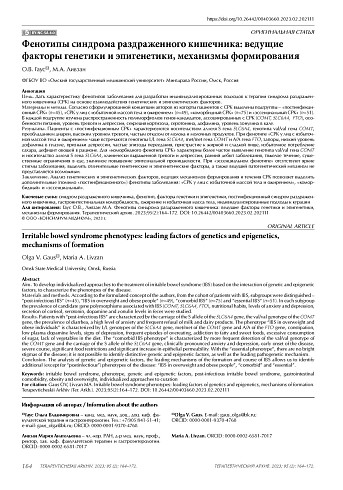
Цель. Дать характеристику фенотипов заболевания для разработки индивидуализированных подходов к терапии синдрома раздраженного кишечника (СРК) на основе взаимодействия генетических и эпигенетических факторов.
Материалы и методы. Согласно сформулированной концепции авторов из когорты пациентов с СРК выделены подгруппы – «постинфекционный СРК» (n=45), «СРК у лиц с избыточной массой тела и ожирением» (n=49), «коморбидный СРК» (n=75) и «эссенциальный СРК» (n=51). В каждой подгруппе изучена распространенность полиморфизмов генов-кандидатов, ассоциированных с СРК (COMT, SLC6A4, FTO), особенности питания, уровень тревоги и депрессии, секреция кортизола, серотонина, дофамина, уровень зонулина в кале.
Результаты. Пациенты с «постинфекционным СРК» характеризуются носительством аллеля S гена SLC6A4, генотипа val/val гена COMT, преобладанием диареи, высоким уровнем тревоги, частым отказом от молока и молочных продуктов. При фенотипе «СРК у лиц с избыточной массой тела и ожирением» чаще встречаются генотипы L/L гена SLC6A4, met/met гена COMT и A/A гена FTO, запоры, низкий уровень дофамина в плазме, признаки депрессии, частые эпизоды переедания, пристрастие к жирной и сладкой пище, избыточное потребление сахара, дефицит овощей в рационе. Для «коморбидного фенотипа СРК» характерны более частое выявление генотипа val/val гена COMT и носительство аллеля S гена SLC6A4, клинически выраженной тревоги и депрессии, ранний дебют заболевания, тяжелое течение, существенные ограничения в еде, значимое повышение эпителиальной проницаемости. При «эссенциальном фенотипе» отсутствуют яркие стигмы заболевания, выделить отличительные генетические и эпигенетические факторы, а также ведущий патогенетический механизм не представляется возможным.
Заключение. Анализ генетических и эпигенетических факторов, ведущих механизмов формирования и течения СРК позволяет выделить дополнительные (помимо «постинфекционного») фенотипы заболевания: «СРК у лиц с избыточной массой тела и ожирением», «коморбидный» и «эссенциальный».
Ключевые слова: синдром раздраженного кишечника, фенотип, факторы генетики и эпигенетики, постинфекционный синдром раздраженного кишечника, гастроинтестинальная коморбидность, ожирение и избыточная масса тела, индивидуализированные подходы к курации
Materials and methods. According to the formulated concept of the authors, from the cohort of patients with IBS, subgroups were distinguished – “post-infectious IBS” (n=45), “IBS in overweight and obese people” (n=49), “comorbid IBS” (n=75) and “essential IBS” (n=51). In each subgroup the prevalence of candidate gene polymorphisms associated with IBS (COMT, SLC6A4, FTO), nutritional habits, levels of anxiety and depression, secretion of cortisol, serotonin, dopamine and zonulin levels in feces were studied.
Results. Patients with “post-infectious IBS” are characterized by the carriage of the S allele of the SLC6A4 gene, the val/val genotype of the COMT gene, the prevalence of diarrhea, a high level of anxiety and frequent refusal of milk and dairy products. The phenotype “IBS in overweight and obese individuals” is characterized by L/L genotypes of the SLC6A4 gene, met/met of the COMT gene and A/A of the FTO gene, constipation, low plasma dopamine levels, signs of depression, frequent episodes of overeating, addiction to fatty and sweet foods, excessive consumption of sugar, lack of vegetables in the diet. The “comorbid IBS phenotype” is characterized by more frequent detection of the val/val genotype of the COMT gene and the carriage of the S allele of the SLC6A4 gene, clinically pronounced anxiety and depression, early onset of the disease, severe course, significant food restrictions and significant increase in epithelial permeability. With the “essential phenotype”, there are no bright stigmas of the disease; it is not possible to identify distinctive genetic and epigenetic factors, as well as the leading pathogenetic mechanism.
Conclusion. The analysis of genetic and epigenetic factors, the leading mechanisms of the formation and course of IBS allows us to identify additional (except for “postinfectious”) phenotypes of the disease: “IBS in overweight and obese people”, “comorbid” and “essential”.
Keywords: irritable bowel syndrome, phenotype, genetic and epigenetic factors, post-infectious irritable bowel syndrome, gastrointestinal comorbidity, obesity and overweight, individualized approaches to curation
Материалы и методы. Согласно сформулированной концепции авторов из когорты пациентов с СРК выделены подгруппы – «постинфекционный СРК» (n=45), «СРК у лиц с избыточной массой тела и ожирением» (n=49), «коморбидный СРК» (n=75) и «эссенциальный СРК» (n=51). В каждой подгруппе изучена распространенность полиморфизмов генов-кандидатов, ассоциированных с СРК (COMT, SLC6A4, FTO), особенности питания, уровень тревоги и депрессии, секреция кортизола, серотонина, дофамина, уровень зонулина в кале.
Результаты. Пациенты с «постинфекционным СРК» характеризуются носительством аллеля S гена SLC6A4, генотипа val/val гена COMT, преобладанием диареи, высоким уровнем тревоги, частым отказом от молока и молочных продуктов. При фенотипе «СРК у лиц с избыточной массой тела и ожирением» чаще встречаются генотипы L/L гена SLC6A4, met/met гена COMT и A/A гена FTO, запоры, низкий уровень дофамина в плазме, признаки депрессии, частые эпизоды переедания, пристрастие к жирной и сладкой пище, избыточное потребление сахара, дефицит овощей в рационе. Для «коморбидного фенотипа СРК» характерны более частое выявление генотипа val/val гена COMT и носительство аллеля S гена SLC6A4, клинически выраженной тревоги и депрессии, ранний дебют заболевания, тяжелое течение, существенные ограничения в еде, значимое повышение эпителиальной проницаемости. При «эссенциальном фенотипе» отсутствуют яркие стигмы заболевания, выделить отличительные генетические и эпигенетические факторы, а также ведущий патогенетический механизм не представляется возможным.
Заключение. Анализ генетических и эпигенетических факторов, ведущих механизмов формирования и течения СРК позволяет выделить дополнительные (помимо «постинфекционного») фенотипы заболевания: «СРК у лиц с избыточной массой тела и ожирением», «коморбидный» и «эссенциальный».
Ключевые слова: синдром раздраженного кишечника, фенотип, факторы генетики и эпигенетики, постинфекционный синдром раздраженного кишечника, гастроинтестинальная коморбидность, ожирение и избыточная масса тела, индивидуализированные подходы к курации
________________________________________________
Materials and methods. According to the formulated concept of the authors, from the cohort of patients with IBS, subgroups were distinguished – “post-infectious IBS” (n=45), “IBS in overweight and obese people” (n=49), “comorbid IBS” (n=75) and “essential IBS” (n=51). In each subgroup the prevalence of candidate gene polymorphisms associated with IBS (COMT, SLC6A4, FTO), nutritional habits, levels of anxiety and depression, secretion of cortisol, serotonin, dopamine and zonulin levels in feces were studied.
Results. Patients with “post-infectious IBS” are characterized by the carriage of the S allele of the SLC6A4 gene, the val/val genotype of the COMT gene, the prevalence of diarrhea, a high level of anxiety and frequent refusal of milk and dairy products. The phenotype “IBS in overweight and obese individuals” is characterized by L/L genotypes of the SLC6A4 gene, met/met of the COMT gene and A/A of the FTO gene, constipation, low plasma dopamine levels, signs of depression, frequent episodes of overeating, addiction to fatty and sweet foods, excessive consumption of sugar, lack of vegetables in the diet. The “comorbid IBS phenotype” is characterized by more frequent detection of the val/val genotype of the COMT gene and the carriage of the S allele of the SLC6A4 gene, clinically pronounced anxiety and depression, early onset of the disease, severe course, significant food restrictions and significant increase in epithelial permeability. With the “essential phenotype”, there are no bright stigmas of the disease; it is not possible to identify distinctive genetic and epigenetic factors, as well as the leading pathogenetic mechanism.
Conclusion. The analysis of genetic and epigenetic factors, the leading mechanisms of the formation and course of IBS allows us to identify additional (except for “postinfectious”) phenotypes of the disease: “IBS in overweight and obese people”, “comorbid” and “essential”.
Keywords: irritable bowel syndrome, phenotype, genetic and epigenetic factors, post-infectious irritable bowel syndrome, gastrointestinal comorbidity, obesity and overweight, individualized approaches to curation
Полный текст
Список литературы
1. Black CJ, Ford AC. Global burden of irritable bowel syndrome: trends, predictions and risk factors. Nat Rev Gastroenterol Hepatol. 2020;17(8):473-86. DOI:10.1038/s41575-020-0286-8
2. Frändemark Å, Törnblom H, Jakobsson S, Simrén M. Work Productivity and Activity Impairment in Irritable Bowel Syndrome (IBS): A Multifaceted Problem. Am J Gastroenterol. 2018;113(10):1540-9. DOI:10.1038/s41395-018-0262-x
3. Ballou S, McMahon C, Lee HN, et al. Effects of Irritable Bowel Syndrome on Daily Activities Vary Among Subtypes Based on Results From the IBS in America Survey. Clin Gastroenterol Hepatol. 2019;17(12):2471-8.e3. DOI:10.1016/j.cgh.2019.08.016
4. Weerts ZZRM, Vork L, Mujagic Z, et al. Reduction in IBS symptom severity is not paralleled by improvement in quality of life in patients with irritable bowel syndrome. Neurogastroenterol Motil. 2019;31(8):e13629. DOI:10.1111/nmo.13629
5. Spiegel BM, Gralnek IM, Bolus R, et al. Clinical determinants of health-related quality of life in patients with irritable bowel syndrome. Arch Intern Med. 2004;164(16):1773-80. DOI:10.1001/archinte.164.16.1773
6. Mahurkar-Joshi S, Chang L. Epigenetic Mechanisms in Irritable Bowel Syndrome. Front Psychiatry. 2020;11:805. DOI:10.3389/fpsyt.2020.00805
7. Videlock EJ, Chang L. Latest Insights on the Pathogenesis of Irritable Bowel Syndrome. Gastroenterol Clin North Am. 2021;50(3):505-22. DOI:10.1016/j.gtc.2021.04.002
8. Barbara G, Grover M, Bercik P, et al. Rome Foundation Working Team Report on Post-Infection Irritable Bowel Syndrome. Gastroenterology. 2019;156(1):46-58.e7. DOI:10.1053/j.gastro.2018.07.011
9. Zhang Y, Li L, Guo C, et al. Effects of probiotic type, dose and treatment duration on irritable bowel syndrome diagnosed by Rome III criteria: a meta-analysis. BMC Gastroenterol. 2016;16(1):62. DOI:10.1186/s12876-016-0470-z
10. Pinto-Sánchez MI, Smecuol EC, Temprano MP, et al. Bifidobacterium infantis NLS Super Strain Reduces the Expression of α-Defensin-5, a Marker of Innate Immunity, in the Mucosa of Active Celiac Disease Patients. J Clin Gastroenterol. 2017;51(9):814-7. DOI:10.1097/MCG.0000000000000687
11. Гаус О.В., Ливзан М.А. «Гастроинтестинальная» коморбидность при синдроме раздраженного кишечника. Экспериментальная и клиническая гастроэнтерология. 2021;190(6):104-11 [Gaus OV, Livzan MA. “Gastrointestinal” comorbidity in irritable bowel syndrome. Eksperimental'naia i klinicheskaia gastroenterologiia. 2021;190(6):104-11 (in Russian)]. DOI:10.31146/1682-8658-ecg-190-6-104-111
12. Гаус О.В., Ливзан М.А. Влияние социодемографических факторов, пищевых привычек и психологического статуса на развитие синдрома раздраженного кишечника. Профилактическая медицина. 2022;25(11):84-91 [Gaus OV, Livzan MA. Social and demographic factors, eating habits, and psychological status in developing irritable bowel syndrome. Profilakticheskaia medicina. 2022;25(11):84-91 (in Russian)]. DOI:10.17116/profmed20222511184
13. Федорин М.М., Ливзан М.А., Гаус О.В. Синдром раздраженного кишечника у лиц с избыточной массой тела и ожирением: новый фенотип заболевания? Доказательная гастроэнтерология. 2021;10(2):52-60 [Fedorin MM, Livzan MA, Gaus OV. IBS in overweight and obese individuals: a new disease phenotype? Dokazatel’naia gastroenterologiia. 2021;10(2):52-60 (in Russian)]. DOI:10.17116/dokgastro20211002152
14. Федорин М.М., Ливзан М.А., Гаус О.В. Клинические особенности и пищевые предпочтения у лиц с синдромом раздраженного кишечника на фоне избыточной массы тела и ожирения. Consilium Medicum. 2022;24(5):306-11 [Fedorin ММ, Livzan MA, Gaus OV. Clinical features and food preferences in persons with irritable bowel syndrome against the background of overweight and obesity. Consilium Medicum. 2022;24(5):306-11 (in Russian)]. DOI:10.26442/20751753.2022.5.201730
15. Ивашкин В.Т., Маев И.В., Шелыгин Ю.А., и др. Диагностика и лечение синдрома раздраженного кишечника (Клинические рекомендации Российской гастроэнтерологической ассоциации и Ассоциации колопроктологов России). Российский журнал гастроэнтерологии, гепатологии, колопроктологии. 2021;31(5):74-95 [Ivashkin VT, Maev IV, Shelygin YuA, et al. Diagnosis and Treatment of Irritable Bowel Syndrome: Clinical Recommendations of the Russian Gastroenterological Association and Association of Coloproctologists of Russia. Rossiiskii zhurnal gastroienterologii, gepatologii, koloproktologii. 2021;31(5):74-95 (in Russian)]. DOI:10.22416/1382-4376-2021-31-5-74-95
16. Camilleri M. Leaky gut: mechanisms, measurement and clinical implications in humans. Gut. 2019;68(8):1516-26. DOI:10.1136/gutjnl-2019-318427
17. Odenwald MA, Turner JR. The intestinal epithelial barrier: a therapeutic target? Nat Rev Gastroenterol Hepatol. 2017;14(1):9-21. DOI:10.1038/nrgastro.2016.169
18. Spiller R, Garsed K. Postinfectious irritable bowel syndrome. Gastroenterology. 2009;136(6):1979-88. DOI:10.1053/j.gastro.2009.02.074
19. Rusu F, Mocanu L, Dumitraşcu DL. Phenotypic features of patients with post-infectious irritable bowel syndrome. Med Pharm Rep. 2019;92(3):239-45. DOI:10.15386/mpr-1317
20. Nielsen HL, Engberg J, Ejlertsen T, Nielsen H. Psychometric scores and persistence of irritable bowel after Campylobacter concisus infection. Scand J Gastroenterol. 2014;49(5):545-51. DOI:10.3109/00365521.2014.886718
21. Ghoshal UC, Shukla R, Ghoshal U. Small Intestinal Bacterial Overgrowth and Irritable Bowel Syndrome: A Bridge between Functional Organic Dichotomy. Gut Liver. 2017;11(2):196-208. DOI:10.5009/gnl16126
22. Kumar S, Ranjan P, Mittal B, Ghoshal UC. Serotonin transporter gene (SLC6A4) polymorphism in patients with irritable bowel syndrome and healthy controls. J Gastrointestin Liver Dis. 2012;21(1):31-8.
23. Spiller R, Lam C. An Update on Post-infectious Irritable Bowel Syndrome: Role of Genetics, Immune Activation, Serotonin and Altered Microbiome. J Neurogastroenterol Motil. 2012;18(3):258-68. DOI:10.5056/jnm.2012.18.3.258
24. Kibune Nagasako C, Garcia Montes C, Silva Lorena SL, Mesquita MA. Irritable bowel syndrome subtypes: Clinical and psychological features, body mass index and comorbidities. Rev Esp Enferm Dig. 2016;108(2):59-64. DOI:10.17235/reed.2015.3979/2015
25. Lee CG, Lee JK, Kang YS, et al. Visceral abdominal obesity is associated with an increased risk of irritable bowel syndrome. Am J Gastroenterol. 2015;110(2):310-9. DOI:10.1038/ajg.2014.422
26. Fysekidis M, Bouchoucha M, Bihan H, et al. Prevalence and co-occurrence of upper and lower functional gastrointestinal symptoms in patients eligible for bariatric surgery. Obes Surg. 2012;22(3):403-10. DOI:10.1007/s11695-011-0396-z
27. Liu DR, Xu XJ, Yao SK. Increased intestinal mucosal leptin levels in patients with diarrhea-predominant irritable bowel syndrome. World J Gastroenterol. 2018;24(1):46-57. DOI:10.3748/wjg.v24.i1.46
28. Russo F, Chimienti G, Clemente C, et al. Adipokine profile in celiac patients: differences in comparison with patients suffering from diarrhea-predominant IBS and healthy subjects. Scand J Gastroenterol. 2013;48(12):1377-85. DOI:10.3109/00365521.2013.845907
29. Pickett-Blakely O. Obesity and irritable bowel syndrome: a comprehensive review. Gastroenterol Hepatol (N Y). 2014;10(7):411-6.
30. Talley NJ, Quan C, Jones MP, Horowitz M. Association of upper and lower gastrointestinal tract symptoms with body mass index in an Australian cohort. Neurogastroenterol Motil. 2004;16(4):413-9. DOI:10.1111/j.1365-2982.2004.00530.x
31. Barberio B, Yiannakou Y, Houghton LA, et al. Overlap of Rome IV Irritable Bowel Syndrome and Functional Dyspepsia and Effect on Natural History: A Longitudinal Follow-Up Study. Clin Gastroenterol Hepatol. 2022;20(2):e89-101. DOI:10.1016/j.cgh.2021.04.011
32. Lee JY, Kim N, Park JH, et al. Sex and Gender Differences in Overlap Syndrome of Functional Gastrointestinal Disorder and Effect of Genetic Polymorphisms in South Korea: A Long-term Follow-up Study. J Neurogastroenterol Motil. 2022;28(1):145-58. DOI:10.5056/jnm21047
2. Frändemark Å, Törnblom H, Jakobsson S, Simrén M. Work Productivity and Activity Impairment in Irritable Bowel Syndrome (IBS): A Multifaceted Problem. Am J Gastroenterol. 2018;113(10):1540-9. DOI:10.1038/s41395-018-0262-x
3. Ballou S, McMahon C, Lee HN, et al. Effects of Irritable Bowel Syndrome on Daily Activities Vary Among Subtypes Based on Results From the IBS in America Survey. Clin Gastroenterol Hepatol. 2019;17(12):2471-8.e3. DOI:10.1016/j.cgh.2019.08.016
4. Weerts ZZRM, Vork L, Mujagic Z, et al. Reduction in IBS symptom severity is not paralleled by improvement in quality of life in patients with irritable bowel syndrome. Neurogastroenterol Motil. 2019;31(8):e13629. DOI:10.1111/nmo.13629
5. Spiegel BM, Gralnek IM, Bolus R, et al. Clinical determinants of health-related quality of life in patients with irritable bowel syndrome. Arch Intern Med. 2004;164(16):1773-80. DOI:10.1001/archinte.164.16.1773
6. Mahurkar-Joshi S, Chang L. Epigenetic Mechanisms in Irritable Bowel Syndrome. Front Psychiatry. 2020;11:805. DOI:10.3389/fpsyt.2020.00805
7. Videlock EJ, Chang L. Latest Insights on the Pathogenesis of Irritable Bowel Syndrome. Gastroenterol Clin North Am. 2021;50(3):505-22. DOI:10.1016/j.gtc.2021.04.002
8. Barbara G, Grover M, Bercik P, et al. Rome Foundation Working Team Report on Post-Infection Irritable Bowel Syndrome. Gastroenterology. 2019;156(1):46-58.e7. DOI:10.1053/j.gastro.2018.07.011
9. Zhang Y, Li L, Guo C, et al. Effects of probiotic type, dose and treatment duration on irritable bowel syndrome diagnosed by Rome III criteria: a meta-analysis. BMC Gastroenterol. 2016;16(1):62. DOI:10.1186/s12876-016-0470-z
10. Pinto-Sánchez MI, Smecuol EC, Temprano MP, et al. Bifidobacterium infantis NLS Super Strain Reduces the Expression of α-Defensin-5, a Marker of Innate Immunity, in the Mucosa of Active Celiac Disease Patients. J Clin Gastroenterol. 2017;51(9):814-7. DOI:10.1097/MCG.0000000000000687
11. Gaus OV, Livzan MA. “Gastrointestinal” comorbidity in irritable bowel syndrome. Eksperimental'naia i klinicheskaia gastroenterologiia. 2021;190(6):104-11 (in Russian). DOI:10.31146/1682-8658-ecg-190-6-104-111
12. Gaus OV, Livzan MA. Social and demographic factors, eating habits, and psychological status in developing irritable bowel syndrome. Profilakticheskaia medicina. 2022;25(11):84-91 (in Russian). DOI:10.17116/profmed20222511184
13. Fedorin MM, Livzan MA, Gaus OV. IBS in overweight and obese individuals: a new disease phenotype? Dokazatel’naia gastroenterologiia. 2021;10(2):52-60 (in Russian). DOI:10.17116/dokgastro20211002152
14. Fedorin ММ, Livzan MA, Gaus OV. Clinical features and food preferences in persons with irritable bowel syndrome against the background of overweight and obesity. Consilium Medicum. 2022;24(5):306-11 (in Russian). DOI:10.26442/20751753.2022.5.201730
15. Ivashkin VT, Maev IV, Shelygin YuA, et al. Diagnosis and Treatment of Irritable Bowel Syndrome: Clinical Recommendations of the Russian Gastroenterological Association and Association of Coloproctologists of Russia. Rossiiskii zhurnal gastroienterologii, gepatologii, koloproktologii. 2021;31(5):74-95 (in Russian). DOI:10.22416/1382-4376-2021-31-5-74-95
16. Camilleri M. Leaky gut: mechanisms, measurement and clinical implications in humans. Gut. 2019;68(8):1516-26. DOI:10.1136/gutjnl-2019-318427
17. Odenwald MA, Turner JR. The intestinal epithelial barrier: a therapeutic target? Nat Rev Gastroenterol Hepatol. 2017;14(1):9-21. DOI:10.1038/nrgastro.2016.169
18. Spiller R, Garsed K. Postinfectious irritable bowel syndrome. Gastroenterology. 2009;136(6):1979-88. DOI:10.1053/j.gastro.2009.02.074
19. Rusu F, Mocanu L, Dumitraşcu DL. Phenotypic features of patients with post-infectious irritable bowel syndrome. Med Pharm Rep. 2019;92(3):239-45. DOI:10.15386/mpr-1317
20. Nielsen HL, Engberg J, Ejlertsen T, Nielsen H. Psychometric scores and persistence of irritable bowel after Campylobacter concisus infection. Scand J Gastroenterol. 2014;49(5):545-51. DOI:10.3109/00365521.2014.886718
21. Ghoshal UC, Shukla R, Ghoshal U. Small Intestinal Bacterial Overgrowth and Irritable Bowel Syndrome: A Bridge between Functional Organic Dichotomy. Gut Liver. 2017;11(2):196-208. DOI:10.5009/gnl16126
22. Kumar S, Ranjan P, Mittal B, Ghoshal UC. Serotonin transporter gene (SLC6A4) polymorphism in patients with irritable bowel syndrome and healthy controls. J Gastrointestin Liver Dis. 2012;21(1):31-8.
23. Spiller R, Lam C. An Update on Post-infectious Irritable Bowel Syndrome: Role of Genetics, Immune Activation, Serotonin and Altered Microbiome. J Neurogastroenterol Motil. 2012;18(3):258-68. DOI:10.5056/jnm.2012.18.3.258
24. Kibune Nagasako C, Garcia Montes C, Silva Lorena SL, Mesquita MA. Irritable bowel syndrome subtypes: Clinical and psychological features, body mass index and comorbidities. Rev Esp Enferm Dig. 2016;108(2):59-64. DOI:10.17235/reed.2015.3979/2015
25. Lee CG, Lee JK, Kang YS, et al. Visceral abdominal obesity is associated with an increased risk of irritable bowel syndrome. Am J Gastroenterol. 2015;110(2):310-9. DOI:10.1038/ajg.2014.422
26. Fysekidis M, Bouchoucha M, Bihan H, et al. Prevalence and co-occurrence of upper and lower functional gastrointestinal symptoms in patients eligible for bariatric surgery. Obes Surg. 2012;22(3):403-10. DOI:10.1007/s11695-011-0396-z
27. Liu DR, Xu XJ, Yao SK. Increased intestinal mucosal leptin levels in patients with diarrhea-predominant irritable bowel syndrome. World J Gastroenterol. 2018;24(1):46-57. DOI:10.3748/wjg.v24.i1.46
28. Russo F, Chimienti G, Clemente C, et al. Adipokine profile in celiac patients: differences in comparison with patients suffering from diarrhea-predominant IBS and healthy subjects. Scand J Gastroenterol. 2013;48(12):1377-85. DOI:10.3109/00365521.2013.845907
29. Pickett-Blakely O. Obesity and irritable bowel syndrome: a comprehensive review. Gastroenterol Hepatol (N Y). 2014;10(7):411-6.
30. Talley NJ, Quan C, Jones MP, Horowitz M. Association of upper and lower gastrointestinal tract symptoms with body mass index in an Australian cohort. Neurogastroenterol Motil. 2004;16(4):413-9. DOI:10.1111/j.1365-2982.2004.00530.x
31. Barberio B, Yiannakou Y, Houghton LA, et al. Overlap of Rome IV Irritable Bowel Syndrome and Functional Dyspepsia and Effect on Natural History: A Longitudinal Follow-Up Study. Clin Gastroenterol Hepatol. 2022;20(2):e89-101. DOI:10.1016/j.cgh.2021.04.011
32. Lee JY, Kim N, Park JH, et al. Sex and Gender Differences in Overlap Syndrome of Functional Gastrointestinal Disorder and Effect of Genetic Polymorphisms in South Korea: A Long-term Follow-up Study. J Neurogastroenterol Motil. 2022;28(1):145-58. DOI:10.5056/jnm21047
2. Frändemark Å, Törnblom H, Jakobsson S, Simrén M. Work Productivity and Activity Impairment in Irritable Bowel Syndrome (IBS): A Multifaceted Problem. Am J Gastroenterol. 2018;113(10):1540-9. DOI:10.1038/s41395-018-0262-x
3. Ballou S, McMahon C, Lee HN, et al. Effects of Irritable Bowel Syndrome on Daily Activities Vary Among Subtypes Based on Results From the IBS in America Survey. Clin Gastroenterol Hepatol. 2019;17(12):2471-8.e3. DOI:10.1016/j.cgh.2019.08.016
4. Weerts ZZRM, Vork L, Mujagic Z, et al. Reduction in IBS symptom severity is not paralleled by improvement in quality of life in patients with irritable bowel syndrome. Neurogastroenterol Motil. 2019;31(8):e13629. DOI:10.1111/nmo.13629
5. Spiegel BM, Gralnek IM, Bolus R, et al. Clinical determinants of health-related quality of life in patients with irritable bowel syndrome. Arch Intern Med. 2004;164(16):1773-80. DOI:10.1001/archinte.164.16.1773
6. Mahurkar-Joshi S, Chang L. Epigenetic Mechanisms in Irritable Bowel Syndrome. Front Psychiatry. 2020;11:805. DOI:10.3389/fpsyt.2020.00805
7. Videlock EJ, Chang L. Latest Insights on the Pathogenesis of Irritable Bowel Syndrome. Gastroenterol Clin North Am. 2021;50(3):505-22. DOI:10.1016/j.gtc.2021.04.002
8. Barbara G, Grover M, Bercik P, et al. Rome Foundation Working Team Report on Post-Infection Irritable Bowel Syndrome. Gastroenterology. 2019;156(1):46-58.e7. DOI:10.1053/j.gastro.2018.07.011
9. Zhang Y, Li L, Guo C, et al. Effects of probiotic type, dose and treatment duration on irritable bowel syndrome diagnosed by Rome III criteria: a meta-analysis. BMC Gastroenterol. 2016;16(1):62. DOI:10.1186/s12876-016-0470-z
10. Pinto-Sánchez MI, Smecuol EC, Temprano MP, et al. Bifidobacterium infantis NLS Super Strain Reduces the Expression of α-Defensin-5, a Marker of Innate Immunity, in the Mucosa of Active Celiac Disease Patients. J Clin Gastroenterol. 2017;51(9):814-7. DOI:10.1097/MCG.0000000000000687
11. Гаус О.В., Ливзан М.А. «Гастроинтестинальная» коморбидность при синдроме раздраженного кишечника. Экспериментальная и клиническая гастроэнтерология. 2021;190(6):104-11 [Gaus OV, Livzan MA. “Gastrointestinal” comorbidity in irritable bowel syndrome. Eksperimental'naia i klinicheskaia gastroenterologiia. 2021;190(6):104-11 (in Russian)]. DOI:10.31146/1682-8658-ecg-190-6-104-111
12. Гаус О.В., Ливзан М.А. Влияние социодемографических факторов, пищевых привычек и психологического статуса на развитие синдрома раздраженного кишечника. Профилактическая медицина. 2022;25(11):84-91 [Gaus OV, Livzan MA. Social and demographic factors, eating habits, and psychological status in developing irritable bowel syndrome. Profilakticheskaia medicina. 2022;25(11):84-91 (in Russian)]. DOI:10.17116/profmed20222511184
13. Федорин М.М., Ливзан М.А., Гаус О.В. Синдром раздраженного кишечника у лиц с избыточной массой тела и ожирением: новый фенотип заболевания? Доказательная гастроэнтерология. 2021;10(2):52-60 [Fedorin MM, Livzan MA, Gaus OV. IBS in overweight and obese individuals: a new disease phenotype? Dokazatel’naia gastroenterologiia. 2021;10(2):52-60 (in Russian)]. DOI:10.17116/dokgastro20211002152
14. Федорин М.М., Ливзан М.А., Гаус О.В. Клинические особенности и пищевые предпочтения у лиц с синдромом раздраженного кишечника на фоне избыточной массы тела и ожирения. Consilium Medicum. 2022;24(5):306-11 [Fedorin ММ, Livzan MA, Gaus OV. Clinical features and food preferences in persons with irritable bowel syndrome against the background of overweight and obesity. Consilium Medicum. 2022;24(5):306-11 (in Russian)]. DOI:10.26442/20751753.2022.5.201730
15. Ивашкин В.Т., Маев И.В., Шелыгин Ю.А., и др. Диагностика и лечение синдрома раздраженного кишечника (Клинические рекомендации Российской гастроэнтерологической ассоциации и Ассоциации колопроктологов России). Российский журнал гастроэнтерологии, гепатологии, колопроктологии. 2021;31(5):74-95 [Ivashkin VT, Maev IV, Shelygin YuA, et al. Diagnosis and Treatment of Irritable Bowel Syndrome: Clinical Recommendations of the Russian Gastroenterological Association and Association of Coloproctologists of Russia. Rossiiskii zhurnal gastroienterologii, gepatologii, koloproktologii. 2021;31(5):74-95 (in Russian)]. DOI:10.22416/1382-4376-2021-31-5-74-95
16. Camilleri M. Leaky gut: mechanisms, measurement and clinical implications in humans. Gut. 2019;68(8):1516-26. DOI:10.1136/gutjnl-2019-318427
17. Odenwald MA, Turner JR. The intestinal epithelial barrier: a therapeutic target? Nat Rev Gastroenterol Hepatol. 2017;14(1):9-21. DOI:10.1038/nrgastro.2016.169
18. Spiller R, Garsed K. Postinfectious irritable bowel syndrome. Gastroenterology. 2009;136(6):1979-88. DOI:10.1053/j.gastro.2009.02.074
19. Rusu F, Mocanu L, Dumitraşcu DL. Phenotypic features of patients with post-infectious irritable bowel syndrome. Med Pharm Rep. 2019;92(3):239-45. DOI:10.15386/mpr-1317
20. Nielsen HL, Engberg J, Ejlertsen T, Nielsen H. Psychometric scores and persistence of irritable bowel after Campylobacter concisus infection. Scand J Gastroenterol. 2014;49(5):545-51. DOI:10.3109/00365521.2014.886718
21. Ghoshal UC, Shukla R, Ghoshal U. Small Intestinal Bacterial Overgrowth and Irritable Bowel Syndrome: A Bridge between Functional Organic Dichotomy. Gut Liver. 2017;11(2):196-208. DOI:10.5009/gnl16126
22. Kumar S, Ranjan P, Mittal B, Ghoshal UC. Serotonin transporter gene (SLC6A4) polymorphism in patients with irritable bowel syndrome and healthy controls. J Gastrointestin Liver Dis. 2012;21(1):31-8.
23. Spiller R, Lam C. An Update on Post-infectious Irritable Bowel Syndrome: Role of Genetics, Immune Activation, Serotonin and Altered Microbiome. J Neurogastroenterol Motil. 2012;18(3):258-68. DOI:10.5056/jnm.2012.18.3.258
24. Kibune Nagasako C, Garcia Montes C, Silva Lorena SL, Mesquita MA. Irritable bowel syndrome subtypes: Clinical and psychological features, body mass index and comorbidities. Rev Esp Enferm Dig. 2016;108(2):59-64. DOI:10.17235/reed.2015.3979/2015
25. Lee CG, Lee JK, Kang YS, et al. Visceral abdominal obesity is associated with an increased risk of irritable bowel syndrome. Am J Gastroenterol. 2015;110(2):310-9. DOI:10.1038/ajg.2014.422
26. Fysekidis M, Bouchoucha M, Bihan H, et al. Prevalence and co-occurrence of upper and lower functional gastrointestinal symptoms in patients eligible for bariatric surgery. Obes Surg. 2012;22(3):403-10. DOI:10.1007/s11695-011-0396-z
27. Liu DR, Xu XJ, Yao SK. Increased intestinal mucosal leptin levels in patients with diarrhea-predominant irritable bowel syndrome. World J Gastroenterol. 2018;24(1):46-57. DOI:10.3748/wjg.v24.i1.46
28. Russo F, Chimienti G, Clemente C, et al. Adipokine profile in celiac patients: differences in comparison with patients suffering from diarrhea-predominant IBS and healthy subjects. Scand J Gastroenterol. 2013;48(12):1377-85. DOI:10.3109/00365521.2013.845907
29. Pickett-Blakely O. Obesity and irritable bowel syndrome: a comprehensive review. Gastroenterol Hepatol (N Y). 2014;10(7):411-6.
30. Talley NJ, Quan C, Jones MP, Horowitz M. Association of upper and lower gastrointestinal tract symptoms with body mass index in an Australian cohort. Neurogastroenterol Motil. 2004;16(4):413-9. DOI:10.1111/j.1365-2982.2004.00530.x
31. Barberio B, Yiannakou Y, Houghton LA, et al. Overlap of Rome IV Irritable Bowel Syndrome and Functional Dyspepsia and Effect on Natural History: A Longitudinal Follow-Up Study. Clin Gastroenterol Hepatol. 2022;20(2):e89-101. DOI:10.1016/j.cgh.2021.04.011
32. Lee JY, Kim N, Park JH, et al. Sex and Gender Differences in Overlap Syndrome of Functional Gastrointestinal Disorder and Effect of Genetic Polymorphisms in South Korea: A Long-term Follow-up Study. J Neurogastroenterol Motil. 2022;28(1):145-58. DOI:10.5056/jnm21047
________________________________________________
2. Frändemark Å, Törnblom H, Jakobsson S, Simrén M. Work Productivity and Activity Impairment in Irritable Bowel Syndrome (IBS): A Multifaceted Problem. Am J Gastroenterol. 2018;113(10):1540-9. DOI:10.1038/s41395-018-0262-x
3. Ballou S, McMahon C, Lee HN, et al. Effects of Irritable Bowel Syndrome on Daily Activities Vary Among Subtypes Based on Results From the IBS in America Survey. Clin Gastroenterol Hepatol. 2019;17(12):2471-8.e3. DOI:10.1016/j.cgh.2019.08.016
4. Weerts ZZRM, Vork L, Mujagic Z, et al. Reduction in IBS symptom severity is not paralleled by improvement in quality of life in patients with irritable bowel syndrome. Neurogastroenterol Motil. 2019;31(8):e13629. DOI:10.1111/nmo.13629
5. Spiegel BM, Gralnek IM, Bolus R, et al. Clinical determinants of health-related quality of life in patients with irritable bowel syndrome. Arch Intern Med. 2004;164(16):1773-80. DOI:10.1001/archinte.164.16.1773
6. Mahurkar-Joshi S, Chang L. Epigenetic Mechanisms in Irritable Bowel Syndrome. Front Psychiatry. 2020;11:805. DOI:10.3389/fpsyt.2020.00805
7. Videlock EJ, Chang L. Latest Insights on the Pathogenesis of Irritable Bowel Syndrome. Gastroenterol Clin North Am. 2021;50(3):505-22. DOI:10.1016/j.gtc.2021.04.002
8. Barbara G, Grover M, Bercik P, et al. Rome Foundation Working Team Report on Post-Infection Irritable Bowel Syndrome. Gastroenterology. 2019;156(1):46-58.e7. DOI:10.1053/j.gastro.2018.07.011
9. Zhang Y, Li L, Guo C, et al. Effects of probiotic type, dose and treatment duration on irritable bowel syndrome diagnosed by Rome III criteria: a meta-analysis. BMC Gastroenterol. 2016;16(1):62. DOI:10.1186/s12876-016-0470-z
10. Pinto-Sánchez MI, Smecuol EC, Temprano MP, et al. Bifidobacterium infantis NLS Super Strain Reduces the Expression of α-Defensin-5, a Marker of Innate Immunity, in the Mucosa of Active Celiac Disease Patients. J Clin Gastroenterol. 2017;51(9):814-7. DOI:10.1097/MCG.0000000000000687
11. Gaus OV, Livzan MA. “Gastrointestinal” comorbidity in irritable bowel syndrome. Eksperimental'naia i klinicheskaia gastroenterologiia. 2021;190(6):104-11 (in Russian). DOI:10.31146/1682-8658-ecg-190-6-104-111
12. Gaus OV, Livzan MA. Social and demographic factors, eating habits, and psychological status in developing irritable bowel syndrome. Profilakticheskaia medicina. 2022;25(11):84-91 (in Russian). DOI:10.17116/profmed20222511184
13. Fedorin MM, Livzan MA, Gaus OV. IBS in overweight and obese individuals: a new disease phenotype? Dokazatel’naia gastroenterologiia. 2021;10(2):52-60 (in Russian). DOI:10.17116/dokgastro20211002152
14. Fedorin ММ, Livzan MA, Gaus OV. Clinical features and food preferences in persons with irritable bowel syndrome against the background of overweight and obesity. Consilium Medicum. 2022;24(5):306-11 (in Russian). DOI:10.26442/20751753.2022.5.201730
15. Ivashkin VT, Maev IV, Shelygin YuA, et al. Diagnosis and Treatment of Irritable Bowel Syndrome: Clinical Recommendations of the Russian Gastroenterological Association and Association of Coloproctologists of Russia. Rossiiskii zhurnal gastroienterologii, gepatologii, koloproktologii. 2021;31(5):74-95 (in Russian). DOI:10.22416/1382-4376-2021-31-5-74-95
16. Camilleri M. Leaky gut: mechanisms, measurement and clinical implications in humans. Gut. 2019;68(8):1516-26. DOI:10.1136/gutjnl-2019-318427
17. Odenwald MA, Turner JR. The intestinal epithelial barrier: a therapeutic target? Nat Rev Gastroenterol Hepatol. 2017;14(1):9-21. DOI:10.1038/nrgastro.2016.169
18. Spiller R, Garsed K. Postinfectious irritable bowel syndrome. Gastroenterology. 2009;136(6):1979-88. DOI:10.1053/j.gastro.2009.02.074
19. Rusu F, Mocanu L, Dumitraşcu DL. Phenotypic features of patients with post-infectious irritable bowel syndrome. Med Pharm Rep. 2019;92(3):239-45. DOI:10.15386/mpr-1317
20. Nielsen HL, Engberg J, Ejlertsen T, Nielsen H. Psychometric scores and persistence of irritable bowel after Campylobacter concisus infection. Scand J Gastroenterol. 2014;49(5):545-51. DOI:10.3109/00365521.2014.886718
21. Ghoshal UC, Shukla R, Ghoshal U. Small Intestinal Bacterial Overgrowth and Irritable Bowel Syndrome: A Bridge between Functional Organic Dichotomy. Gut Liver. 2017;11(2):196-208. DOI:10.5009/gnl16126
22. Kumar S, Ranjan P, Mittal B, Ghoshal UC. Serotonin transporter gene (SLC6A4) polymorphism in patients with irritable bowel syndrome and healthy controls. J Gastrointestin Liver Dis. 2012;21(1):31-8.
23. Spiller R, Lam C. An Update on Post-infectious Irritable Bowel Syndrome: Role of Genetics, Immune Activation, Serotonin and Altered Microbiome. J Neurogastroenterol Motil. 2012;18(3):258-68. DOI:10.5056/jnm.2012.18.3.258
24. Kibune Nagasako C, Garcia Montes C, Silva Lorena SL, Mesquita MA. Irritable bowel syndrome subtypes: Clinical and psychological features, body mass index and comorbidities. Rev Esp Enferm Dig. 2016;108(2):59-64. DOI:10.17235/reed.2015.3979/2015
25. Lee CG, Lee JK, Kang YS, et al. Visceral abdominal obesity is associated with an increased risk of irritable bowel syndrome. Am J Gastroenterol. 2015;110(2):310-9. DOI:10.1038/ajg.2014.422
26. Fysekidis M, Bouchoucha M, Bihan H, et al. Prevalence and co-occurrence of upper and lower functional gastrointestinal symptoms in patients eligible for bariatric surgery. Obes Surg. 2012;22(3):403-10. DOI:10.1007/s11695-011-0396-z
27. Liu DR, Xu XJ, Yao SK. Increased intestinal mucosal leptin levels in patients with diarrhea-predominant irritable bowel syndrome. World J Gastroenterol. 2018;24(1):46-57. DOI:10.3748/wjg.v24.i1.46
28. Russo F, Chimienti G, Clemente C, et al. Adipokine profile in celiac patients: differences in comparison with patients suffering from diarrhea-predominant IBS and healthy subjects. Scand J Gastroenterol. 2013;48(12):1377-85. DOI:10.3109/00365521.2013.845907
29. Pickett-Blakely O. Obesity and irritable bowel syndrome: a comprehensive review. Gastroenterol Hepatol (N Y). 2014;10(7):411-6.
30. Talley NJ, Quan C, Jones MP, Horowitz M. Association of upper and lower gastrointestinal tract symptoms with body mass index in an Australian cohort. Neurogastroenterol Motil. 2004;16(4):413-9. DOI:10.1111/j.1365-2982.2004.00530.x
31. Barberio B, Yiannakou Y, Houghton LA, et al. Overlap of Rome IV Irritable Bowel Syndrome and Functional Dyspepsia and Effect on Natural History: A Longitudinal Follow-Up Study. Clin Gastroenterol Hepatol. 2022;20(2):e89-101. DOI:10.1016/j.cgh.2021.04.011
32. Lee JY, Kim N, Park JH, et al. Sex and Gender Differences in Overlap Syndrome of Functional Gastrointestinal Disorder and Effect of Genetic Polymorphisms in South Korea: A Long-term Follow-up Study. J Neurogastroenterol Motil. 2022;28(1):145-58. DOI:10.5056/jnm21047
Авторы
О.В. Гаус*, М.А. Ливзан
ФГБОУ ВО «Омский государственный медицинский университет» Минздрава России, Омск, Россия
*gaus_olga@bk.ru
Omsk State Medical University, Omsk, Russia
*gaus_olga@bk.ru
ФГБОУ ВО «Омский государственный медицинский университет» Минздрава России, Омск, Россия
*gaus_olga@bk.ru
________________________________________________
Omsk State Medical University, Omsk, Russia
*gaus_olga@bk.ru
Цель портала OmniDoctor – предоставление профессиональной информации врачам, провизорам и фармацевтам.