

Материалы доступны только для специалистов сферы здравоохранения.
Чтобы посмотреть материал полностью
Авторизуйтесь
или зарегистрируйтесь.
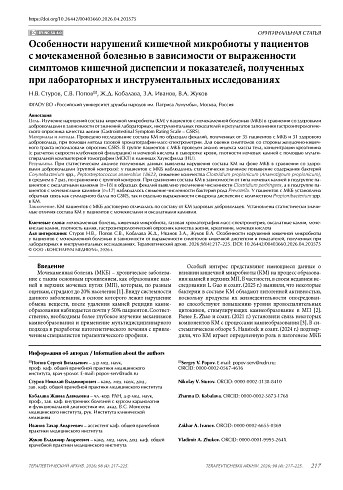
Особенности нарушений кишечной микробиоты у пациентов с мочекаменной болезнью в зависимости от выраженности симптомов кишечной диспепсии и показателей, полученных при лабораторных и инструментальных исследованиях
Особенности нарушений кишечной микробиоты у пациентов с мочекаменной болезнью в зависимости от выраженности симптомов кишечной диспепсии и показателей, полученных при лабораторных и инструментальных исследованиях
Стуров Н.В., Попов С.В., Кобалава Ж.Д., Иванов З.А., Жуков В.А. Особенности нарушений кишечной микробиоты у пациентов с мочекаменной болезнью в зависимости от выраженности симптомов кишечной диспепсии и показателей, полученных при лабораторных и инструментальных исследованиях. Терапевтический архив. 2026;98(4):217–225. DOI: 10.26442/00403660.2026.04.203575
© ООО «КОНСИЛИУМ МЕДИКУМ», 2026 г.
© ООО «КОНСИЛИУМ МЕДИКУМ», 2026 г.
________________________________________________
Материалы доступны только для специалистов сферы здравоохранения.
Чтобы посмотреть материал полностью
Авторизуйтесь
или зарегистрируйтесь.
Аннотация
Цель. Изучение нарушений состава кишечной микробиоты (КМ) у пациентов с мочекаменной болезнью (МКБ) в сравнении со здоровыми добровольцами в зависимости от значений лабораторных, инструментальных показателей и результатов заполнения гастроэнтерологического опросника качества жизни (Gastrointestinal Symptom Rating Scale – GSRS).
Материалы и методы. Проведено исследование состава КМ по образцам фекалий, полученных от 35 пациентов с МКБ и 31 здорового добровольца, при помощи метода газовой хроматографии-масс-спектрометрии. Для оценки симптомов со стороны желудочно-кишечного тракта использовали опросник GSRS. В группе пациентов с МКБ проведен анализ индекса массы тела, концентрации креатинина (с расчетом скорости клубочковой фильтрации) и мочевой кислоты в сыворотке крови, плотности мочевых камней с помощью мультиспиральной компьютерной томографии (МСКТ) в единицах Хаунсфилда (HU).
Результаты. При статистическом анализе полученных данных выявлены нарушения состава КМ на фоне МКБ в сравнении со здоровыми добровольцами (группой контроля): у пациентов с МКБ наблюдались статистически значимое повышение содержания бактерий Corynebacterium spp., Peptostreptococcus anaerobius 18623, снижение количества Clostridium propionicum (Anaerotignum propionicum), в среднем в 7 раз, по сравнению с группой контроля. При сравнении состава КМ в зависимости от типа мочевых камней в подгруппе пациентов с оксалатными камнями (n=18) в образцах фекалий выявлено увеличение численности Clostridium perfringens, а в подгруппе пациентов с мочекислыми камнями (n=17) наблюдалось снижение численности бактерий рода Prevotella. У пациентов с МКБ установлена обратная связь как суммарного балла по GSRS, так и отдельно выраженности синдрома диспепсии с количеством Propionibacterium spp. в КМ.
Заключение. КМ пациентов с МКБ достоверно отличалась по составу от КМ здоровых добровольцев. Установлены статистически значимые отличия состава КМ у пациентов с мочекислыми и оксалатными камнями.
Ключевые слова: мочекаменная болезнь, кишечная микробиота, газовая хроматография-масс-спектрометрия, оксалатные камни, мочекислые камни, плотность камня, гастроэнтерологический опросник качества жизни, креатинин, мочевая кислота
Materials and methods. The composition of GM was studied using fecal samples obtained from 35 patients with urolithiasis and 31 healthy volunteers using gas chromatography-mass spectrometry. The GSRS questionnaire was used to assess gastrointestinal symptoms. In the group of patients with urolithiasis, the body mass index, serum creatinine concentration (with calculation of glomerular filtration rate), and serum uric acid concentration were analyzed, as well as the density of urinary stones using multispiral computed tomography (MSCT) in Hounsfield units (HU).
Results. Statistical analysis of the data revealed violations of the composition of the GM against the background of urolithiasis in comparison with healthy volunteers (control group): patients with urolithiasis had a statistically significant increase in the content of bacteria Corynebacterium spp., Peptostreptococcus anaerobius 18623, a decrease in the number of Clostridium propionicum (Anaerotignum propionicum), on average, 7 times, compared to the control group. When comparing the composition of the GM depending on the type of urinary stones, in the subgroup of patients with oxalate stones (n=18), an increase in the number of Clostridium perfringens was detected in the fecal samples, and in the subgroup of patients with uric acid stones (n=17), a decrease in the number of Prevotella bacteria was observed. In patients with urolithiasis, there was a negative correlation between the total GSRS score and the severity of dyspepsia syndrome, as well as the number of Propionibacterium spp. in the GM.
Conclusion. The composition of the GM in patients with urolithiasis was significantly different from that of the GM in healthy volunteers. Statistically significant differences in the composition of the GM were found in patients with uric acid and oxalate stones.
Keywords: urolithiasis, gut microbiota, gas chromatography-mass spectrometry, oxalate stones, uric acid stones, stone density, Gastrointestinal Symptom Rating Scale, creatinine, uric acid
Материалы и методы. Проведено исследование состава КМ по образцам фекалий, полученных от 35 пациентов с МКБ и 31 здорового добровольца, при помощи метода газовой хроматографии-масс-спектрометрии. Для оценки симптомов со стороны желудочно-кишечного тракта использовали опросник GSRS. В группе пациентов с МКБ проведен анализ индекса массы тела, концентрации креатинина (с расчетом скорости клубочковой фильтрации) и мочевой кислоты в сыворотке крови, плотности мочевых камней с помощью мультиспиральной компьютерной томографии (МСКТ) в единицах Хаунсфилда (HU).
Результаты. При статистическом анализе полученных данных выявлены нарушения состава КМ на фоне МКБ в сравнении со здоровыми добровольцами (группой контроля): у пациентов с МКБ наблюдались статистически значимое повышение содержания бактерий Corynebacterium spp., Peptostreptococcus anaerobius 18623, снижение количества Clostridium propionicum (Anaerotignum propionicum), в среднем в 7 раз, по сравнению с группой контроля. При сравнении состава КМ в зависимости от типа мочевых камней в подгруппе пациентов с оксалатными камнями (n=18) в образцах фекалий выявлено увеличение численности Clostridium perfringens, а в подгруппе пациентов с мочекислыми камнями (n=17) наблюдалось снижение численности бактерий рода Prevotella. У пациентов с МКБ установлена обратная связь как суммарного балла по GSRS, так и отдельно выраженности синдрома диспепсии с количеством Propionibacterium spp. в КМ.
Заключение. КМ пациентов с МКБ достоверно отличалась по составу от КМ здоровых добровольцев. Установлены статистически значимые отличия состава КМ у пациентов с мочекислыми и оксалатными камнями.
Ключевые слова: мочекаменная болезнь, кишечная микробиота, газовая хроматография-масс-спектрометрия, оксалатные камни, мочекислые камни, плотность камня, гастроэнтерологический опросник качества жизни, креатинин, мочевая кислота
________________________________________________
Materials and methods. The composition of GM was studied using fecal samples obtained from 35 patients with urolithiasis and 31 healthy volunteers using gas chromatography-mass spectrometry. The GSRS questionnaire was used to assess gastrointestinal symptoms. In the group of patients with urolithiasis, the body mass index, serum creatinine concentration (with calculation of glomerular filtration rate), and serum uric acid concentration were analyzed, as well as the density of urinary stones using multispiral computed tomography (MSCT) in Hounsfield units (HU).
Results. Statistical analysis of the data revealed violations of the composition of the GM against the background of urolithiasis in comparison with healthy volunteers (control group): patients with urolithiasis had a statistically significant increase in the content of bacteria Corynebacterium spp., Peptostreptococcus anaerobius 18623, a decrease in the number of Clostridium propionicum (Anaerotignum propionicum), on average, 7 times, compared to the control group. When comparing the composition of the GM depending on the type of urinary stones, in the subgroup of patients with oxalate stones (n=18), an increase in the number of Clostridium perfringens was detected in the fecal samples, and in the subgroup of patients with uric acid stones (n=17), a decrease in the number of Prevotella bacteria was observed. In patients with urolithiasis, there was a negative correlation between the total GSRS score and the severity of dyspepsia syndrome, as well as the number of Propionibacterium spp. in the GM.
Conclusion. The composition of the GM in patients with urolithiasis was significantly different from that of the GM in healthy volunteers. Statistically significant differences in the composition of the GM were found in patients with uric acid and oxalate stones.
Keywords: urolithiasis, gut microbiota, gas chromatography-mass spectrometry, oxalate stones, uric acid stones, stone density, Gastrointestinal Symptom Rating Scale, creatinine, uric acid
Полный текст
Список литературы
1. Stamatelou K, Goldfarb DS. Epidemiology of Kidney Stones. Healthcare (Basel). 2023;11(3):424. DOI:10.3390/healthcare11030424
2. Guo L, Lan Q, Zhou M, Liu F. From gut to kidney: microbiota modulates stone risk through inflammation-a mediated Mendelian randomization study. Mamm Genome. 2025;36(1):250-61. DOI:10.1007/s00335-024-10094-9
3. Zhao E, Zhang W, Geng B, et al. Intestinal dysbacteriosis leads to kidney stone disease. Mol Med Rep. 2021;23(3):180. DOI:10.3892/mmr.2020.11819
4. Hanstock S, Chew B, Lange D. The Role of the Gut Microbiome in Kidney Stone Disease. Urol Clin North Am. 2024;51(4):475-82. DOI:10.1016/j.ucl.2024.06.003
5. Baur T, Dürre P. New Insights into the Physiology of the Propionate Producers Anaerotignum propionicum and Anaerotignum neopropionicum (Formerly Clostridium propionicum and Clostridium neopropionicum). Microorganisms. 2023;11(3). DOI:10.3390/microorganisms11030685
6. Huang Y, Zhang YH, Chi ZP, et al. The Handling of Oxalate in the Body and the Origin of Oxalate in Calcium Oxalate Stones. Urol Int. 2020;104(3-4):167-76. DOI:10.1159/000504417
7. Kumar A, Priyamvada S, Ge Y, et al. A Novel Role of SLC26A3 in the Maintenance of Intestinal Epithelial Barrier Integrity. Gastroenterology. 2021;160(4):1240-1255.e3. DOI:10.1053/j.gastro.2020.11.008
8. Dimke H, Winther-Jensen M, Allin KH, et al. Risk of Urolithiasis in Patients With Inflammatory Bowel Disease: A Nationwide Danish Cohort Study 1977–2018. Clin Gastroenterol Hepatol. 2021;19(12):2532-2540.e2. DOI:10.1016/j.cgh.2020.09.049
9. Koudonas A, Tsiakaras S, Tzikoulis V, et al. Lifestyle Factors and the Microbiome in Urolithiasis: A Narrative Review. Nutrients. 2025;17(3):465. DOI:10.3390/nu17030465
10. Zhu W, Liu Y, Lan Y, et al. Dietary vinegar prevents kidney stone recurrence via epigenetic regulations. EBioMedicine. 2019;45:231-50. DOI:10.1016/j.ebiom.2019.06.004
11. Capolongo G, Ferraro PM, Unwin R. Inflammation and kidney stones: cause and effect? Curr Opin Urol. 2023;33(2):129-35. DOI:10.1097/MOU.0000000000001066
12. Wallen ZD, Appah M, Dean MN, et al. Characterizing dysbiosis of gut microbiome in PD: evidence for overabundance of opportunistic pathogens. NPJ Parkinsons Dis. 2020;6:11. DOI:10.1038/s41531-020-0112-6
13. Martín-Navarro JA, Petkov-Stoyanov V, Gutiérrez-Sánchez MJ, Gordo-Flores ME. Struvite urolithiasis with Corynebacterium urealyticum infection: A case report. Nefrologia. 2015;35(4):410-1. DOI:10.1016/j.nefro.2015.06.009
14. Перепанова Т.С., Голованов С.А., Меринов Д.С., и др. Метафилактика инфекционных камней почек после перкутанной нефролитотрипсии. Экспериментальная и клиническая урология. 2016;4:96-9 [Perepanova TS, Golovanov SA, Merinov DS, et al. Metaphylaxis of infectious renal stones after percutaneous nephrolithotomy. Eksperimental’naya i klinicheskaya urologiya. 2016;4:96-9 (in Russian)].
15. Rusmir AV, Paunescu IA, Martis S, et al. Encrusted Uretero-Pyelitis Caused by Corynebacterium urealyticum: Case Report and Literature Review. Diagnostics (Basel). 2022;12(9). DOI:10.3390/diagnostics12092239
16. Liu Y, Wong CC, Ding Y, et al. Peptostreptococcus anaerobius mediates anti-PD1 therapy resistance and exacerbates colorectal cancer via myeloid-derived suppressor cells in mice. Nat Microbiol. 2024;9(6):1467-82. DOI:10.1038/s41564-024-01695-w
17. Suryavanshi MV, Bhute SS, Jadhav SD, et al. Hyperoxaluria leads to dysbiosis and drives selective enrichment of oxalate metabolizing bacterial species in recurrent kidney stone endures. Sci Rep. 2016;6:34712. DOI:10.1038/srep34712
18. Ba X, Jin Y, Ning X, et al. Clostridium perfringens in the Intestine: Innocent Bystander or Serious Threat? Microorganisms. 2024;12(8):1610. DOI:10.3390/microorganisms12081610
19. Голощапов Е.Т., Четвериков А.В., Белозеров Е.С. Инфекционный фактор в генезе мочевого камнеобразования. Урологические ведомости. 2017;6(4):21-7 [Goloschapov ET, Chetverikov AV, Belozerov ES. The infectious factor in the genesis of urinary stone formation. UroVed. 2017;6(4):21-7 (in Russian)]. DOI:10.17816/uroved6421-27
20. Yamamura K, Ashida H, Okano T, et al. Inflammasome Activation Induced by Perfringolysin O of Clostridium perfringens and Its Involvement in the Progression of Gas Gangrene. Front Microbiol. 2019;10:2406. DOI:10.3389/fmicb.2019.02406
21. Goldstein J, Morris WE, Loidl CF, et al. Clostridium perfringens epsilon toxin increases the small intestinal permeability in mice and rats. PLoS One. 2009;4(9):e7065. DOI:10.1371/journal.pone.0007065
22. Hunthai S, Usawachintachit M, Taweevisit M, et al. Unraveling the role of gut microbiota by fecal microbiota transplantation in rat model of kidney stone disease. Sci Rep. 2024;14(1):21924. DOI:10.1038/s41598-024-72694-4
23. Nagpal R, Tsuji H, Takahashi T, et al. Gut dysbiosis following C-section instigates higher colonisation of toxigenic Clostridium perfringens in infants. Benef Microbes. 2017;8(3):353-65. DOI:10.3920/BM2016.0216
24. Chen T, Long W, Zhang C, et al. Fiber-utilizing capacity varies in Prevotella- versus Bacteroides-dominated gut microbiota. Sci Rep. 2017;7(1):2594. DOI:10.1038/s41598-017-02995-4
25. Stern JM, Moazami S, Qiu Y, et al. Evidence for a distinct gut microbiome in kidney stone formers compared to non-stone formers. Urolithiasis. 2016;44(5):399-407. DOI:10.1007/s00240-016-0882-9
26. Yuan T, Xia Y, Li B, et al. Gut microbiota in patients with kidney stones: a systematic review and meta-analysis. BMC Microbiol. 2023;23(1):143. DOI:10.1186/s12866-023-02891-0
27. Kachroo N, Lange D, Penniston KL, et al. Meta-analysis of Clinical Microbiome Studies in Urolithiasis Reveal Age, Stone Composition, and Study Location as the Predominant Factors in Urolithiasis-Associated Microbiome Composition. mBio. 2021;12(4):e0200721. DOI:10.1128/mBio.02007-21
28. Lv Q, Xu D, Zhang X, et al. Association of Hyperuricemia With Immune Disorders and Intestinal Barrier Dysfunction. Front Physiol. 2020;11:524236. DOI:10.3389/fphys.2020.524236
29. Sun L, Zhang M, Zhao J, et al. The human gut microbiota and uric acid metabolism: genes, metabolites, and diet. Crit Rev Food Sci Nutr. 2025;65(31):7612-32. DOI:10.1080/10408398.2025.2475238
30. Jiang W, Wu J, Zhu S, et al. The Role of Short Chain Fatty Acids in Irritable Bowel Syndrome. J Neurogastroenterol Motil. 2022;28(4):540-8. DOI:10.5056/jnm22093
31. Glover J, Sullivan K, Browning B, et al. Acinetobacter species secrete compounds that promote intestinal inflammation. Physiology. 2024;39(S1). DOI:10.1152/physiol.2024.39.s1.1549
32. Dikeocha IJ, Al-Kabsi AM, Ahmeda AF, et al. Investigation into the Potential Role of Propionibacterium freudenreichii in Prevention of Colorectal Cancer and Its Effects on the Diversity of Gut Microbiota in Rats. Int J Mol Sci. 2023;24(9):8080. DOI:10.3390/ijms24098080
33. An M, Park YH, Lim YH. Antiobesity and antidiabetic effects of the dairy bacterium Propionibacterium freudenreichii MJ2 in high-fat diet-induced obese mice by modulating lipid metabolism. Sci Rep. 2021;11(1):2481. DOI:10.1038/s41598-021-82282-5
34. Miao H, Liu F, Wang YN, et al. Targeting Lactobacillus johnsonii to reverse chronic kidney disease. Signal Transduct Target Ther. 2024;9(1):195. DOI:10.1038/s41392-024-01913-1
35. Voroneanu L, Burlacu A, Brinza C, et al. Gut Microbiota in Chronic Kidney Disease: From Composition to Modulation towards Better Outcomes – A Systematic Review. J Clin Med. 2023;12(5):1948. DOI:10.3390/jcm12051948
36. Shin NR, Whon TW, Bae JW. Proteobacteria: microbial signature of dysbiosis in gut microbiota. Trends Biotechnol. 2015;33(9):496-503. DOI:10.1016/j.tibtech.2015.06.011
2. Guo L, Lan Q, Zhou M, Liu F. From gut to kidney: microbiota modulates stone risk through inflammation-a mediated Mendelian randomization study. Mamm Genome. 2025;36(1):250-61. DOI:10.1007/s00335-024-10094-9
3. Zhao E, Zhang W, Geng B, et al. Intestinal dysbacteriosis leads to kidney stone disease. Mol Med Rep. 2021;23(3):180. DOI:10.3892/mmr.2020.11819
4. Hanstock S, Chew B, Lange D. The Role of the Gut Microbiome in Kidney Stone Disease. Urol Clin North Am. 2024;51(4):475-82. DOI:10.1016/j.ucl.2024.06.003
5. Baur T, Dürre P. New Insights into the Physiology of the Propionate Producers Anaerotignum propionicum and Anaerotignum neopropionicum (Formerly Clostridium propionicum and Clostridium neopropionicum). Microorganisms. 2023;11(3). DOI:10.3390/microorganisms11030685
6. Huang Y, Zhang YH, Chi ZP, et al. The Handling of Oxalate in the Body and the Origin of Oxalate in Calcium Oxalate Stones. Urol Int. 2020;104(3-4):167-76. DOI:10.1159/000504417
7. Kumar A, Priyamvada S, Ge Y, et al. A Novel Role of SLC26A3 in the Maintenance of Intestinal Epithelial Barrier Integrity. Gastroenterology. 2021;160(4):1240-1255.e3. DOI:10.1053/j.gastro.2020.11.008
8. Dimke H, Winther-Jensen M, Allin KH, et al. Risk of Urolithiasis in Patients With Inflammatory Bowel Disease: A Nationwide Danish Cohort Study 1977–2018. Clin Gastroenterol Hepatol. 2021;19(12):2532-2540.e2. DOI:10.1016/j.cgh.2020.09.049
9. Koudonas A, Tsiakaras S, Tzikoulis V, et al. Lifestyle Factors and the Microbiome in Urolithiasis: A Narrative Review. Nutrients. 2025;17(3):465. DOI:10.3390/nu17030465
10. Zhu W, Liu Y, Lan Y, et al. Dietary vinegar prevents kidney stone recurrence via epigenetic regulations. EBioMedicine. 2019;45:231-50. DOI:10.1016/j.ebiom.2019.06.004
11. Capolongo G, Ferraro PM, Unwin R. Inflammation and kidney stones: cause and effect? Curr Opin Urol. 2023;33(2):129-35. DOI:10.1097/MOU.0000000000001066
12. Wallen ZD, Appah M, Dean MN, et al. Characterizing dysbiosis of gut microbiome in PD: evidence for overabundance of opportunistic pathogens. NPJ Parkinsons Dis. 2020;6:11. DOI:10.1038/s41531-020-0112-6
13. Martín-Navarro JA, Petkov-Stoyanov V, Gutiérrez-Sánchez MJ, Gordo-Flores ME. Struvite urolithiasis with Corynebacterium urealyticum infection: A case report. Nefrologia. 2015;35(4):410-1. DOI:10.1016/j.nefro.2015.06.009
14. Perepanova TS, Golovanov SA, Merinov DS, et al. Metaphylaxis of infectious renal stones after percutaneous nephrolithotomy. Eksperimental’naya i klinicheskaya urologiya. 2016;4:96-9 (in Russian).
15. Rusmir AV, Paunescu IA, Martis S, et al. Encrusted Uretero-Pyelitis Caused by Corynebacterium urealyticum: Case Report and Literature Review. Diagnostics (Basel). 2022;12(9). DOI:10.3390/diagnostics12092239
16. Liu Y, Wong CC, Ding Y, et al. Peptostreptococcus anaerobius mediates anti-PD1 therapy resistance and exacerbates colorectal cancer via myeloid-derived suppressor cells in mice. Nat Microbiol. 2024;9(6):1467-82. DOI:10.1038/s41564-024-01695-w
17. Suryavanshi MV, Bhute SS, Jadhav SD, et al. Hyperoxaluria leads to dysbiosis and drives selective enrichment of oxalate metabolizing bacterial species in recurrent kidney stone endures. Sci Rep. 2016;6:34712. DOI:10.1038/srep34712
18. Ba X, Jin Y, Ning X, et al. Clostridium perfringens in the Intestine: Innocent Bystander or Serious Threat? Microorganisms. 2024;12(8):1610. DOI:10.3390/microorganisms12081610
19. Goloschapov ET, Chetverikov AV, Belozerov ES. The infectious factor in the genesis of urinary stone formation. UroVed. 2017;6(4):21-7 (in Russian). DOI:10.17816/uroved6421-27
20. Yamamura K, Ashida H, Okano T, et al. Inflammasome Activation Induced by Perfringolysin O of Clostridium perfringens and Its Involvement in the Progression of Gas Gangrene. Front Microbiol. 2019;10:2406. DOI:10.3389/fmicb.2019.02406
21. Goldstein J, Morris WE, Loidl CF, et al. Clostridium perfringens epsilon toxin increases the small intestinal permeability in mice and rats. PLoS One. 2009;4(9):e7065. DOI:10.1371/journal.pone.0007065
22. Hunthai S, Usawachintachit M, Taweevisit M, et al. Unraveling the role of gut microbiota by fecal microbiota transplantation in rat model of kidney stone disease. Sci Rep. 2024;14(1):21924. DOI:10.1038/s41598-024-72694-4
23. Nagpal R, Tsuji H, Takahashi T, et al. Gut dysbiosis following C-section instigates higher colonisation of toxigenic Clostridium perfringens in infants. Benef Microbes. 2017;8(3):353-65. DOI:10.3920/BM2016.0216
24. Chen T, Long W, Zhang C, et al. Fiber-utilizing capacity varies in Prevotella- versus Bacteroides-dominated gut microbiota. Sci Rep. 2017;7(1):2594. DOI:10.1038/s41598-017-02995-4
25. Stern JM, Moazami S, Qiu Y, et al. Evidence for a distinct gut microbiome in kidney stone formers compared to non-stone formers. Urolithiasis. 2016;44(5):399-407. DOI:10.1007/s00240-016-0882-9
26. Yuan T, Xia Y, Li B, et al. Gut microbiota in patients with kidney stones: a systematic review and meta-analysis. BMC Microbiol. 2023;23(1):143. DOI:10.1186/s12866-023-02891-0
27. Kachroo N, Lange D, Penniston KL, et al. Meta-analysis of Clinical Microbiome Studies in Urolithiasis Reveal Age, Stone Composition, and Study Location as the Predominant Factors in Urolithiasis-Associated Microbiome Composition. mBio. 2021;12(4):e0200721. DOI:10.1128/mBio.02007-21
28. Lv Q, Xu D, Zhang X, et al. Association of Hyperuricemia With Immune Disorders and Intestinal Barrier Dysfunction. Front Physiol. 2020;11:524236. DOI:10.3389/fphys.2020.524236
29. Sun L, Zhang M, Zhao J, et al. The human gut microbiota and uric acid metabolism: genes, metabolites, and diet. Crit Rev Food Sci Nutr. 2025;65(31):7612-32. DOI:10.1080/10408398.2025.2475238
30. Jiang W, Wu J, Zhu S, et al. The Role of Short Chain Fatty Acids in Irritable Bowel Syndrome. J Neurogastroenterol Motil. 2022;28(4):540-8. DOI:10.5056/jnm22093
31. Glover J, Sullivan K, Browning B, et al. Acinetobacter species secrete compounds that promote intestinal inflammation. Physiology. 2024;39(S1). DOI:10.1152/physiol.2024.39.s1.1549
32. Dikeocha IJ, Al-Kabsi AM, Ahmeda AF, et al. Investigation into the Potential Role of Propionibacterium freudenreichii in Prevention of Colorectal Cancer and Its Effects on the Diversity of Gut Microbiota in Rats. Int J Mol Sci. 2023;24(9):8080. DOI:10.3390/ijms24098080
33. An M, Park YH, Lim YH. Antiobesity and antidiabetic effects of the dairy bacterium Propionibacterium freudenreichii MJ2 in high-fat diet-induced obese mice by modulating lipid metabolism. Sci Rep. 2021;11(1):2481. DOI:10.1038/s41598-021-82282-5
34. Miao H, Liu F, Wang YN, et al. Targeting Lactobacillus johnsonii to reverse chronic kidney disease. Signal Transduct Target Ther. 2024;9(1):195. DOI:10.1038/s41392-024-01913-1
35. Voroneanu L, Burlacu A, Brinza C, et al. Gut Microbiota in Chronic Kidney Disease: From Composition to Modulation towards Better Outcomes – A Systematic Review. J Clin Med. 2023;12(5):1948. DOI:10.3390/jcm12051948
36. Shin NR, Whon TW, Bae JW. Proteobacteria: microbial signature of dysbiosis in gut microbiota. Trends Biotechnol. 2015;33(9):496-503. DOI:10.1016/j.tibtech.2015.06.011
2. Guo L, Lan Q, Zhou M, Liu F. From gut to kidney: microbiota modulates stone risk through inflammation-a mediated Mendelian randomization study. Mamm Genome. 2025;36(1):250-61. DOI:10.1007/s00335-024-10094-9
3. Zhao E, Zhang W, Geng B, et al. Intestinal dysbacteriosis leads to kidney stone disease. Mol Med Rep. 2021;23(3):180. DOI:10.3892/mmr.2020.11819
4. Hanstock S, Chew B, Lange D. The Role of the Gut Microbiome in Kidney Stone Disease. Urol Clin North Am. 2024;51(4):475-82. DOI:10.1016/j.ucl.2024.06.003
5. Baur T, Dürre P. New Insights into the Physiology of the Propionate Producers Anaerotignum propionicum and Anaerotignum neopropionicum (Formerly Clostridium propionicum and Clostridium neopropionicum). Microorganisms. 2023;11(3). DOI:10.3390/microorganisms11030685
6. Huang Y, Zhang YH, Chi ZP, et al. The Handling of Oxalate in the Body and the Origin of Oxalate in Calcium Oxalate Stones. Urol Int. 2020;104(3-4):167-76. DOI:10.1159/000504417
7. Kumar A, Priyamvada S, Ge Y, et al. A Novel Role of SLC26A3 in the Maintenance of Intestinal Epithelial Barrier Integrity. Gastroenterology. 2021;160(4):1240-1255.e3. DOI:10.1053/j.gastro.2020.11.008
8. Dimke H, Winther-Jensen M, Allin KH, et al. Risk of Urolithiasis in Patients With Inflammatory Bowel Disease: A Nationwide Danish Cohort Study 1977–2018. Clin Gastroenterol Hepatol. 2021;19(12):2532-2540.e2. DOI:10.1016/j.cgh.2020.09.049
9. Koudonas A, Tsiakaras S, Tzikoulis V, et al. Lifestyle Factors and the Microbiome in Urolithiasis: A Narrative Review. Nutrients. 2025;17(3):465. DOI:10.3390/nu17030465
10. Zhu W, Liu Y, Lan Y, et al. Dietary vinegar prevents kidney stone recurrence via epigenetic regulations. EBioMedicine. 2019;45:231-50. DOI:10.1016/j.ebiom.2019.06.004
11. Capolongo G, Ferraro PM, Unwin R. Inflammation and kidney stones: cause and effect? Curr Opin Urol. 2023;33(2):129-35. DOI:10.1097/MOU.0000000000001066
12. Wallen ZD, Appah M, Dean MN, et al. Characterizing dysbiosis of gut microbiome in PD: evidence for overabundance of opportunistic pathogens. NPJ Parkinsons Dis. 2020;6:11. DOI:10.1038/s41531-020-0112-6
13. Martín-Navarro JA, Petkov-Stoyanov V, Gutiérrez-Sánchez MJ, Gordo-Flores ME. Struvite urolithiasis with Corynebacterium urealyticum infection: A case report. Nefrologia. 2015;35(4):410-1. DOI:10.1016/j.nefro.2015.06.009
14. Перепанова Т.С., Голованов С.А., Меринов Д.С., и др. Метафилактика инфекционных камней почек после перкутанной нефролитотрипсии. Экспериментальная и клиническая урология. 2016;4:96-9 [Perepanova TS, Golovanov SA, Merinov DS, et al. Metaphylaxis of infectious renal stones after percutaneous nephrolithotomy. Eksperimental’naya i klinicheskaya urologiya. 2016;4:96-9 (in Russian)].
15. Rusmir AV, Paunescu IA, Martis S, et al. Encrusted Uretero-Pyelitis Caused by Corynebacterium urealyticum: Case Report and Literature Review. Diagnostics (Basel). 2022;12(9). DOI:10.3390/diagnostics12092239
16. Liu Y, Wong CC, Ding Y, et al. Peptostreptococcus anaerobius mediates anti-PD1 therapy resistance and exacerbates colorectal cancer via myeloid-derived suppressor cells in mice. Nat Microbiol. 2024;9(6):1467-82. DOI:10.1038/s41564-024-01695-w
17. Suryavanshi MV, Bhute SS, Jadhav SD, et al. Hyperoxaluria leads to dysbiosis and drives selective enrichment of oxalate metabolizing bacterial species in recurrent kidney stone endures. Sci Rep. 2016;6:34712. DOI:10.1038/srep34712
18. Ba X, Jin Y, Ning X, et al. Clostridium perfringens in the Intestine: Innocent Bystander or Serious Threat? Microorganisms. 2024;12(8):1610. DOI:10.3390/microorganisms12081610
19. Голощапов Е.Т., Четвериков А.В., Белозеров Е.С. Инфекционный фактор в генезе мочевого камнеобразования. Урологические ведомости. 2017;6(4):21-7 [Goloschapov ET, Chetverikov AV, Belozerov ES. The infectious factor in the genesis of urinary stone formation. UroVed. 2017;6(4):21-7 (in Russian)]. DOI:10.17816/uroved6421-27
20. Yamamura K, Ashida H, Okano T, et al. Inflammasome Activation Induced by Perfringolysin O of Clostridium perfringens and Its Involvement in the Progression of Gas Gangrene. Front Microbiol. 2019;10:2406. DOI:10.3389/fmicb.2019.02406
21. Goldstein J, Morris WE, Loidl CF, et al. Clostridium perfringens epsilon toxin increases the small intestinal permeability in mice and rats. PLoS One. 2009;4(9):e7065. DOI:10.1371/journal.pone.0007065
22. Hunthai S, Usawachintachit M, Taweevisit M, et al. Unraveling the role of gut microbiota by fecal microbiota transplantation in rat model of kidney stone disease. Sci Rep. 2024;14(1):21924. DOI:10.1038/s41598-024-72694-4
23. Nagpal R, Tsuji H, Takahashi T, et al. Gut dysbiosis following C-section instigates higher colonisation of toxigenic Clostridium perfringens in infants. Benef Microbes. 2017;8(3):353-65. DOI:10.3920/BM2016.0216
24. Chen T, Long W, Zhang C, et al. Fiber-utilizing capacity varies in Prevotella- versus Bacteroides-dominated gut microbiota. Sci Rep. 2017;7(1):2594. DOI:10.1038/s41598-017-02995-4
25. Stern JM, Moazami S, Qiu Y, et al. Evidence for a distinct gut microbiome in kidney stone formers compared to non-stone formers. Urolithiasis. 2016;44(5):399-407. DOI:10.1007/s00240-016-0882-9
26. Yuan T, Xia Y, Li B, et al. Gut microbiota in patients with kidney stones: a systematic review and meta-analysis. BMC Microbiol. 2023;23(1):143. DOI:10.1186/s12866-023-02891-0
27. Kachroo N, Lange D, Penniston KL, et al. Meta-analysis of Clinical Microbiome Studies in Urolithiasis Reveal Age, Stone Composition, and Study Location as the Predominant Factors in Urolithiasis-Associated Microbiome Composition. mBio. 2021;12(4):e0200721. DOI:10.1128/mBio.02007-21
28. Lv Q, Xu D, Zhang X, et al. Association of Hyperuricemia With Immune Disorders and Intestinal Barrier Dysfunction. Front Physiol. 2020;11:524236. DOI:10.3389/fphys.2020.524236
29. Sun L, Zhang M, Zhao J, et al. The human gut microbiota and uric acid metabolism: genes, metabolites, and diet. Crit Rev Food Sci Nutr. 2025;65(31):7612-32. DOI:10.1080/10408398.2025.2475238
30. Jiang W, Wu J, Zhu S, et al. The Role of Short Chain Fatty Acids in Irritable Bowel Syndrome. J Neurogastroenterol Motil. 2022;28(4):540-8. DOI:10.5056/jnm22093
31. Glover J, Sullivan K, Browning B, et al. Acinetobacter species secrete compounds that promote intestinal inflammation. Physiology. 2024;39(S1). DOI:10.1152/physiol.2024.39.s1.1549
32. Dikeocha IJ, Al-Kabsi AM, Ahmeda AF, et al. Investigation into the Potential Role of Propionibacterium freudenreichii in Prevention of Colorectal Cancer and Its Effects on the Diversity of Gut Microbiota in Rats. Int J Mol Sci. 2023;24(9):8080. DOI:10.3390/ijms24098080
33. An M, Park YH, Lim YH. Antiobesity and antidiabetic effects of the dairy bacterium Propionibacterium freudenreichii MJ2 in high-fat diet-induced obese mice by modulating lipid metabolism. Sci Rep. 2021;11(1):2481. DOI:10.1038/s41598-021-82282-5
34. Miao H, Liu F, Wang YN, et al. Targeting Lactobacillus johnsonii to reverse chronic kidney disease. Signal Transduct Target Ther. 2024;9(1):195. DOI:10.1038/s41392-024-01913-1
35. Voroneanu L, Burlacu A, Brinza C, et al. Gut Microbiota in Chronic Kidney Disease: From Composition to Modulation towards Better Outcomes – A Systematic Review. J Clin Med. 2023;12(5):1948. DOI:10.3390/jcm12051948
36. Shin NR, Whon TW, Bae JW. Proteobacteria: microbial signature of dysbiosis in gut microbiota. Trends Biotechnol. 2015;33(9):496-503. DOI:10.1016/j.tibtech.2015.06.011
________________________________________________
2. Guo L, Lan Q, Zhou M, Liu F. From gut to kidney: microbiota modulates stone risk through inflammation-a mediated Mendelian randomization study. Mamm Genome. 2025;36(1):250-61. DOI:10.1007/s00335-024-10094-9
3. Zhao E, Zhang W, Geng B, et al. Intestinal dysbacteriosis leads to kidney stone disease. Mol Med Rep. 2021;23(3):180. DOI:10.3892/mmr.2020.11819
4. Hanstock S, Chew B, Lange D. The Role of the Gut Microbiome in Kidney Stone Disease. Urol Clin North Am. 2024;51(4):475-82. DOI:10.1016/j.ucl.2024.06.003
5. Baur T, Dürre P. New Insights into the Physiology of the Propionate Producers Anaerotignum propionicum and Anaerotignum neopropionicum (Formerly Clostridium propionicum and Clostridium neopropionicum). Microorganisms. 2023;11(3). DOI:10.3390/microorganisms11030685
6. Huang Y, Zhang YH, Chi ZP, et al. The Handling of Oxalate in the Body and the Origin of Oxalate in Calcium Oxalate Stones. Urol Int. 2020;104(3-4):167-76. DOI:10.1159/000504417
7. Kumar A, Priyamvada S, Ge Y, et al. A Novel Role of SLC26A3 in the Maintenance of Intestinal Epithelial Barrier Integrity. Gastroenterology. 2021;160(4):1240-1255.e3. DOI:10.1053/j.gastro.2020.11.008
8. Dimke H, Winther-Jensen M, Allin KH, et al. Risk of Urolithiasis in Patients With Inflammatory Bowel Disease: A Nationwide Danish Cohort Study 1977–2018. Clin Gastroenterol Hepatol. 2021;19(12):2532-2540.e2. DOI:10.1016/j.cgh.2020.09.049
9. Koudonas A, Tsiakaras S, Tzikoulis V, et al. Lifestyle Factors and the Microbiome in Urolithiasis: A Narrative Review. Nutrients. 2025;17(3):465. DOI:10.3390/nu17030465
10. Zhu W, Liu Y, Lan Y, et al. Dietary vinegar prevents kidney stone recurrence via epigenetic regulations. EBioMedicine. 2019;45:231-50. DOI:10.1016/j.ebiom.2019.06.004
11. Capolongo G, Ferraro PM, Unwin R. Inflammation and kidney stones: cause and effect? Curr Opin Urol. 2023;33(2):129-35. DOI:10.1097/MOU.0000000000001066
12. Wallen ZD, Appah M, Dean MN, et al. Characterizing dysbiosis of gut microbiome in PD: evidence for overabundance of opportunistic pathogens. NPJ Parkinsons Dis. 2020;6:11. DOI:10.1038/s41531-020-0112-6
13. Martín-Navarro JA, Petkov-Stoyanov V, Gutiérrez-Sánchez MJ, Gordo-Flores ME. Struvite urolithiasis with Corynebacterium urealyticum infection: A case report. Nefrologia. 2015;35(4):410-1. DOI:10.1016/j.nefro.2015.06.009
14. Perepanova TS, Golovanov SA, Merinov DS, et al. Metaphylaxis of infectious renal stones after percutaneous nephrolithotomy. Eksperimental’naya i klinicheskaya urologiya. 2016;4:96-9 (in Russian).
15. Rusmir AV, Paunescu IA, Martis S, et al. Encrusted Uretero-Pyelitis Caused by Corynebacterium urealyticum: Case Report and Literature Review. Diagnostics (Basel). 2022;12(9). DOI:10.3390/diagnostics12092239
16. Liu Y, Wong CC, Ding Y, et al. Peptostreptococcus anaerobius mediates anti-PD1 therapy resistance and exacerbates colorectal cancer via myeloid-derived suppressor cells in mice. Nat Microbiol. 2024;9(6):1467-82. DOI:10.1038/s41564-024-01695-w
17. Suryavanshi MV, Bhute SS, Jadhav SD, et al. Hyperoxaluria leads to dysbiosis and drives selective enrichment of oxalate metabolizing bacterial species in recurrent kidney stone endures. Sci Rep. 2016;6:34712. DOI:10.1038/srep34712
18. Ba X, Jin Y, Ning X, et al. Clostridium perfringens in the Intestine: Innocent Bystander or Serious Threat? Microorganisms. 2024;12(8):1610. DOI:10.3390/microorganisms12081610
19. Goloschapov ET, Chetverikov AV, Belozerov ES. The infectious factor in the genesis of urinary stone formation. UroVed. 2017;6(4):21-7 (in Russian). DOI:10.17816/uroved6421-27
20. Yamamura K, Ashida H, Okano T, et al. Inflammasome Activation Induced by Perfringolysin O of Clostridium perfringens and Its Involvement in the Progression of Gas Gangrene. Front Microbiol. 2019;10:2406. DOI:10.3389/fmicb.2019.02406
21. Goldstein J, Morris WE, Loidl CF, et al. Clostridium perfringens epsilon toxin increases the small intestinal permeability in mice and rats. PLoS One. 2009;4(9):e7065. DOI:10.1371/journal.pone.0007065
22. Hunthai S, Usawachintachit M, Taweevisit M, et al. Unraveling the role of gut microbiota by fecal microbiota transplantation in rat model of kidney stone disease. Sci Rep. 2024;14(1):21924. DOI:10.1038/s41598-024-72694-4
23. Nagpal R, Tsuji H, Takahashi T, et al. Gut dysbiosis following C-section instigates higher colonisation of toxigenic Clostridium perfringens in infants. Benef Microbes. 2017;8(3):353-65. DOI:10.3920/BM2016.0216
24. Chen T, Long W, Zhang C, et al. Fiber-utilizing capacity varies in Prevotella- versus Bacteroides-dominated gut microbiota. Sci Rep. 2017;7(1):2594. DOI:10.1038/s41598-017-02995-4
25. Stern JM, Moazami S, Qiu Y, et al. Evidence for a distinct gut microbiome in kidney stone formers compared to non-stone formers. Urolithiasis. 2016;44(5):399-407. DOI:10.1007/s00240-016-0882-9
26. Yuan T, Xia Y, Li B, et al. Gut microbiota in patients with kidney stones: a systematic review and meta-analysis. BMC Microbiol. 2023;23(1):143. DOI:10.1186/s12866-023-02891-0
27. Kachroo N, Lange D, Penniston KL, et al. Meta-analysis of Clinical Microbiome Studies in Urolithiasis Reveal Age, Stone Composition, and Study Location as the Predominant Factors in Urolithiasis-Associated Microbiome Composition. mBio. 2021;12(4):e0200721. DOI:10.1128/mBio.02007-21
28. Lv Q, Xu D, Zhang X, et al. Association of Hyperuricemia With Immune Disorders and Intestinal Barrier Dysfunction. Front Physiol. 2020;11:524236. DOI:10.3389/fphys.2020.524236
29. Sun L, Zhang M, Zhao J, et al. The human gut microbiota and uric acid metabolism: genes, metabolites, and diet. Crit Rev Food Sci Nutr. 2025;65(31):7612-32. DOI:10.1080/10408398.2025.2475238
30. Jiang W, Wu J, Zhu S, et al. The Role of Short Chain Fatty Acids in Irritable Bowel Syndrome. J Neurogastroenterol Motil. 2022;28(4):540-8. DOI:10.5056/jnm22093
31. Glover J, Sullivan K, Browning B, et al. Acinetobacter species secrete compounds that promote intestinal inflammation. Physiology. 2024;39(S1). DOI:10.1152/physiol.2024.39.s1.1549
32. Dikeocha IJ, Al-Kabsi AM, Ahmeda AF, et al. Investigation into the Potential Role of Propionibacterium freudenreichii in Prevention of Colorectal Cancer and Its Effects on the Diversity of Gut Microbiota in Rats. Int J Mol Sci. 2023;24(9):8080. DOI:10.3390/ijms24098080
33. An M, Park YH, Lim YH. Antiobesity and antidiabetic effects of the dairy bacterium Propionibacterium freudenreichii MJ2 in high-fat diet-induced obese mice by modulating lipid metabolism. Sci Rep. 2021;11(1):2481. DOI:10.1038/s41598-021-82282-5
34. Miao H, Liu F, Wang YN, et al. Targeting Lactobacillus johnsonii to reverse chronic kidney disease. Signal Transduct Target Ther. 2024;9(1):195. DOI:10.1038/s41392-024-01913-1
35. Voroneanu L, Burlacu A, Brinza C, et al. Gut Microbiota in Chronic Kidney Disease: From Composition to Modulation towards Better Outcomes – A Systematic Review. J Clin Med. 2023;12(5):1948. DOI:10.3390/jcm12051948
36. Shin NR, Whon TW, Bae JW. Proteobacteria: microbial signature of dysbiosis in gut microbiota. Trends Biotechnol. 2015;33(9):496-503. DOI:10.1016/j.tibtech.2015.06.011
Авторы
Н.В. Стуров, С.В. Попов*, Ж.Д. Кобалава, З.А. Иванов, В.А. Жуков
ФГАОУ ВО «Российский университет дружбы народов им. Патриса Лумумбы», Москва, Россия
*popov-serv@rudn.ru
People’s Friendship University of Russia named after Patrice Lumumba, Moscow, Russia
*popov-serv@rudn.ru
ФГАОУ ВО «Российский университет дружбы народов им. Патриса Лумумбы», Москва, Россия
*popov-serv@rudn.ru
________________________________________________
People’s Friendship University of Russia named after Patrice Lumumba, Moscow, Russia
*popov-serv@rudn.ru
Цель портала OmniDoctor – предоставление профессиональной информации врачам, провизорам и фармацевтам.