

Материалы доступны только для специалистов сферы здравоохранения. Авторизуйтесь или зарегистрируйтесь.
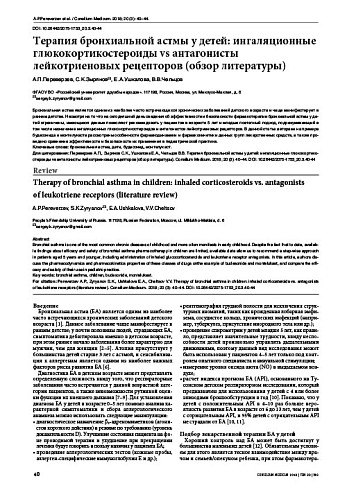
Терапия бронхиальной астмы у детей: ингаляционные глюкокортикостероиды vs антагонисты лейкотриеновых рецепторов (обзор литературы)
Терапия бронхиальной астмы у детей: ингаляционные глюкокортикостероиды vs антагонисты лейкотриеновых рецепторов (обзор литературы)
Переверзев А.П., Зырянов С.К., Ушкалова Е.А., Чельцов В.В. Терапия бронхиальной астмы у детей: ингаляционные глюкокортикостероиды vs антагонисты лейкотриеновых рецепторов (обзор литературы). Consilium Medicum. 2018; 20 (3): 40–44. DOI: 10.26442/2075-1753_20.3.40-44
________________________________________________
Материалы доступны только для специалистов сферы здравоохранения. Авторизуйтесь или зарегистрируйтесь.
Аннотация
Бронхиальная астма является одним из наиболее часто встречающихся хронических заболеваний детского возраста и чаще манифестирует в раннем детстве. Несмотря на то что на сегодняшний день сведения об эффективности и безопасности фармакотерапии бронхиальной астмы у детей ограничены, имеющиеся данные позволяют рекомендовать у пациентов в возрасте 5 лет и младше поэтапный подход, подразумевающий в том числе назначение ингаляционных глюкокортикостероидов и антагонистов лейкотриеновых рецепторов. В данной статье авторами на примере будесонида и монтелукаста рассмотрены особенности фармакодинамики и фармакокинетики данных групп лекарственных средств, а также проведено сравнение эффективности и безопасности их применения в педиатрической практике.
Ключевые слова: бронхиальная астма, дети, будесонид, монтелукаст.
Key words: bronchial asthma, children, budesonide, montelukast.
Ключевые слова: бронхиальная астма, дети, будесонид, монтелукаст.
________________________________________________
Key words: bronchial asthma, children, budesonide, montelukast.
Полный текст
Список литературы
1. Masoli M, Fabian D, Holt S, Beasley R. The global burden of asthma: executive summary of the GINA Dissemination Committee report. Allergy 2004; 59: 469–78.
2. Simpson CR, Sheikh A. Trends in the epidemiology of asthma in England: a national study of 333,294 patients. J R Soc Med 2010; 103: 98–106.3. Bisgaard H, Szefler S. Prevalence of asthma-like symptoms in young children. Pediatr Pulmonol 2007; 42: 723–8.
4. Kuehni CE, Strippoli MP, Low N et al. Wheeze and asthma prevalence and related health- service use in white and south Asian pre-schoolchildren in the United Kingdom. Clin Exp Allergy 2007; 37: 1738–46.
5. Martinez FD, Wright AL, Taussig LM et al. Asthma and wheezing in the first six years of life. The Group Health Medical Associates. N Engl J Med 1995; 332: 133–8.
6. Sly PD, Boner AL, Bjorksten B et al. Early identification of atopy in the prediction of persistent asthma in children. Lancet 2008; 372: 1100–6.
7. Doherty G, Bush A. Diagnosing respiratory problems in young children. Practitioner 2007; 251: 20, 2–5.
8. Pedersen S. Preschool asthma – not so easy to diagnose. Prim Care Respir J 2007; 16: 4–6.
9. Brand PL, Caudri D, Eber E et al. Classification and pharmacological treatment of preschool wheezing: changes since 2008. Eur Respir J 2014; 43: 1172–7.
10. Global Initiative for Asthma. Global Strategy for Asthma Management and Prevention, 2017. 06.02.2018. URL: www.ginasthma.org
11. Castro-Rodriguez JA, Holberg CJ, Wright AL, Martinez FD. A clinical index to define risk of asthma in young children with recurrent wheezing. Am J Respir Crit Care Med 2000; 162: 1403–6.
12. Bisgaard H, Allen D, Milanowski J et al. Twelve-month safety and efficacy of inhaled fluticasone propionate in children aged 1 to 3 years with recurrent wheezing. Pediatrics 2004; 113: e87–94.
13. Guilbert TW, Morgan WJ, Zeiger RS et al. Long-term inhaled corticosteroids in preschool children at high risk for asthma. N Engl J Med 2006; 354: 1985–97.
14. Nielsen KG, Bisgaard H. The effect of inhaled budesonide on symptoms, lung function, and cold air and methacholine responsiveness in 2- to 5-year-old asthmatic children. Am J Respir Crit Care Med 2000; 162: 1500–6.
15. Szefler SJ, Baker JW, Uryniak T et al. Comparative study of budesonide inhalation suspension and montelukast in young children with mild persistent asthma. J Allergy Clin Immunol 2007; 120: 1043–50.
16. Инструкция по медицинскому применению лекарственного препарата Сингуляр®. Государственный реестр лекарственных средств. 06.02.2018 URL: http://grls.rosminzdrav.ru/Grls_View_v2.aspx?routingGuid=a148e32c-aedc-4936-b984-aa7ea5c111b0&am.... / Instruktsiia po meditsinskomu primeneniiu lekarstvennogo preparata Singuliar®. Gosudarstvennyi reestr lekarstvennykh sredstv. 06.02.2018 URL: http://grls.rosminzdrav.ru/Grls_View_v2.aspx?routingGuid=a148e32c-aedc-4936-b984-aa7ea5c111b0&am.... [in Russian]
17. Hvizdos KM, Jarvis B. Budesonide inhalation suspension: a review of its use in infants, children and adults with inflammatory respiratory disorders. Drugs 2000; 60 (5): 1141–78.
18. Knorr B, Franchi LM, Bisgaard H et al. Montelukast, a leukotriene receptor antagonist, for the treatment of persistent asthma in children aged 2 to 5 years. Pediatrics 2001; 108: E48.
19. Shah MB, Gohil J, Khapekar S, Dave J. Montelukast versus budesonide as a first line preventive therapy in mild persistent asthma in 2 to 18 y. Indian J Pediatr 2014; 81 (7): 655–9.
20. Szefler SJ, Carlsson LG, Uryniak T, Baker JW. Budesonide inhalation suspension versus montelukast in children aged 2 to 4 years with mild persistent asthma. J Allergy Clin Immunol Pract 2013; 1 (1): 58–64.
21. Edsbäcker S, Wollmer P, Selroos O et al. Do airway clearance mechanisms influence the local and systemic effects of inhaled corticosteroids? Pulm Pharmacol Ther 2008; 21: 247–2582.
22. Bhupendrasinh F Chauhan, Francine M Ducharme. Anti-leukotriene agents compared to inhaled corticosteroids in the management of recurrent and/or chronic asthma in adults and children. Cochraine library 06.02.2018 URL: http://onlinelibrary.wiley.com/doi/10.1002/14651858.CD002314.pub3/full
23. Loke YK, Blanco P, Thavarajah M, Wilson AM. Impact of inhaled corticosteroids on growth in children with asthma: Systematic review and meta-analysis. PLoS One 2015; 10.
24. Kelly HW, Sternberg AL, Lescher R et al. Effect of inhaled glucocorticoids in childhood on adult height. N Engl J Med 2012; 367: 904–12.
25. Pedersen S. Do inhaled corticosteroids inhibit growth in children? Am J Respir Crit Care Med 2001; 164: 521–35.
26. Wallerstedt SM, Brunlöf G, Sundström A, Eriksson AL. Montelukast and psychiatric disorders in children. Pharmacoepidemiol Drug Saf 2009; 18 (9): 858–64.
27. Calapai G, Casciaro M, Miroddi M et al. Montelukast-induced adverse drug reactions: a review of case reports in the literature. Pharmacology 2014; 94 (1–2): 60–70.
28. Инструкция по медицинскому применению лекарственного препарата Пульмикорт® (суспензия для ингаляций дозированная 0,25 и 0,5 мг/мл) с учетом изменений №1, 2, 3. Регистрационное удостоверение П N013826/01 от 14.09.2007, дата переоформления 24.11.2016. / Instruktsiya po meditsinskomu primeneniiu lekarstvennogo preparata Pulmikort® (suspenziya dlya ingalyatsii dozirovannaya 0,25 i 0,5 mg/ml) s uchetom izmenenii №1, 2, 3. Registratsionnoe udostoverenie P N013826/01 ot 14.09.2007, data pereoformleniya 24.11.2016. [in Russian]
29. Philip G et al. Analysis of behavior-related adverse experiences in clinical trials of montelukast. J Allergy Clin Immunol 2009; 124: 699–706.
30. Philip G et al. Reports of suicidality in clinical trials of montelukast. J Allergy Clin Immunol 2009; 124: 691–6.
31. Kelsay K. Assessing risk: data from montelukast clinical trials. J Allergy Clin Immunol 2009; 124: 697–8.
32. Marchand MS et al. Troubles psychiatriques associés au montélukast: données de la base nationale de pharmacovigilance. [Psychiatric disorders associated with montelukast: data from the National Pharmacovigilance Database]. Arch Pediatr 2013; 20: 269–73.
33. Aldea Perona A et al. Psychiatric disorders and montelukast in children: a disproportionality analysis of the VigiBase®. Drug Saf 2016; 39: 69–78.
34. Bygdell M et al. Psychiatric adverse drug reactions reported during a 10-year period in the Swedish pediatric population. Pharmacoepidemiol Drug Saf 2012; 21: 79–86.
35. Benard B et al. Neuropsychiatric adverse drug reactions in children initiated on montelukast in real-life practice. Eur Respir J 2017; 50 (2): 1700148.
________________________________________________
1. Masoli M, Fabian D, Holt S, Beasley R. The global burden of asthma: executive summary of the GINA Dissemination Committee report. Allergy 2004; 59: 469–78.
2. Simpson CR, Sheikh A. Trends in the epidemiology of asthma in England: a national study of 333,294 patients. J R Soc Med 2010; 103: 98–106.
3. Bisgaard H, Szefler S. Prevalence of asthma-like symptoms in young children. Pediatr Pulmonol 2007; 42: 723–8.
4. Kuehni CE, Strippoli MP, Low N et al. Wheeze and asthma prevalence and related health- service use in white and south Asian pre-schoolchildren in the United Kingdom. Clin Exp Allergy 2007; 37: 1738–46.
5. Martinez FD, Wright AL, Taussig LM et al. Asthma and wheezing in the first six years of life. The Group Health Medical Associates. N Engl J Med 1995; 332: 133–8.
6. Sly PD, Boner AL, Bjorksten B et al. Early identification of atopy in the prediction of persistent asthma in children. Lancet 2008; 372: 1100–6.
7. Doherty G, Bush A. Diagnosing respiratory problems in young children. Practitioner 2007; 251: 20, 2–5.
8. Pedersen S. Preschool asthma – not so easy to diagnose. Prim Care Respir J 2007; 16: 4–6.
9. Brand PL, Caudri D, Eber E et al. Classification and pharmacological treatment of preschool wheezing: changes since 2008. Eur Respir J 2014; 43: 1172–7.
10. Global Initiative for Asthma. Global Strategy for Asthma Management and Prevention, 2017. 06.02.2018. URL: www.ginasthma.org
11. Castro-Rodriguez JA, Holberg CJ, Wright AL, Martinez FD. A clinical index to define risk of asthma in young children with recurrent wheezing. Am J Respir Crit Care Med 2000; 162: 1403–6.
12. Bisgaard H, Allen D, Milanowski J et al. Twelve-month safety and efficacy of inhaled fluticasone propionate in children aged 1 to 3 years with recurrent wheezing. Pediatrics 2004; 113: e87–94.
13. Guilbert TW, Morgan WJ, Zeiger RS et al. Long-term inhaled corticosteroids in preschool children at high risk for asthma. N Engl J Med 2006; 354: 1985–97.
14. Nielsen KG, Bisgaard H. The effect of inhaled budesonide on symptoms, lung function, and cold air and methacholine responsiveness in 2- to 5-year-old asthmatic children. Am J Respir Crit Care Med 2000; 162: 1500–6.
15. Szefler SJ, Baker JW, Uryniak T et al. Comparative study of budesonide inhalation suspension and montelukast in young children with mild persistent asthma. J Allergy Clin Immunol 2007; 120: 1043–50.
16. Instruktsiia po meditsinskomu primeneniiu lekarstvennogo preparata Singuliar®. Gosudarstvennyi reestr lekarstvennykh sredstv. 06.02.2018 URL: http://grls.rosminzdrav.ru/Grls_View_v2.aspx?routingGuid=a148e32c-aedc-4936-b984-aa7ea5c111b0&am.... [in Russian]
17. Hvizdos KM, Jarvis B. Budesonide inhalation suspension: a review of its use in infants, children and adults with inflammatory respiratory disorders. Drugs 2000; 60 (5): 1141–78.
18. Knorr B, Franchi LM, Bisgaard H et al. Montelukast, a leukotriene receptor antagonist, for the treatment of persistent asthma in children aged 2 to 5 years. Pediatrics 2001; 108: E48.
19. Shah MB, Gohil J, Khapekar S, Dave J. Montelukast versus budesonide as a first line preventive therapy in mild persistent asthma in 2 to 18 y. Indian J Pediatr 2014; 81 (7): 655–9.
20. Szefler SJ, Carlsson LG, Uryniak T, Baker JW. Budesonide inhalation suspension versus montelukast in children aged 2 to 4 years with mild persistent asthma. J Allergy Clin Immunol Pract 2013; 1 (1): 58–64.
21. Edsbäcker S, Wollmer P, Selroos O et al. Do airway clearance mechanisms influence the local and systemic effects of inhaled corticosteroids? Pulm Pharmacol Ther 2008; 21: 247–2582.
22. Bhupendrasinh F Chauhan, Francine M Ducharme. Anti-leukotriene agents compared to inhaled corticosteroids in the management of recurrent and/or chronic asthma in adults and children. Cochraine library 06.02.2018 URL: http://onlinelibrary.wiley.com/doi/10.1002/14651858.CD002314.pub3/full
23. Loke YK, Blanco P, Thavarajah M, Wilson AM. Impact of inhaled corticosteroids on growth in children with asthma: Systematic review and meta-analysis. PLoS One 2015; 10.
24. Kelly HW, Sternberg AL, Lescher R et al. Effect of inhaled glucocorticoids in childhood on adult height. N Engl J Med 2012; 367: 904–12.
25. Pedersen S. Do inhaled corticosteroids inhibit growth in children? Am J Respir Crit Care Med 2001; 164: 521–35.
26. Wallerstedt SM, Brunlöf G, Sundström A, Eriksson AL. Montelukast and psychiatric disorders in children. Pharmacoepidemiol Drug Saf 2009; 18 (9): 858–64.
27. Calapai G, Casciaro M, Miroddi M et al. Montelukast-induced adverse drug reactions: a review of case reports in the literature. Pharmacology 2014; 94 (1–2): 60–70.
28. Instruktsiya po meditsinskomu primeneniiu lekarstvennogo preparata Pulmikort® (suspenziya dlya ingalyatsii dozirovannaya 0,25 i 0,5 mg/ml) s uchetom izmenenii №1, 2, 3. Registratsionnoe udostoverenie P N013826/01 ot 14.09.2007, data pereoformleniya 24.11.2016. [in Russian]
29. Philip G et al. Analysis of behavior-related adverse experiences in clinical trials of montelukast. J Allergy Clin Immunol 2009; 124: 699–706.
30. Philip G et al. Reports of suicidality in clinical trials of montelukast. J Allergy Clin Immunol 2009; 124: 691–6.
31. Kelsay K. Assessing risk: data from montelukast clinical trials. J Allergy Clin Immunol 2009; 124: 697–8.
32. Marchand MS et al. Troubles psychiatriques associés au montélukast: données de la base nationale de pharmacovigilance. [Psychiatric disorders associated with montelukast: data from the National Pharmacovigilance Database]. Arch Pediatr 2013; 20: 269–73.
33. Aldea Perona A et al. Psychiatric disorders and montelukast in children: a disproportionality analysis of the VigiBase®. Drug Saf 2016; 39: 69–78.
34. Bygdell M et al. Psychiatric adverse drug reactions reported during a 10-year period in the Swedish pediatric population. Pharmacoepidemiol Drug Saf 2012; 21: 79–86.
35. Benard B et al. Neuropsychiatric adverse drug reactions in children initiated on montelukast in real-life practice. Eur Respir J 2017; 50 (2): 1700148.
2. Simpson CR, Sheikh A. Trends in the epidemiology of asthma in England: a national study of 333,294 patients. J R Soc Med 2010; 103: 98–106.
3. Bisgaard H, Szefler S. Prevalence of asthma-like symptoms in young children. Pediatr Pulmonol 2007; 42: 723–8.
4. Kuehni CE, Strippoli MP, Low N et al. Wheeze and asthma prevalence and related health- service use in white and south Asian pre-schoolchildren in the United Kingdom. Clin Exp Allergy 2007; 37: 1738–46.
5. Martinez FD, Wright AL, Taussig LM et al. Asthma and wheezing in the first six years of life. The Group Health Medical Associates. N Engl J Med 1995; 332: 133–8.
6. Sly PD, Boner AL, Bjorksten B et al. Early identification of atopy in the prediction of persistent asthma in children. Lancet 2008; 372: 1100–6.
7. Doherty G, Bush A. Diagnosing respiratory problems in young children. Practitioner 2007; 251: 20, 2–5.
8. Pedersen S. Preschool asthma – not so easy to diagnose. Prim Care Respir J 2007; 16: 4–6.
9. Brand PL, Caudri D, Eber E et al. Classification and pharmacological treatment of preschool wheezing: changes since 2008. Eur Respir J 2014; 43: 1172–7.
10. Global Initiative for Asthma. Global Strategy for Asthma Management and Prevention, 2017. 06.02.2018. URL: www.ginasthma.org
11. Castro-Rodriguez JA, Holberg CJ, Wright AL, Martinez FD. A clinical index to define risk of asthma in young children with recurrent wheezing. Am J Respir Crit Care Med 2000; 162: 1403–6.
12. Bisgaard H, Allen D, Milanowski J et al. Twelve-month safety and efficacy of inhaled fluticasone propionate in children aged 1 to 3 years with recurrent wheezing. Pediatrics 2004; 113: e87–94.
13. Guilbert TW, Morgan WJ, Zeiger RS et al. Long-term inhaled corticosteroids in preschool children at high risk for asthma. N Engl J Med 2006; 354: 1985–97.
14. Nielsen KG, Bisgaard H. The effect of inhaled budesonide on symptoms, lung function, and cold air and methacholine responsiveness in 2- to 5-year-old asthmatic children. Am J Respir Crit Care Med 2000; 162: 1500–6.
15. Szefler SJ, Baker JW, Uryniak T et al. Comparative study of budesonide inhalation suspension and montelukast in young children with mild persistent asthma. J Allergy Clin Immunol 2007; 120: 1043–50.
16. Instruktsiia po meditsinskomu primeneniiu lekarstvennogo preparata Singuliar®. Gosudarstvennyi reestr lekarstvennykh sredstv. 06.02.2018 URL: http://grls.rosminzdrav.ru/Grls_View_v2.aspx?routingGuid=a148e32c-aedc-4936-b984-aa7ea5c111b0&am.... [in Russian]
17. Hvizdos KM, Jarvis B. Budesonide inhalation suspension: a review of its use in infants, children and adults with inflammatory respiratory disorders. Drugs 2000; 60 (5): 1141–78.
18. Knorr B, Franchi LM, Bisgaard H et al. Montelukast, a leukotriene receptor antagonist, for the treatment of persistent asthma in children aged 2 to 5 years. Pediatrics 2001; 108: E48.
19. Shah MB, Gohil J, Khapekar S, Dave J. Montelukast versus budesonide as a first line preventive therapy in mild persistent asthma in 2 to 18 y. Indian J Pediatr 2014; 81 (7): 655–9.
20. Szefler SJ, Carlsson LG, Uryniak T, Baker JW. Budesonide inhalation suspension versus montelukast in children aged 2 to 4 years with mild persistent asthma. J Allergy Clin Immunol Pract 2013; 1 (1): 58–64.
21. Edsbäcker S, Wollmer P, Selroos O et al. Do airway clearance mechanisms influence the local and systemic effects of inhaled corticosteroids? Pulm Pharmacol Ther 2008; 21: 247–2582.
22. Bhupendrasinh F Chauhan, Francine M Ducharme. Anti-leukotriene agents compared to inhaled corticosteroids in the management of recurrent and/or chronic asthma in adults and children. Cochraine library 06.02.2018 URL: http://onlinelibrary.wiley.com/doi/10.1002/14651858.CD002314.pub3/full
23. Loke YK, Blanco P, Thavarajah M, Wilson AM. Impact of inhaled corticosteroids on growth in children with asthma: Systematic review and meta-analysis. PLoS One 2015; 10.
24. Kelly HW, Sternberg AL, Lescher R et al. Effect of inhaled glucocorticoids in childhood on adult height. N Engl J Med 2012; 367: 904–12.
25. Pedersen S. Do inhaled corticosteroids inhibit growth in children? Am J Respir Crit Care Med 2001; 164: 521–35.
26. Wallerstedt SM, Brunlöf G, Sundström A, Eriksson AL. Montelukast and psychiatric disorders in children. Pharmacoepidemiol Drug Saf 2009; 18 (9): 858–64.
27. Calapai G, Casciaro M, Miroddi M et al. Montelukast-induced adverse drug reactions: a review of case reports in the literature. Pharmacology 2014; 94 (1–2): 60–70.
28. Instruktsiya po meditsinskomu primeneniiu lekarstvennogo preparata Pulmikort® (suspenziya dlya ingalyatsii dozirovannaya 0,25 i 0,5 mg/ml) s uchetom izmenenii №1, 2, 3. Registratsionnoe udostoverenie P N013826/01 ot 14.09.2007, data pereoformleniya 24.11.2016. [in Russian]
29. Philip G et al. Analysis of behavior-related adverse experiences in clinical trials of montelukast. J Allergy Clin Immunol 2009; 124: 699–706.
30. Philip G et al. Reports of suicidality in clinical trials of montelukast. J Allergy Clin Immunol 2009; 124: 691–6.
31. Kelsay K. Assessing risk: data from montelukast clinical trials. J Allergy Clin Immunol 2009; 124: 697–8.
32. Marchand MS et al. Troubles psychiatriques associés au montélukast: données de la base nationale de pharmacovigilance. [Psychiatric disorders associated with montelukast: data from the National Pharmacovigilance Database]. Arch Pediatr 2013; 20: 269–73.
33. Aldea Perona A et al. Psychiatric disorders and montelukast in children: a disproportionality analysis of the VigiBase®. Drug Saf 2016; 39: 69–78.
34. Bygdell M et al. Psychiatric adverse drug reactions reported during a 10-year period in the Swedish pediatric population. Pharmacoepidemiol Drug Saf 2012; 21: 79–86.
35. Benard B et al. Neuropsychiatric adverse drug reactions in children initiated on montelukast in real-life practice. Eur Respir J 2017; 50 (2): 1700148.
Авторы
А.П.Переверзев, С.К.Зырянов*, Е.А.Ушкалова, В.В.Чельцов
ФГАОУ ВО «Российский университет дружбы народов». 117198, Россия, Москва, ул. Миклухо-Маклая, д. 6
*sergey.k.zyryanov@gmail.com
People’s Friendship University of Russia. 117198, Russian Federation, Moscow, ul. Miklukho-Maklaia, d. 6
*sergey.k.zyryanov@gmail.com
*sergey.k.zyryanov@gmail.com
________________________________________________
People’s Friendship University of Russia. 117198, Russian Federation, Moscow, ul. Miklukho-Maklaia, d. 6
*sergey.k.zyryanov@gmail.com
Цель портала OmniDoctor – предоставление профессиональной информации врачам, провизорам и фармацевтам.